原材料价格上涨

Search documents
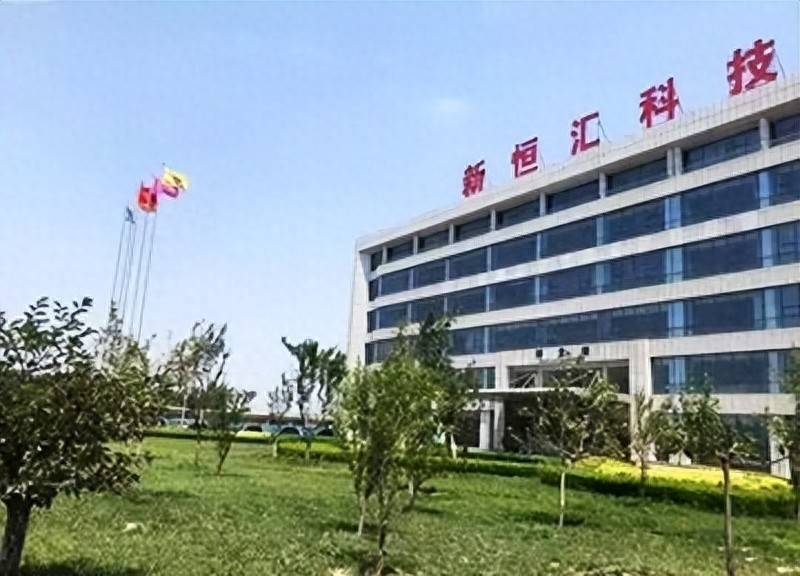
新恒汇今日上市:传统业务增长乏力,原材料价格持续上涨
Sou Hu Cai Jing· 2025-06-20 08:21
Core Viewpoint - The news highlights the unusual situation in the A-share market where the actual controller of Xinhenghui Electronics Co., Ltd. disclosed plans to reduce holdings to repay debts, raising concerns about corporate governance and financial stability [2][3]. Company Overview - Xinhenghui was established with the controlling shareholder being Henghui Electronics, originally controlled by Chen Tongsheng. After a debt crisis in 2017, the control shifted to Yu Renrong and Ren Zhijun through a restructuring process [3][4]. - Yu Renrong holds 31.94% of the shares, making him the largest shareholder, while Ren Zhijun holds 19.31%, serving as the chairman [4]. Financial Maneuvering - Ren Zhijun acquired control through a loan from Yu Renrong, with a current debt balance of 116 million yuan, due by January 25, 2029. The loan has an annual interest rate of 12% [6][7]. - Ren plans to use dividends from Xinhenghui's IPO to repay the loan and may transfer shares back to Yu Renrong to settle remaining debts, potentially altering their shareholding proportions [7]. Business Performance - The traditional smart card business has shown stable but limited growth, with sales revenues of 561.81 million yuan, 583.29 million yuan, and 562.29 million yuan for 2022, 2023, and 2024, respectively [8]. - The etched lead frame products, a newer segment, have seen increasing sales from 77.41 million yuan in 2022 to 193.80 million yuan in 2024, although production quality issues were previously encountered [8]. Market Competition - In the flexible lead frame market, Xinhenghui holds a 32.32% market share as of 2023, competing against major players like France's Linxens, which has a 63.23% share [9]. - Price competition has intensified due to aggressive pricing strategies from competitors, leading to a decline in market prices for flexible lead frames [9]. Raw Material Costs - The company faces rising costs for key raw materials, including cyanide potassium and gold wire, which accounted for 27.61%, 27.41%, and 23.84% of total procurement costs in the respective years [10]. - The average procurement prices for these precious metals have increased significantly, with year-on-year rises of 14.23% and 29.10% expected in 2023 and 2024 [10].

“多重压力”下,2025财年岛津如何稳增长?
仪器信息网· 2025-05-21 08:22
Core Viewpoint - In the fiscal year 2024, Shimadzu achieved record revenue for the fifth consecutive year, reaching 539 billion yen (approximately 26.88 billion RMB), with a year-on-year growth of 5% [1][2]. Financial Performance - Despite the challenging environment in fiscal year 2024, Shimadzu reported a slight decline in net profit by 1% to 71.7 billion yen (approximately 3.58 billion RMB) [2]. - In Q4 of fiscal year 2025, Shimadzu's revenue and profit both reached new highs, with revenue increasing by 6% to 154.8 billion yen (approximately 7.74 billion RMB) and profit rising by 12% to 24.7 billion yen (approximately 1.23 billion RMB) [2]. Regional Market Analysis - Japan remains the most significant revenue source for Shimadzu, accounting for 43.5% of total revenue in fiscal year 2024 [5]. - The Chinese market experienced a decline, with revenue falling by 9% to 91.3 billion yen (approximately 4.56 billion RMB) [5]. Segment Performance - The Analytical and Measuring Instruments segment saw a revenue increase of 3% to 347.9 billion yen (approximately 17.4 billion RMB), but operating profit decreased by 9% to 52.1 billion yen (approximately 2.61 billion RMB) due to rising R&D and labor costs [8]. - Core products (LC, MS, GC) had a global sales increase of 3% to 190.5 billion yen (approximately 9.53 billion RMB), with a 7% growth in regions outside China [9]. Strategic Actions - Facing multiple challenges, including tariffs, rising raw material costs, and increased competition from local brands, Shimadzu forecasts a decline in operating profit for fiscal year 2025 to approximately 515 billion yen (about 25.76 billion RMB) and a 19% drop in net profit to 58 billion yen (approximately 2.9 billion RMB) [11]. - The company plans to enhance the promotion of high-value-added products and adjust sales strategies based on regional tariff impacts [11][12]. - In the U.S. market, Shimadzu will implement short-term price adjustments and increase local inventory, while long-term strategies will focus on optimizing sales through its U.S. production base [11]. Innovation and Future Growth - Shimadzu is celebrating its 150th anniversary and aims to contribute to society through science and technology, focusing on healthcare, green energy, and industrial sectors [16]. - The company is set to launch over 10 new products to enhance performance and provide new value to customers [13].

主要原料可可价格飙升,玛氏、费列罗两大巧克力巨头齐齐涨价
Nan Fang Du Shi Bao· 2025-05-08 14:28
Core Viewpoint - Mars and Ferrero are preparing to raise prices on their chocolate products due to soaring cocoa prices, with Mars increasing prices by 4.9% to 15% on certain items, while Ferrero plans a slight increase for its Kinder brand in June as part of operational adjustments [1][2][4]. Group 1: Price Increases - Mars has confirmed price increases on certain products, with a range of 4.9% to 15% [4]. - Ferrero's Kinder chocolate products will see a slight price adjustment in June, attributed to market conditions [2][4]. - Other chocolate brands are also planning price hikes due to rising raw material costs, indicating a broader trend in the industry [6]. Group 2: Market Context - The chocolate market in China is projected to reach approximately 23 billion yuan in 2024, with Mars and Ferrero holding over 60% market share [2]. - Cocoa prices have surged significantly, with futures rising from about $3,600 per ton at the beginning of 2024 to approximately $11,200 per ton by December 2024 [7]. - The average trading reference price for cocoa was reported at $8,400.6 per ton as of May 6, 2024, down from $11,984 per ton in December 2023, but still high compared to $4,200 per ton at the start of 2024 [8]. Group 3: Industry Response - Major chocolate brands like Hershey and Mondelez have also raised prices in response to cocoa cost increases, with Hershey indicating that price hikes contributed to sales growth [11]. - Nestlé has reported price increases for its KitKat and Nespresso brands to counter rising coffee and cocoa costs [11]. - The overall chocolate market is experiencing pressure to raise prices as brands deplete their stockpiled cocoa from previous years, leading to a widespread adjustment in pricing strategies [8][11].

受美关税政策拖累 丰田预计新财年净利润将减少超三成
news flash· 2025-05-08 08:30
Core Viewpoint - Toyota Motor Corporation expects a 34.9% year-on-year decline in net profit for the fiscal year 2025 (April 2025 to March 2026) due to the impact of U.S. government tariff policies [1] Group 1: Financial Impact - The company anticipates a loss of sales amounting to 180 billion yen (approximately 1.25 billion USD) over the months of April and May due to the aforementioned tariff policies [1] - Rising raw material prices are also exerting significant pressure on the company's operations [1]
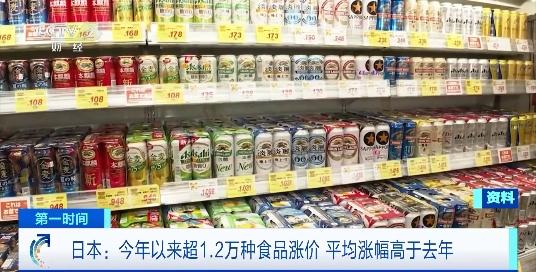
日本今年超1.2万种食品涨价,平均涨幅达17%
Zhong Guo Jing Ji Wang· 2024-12-27 23:27
Core Insights - The average price increase of food in Japan this year is 17%, higher than last year's 15%, with 12,520 food items affected [1][3] - The most significant price increases are seen in processed foods, with 5,757 items, followed by alcoholic beverages and drinks at 2,652 items [1] - The depreciation of the yen has notably impacted the prices of imported alcoholic beverages [1] Price Increase Reasons - 92.2% of the food price increases are attributed to rising raw material costs, a slight decrease compared to last year [2] - Logistics costs account for 68.1% of the price increases, while labor costs contribute 26.5%, both of which have risen compared to the previous year [2] Future Outlook - The operating environment for food companies in Japan is challenging, with expectations of continued price increases into next year [5] - For the period from January to April 2025, 6,121 food items are already known to be set for price increases, with an average expected rise of 18%, surpassing the increases of 2024 [5]