
国家公园建设

Search documents
国家林草局:落实自然保护地整合优化和国家公园空间布局方案
Di Yi Cai Jing· 2025-07-31 06:06
Core Viewpoint - China's natural protected area system construction has entered a new stage of systematic integration and comprehensive promotion [1] Group 1: National Park System Development - The country will strengthen systematic governance and implement the integration and optimization plan for natural protected areas, as well as the spatial layout plan for national parks [1] - This year marks the 10th anniversary of the national park system reform and the conclusion of the 14th Five-Year Plan [1] - The establishment of the national park system has transitioned from pilot exploration to systematic coordination and comprehensive promotion [1][2] Group 2: Achievements in National Parks - China has established the world's largest national park system, with flagship species' wild populations recovering and ecosystem diversity and stability improving [1] - The first batch of national parks includes Sanjiangyuan, Giant Panda, Northeast Tiger and Leopard, Hainan Tropical Rainforest, and Wuyi Mountain [3][4][5] - The number of wild giant pandas has increased from about 1,100 in the 1980s to approximately 1,900 [4] - The Hainan gibbon population has grown from 35 individuals to 42, making it the only gibbon species with a continuously increasing population [5] Group 3: Systematic Governance and Community Involvement - The national park construction involves a shift from single-element protection to integrated system governance, requiring innovation in various institutional aspects [2] - The implementation of the "one household, one post" model for ecological guardians has engaged 23,000 local residents in conservation efforts [3] - The local residents' average annual income has increased by 15,000 to 21,000 yuan, enhancing their sense of gain and happiness [3] Group 4: Future Directions - The National Forestry and Grassland Administration will continue to improve institutional mechanisms and promote the establishment of new national parks based on maturity [1][6] - There will be a focus on biodiversity protection and the implementation of major ecological governance projects [1]

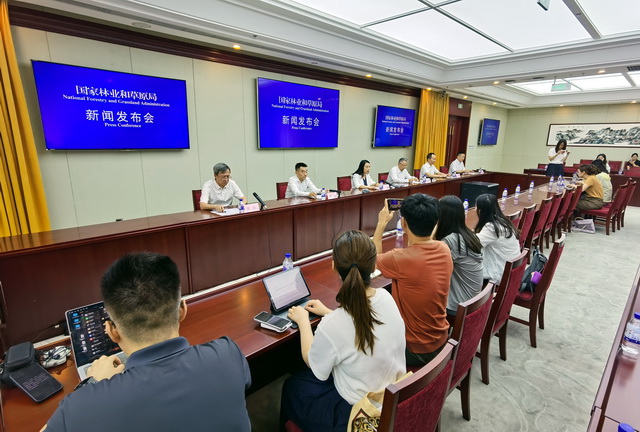
我国第一批国家公园都取得哪些成效?国家林草局回应
Xin Jing Bao· 2025-07-31 05:07
Core Insights - The establishment of the first batch of national parks in China has led to significant ecological and economic benefits, including increased wildlife populations and improved livelihoods for local residents [1][2][3] Group 1: Achievements of National Parks - Sanjiangyuan National Park has integrated the source areas of the Yangtze and Yellow Rivers, employing 23,000 local residents for ecological management, resulting in an 8.6% increase in grassland vegetation coverage and an annual income increase of 15,000 to 21,000 yuan for residents [1] - The Giant Panda National Park has connected 73 natural reserves across three provinces, increasing the wild panda population from 1,100 in the 1980s to approximately 1,900 today, with a 110 million yuan investment in research and conservation [1][2] - The Northeast Tiger and Leopard National Park has established a modern monitoring system, increasing the populations of Northeast tigers and leopards from 27 and 42 to around 70 and 80, respectively, with a significant expansion of their habitat [2] - Hainan Tropical Rainforest National Park has successfully increased the population of the critically endangered Hainan gibbon from 35 to 42 individuals, while also significantly boosting the income of relocated residents [2] - Wuyi Mountain National Park has integrated ecological protection efforts between Fujian and Jiangxi provinces, discovering new species and maintaining a stable population of the yellow-bellied pheasant [2] Group 2: Management and Innovation - The National Forestry and Grassland Administration has approved overall planning and monitoring systems for national parks, promoting innovative approaches in wildlife hazard prevention, natural education, and ecological experiences [3]
第三届国家公园论坛将于8月18日至19日在成都举办
Xin Jing Bao· 2025-07-31 05:07
Group 1 - The third National Park Forum will be held on August 18-19, co-hosted by the National Forestry and Grassland Administration and the Sichuan Provincial Government, with the theme "Protecting Natural Treasures, Co-creating Harmonious Beauty" [1] - The forum will include an opening ceremony, a main forum, three sub-forums, and a thematic achievement exhibition, focusing on the latest achievements in national park construction and inviting top experts to share insights and recommendations [1][2] - Approximately 200 representatives from relevant ministries, national park management agencies, foreign embassies, and international organizations will participate, discussing strategic and critical issues related to national parks during the 14th Five-Year Plan period [1] Group 2 - The construction of national parks is a complex system project that requires a shift from single-element protection to integrated management of mountains, waters, forests, fields, lakes, grasslands, and deserts, involving various institutional innovations [2] - The National Park Forum aims to facilitate multi-party participation from government, academic institutions, and international organizations to foster wisdom exchange and consensus building for future national park construction [2]
生态环境部:正编制国家公园等生态环境保护成效评估标准
Di Yi Cai Jing· 2025-05-30 05:59
Core Viewpoint - The establishment of national standards for evaluating the ecological protection effectiveness of national parks and nature parks is crucial for enhancing regulatory oversight in these areas [1][2]. Group 1: National Standards and Evaluation Framework - The Ministry of Ecology and Environment is developing evaluation standards for the ecological protection effectiveness of national parks and nature parks, aiming to provide technical guidance for overall regulatory improvement [1][2]. - The draft standards, titled "Technical Specifications for Evaluating the Ecological Protection Effectiveness of National Parks" and "Technical Specifications for Evaluating the Ecological Protection Effectiveness of Nature Parks," are open for public consultation starting from the 29th [1][2]. - The overall plan for establishing the national park system emphasizes the need for evaluations of ecosystem status, environmental quality changes, and the implementation of ecological civilization systems, including the establishment of a third-party evaluation system [2]. Group 2: Evaluation Criteria and Methodology - The evaluation of national park ecological protection effectiveness will assess aspects such as ecosystem authenticity, integrity, functionality, biodiversity, water quality, major threats, violations, and monitoring status, with a recommended evaluation cycle of every five years [3]. - The evaluation for nature parks will focus on the protection status of natural ecosystems, key species, and natural relics, with specific indicators selected based on the characteristics of each nature park [3]. - The evaluation methodology will combine quantitative and qualitative assessments, covering natural ecology, environmental quality, ecological stress, violations, and monitoring status [3]. Group 3: Consequences of Evaluation Results - If significant environmental incidents caused by human factors occur, or if there are major pollution or ecological damage issues that are reported by central ecological environment protection inspections and not rectified on time, the evaluation result for the nature park will be downgraded to "poor" [4]. - For lesser incidents that are not rectified on time, the evaluation result may also be downgraded by one level [4].
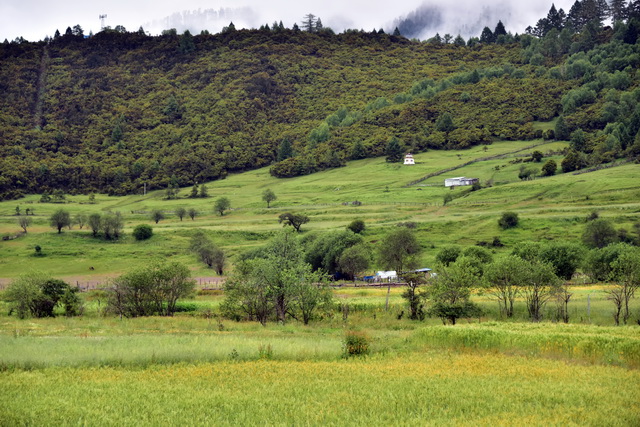
广东省建筑设计研究院总工程师陈建飚:要以新理念新模式统筹谋划新型城镇化
2 1 Shi Ji Jing Ji Bao Dao· 2025-05-20 14:46
Group 1: New Urbanization and Regional Development - The government work report emphasizes the promotion of new urbanization and regional coordinated development, aiming to optimize the spatial development pattern and enhance urbanization quality with a people-centered approach [1][2] - Chen Jianbiao, a member of the National Committee of the Chinese People's Political Consultative Conference, suggests that county towns should be key carriers for urban-rural integration, focusing on planning, design, employment, and aesthetic enhancement [1][2] Group 2: Planning and Design Strategies - The planning and design for new urbanization should prioritize industrial guidance, high-level integration, and the reflection of urban-rural aesthetics, while establishing efficient construction and operation mechanisms [2] - Optimizing industrial layout is crucial for new urbanization, as a thriving industry leads to vibrant counties, necessitating a comprehensive approach to planning both short-term and long-term industrial spatial patterns [2][3] Group 3: Environmental and Cultural Enhancements - There is a need to enhance green space and create livable, workable, and touristic county towns by promoting green buildings and restoring ecological environments [3] - The revitalization of ancient villages and buildings through cultural heritage and local craftsmanship is essential for enhancing the attractiveness and cultural quality of county towns [3] Group 4: National Park Development - The government report highlights the establishment of a natural protection system centered on national parks, aiming to create the world's largest national park system by 2035 [4] - The first batch of national parks has integrated regional economic and social development into their planning, promoting a harmonious interaction between ecological protection and socio-economic development [4] Group 5: Community and Economic Growth - Establishing a unified national park logo can enhance the value of products and industries in agriculture, tourism, manufacturing, and cultural creativity, fostering economic growth in surrounding communities [5] - Engaging local communities and industries in national park development is vital for ensuring shared benefits and sustainable growth [5] Group 6: Technological Integration - The emergence of new technologies, particularly AI and robotics, can significantly enhance the monitoring, management, and educational aspects of national parks [6] - Updating technical standards and improving the national sensing system are necessary steps towards achieving smarter management of national parks [6] Group 7: Modern Industrial System Development - The government work report calls for the development of a modern industrial system, with state-owned enterprises playing a crucial role in this initiative [7] - The Guangdong Provincial Architectural Design Institute aims to leverage its expertise to support the high-quality development of the modern industrial system, focusing on green and low-carbon technologies [7] Group 8: Future Business Directions - The Guangdong Provincial Architectural Design Institute plans to establish new subsidiaries to focus on emerging industries, including green construction and smart urban management [7] - The institute aims to enhance its competitiveness by developing high-quality, energy-efficient building products and expanding into smart city services and infrastructure [7]