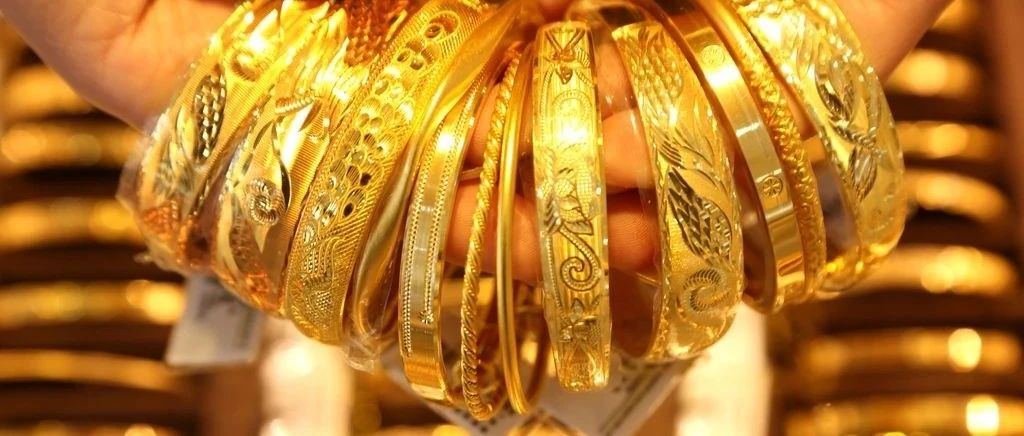
央行增持黄金

Search documents
央行5月末黄金储备环比增加6万盎司
news flash· 2025-06-07 02:03
Core Insights - The central bank data indicates that as of the end of May, gold reserves reached 73.83 million ounces, reflecting an increase of 60,000 ounces, marking the seventh consecutive month of gold accumulation [1] Group 1 - The central bank has been consistently increasing its gold reserves for seven months [1] - The total gold reserves now stand at 73.83 million ounces [1] - The increase of 60,000 ounces in May represents a continued trend in gold accumulation [1]
央行连续第7个月增持黄金
news flash· 2025-06-07 02:03
央行连续第7个月增持黄金 智通财经6月7日电,央行数据显示,5月末黄金储备报7383万盎司(约2296.37吨),环比增加6万盎司 (约1.86吨),为连续第7个月增持黄金。 ...
人民币,大涨!黄金,大跌!
Zhong Guo Jing Ying Bao· 2025-05-12 04:03
Economic Developments - Significant progress has been made in high-level economic talks between the US and China, with both sides reaching important consensus [1][3] - The US Treasury Secretary Scott Bessent expressed satisfaction with the productive nature of the negotiations, indicating that a detailed briefing would follow [3] - The US Trade Representative emphasized the constructive nature of the discussions, highlighting the need to address the substantial trade deficit [3] Market Reactions - Following the news of the trade talks, US stock futures surged, with the Dow Jones rising by 1%, S&P 500 by 1.2%, and Nasdaq by 1.5% [1] - The offshore Chinese yuan experienced a significant increase, rising nearly 200 points, while Asian markets opened positively across the board [1] Gold Market Dynamics - International gold prices opened lower, with a decline exceeding 1%, and prices dropping to below $3,260 per ounce [4] - COMEX gold futures also faced pressure, opening nearly 2% lower at $3,283.7 per ounce [5] - Domestic gold jewelry prices followed suit, with notable decreases in prices for major brands [6] Future Gold Price Predictions - Analysts predict short-term volatility in gold prices, but a long-term upward trend is expected, with Goldman Sachs forecasting prices to reach $3,700 per ounce by the end of 2025 and $4,000 by mid-2026 [9] - China's gold reserves have increased for six consecutive months, with a total of 7.377 million ounces reported at the end of April, reflecting a growing trend in central bank gold purchases globally [10] Regulatory Actions - Several banks have issued warnings against using credit cards for gold trading, citing risks associated with market volatility and regulatory compliance [12][13] - The banks emphasize that credit card funds should only be used for daily consumption and not for investment purposes, including gold [12][13]

聚焦美联储利率决议!央行连续6月增持黄金,长期软支撑是否有效?行情后续如何演绎?立即观看超V推荐官Jason的讲解,直播间可领取超V9.9元体验包>>>
news flash· 2025-05-07 12:47
Group 1 - The article focuses on the Federal Reserve's interest rate decision and its implications for the market [1] - The central bank has increased its gold holdings for six consecutive months, raising questions about the effectiveness of long-term soft support [1] - There is speculation on how the market will evolve following these developments [1]
短期波动之后对黄金资产更乐观
雪球· 2025-04-11 07:56
Core Viewpoint - The article discusses the recent fluctuations in gold prices due to global trade tensions and the impact of liquidity factors, emphasizing that despite short-term volatility, the long-term outlook for gold remains positive due to various macroeconomic factors [3][4][5]. Group 1: Economic Factors Influencing Gold Prices - The imposition of reciprocal tariffs by the U.S. on major trade partners has led to increased uncertainty in the global economy, prompting expectations of more monetary easing and fiscal stimulus from various countries [4]. - The market now anticipates that the Federal Reserve may cut interest rates 4 to 5 times this year, significantly increasing the likelihood of a U.S. recession, which could lead to a decline in the U.S. dollar index and stimulate demand for gold [4]. - The ongoing trade uncertainties are accelerating the process of de-dollarization globally, which could further enhance the appeal of gold as an alternative currency [4][5]. Group 2: Central Bank Actions - Central banks, particularly in developing countries like China, are increasing their gold reserves. As of the end of March, China's gold reserves stood at 73.7 million ounces, up from 73.61 million ounces at the end of February, indicating a sustained bullish outlook on gold [5]. - The article suggests that the unexpected trade tensions may lead to a more significant accumulation of gold by central banks as they seek to reduce reliance on the U.S. dollar [5]. Group 3: Investment Strategies - Despite short-term fluctuations in gold prices, the article advocates for a long-term investment strategy in gold assets, including physical gold and gold ETFs, which offer good liquidity and low fees [6]. - The potential for greater elasticity in gold stocks is highlighted, as they are expected to catch up with gold price increases, making them a viable investment option [6].

金价不刹车
和讯· 2025-03-12 07:58
Core Viewpoint - The international gold price has been fluctuating around the $2900 per ounce mark, with potential to reach $3000 per ounce, driven by global economic and political uncertainties [1][2]. Group 1: Central Bank Gold Purchases - The People's Bank of China (PBOC) has increased its gold reserves for four consecutive months since November 2024, holding 2289.53 tons as of February 2025, with a modest increase of 4.98 tons in February [3][4]. - The PBOC's gold purchases are influenced by the need to optimize international reserve structure, as the gold reserve proportion in China's official reserves is only 5.5%, significantly lower than the global average of around 15% [4][6]. - Other central banks globally are also showing interest in gold purchases, although the pace has slowed, with a net purchase of 18 tons in January 2025, down from the previous year [6][7]. Group 2: Future Gold Price Predictions - Analysts predict that the international gold price may reach a new high of $3100 per ounce within the year, supported by ongoing global uncertainties and expected inflows into overseas gold ETFs [2][8]. - The current fluctuations in gold prices are attributed to U.S. economic policy uncertainties and potential recession risks, with short-term price movements expected between $2870 and $2950 per ounce [8][9]. - Long-term investment in gold is considered valuable due to its low correlation with other assets and the protective cushion provided by fluctuations in the RMB exchange rate [10].