家国情怀

Search documents
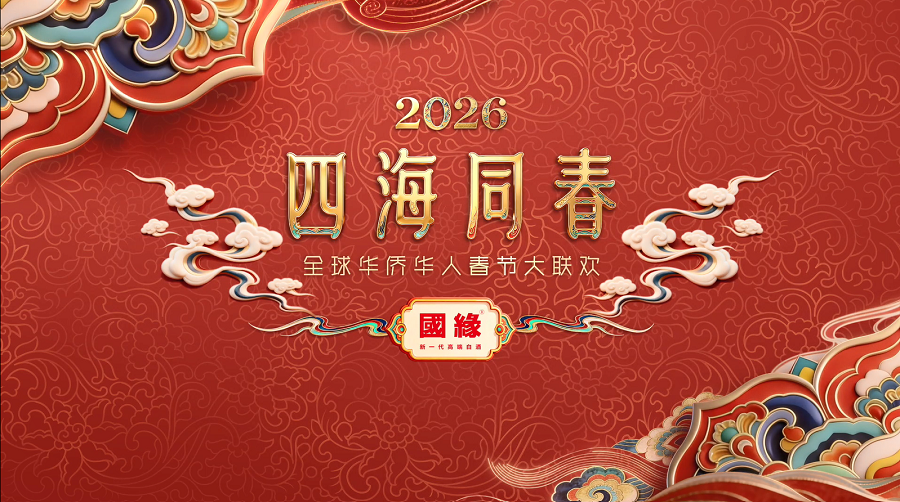
缘结四海,共贺新春——邀您共赏“四海同春”总台侨晚
Sou Hu Wang· 2026-02-10 07:31
Core Viewpoint - The "2026 Global Chinese New Year Gala" aims to connect overseas Chinese communities and celebrate the Lunar New Year with a rich cultural program, emphasizing themes of unity and cultural heritage [1][3]. Group 1: Event Overview - The gala will be broadcasted on February 17, 2026, at 19:30 on CCTV-4, serving as a "cloud family banquet" for Chinese people worldwide [1]. - The event is designed to convey greetings from the motherland to overseas Chinese, maintaining cultural ties and familial connections [3]. Group 2: Theme and Program - This year's theme is "Celebrating Together, Welcoming Spring from All Directions," creating a reunion atmosphere through carefully curated performances [5]. - The program features a diverse range of performances, including classic songs and contemporary acts, catering to various age groups and emotional needs [5]. Group 3: Cultural Significance - The gala emphasizes cultural confidence, showcasing traditional Chinese arts such as Peking opera and martial arts, alongside modern performances that reflect the depth of Chinese culture [6][9]. - The inclusion of interviews with overseas Chinese representatives aims to connect individual stories with broader cultural narratives, enhancing the emotional resonance of the event [9]. Group 4: Invitation and Expectations - The event invites global audiences to join in celebrating the Lunar New Year, fostering a sense of community and shared cultural identity [15]. - The gala is positioned as a significant cultural event that not only entertains but also strengthens the bonds of kinship and cultural heritage among Chinese people worldwide [12].

新春诗词中的家国情怀
Xin Lang Cai Jing· 2026-02-08 21:40
Group 1 - The Spring Festival is one of China's oldest and most culturally significant traditional festivals, recognized as part of the intangible cultural heritage of humanity in 2024 [1] - The festival symbolizes renewal and the welcoming of good fortune, reflecting people's aspirations for a better life [1] - Classical poetry about the Spring Festival is rich in content and diverse in form, showcasing the spirit of resilience and optimism among the Chinese people [1] Group 2 - The theme of driving away evil and praying for blessings is central to the Spring Festival, with customs like setting off firecrackers and exchanging peach wood charms to ward off evil spirits [2] - The origin of the Spring Festival is linked to the legend of the "Nian" beast, which is said to fear loud noises, the color red, and fire [2] - The practice of drinking "Chusu" wine to dispel pestilence is a significant part of ancient Spring Festival customs [3] Group 3 - The Spring Festival is a time for family reunions, evoking strong feelings of homesickness among those away from home, which is often expressed in poetry [4] - Poets like Gao Shi and Yuan Kai poignantly convey their longing for family during the New Year, reflecting the emotional weight of separation [4] Group 4 - Despite being away from home, many poets express hope for the future and the renewal that the New Year brings, as seen in the works of Cui Tu and Liu Changqing [5] - The concept of home transcends physical space, representing a deep emotional connection for individuals [5] Group 5 - The spirit of caring for the nation and the people is a notable characteristic of Chinese intellectuals, with many expressing their hopes for national unity and peace during the Spring Festival [6] - Poets like Wen Tianxiang and Zuo Xiquan articulate their patriotic sentiments and aspirations for a better future through their works [6][7] Group 6 - The Spring Festival and its associated poetry reflect the collective memory and spiritual character of the Chinese nation, emphasizing themes of national pride and resilience [7] - The celebration of the Spring Festival serves as a reminder of the importance of cultural heritage and the values of dedication to the country and its people [7]
争做新时代的追光人
Liao Ning Ri Bao· 2026-02-04 01:05
Core Viewpoint - The heroic actions of Jin Chenglong, a student from Liaoning University of Traditional Chinese Medicine, exemplify the spirit of selflessness and dedication to the country, inspiring the youth to embody similar values in their lives and actions [1][2][3] Group 1: Heroic Actions and Values - Jin Chenglong's bravery in rescuing a father and son from drowning at the age of 26 highlights his commitment to helping others, rooted in years of selfless acts such as carrying a first aid kit and donating blood 13 times, totaling 4000 milliliters [1] - His actions reflect the deep-seated influence of the Lei Feng spirit, which emphasizes altruism and service to the community, showcasing that extraordinary courage often stems from ordinary deeds [1][2] Group 2: Inspiration for Youth - The story of Jin Chenglong serves as a spiritual awakening and call to action for the youth, encouraging them to embrace values of dedication, service, and selflessness in their pursuits [2] - The narrative emphasizes the importance of translating steadfast ideals into tangible actions, urging individuals to strive for excellence in their roles and contribute positively to society [2][3] Group 3: Legacy and Impact - Jin Chenglong's legacy is expected to inspire future generations, with his actions planting the seeds of the Lei Feng spirit in the region, promoting a culture of heroism and community service [3] - The call to action encourages individuals to transform admiration into motivation, striving to contribute to national development and the revitalization of the region through collective efforts [3]
“时刻准备着挺身而出、救助他人”(守望)
Ren Min Ri Bao· 2026-02-03 03:28
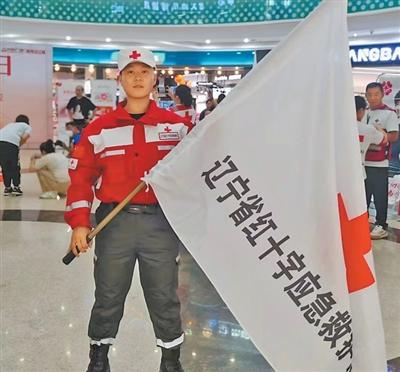
Core Viewpoint - The article highlights the heroic actions of a young man, Jin Chenglong, who sacrificed his life while attempting to rescue a father and son from drowning in the frozen river, showcasing the spirit of selflessness and dedication to helping others in the new generation of youth [2][3]. Group 1: Heroic Actions - On January 23, at 13:40, Jin Chenglong, a 26-year-old medical student, jumped into action to save a father and son who had fallen into the frozen Hunhe River, demonstrating his quick response and bravery [3]. - Despite his efforts, Jin fell through the ice while trying to reach the drowning individuals, ultimately losing his life in the process, while the 7-year-old child was successfully rescued [3]. Group 2: Background and Contributions - Jin Chenglong had a history of helping others, including rescuing an elderly person who had fallen and assisting a traveler with a medical emergency, reflecting his commitment to community service [4][5]. - He was actively involved in various charitable activities, including donating blood 13 times since 2019, totaling 4000 milliliters, and had recently completed a blood donation just two days before his tragic death [5]. Group 3: Personal Values and Legacy - Jin's personal diary contained reflections of his values, emphasizing selflessness and dedication to his country, with a desire to contribute positively to society [6]. - His military service included significant participation in major missions, and he continued to embody the values of a soldier after returning to civilian life by engaging in community service and education [6][7].
如何让科普点燃“精神火花”?天津大中小学“组队”作答
Zhong Guo Qing Nian Bao· 2026-02-02 02:13
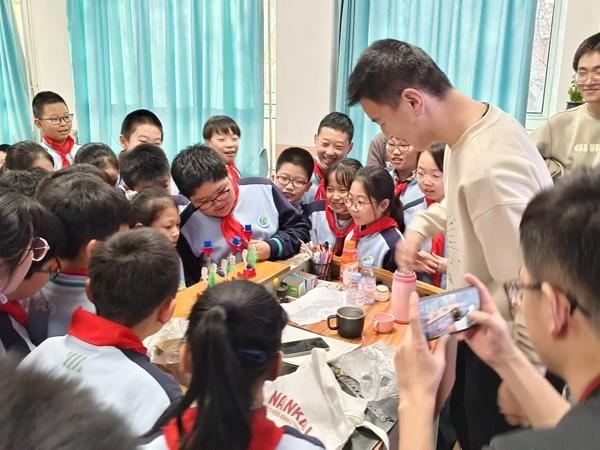
Core Viewpoint - The article highlights the integration of science popularization and ideological education in Tianjin's primary and secondary schools, showcasing how university students engage with younger students to foster scientific curiosity and national spirit through hands-on experiments and storytelling [4][11]. Group 1: Science Popularization Activities - University students from Tianjin University of Commerce and Nankai University are conducting science experiments for middle and primary school students, such as assembling air-powered rockets and demonstrating optical phenomena [3][5]. - The "Science and Ideology" initiative aims to convey scientific knowledge while instilling values like innovation and patriotism among students [4][11]. - Events like the "Hand-Brain Sports Meeting" at Tianjin Yuhua Middle School encourage students to engage in scientific exploration through practical tasks [9]. Group 2: Educational Impact and Methodology - The approach emphasizes experiential learning, where students not only learn scientific concepts but also the stories of China's scientific achievements, enhancing their understanding and appreciation of science [5][12]. - The integration of ideological education into science classes is seen as a way to subtly instill values without being didactic, making the learning process more engaging [6][11]. - The curriculum encourages university students to simplify complex scientific concepts for younger audiences, which in turn deepens their own understanding [6][12]. Group 3: Institutional Support and Development - The Tianjin Science Popularization Ideology Research Association has been established to support the integration of science and ideological education across various educational levels [11]. - The initiative has received significant participation, with 272 project proposals submitted for research and practical applications in science education [8]. - Collaborations with experts, such as academicians, enhance the credibility and impact of the science popularization efforts [8][10].
金城龙,续写“雷锋日记”
Xin Lang Cai Jing· 2026-02-01 22:24
Core Viewpoint - The article highlights the heroic act of Jin Chenglong, a student from Liaoning University of Traditional Chinese Medicine, who sacrificed his life while rescuing a drowning person, embodying the spirit of responsibility and dedication to the country [1][2][3] Group 1: Heroic Actions and Sacrifice - Jin Chenglong's life was tragically cut short at the age of 26 while attempting to save a drowning individual in the icy waters of the Hunhe River [1] - His actions reflect a deep commitment to serving the nation, as he was always prepared to sacrifice his life for the greater good without any regrets [1][2] - The article emphasizes that his bravery is a testament to the spirit of the youth in the new era, who do not shy away from danger [2] Group 2: Ideals and Beliefs - Jin's diary entries reveal a strong sense of faith and belief in serving the country, with phrases like "no name, no profit, no regrets" encapsulating his dedication [1] - His writings express a profound understanding of the responsibilities of youth, stating that the future glory of a nation depends on the commitment of its younger generation [2] - The diary serves as a love letter to the country, showcasing the values of selflessness, love, and the relentless pursuit of progress [3] Group 3: Inspirational Legacy - Jin Chenglong's life and actions are portrayed as a source of inspiration for others, encouraging youth to integrate their ideals into the service of the nation [3] - His story is positioned as a modern embodiment of the spirit of Lei Feng, symbolizing dedication, altruism, and a relentless pursuit of excellence [3] - The article concludes that his legacy will motivate more young people to strive for greatness and contribute positively to society [3]
乱世孤芳: 沈家本诗作中的家国情怀与生命哲思
Xin Lang Cai Jing· 2026-01-31 18:30
Core Viewpoint - The poetry of Shen Jiabens, particularly "Thirty Poems of Red Vine" and "Song of Lotus Picking," reflects the intertwining of personal fate and the suffering of the times during the turbulent late Qing Dynasty, showcasing the resilience of the human spirit and a deep sense of national sentiment [1][2][5]. Group 1: Context and Background - Shen Jiabens was born in 1840 in Huzhou, Zhejiang, and came from a family of officials, nurturing ambitions of serving the country through the imperial examination system [1]. - His youth coincided with significant turmoil, including the Taiping Rebellion and foreign invasions, leading to a blend of personal and national crises that influenced his poetry [1][2]. Group 2: Themes in "Thirty Poems of Red Vine" - The collection employs a multi-dimensional approach to depict the characteristics of the red vine, intertwining personal experiences with the broader suffering of the era, creating a rich tapestry of meaning [2]. - The imagery of the red vine symbolizes resilience and moral integrity, reflecting the poet's commitment to maintaining his principles amidst chaos [2][5]. - The poems express nostalgia for the poet's homeland and a yearning for peace, using nature as a medium to convey deeper emotional states [2][3]. Group 3: Themes in "Song of Lotus Picking" - "Song of Lotus Picking" serves as a refined piece that captures the beauty of Jiangnan's lotus ponds while embedding themes of nostalgia and the pain of living in a chaotic era [3][4]. - The poem contrasts the purity of the lotus flower with the turmoil of the times, symbolizing the poet's pursuit of a pristine spiritual world amidst moral decay [3][4]. - The imagery of the lotus and the act of lotus picking evoke a longing for a peaceful life, reflecting the poet's desire to escape the harsh realities of war [4]. Group 4: Artistic and Historical Significance - Both poetry collections exhibit a blend of classical poetic charm and the characteristics of late Qing literature, offering high aesthetic and historical value [5]. - The works reflect Shen Jiabens' ideals of personal cultivation and governance, while also addressing the harsh realities of national decline and personal ambition [5]. - These poems are significant historical documents that provide insight into the spirit of late Qing intellectuals, highlighting themes of national sentiment and resilience that remain relevant today [5].
一封凌晨写就的家书
Xin Lang Cai Jing· 2026-01-31 14:21
Core Viewpoint - The article narrates the transformation of a young soldier, Cui Mingtao, from a rebellious and unmotivated individual to a dedicated and exemplary soldier, driven by a heartfelt letter from his father, a former soldier, highlighting the impact of familial support and personal growth in a military environment [1][3][11]. Group 1: Personal Transformation - Cui Mingtao initially displayed a rebellious attitude in the military, often causing trouble and avoiding hard work, which strained his relationships with peers and superiors [1][3]. - A visit from his father during the May Day holiday sparked a change in Cui, as he felt a mix of pride and guilt after receiving praise from both his father and his commanding officer [3][4]. - After reading a heartfelt letter from his father expressing pride and concern, Cui resolved to change his ways and prove himself [6][8]. Group 2: Achievements and Progress - Following his decision to improve, Cui actively participated in training and took on leadership roles, earning respect from his fellow soldiers [8][9]. - His dedication led to him being recommended for driver training, where he excelled, finishing third in his class, and subsequently transitioned to a police officer role [9]. - Cui continued to pursue excellence by enrolling in instructor training, where he achieved commendable results, ultimately becoming a respected instructor [9][11].
孤岛之上 浪潮永生
Xin Lang Cai Jing· 2026-01-30 18:44
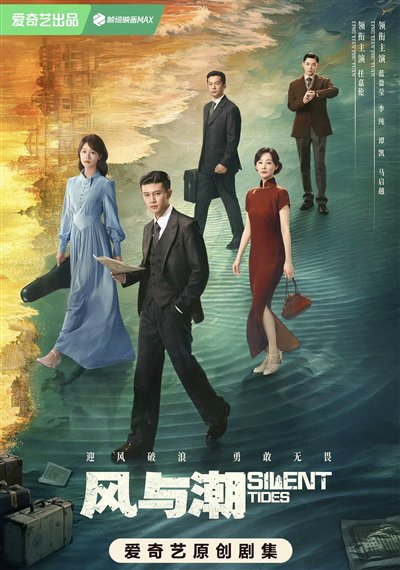
(来源:团结报) 转自:团结报 叙事与艺术手法的匠心,让深刻主题得以精准传递。导演杨振宇采用"动静结合"的手法,用金融交易所 的运动镜头营造紧迫感,何贤"以不变应万变"的沉稳则用固定镜头刻画,形成鲜明对比。剧集遵循"大 事不虚,小事不拘"的原则,将澳门三年饥荒饿死超1.6万人等被忽视的史实融入剧情,唤醒民族记忆。 结局的处理更是高明,没有轰轰烈烈的庆功宴,而是延伸至新中国成立的五星红旗下,何贤代表澳门华 人发言的笑容,成为对所有牺牲者的最好告慰。这种"最后一难"的设计,让胜利的来之不易更加凸显, 也让故事格局彻底打开。 □李禹彤 电视剧《风与潮》的成功,不仅在于它让枯燥的历史变成有温度的故事,更在于它重新定义了抗战叙事 的边界。它告诉我们,抗战不仅由前线的枪弹轰鸣构成,更由后方的调度、筹划、坚守与互助支撑。风 是乱世的兵荒马乱,潮是华人的众志成城,风会停,潮会平,但那些为正义与家国付出的牺牲,永远值 得铭记。这部剧的热潮与回响,恰证明了真诚的历史表达拥有跨越时空的力量,也让我们在回望中懂 得,每个时代的坚守与勇气,都是照亮前路的光。 太平洋战争的硝烟笼罩东南亚,澳门成为乱世中的"孤岛",也成为电视剧《风与潮》 ...
跨越千年的精神共鸣
Xin Lang Cai Jing· 2026-01-29 18:46
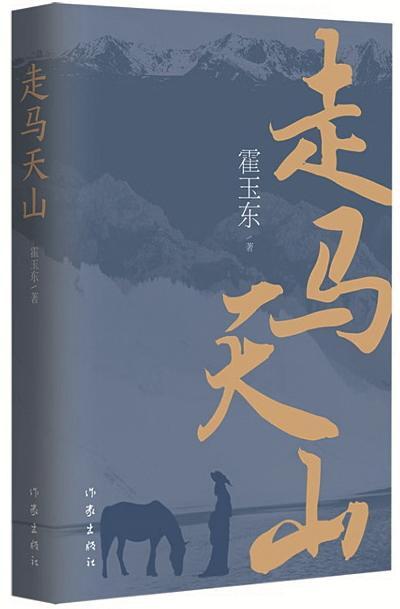
●肖帅 霍玉东创作的《走马天山》,以唐代边塞诗人岑参两次出塞经历为脉络,在历史真实与文学想象的交织 中,为读者还原了一个立体鲜活的诗人形象。这部作品跳出传统历史小说的宏大叙事框架,以情感为纽 带、以精神为内核,为历史人物题材创作提供了兼具思想深度与审美价值的范本。作为一部立足历史、 关照当下的作品,它不仅解开了同为兵团文艺工作者的笔者对岑参创作的困惑,更以跨越千年的情感对 话,让盛唐边塞精神与当代兵团人的价值追求产生深刻共鸣。 历史中的岑参,多以"边塞诗人"的单薄标签留存于大众视野,其西域军旅生涯的细节与内心世界的波 澜,始终淹没在史料的寥寥数笔中。《走马天山》的突破,在于以严谨的历史考据为根基,用文学想象 填补史料空白,让沉睡千年的诗人有了血肉与温度。作者霍玉东为创作倾注大量心力,将岑参视作朝夕 相伴的挚友,而非遥远的历史符号——书中以岑参、高仙芝、封常清、杜甫、高适等真实历史人物搭建 叙事主线,又通过鱼玄儿、陆虎、阿鹘等虚构角色,完善其人生轨迹与情感维度,使人物形象愈发可信 可感。 作品精准捕捉岑参两次出塞的精神蜕变,勾勒出其家国情怀的升华轨迹。第一次出塞,投身高仙芝麾下 的岑参满怀建功立业的渴望,却亲历 ...