
脑机接口技术

Search documents
可孚医疗20260116
2026-01-19 02:29
Summary of Conference Call for Kefu Medical and Lizhi Intelligent Industry and Company Overview - The conference call primarily discusses the collaboration between Kefu Medical and Lizhi Intelligent in the non-embedded brain-machine rehabilitation sector, aiming to integrate their strengths for business synergy in both B-end (hospitals) and C-end (consumers) markets [2][4]. Key Points and Arguments Collaboration and Market Strategy - Kefu Medical and Lizhi Intelligent are working together to enhance product value by combining brain-controlled rehabilitation robots with existing products, such as integrating sleep devices with ventilators [2][10]. - The partnership aims to leverage Kefu Medical's market data to iterate AI algorithms, creating a closed-loop system that enhances product profitability and brand reputation [2][11]. Technological Advancements - Lizhi Intelligent has developed a comprehensive technology chain in brain-machine interface technology, including sensor data acquisition, algorithm decoding, and execution control, which has been successfully applied in rehabilitation robots [6][8]. - The focus is on non-invasive brain-machine interface technology, which has broad application prospects in home rehabilitation, particularly for sleep management, pain management, and Parkinson's disease [5][16]. Market Demand and Policy Support - The aging population in China, which reached a rate of 22% in 2025, is driving the demand for home rehabilitation solutions [2][11]. - There is a high clinical demand for brain-machine interface products, with over 500 million yuan in orders already secured [7][14]. - At least 15 provinces in China have introduced supportive policies for the brain-machine interface industry, enhancing institutional purchasing enthusiasm [15][18]. Financial and Investment Insights - Kefu Medical has made significant investments in Lizhi Intelligent, with plans to gradually increase its shareholding to achieve business synergy [4][22]. - The company is also collaborating with Philips, with a new team established to develop a series of products expected to launch by the end of Q2 2026 [24][25]. Future Outlook - The brain-machine interface industry is in its early stages, with a projected development window of 5 to 10 years, driven by technological advancements and the growing demand from an aging population [18]. - Kefu Medical is focused on expanding its product lines and enhancing its international capabilities, with plans for an IPO in Hong Kong nearing completion [27][28]. Additional Important Content - Lizhi Intelligent's collaboration with South China University of Technology aims to foster talent and technology integration, enhancing product development and iteration [12]. - The company is also exploring invasive brain-machine interface technologies, although these are still in the research phase [12][16]. - The competitive advantage lies in providing practical, clinically applicable solutions that meet diverse medical needs, ensuring revenue generation through genuine partnerships rather than free distribution [19].
无创脑机接口治疗“唤醒”脑梗死偏瘫肢体
Xin Lang Cai Jing· 2026-01-16 23:10
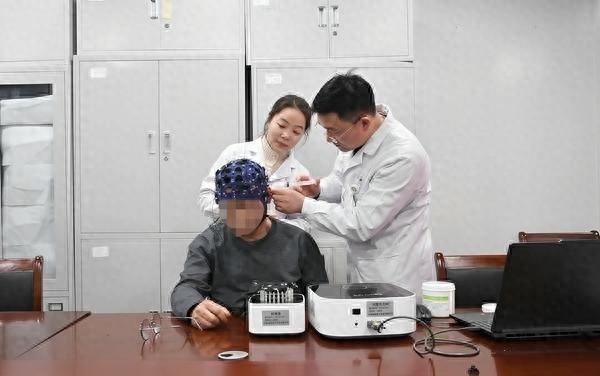
Core Insights - The successful implementation of non-invasive brain-computer interface (BCI) technology at the First Affiliated Hospital of Bengbu Medical College has provided new rehabilitation hope for acute stroke patients with hemiplegia [2][3] - This innovative treatment allows for early neural repair interventions within 72 hours of stroke onset, addressing the limitations of traditional thrombolysis and thrombectomy methods [2][3] Group 1: Treatment Details - The first patient treated was relatively young and exhibited left-sided hemiplegia, with noticeable instability despite being able to walk and raise their hand [2] - The treatment involved a non-invasive BCI approach, which was applied alongside conventional medication, leading to significant improvements in the patient's motor functions [3] - The BCI technology utilized high-precision MRI to create a personalized brain model, allowing for accurate targeting of the damaged areas [3] Group 2: BCI Technology Overview - BCI technology establishes a new communication channel between the brain and external devices, enabling direct interaction and control [4] - It can be categorized into invasive, semi-invasive, and non-invasive types, with non-invasive BCI being favored for its safety and broad applicability [5] Group 3: Market Potential and Future Applications - There is a large population of patients in China suffering from severe neurological disorders, including over 28 million stroke patients, which highlights the potential market for BCI technology [5] - The ongoing advancements in neuroscience, materials science, microelectronics, and artificial intelligence are expected to enhance the application prospects of BCI technology in various medical fields [5] - The non-invasive BCI approach is seen as a safer and more accessible option, likely to integrate into everyday life for a broader audience [6] Group 4: Clinical Development - The hospital is initiating treatment for a second batch of acute stroke patients and is actively exploring BCI applications in other neurological diseases such as Alzheimer's and Parkinson's [6]

融资18亿!奥特曼杀入马斯克脑机地盘
Sou Hu Cai Jing· 2026-01-16 10:51
Group 1 - Sam Altman, CEO of OpenAI, has successfully raised $252 million (approximately 1.8 billion RMB) in seed funding for Merge Labs, a brain-computer interface company, significantly exceeding the early funding scale of most neurotechnology companies [2][3] - Merge Labs is focusing on a non-invasive technology approach, utilizing ultrasound and other methods to send and receive information without implanting electrodes in the brain, contrasting sharply with Elon Musk's invasive strategy with Neuralink [2][3] - The competition between Altman and Musk in the brain-computer interface sector represents a broader trend in the global brain-computer interface industry, which is experiencing rapid growth due to technological breakthroughs, supportive policies, and increased capital investment [6][9] Group 2 - OpenAI is the largest investor in Merge Labs' recent funding round, indicating a potential integration of OpenAI's core algorithms with brain-computer interface technology, which distinguishes Merge Labs from other companies in the field [4] - Merge Labs aims to connect biological intelligence with artificial intelligence to maximize human capabilities and experiences, developing a new paradigm of brain-computer interfaces for high-bandwidth interaction with advanced AI [4] - The global brain-computer interface market is projected to grow from approximately $2.62 billion in 2024 to $12.4 billion by 2034, with China's market expected to increase from 3.2 billion RMB in 2024 to 5.58 billion RMB by 2027, reflecting a compound annual growth rate of about 20% [6]

关注“AI与人”新境遇
Xin Lang Cai Jing· 2026-01-15 16:21
Core Perspective - The novel "Planting Memories" by author Zhang Ling explores the relationship between AI, humanity, memory, and self-identity through the lens of brain-computer interface technology, presenting a unique narrative that balances emotional depth with science fiction elements [2][4]. Summary by Sections Narrative and Themes - The story is set in 2035 and follows a girl named Chen Qianse, who loses her sight and memory in an accident. Her parents, an AI scientist and a neurosurgeon, face various challenges while helping her "plant memories" with the assistance of an AI robot named "Xiao Meng" [2][3]. - The narrative emphasizes the emotional conflicts and challenges faced by the family, highlighting the importance of love as a guiding force in the journey of self-discovery [2][3]. Emotional Impact and AI's Role - A poignant moment in the novel occurs when Xiao Meng is powered down, losing all interactive memories with Qianse, illustrating the fundamental difference between human emotions and AI's capacity for memory, which can be erased [3][4]. - The author reflects on the continuous connection between human emotions and memories, particularly regarding love, and how technology can impact these experiences [4]. Exploration of Technology and Humanity - Zhang Ling expresses a keen interest in the implications of advanced technology on human life, particularly the brain's flexibility and the potential for diverse thought processes [4][5]. - The novel is positioned as a blend of realistic elements with futuristic sci-fi, exploring familial relationships and cultural differences influenced by AI and technology [5]. AI in Creative Processes - The integration of AI into daily life and its role in artistic creation raises questions about the balance between efficiency and the preservation of human originality in literature [5]. - Zhang Ling emphasizes that while AI can assist in research and productivity, the essence of storytelling and the soul of a novel must remain a human endeavor [5].

国泰海通|策略:美国对委特别行动,伊朗局势悄然生变
国泰海通证券研究· 2026-01-15 12:07
Global Geopolitical Developments - Venezuelan President Maduro was captured by U.S. Delta Force on January 5, 2026, and appeared in court in New York [1] - Protests and unrest have erupted in Iran since December 28, 2025, due to rising prices and currency devaluation, resulting in casualties among security personnel and civilians [1] - The changes in regions like Syria, Venezuela, and Iran are attributed to a "vacuum of influence" in Russia's traditional sphere amid the Ukraine conflict [1] Domestic Economic and Industrial Policies - On January 6, 2026, the Ministry of Commerce announced a ban on the export of dual-use items to Japanese military users, including rare earth elements [2] - On January 7, 2026, the Ministry of Industry and Information Technology and eight other departments issued a notice on the implementation of the "AI + Manufacturing" special action plan [2] - On January 9, 2026, the National Medical Products Administration published a plan for two recommended industry standards for medical devices using brain-computer interface technology [2] - On January 10, 2026, the Radio Innovation Institute submitted an application for an additional 203,000 satellites to the International Telecommunication Union, with over 190,000 from this new institution [2] Capital Market Dynamics - On December 29, 2025, the China Banking and Insurance Asset Management Association released a guide for data classification and grading in the insurance asset management industry [3] - On December 31, 2025, the Financial Supervisory Authority introduced the "Commercial Bank M&A Loan Management Measures," while the China Securities Association released two self-regulatory rules for commercial real estate REITs [3] - On January 5, 2026, the China Securities Index Company launched 15 new comprehensive bond indices covering core domestic bond varieties, enhancing market index tools [3] Global Geopolitical and Economic Tracking - The U.S. has been increasingly taking military actions and threats against several countries, including the capture of Maduro and threats against Colombia and Mexico [4] - The Federal Reserve's expectations for a rate cut in January have cooled, with ADP data showing a private sector job increase of 41,000 in December, reversing the previous month's decline [4] - As of January 3, 2026, initial jobless claims in the U.S. were reported at 208,000, slightly below expectations, indicating resilience in the labor market [4]

疫苗ETF(159643)盘中涨超2%,医药科技属性强化或成行业新动能
Mei Ri Jing Ji Xin Wen· 2026-01-14 06:35
Group 1 - The pharmaceutical and biotechnology industry is experiencing a sustained improvement in prosperity, with innovative drugs entering the 3.0 era, showcasing a leading trend in new targets, technologies, and disease areas in China [1] - Recent positive clinical data for small nucleic acid drugs and the emergence of targeted delivery technologies indicate significant potential in chronic disease areas such as cardiovascular and metabolic diseases [1] - The domestic CRO (Contract Research Organization) orders are showing a trend of increasing volume and price, benefiting from the overseas business development of innovative drugs and a stabilization in financing, with performance expected to improve by 2026 [1] Group 2 - The medical device industry continues to have demand-side potential, with supply-side structural upgrades and accelerated innovation and internationalization, expected to maintain steady growth through 2026 [1] - The exploration of AI in medicine is ongoing, with potential effective business models emerging in areas such as assisted diagnosis and health management [1] - Brain-computer interface technology is undergoing rapid iteration and upgrades, with significant clinical and commercialization advancements anticipated by 2026, marking a new development phase for the industry [1] Group 3 - The vaccine ETF (159643) tracks the vaccine biotechnology index (980015), which selects listed companies involved in vaccine research, production, and related biotechnology businesses to reflect the overall performance of the biopharmaceutical and research service sectors [1] - This index is characterized by high growth and innovation, focusing on the bioproducts and research service fields [1]
A股开盘速递 | A股反攻!创业板指拉升涨逾1% AI应用方向继续走强
智通财经网· 2026-01-14 01:59
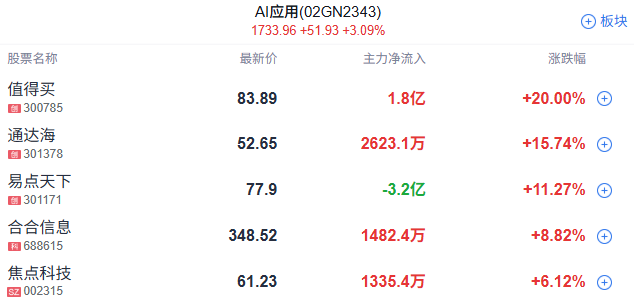
Core Viewpoint - The market shows strength with major indices rising, particularly in AI applications and precious metals, while adjustments in certain sectors are seen as profit-taking rather than panic [1]. Group 1: AI Applications - AI application sector continues to strengthen, with stocks like Zhejiang Wenhui and Shiji Information hitting daily limits, and others like Guangyun Technology and Zhidema rising over 10% [2][3]. - Google announced partnerships with major retailers to develop AI applications for e-commerce, indicating a broadening commercial space for AI [3]. Group 2: Market Analysis - Everbright Securities suggests that recent market adjustments are primarily due to profit-taking, with a structural shift from high-performing sectors like commercial aerospace to relatively lower-performing sectors [4]. - The market is not in a state of panic, and a structural market trend is expected to continue, with indices likely to experience fluctuations [4]. Group 3: AI in Healthcare - CITIC Securities reports that AI in healthcare is set to accelerate the restructuring of the trillion-dollar pharmaceutical market, with clearer payment structures expected by 2026 [5]. - Key areas of focus include AI drug development, grassroots AI healthcare applications, and AI pathology diagnostics [5]. Group 4: Brain-Computer Interface Technology - Galaxy Securities highlights the transition of brain-computer interface technology from laboratory settings to industrial production, with significant developments expected from companies like Neuralink [6]. - The industry is supported by government policies and healthcare pricing strategies, facilitating commercialization and innovation [6]. Group 5: Space Photovoltaics - Guojin Securities identifies space photovoltaics as a key segment within the commercial aerospace sector, expected to be a leading theme in the new energy sector by 2026 [7]. - The market is recognizing the value and potential of space photovoltaics, with ongoing developments in related equipment and materials [7].



银河证券:脑机接口技术正从实验室迈向产业化生产
Jin Rong Jie· 2026-01-14 00:56
Core Insights - Brain-computer interface (BCI) technology is transitioning from laboratory research to industrial production, with significant advancements expected in the coming years [1] - Neuralink, a company owned by Elon Musk, plans to initiate large-scale production of BCI devices by 2026 and is advancing fully automated surgical procedures [1] - The global BCI industry is experiencing rapid growth, with two main technological paths: invasive and non-invasive methods [1] Industry Overview - The BCI industry encompasses a wide range of sectors, including materials, chips, surgery, and medical rehabilitation [1] - The United States and China are the leading countries in the BCI field, engaging in intense competition [1] - The U.S. has accumulated significant advancements in invasive frontier technologies, while Chinese companies are quickly catching up due to policy guidance and capital support [1] Policy and Support - In recent years, a series of policies have been introduced at both national and local levels in China, clarifying the development direction of the BCI industry [1] - Support measures such as medical insurance pricing and expedited approval processes have been implemented to facilitate the commercialization and innovation of the BCI industry in China [1]
中国银河证券:脑机接口技术正从实验室迈向产业化生产
Xin Lang Cai Jing· 2026-01-14 00:27
中国银河证券指出,脑机接口技术正从实验室迈向产业化生产。近期,马斯克旗下公司Neuralink宣布, 计划在2026年启动脑机接口设备的大规模量产,并推进全自动化外科手术流程。全球脑机接口产业正迎 来快速发展,其技术路径主要分为侵入式和非侵入式两种,产业链覆盖材料、芯片、手术及医疗康复等 多个领域。近年来,我国从国家到地方层面密集出台的系列政策以及医保定价、优先审批等支持措施, 明确了脑机接口产业发展方向,并为中国脑机接口产业的商业化落地和创新追赶提供了强力保障。 ...

可孚医疗:纽聆氪医疗专注于侵入式脑机接口技术
Zheng Quan Ri Bao Wang· 2026-01-13 14:12
Core Viewpoint - Kefu Medical (301087) is focusing on strategic collaborations with companies specializing in advanced brain-machine interface technologies to enhance its existing rehabilitation and respiratory product lines [1] Group 1: Company Developments - Kefu Medical has engaged in strategic cooperation with NeuLink Medical, which is dedicated to invasive brain-machine interface technology, currently developing bionic ear and bionic eye products in the early research phase [1] - The collaboration aims to integrate cutting-edge brain-machine interface technologies with Kefu Medical's existing product lines, fostering strategic synergy [1] Group 2: Product and Technology Insights - NeuLink Medical's products are designed to provide innovative solutions for patients with hearing and vision impairments [1] - Lizi Intelligent has successfully implemented multimodal brain-controlled rehabilitation robots for large-scale clinical applications targeting central nervous system injuries, with over 20 products developed, 7 of which have been approved for market [1] - The company will continue to monitor the progress of these collaborations and actively promote the development and implementation of related joint research projects and product solutions [1]