
融合创新

Search documents
中国手游出海“生意经”:百亿爆款是如何炼成的?
Di Yi Cai Jing· 2025-05-14 10:33
Core Insights - The gaming industry is experiencing a shift where creating a hit game is seen as both an art and a science, with data-driven approaches becoming increasingly important [1][12][13] - Companies like Century Huatong and 37 Interactive Entertainment have successfully launched popular games by blending genres and leveraging data analytics to understand user preferences [3][4][5] Group 1: Game Development Strategies - Century Huatong's subsidiary, Didi Interactive, developed "Whiteout Survival," which has generated over 16 billion RMB in revenue, surpassing major competitors like Tencent and Mihayou [1][5] - 37 Interactive Entertainment's "Puzzles & Survival" has achieved over 10 billion RMB in revenue within five years, demonstrating the potential of merging casual and strategy gameplay [3][5] - The integration of casual elements into traditionally heavy games has attracted a broader audience, including a significant percentage of female players [4][5] Group 2: Market Trends and Challenges - The gaming market is becoming increasingly competitive, with companies needing to focus on long-term strategies and user engagement rather than quick wins [20][23] - The success of games in international markets often hinges on effective localization, which goes beyond mere translation to include cultural adaptation [15][16][17] - Companies are recognizing the importance of building local teams to enhance market understanding and tailor content to regional preferences [17][18] Group 3: Data-Driven Decision Making - Data analytics plays a crucial role in game development, with companies relying on various metrics such as user retention rates to guide their strategies [12][14] - Successful game development requires a balance between data-driven decisions and creative innovation, ensuring that games remain engaging while meeting user expectations [14][21] - The industry's focus on data has led to a more scientific approach to game design, where understanding player behavior is essential for success [12][13] Group 4: Long-Term Commitment and Experience - Companies that have been in the industry for over a decade tend to have a better understanding of market dynamics and are more likely to seize opportunities [20][21] - The journey of companies like Didi Interactive and 37 Interactive Entertainment illustrates the importance of persistence and strategic focus in achieving success in the gaming sector [20][22] - The evolving landscape of the gaming industry requires companies to adapt continuously and innovate to maintain relevance and profitability [23]




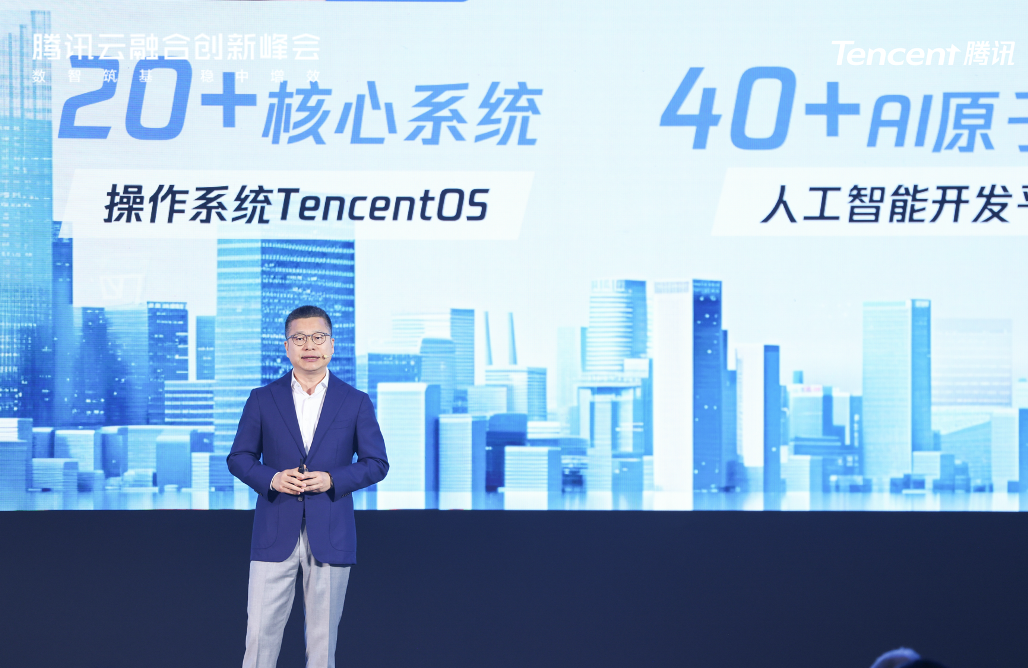
腾讯副总裁李强:今年将是融合创业产业爆发的临界点
Hua Er Jie Jian Wen· 2025-05-14 08:48
Core Viewpoint - The integration innovation industry is approaching a critical point of explosion, with Tencent Cloud positioned to benefit from this growth as it emphasizes integration innovation alongside AI and international expansion [2][5][7]. Group 1: Industry Growth and Trends - The integration innovation sector is experiencing rapid growth, with listed companies involved in this space showing significant expansion [2][3]. - Since 2020, the integration innovation industry has entered a phase of large-scale promotion, driven by policies and digital upgrades, leading to a complete ecosystem from basic hardware and software to core application systems [7]. - The Chinese government has implemented various policies to support domestic innovation, with a focus on self-sufficiency in technology [5][6]. Group 2: Tencent Cloud's Position and Strategy - Tencent Cloud is one of the few cloud service providers making substantial investments in integration innovation, focusing on leveraging its strengths in software rather than attempting to cover the entire market [2][3]. - The company has developed a comprehensive software system that includes foundational software and application software, which is compatible with mainstream domestic hardware and software ecosystems [2][3]. - Tencent Cloud has established a dealer system covering 28 provinces and various industries to respond quickly to customer needs for innovation upgrades [4]. Group 3: Market Opportunities - The integration innovation market is described as a vast "blue ocean," indicating significant growth potential [5]. - By 2027, state-owned enterprises are expected to fully complete the replacement of key technology components, marking a shift towards a comprehensive upgrade of the entire industry chain [6]. - Tencent Cloud aims to establish industry benchmarks and promote these solutions nationwide in collaboration with partners [4].


科华生物(002022) - 2025年5月8日投资者关系活动记录表
2025-05-08 10:28
Group 1: Financial Performance and Challenges - The company reported a net profit loss of 2.34 billion in the past year, which increased to 6.41 billion in the current year, indicating a significant financial struggle [4][6]. - The company's overseas business accounts for 23% of its total revenue, with the U.S. market being a minor contributor [3][4]. - The asset-liability ratio stands at 24.22%, with cash reserves of approximately 787 million [4]. Group 2: Strategic Initiatives and Future Plans - The company aims to enhance operational efficiency through lean management and continuous improvement in quality and efficiency [2][3]. - Plans for 2025 include integrating global resources, advancing automation and digitalization, and expanding into diverse overseas markets [5][10]. - The company is committed to ongoing R&D investments to develop comprehensive solutions that meet national health needs [3][5]. Group 3: Market Position and Competitive Landscape - The company has a market coverage of approximately 60% in tertiary hospitals and 40% in blood stations within China [5]. - The company is focusing on enhancing its core products and expanding its market share through strategic marketing and product innovation [5][7]. - The competitive environment has intensified, leading to price reductions in various diagnostic product segments since 2022 [7]. Group 4: Governance and Management Concerns - There are concerns regarding the complexity of financial management due to multiple subsidiaries, which may lead to increased operational costs [6][8]. - The company has established a robust internal control system to ensure compliance and transparency in its operations [4][12]. - The management's compensation has reportedly increased despite the company's financial losses, raising questions about alignment with shareholder interests [6][7].
