逆向思维

Search documents
关税战硝烟四起,从达尔文那里回看投资的本质︱重阳书享
重阳投资· 2025-04-14 07:24
关税战硝烟四起,从达尔文那里回看投资的本质 文/ 重阳投资合伙人舒泰峰 4月2日,特朗普向全球发起关税大战,一时间硝烟四起,搅得资本市场剧烈波动,投资者人心惶惶。 然而,冷静下来就不难发现,其实这正是投资的重要必修课之一——你永远不知道哪里会飞出一 只"黑天鹅"。不用追溯太久,仅仅回想过去5年,我们就经历了许多类似的"黑天鹅"事件:新冠疫 情、俄乌战争、美联储暴力加息等等,每一次都引起资本市场的急剧波动和投资者心理上的巨大冲 击,每一次似乎都"过不去了",然而股市神奇的地方在于,每一次我们又都跨过了沟沟坎坎,找到了 新的生机。当然,不可否认在这个过程中也有不少个体由于没有系好安全带而悲剧性地被甩出轨道。 市场的这种神奇之处背后的秘密是什么?如何能在黑天鹅的冲击下立于不败之地?笔者在拙作《财富 是认知的变现》之中曾经总结过投资需要具备的12个认知武器,在这几年的市场震荡中,笔者又经过 反复琢磨提炼,觉得其中最重要的是四个思维:复利思维、逆向思维、风险思维和股权思维。如果对 应为心法的话就是四颗心:耐心、疑心、小心和初心。具备了这四种思维或四个心,或许能够帮助我 们更加从容看待"黑天鹅"事件带来的纷扰。 正好最近 ...
关税战硝烟四起,从达尔文那里回看投资的本质︱重阳书享
重阳投资· 2025-04-14 07:24
Core Viewpoint - The article emphasizes the importance of understanding investment principles in the face of unpredictable events, referred to as "black swan" events, and highlights four key investment mindsets: compound interest thinking, contrarian thinking, risk thinking, and equity thinking [2][3]. Group 1: Compound Interest Thinking - The story of the Manchester peppered moth illustrates how species adapt to environmental changes, emphasizing the power of compound interest over time. For instance, an initial investment of 100,000 yuan at a 20% annual return can grow to approximately 23.74 million yuan over 30 years [6][10]. - The article notes that many investors fail to harness the benefits of compound interest due to a lack of understanding of its gradual accumulation, which can lead to significant wealth over time [9][10]. Group 2: Contrarian Thinking - The life cycle of the periodical cicada, which waits 17 years to emerge and reproduce, serves as a metaphor for the investment strategy of patience and waiting for the right opportunities, contrasting with the impulsive nature of many investors [11][14]. - Successful investors often adopt a "sit and wait" approach, as exemplified by notable figures like Buffett and Munger, who emphasize the importance of long-term holding rather than frequent trading [13][15]. Group 3: Risk Thinking - The behavior of male deer during mating season illustrates the concept of minimizing risks in competition. They engage in ritualistic displays to avoid serious injury, reflecting the need to balance competitive actions with self-preservation [17][21]. - The article categorizes investment errors into two types: Type I errors (taking unnecessary risks) and Type II errors (being overly cautious). It suggests that successful investors prefer to avoid Type I errors, even if it means missing out on some opportunities [22][23]. Group 4: Equity Thinking - The green frog and the fiddler crab demonstrate the concept of signaling in the animal kingdom, where individuals may present misleading signals to gain advantages. This parallels the investment world, where discerning genuine signals from noise is crucial [25][29]. - The article stresses the importance of historical performance data as a reliable indicator of a company's potential, aligning with value investing principles that prioritize long-term fundamentals over speculative signals [30][31].


在股市生存,一定要狠狠记住这8句话!
天天基金网· 2025-04-12 03:52
Core Insights - The article emphasizes the importance of maintaining a contrarian mindset in investing, particularly during market downturns, as these periods often present significant opportunities [5] - It highlights the necessity of a long-term perspective to filter out short-term market fluctuations [6] - The essence of investing is rooted in understanding the intrinsic value of companies and recognizing that prices will eventually align with this value [6] - Successful investing is fundamentally about overcoming human psychological weaknesses [6] Group 1: Investment Philosophy - The article outlines four key investment principles: 1. Contrarian Thinking: Extreme market emotions often create opportunities [5] 2. Long-Term Perspective: Using a long-term view to mitigate short-term volatility [6] 3. Value Essence: Prices will ultimately revert to the true value of the enterprise [6] 4. Psychological Game: Successful investing is about overcoming human flaws [6]

睿书会第61期:《孙子兵法》漫谈——孙子会是价值投资者吗?
广东睿璞投资· 2025-03-24 07:47
Core Viewpoint - The article draws parallels between Sun Tzu's military strategies in "The Art of War" and principles of value investing, emphasizing the importance of risk management and fundamental analysis in investment decisions [2][3][11]. Group 1: Sun Tzu's Philosophy on Warfare - Sun Tzu's approach to warfare focuses on avoiding defeat rather than seeking victory, highlighting the asymmetry of costs and benefits in conflict [3][5]. - The concept of "calculating" in warfare is misinterpreted as cunning strategies, while it actually refers to a thorough analysis of fundamental factors [5][6]. - The five factors and seven calculations outlined by Sun Tzu serve as a framework for assessing the likelihood of success before engaging in battle, akin to evaluating investment opportunities [5][6]. Group 2: Cost Considerations - Sun Tzu emphasizes the significant costs associated with warfare, advocating for careful consideration of whether the potential gains justify the expenses [8][9]. - Historical examples illustrate that excessive victories can lead to downfall, as seen in the case of Emperor Wu of Han, who faced severe consequences from his military campaigns [9][10]. - Investors are cautioned against becoming complacent after a series of successful trades, as this can lead to overconfidence and poor decision-making [10]. Group 3: Return on Investment - Sun Tzu's military philosophy prioritizes the preservation of resources and achieving objectives efficiently, which aligns with the principles of value investing [11][12]. - The article suggests that successful investors, like Sun Tzu's ideal commanders, should focus on long-term strategies rather than short-term gains [12][13]. - The narrative highlights that true success in both warfare and investing often lacks dramatic stories, emphasizing the importance of steady, principled approaches [13][14]. Group 4: Technical Aspects - Sun Tzu advocates for self-discipline and patience, advising that one should first secure their position before engaging in competition [15][16]. - The article discusses the importance of understanding market dynamics and using strategic thinking to identify undervalued investment opportunities [16][17]. - The need for emotional stability in investment decisions is underscored, drawing parallels to historical military leaders who maintained composure under pressure [18][19]. Group 5: Conclusion and Investment Philosophy - The article concludes by reflecting on Warren Buffett's investment philosophy, which emphasizes long-term value and maintaining a margin of safety [20][21]. - Buffett's consistent approach over decades, focusing on traditional industries and avoiding speculative trends, is presented as a model for successful investing [21].

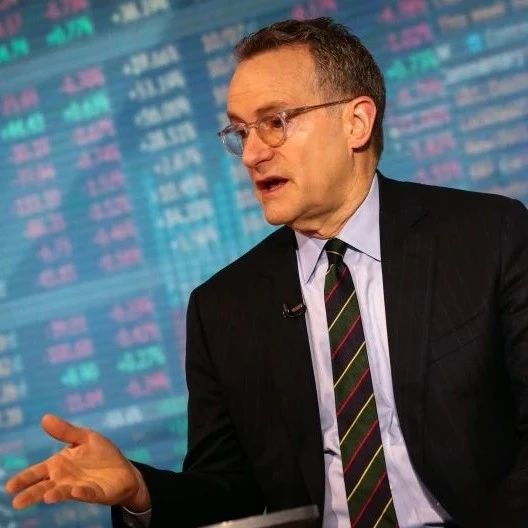
霍华德·马克斯:如果你认为能准确预测市场,那你就是一个傻瓜,不要为一种结果做准备
华尔街见闻· 2025-03-15 10:20
Core Insights - The key to investment success lies not in buying good companies, but in buying at the right time [2][9] - Unique success can only be achieved by doing what others are unwilling to do, and ensuring positive outcomes [11] Group 1: Investment Philosophy - The main challenge is not how to exit a successful investment, but how to patiently hold onto an unsuccessful one [3][13] - Strong psychological resilience and emotional control are essential for executing investment strategies [13] - Selling decisions should not be based solely on price fluctuations; a thorough re-evaluation of the investment is necessary [4][15] Group 2: Market Cycles - Market cycles are inevitable, stemming from excessive behaviors that are often emotional and psychological [5][18] - The reality of economic fluctuations is minor compared to the significant volatility in stock prices driven by investor emotions [19][20] - Recognizing the traps of overconfidence is crucial for navigating market cycles [17][21] Group 3: Uncertainty and Preparation - There is no certainty in the investment industry; acknowledging what is unknown is vital for success [6][21][25] - Successful preparation involves being ready for a range of outcomes rather than a single predicted scenario [29][27] - The importance of intellectual humility is emphasized, as believing one knows everything can lead to failure [26][25]