合理定价

Search documents
韩国造船业,进入“超级周期”
Sou Hu Cai Jing· 2026-01-09 07:09
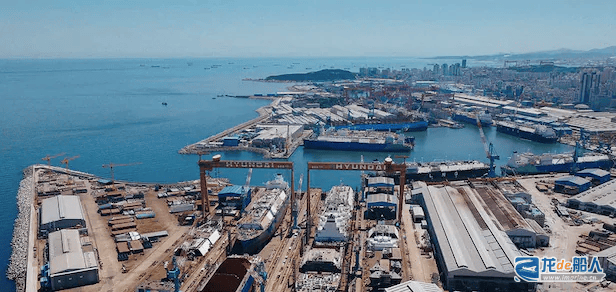
Group 1 - HD Hyundai Heavy Industries' shipyards in Ulsan and Jeollabuk-do are operating at full capacity, with 14 docks currently in operation and approximately 30 vessels under construction [1] - The company is implementing a "double-ship parallel docking operation" to expedite shipbuilding progress due to space constraints [1] Group 2 - The South Korean shipbuilding industry is expected to adopt a "reasonable pricing" strategy for selective order-taking, with nearly all ship slots sold out until 2028 [3] - The profitability of South Korean shipbuilders is anticipated to improve significantly due to the concentration of deliveries starting in 2026 and a stabilization in steel plate prices, which will alleviate shipbuilding costs [3] Group 3 - The Korea Institute for Industrial Economics and Trade (KIET) forecasts that South Korea's shipbuilding exports will reach 10.46 million gross tons in 2026, a 7.9% increase from 2025, driven by an increase in commercial ship deliveries [4] - Despite the increase in export volume, the export value is expected to decline by 4% to $30.326 billion, attributed to a shift in the product structure rather than a drop in ship prices [4] Group 4 - The order structure in South Korea's shipbuilding industry is shifting towards high-value, specialized vessels, with LNG carriers expected to account for 33% of new orders [4] - NH Investment & Securities predicts that new ship orders in 2026 will total approximately $38.8 billion, a 10% increase year-on-year, with a focus on LNG carriers and tankers [6] Group 5 - New LNG carrier prices are projected to exceed $260 million in the next 6-12 months, reflecting a 5% increase from the end of 2025, with 77 LNG carriers expected to be ordered in 2026 [8] - 2026 is seen as a foundational year for South Korean shipbuilders to enter the U.S. defense market, with potential collaborations with Huntington Ingalls Industries (HII) [8] Group 6 - There are mixed sentiments regarding the collaboration between South Korea and the U.S. in the defense market, with some analysts suggesting that tangible results may take years due to legal and investment prerequisites [10] - KIET predicts a significant increase in overseas production for South Korean shipbuilders, with production in Vietnam and the U.S. expected to grow by over 20% [10]

第一批收咨询费的旅行社被骂惨了
Hu Xiu· 2025-07-27 23:32
Core Viewpoint - The travel industry is facing challenges due to a growing number of customers who expect high-quality services without wanting to pay for them, leading to a toxic environment for service providers [9][21][24]. Group 1: Customer Expectations - Customers are increasingly demanding "high value for low cost," expecting premium services while paying minimal fees, which is damaging the industry [10][11]. - There is a prevalent attitude among customers that travel agencies should provide services for free, as they believe that the information is readily available online [18][21]. - The concept of "value" is distorted, with customers equating low prices with high-quality experiences, leading to dissatisfaction when expectations are not met [11][13]. Group 2: Industry Response - Travel agencies are beginning to implement consultation fees to filter out clients who are unwilling to pay for professional services, establishing boundaries for their offerings [23][24]. - There is a call within the industry to stop catering to low-value clients, as this approach only leads to further degradation of service quality and profitability [24][26]. - Agencies are encouraged to uphold reasonable pricing and not compromise on service quality, which is essential for long-term sustainability [22][24]. Group 3: Market Dynamics - The competitive landscape of the travel industry has led to a culture where many agencies feel pressured to provide free services, resulting in a cycle of unrealistic customer demands [21][22]. - The normalization of "free labor" in the industry has contributed to a lack of respect for the expertise and effort that travel professionals invest in their work [21][25]. - The industry is at a crossroads, where agencies must decide whether to continue appeasing demanding customers or to assert the value of their services [24][31].

霍华德·马克斯:如果你认为能准确预测市场,那你就是一个傻瓜,不要为一种结果做准备
华尔街见闻· 2025-03-15 10:20
Core Insights - The key to investment success lies not in buying good companies, but in buying at the right time [2][9] - Unique success can only be achieved by doing what others are unwilling to do, and ensuring positive outcomes [11] Group 1: Investment Philosophy - The main challenge is not how to exit a successful investment, but how to patiently hold onto an unsuccessful one [3][13] - Strong psychological resilience and emotional control are essential for executing investment strategies [13] - Selling decisions should not be based solely on price fluctuations; a thorough re-evaluation of the investment is necessary [4][15] Group 2: Market Cycles - Market cycles are inevitable, stemming from excessive behaviors that are often emotional and psychological [5][18] - The reality of economic fluctuations is minor compared to the significant volatility in stock prices driven by investor emotions [19][20] - Recognizing the traps of overconfidence is crucial for navigating market cycles [17][21] Group 3: Uncertainty and Preparation - There is no certainty in the investment industry; acknowledging what is unknown is vital for success [6][21][25] - Successful preparation involves being ready for a range of outcomes rather than a single predicted scenario [29][27] - The importance of intellectual humility is emphasized, as believing one knows everything can lead to failure [26][25]