
通关便利化

Search documents
厦门五通码头智能快捷通道开启一个月 台胞使用者达2万人次
Zhong Guo Xin Wen Wang· 2025-12-05 07:44
Core Points - The Xiamen Wutong Terminal's smart fast track for "face recognition" customs clearance has been operational for one month, with 20,000 Taiwanese users utilizing the service [1] - Over 1.5 million Taiwanese have entered and exited through Xiamen's ports this year, marking a year-on-year increase of over 15% [1] - The Xiamen-Kinmen "mini-three links" passenger route has seen over 1.18 million Taiwanese travelers, setting a new record since the route's inception [1] Group 1 - The smart fast track has become the preferred choice for Taiwanese travelers, with over half opting for "face recognition" customs clearance [1] - The implementation of the smart fast track has significantly improved customs clearance efficiency, especially during peak travel times [1] - The Xiamen border inspection station is actively promoting the concept of "two sides as one family" and enhancing cross-strait integration [2] Group 2 - The border inspection station is optimizing its operations and leveraging technology to provide better services, including customs guidance and policy consultation for Taiwanese travelers [2] - Efforts are being made to create a safe, smooth, and efficient customs environment to accommodate the rapid increase in cross-border traffic [2]
俄罗斯对中国免签首日 东宁口岸通关顺畅活力迸发
Sou Hu Cai Jing· 2025-12-02 08:58
Core Insights - The implementation of a visa-free policy for Chinese passport holders by Russia has led to increased cross-border activity at the Dongning Port, which is the closest and most convenient land port to Vladivostok, Russia [1][4] - Dongning City has made extensive preparations to ensure the effective execution of the visa-free policy, including enhancing service capabilities and improving communication skills among border police [1][2] Group 1: Cross-Border Travel Facilitation - Dongning City has introduced a series of practical measures to create a convenient, safe, and high-quality cross-border tourism environment, focusing on the entire travel chain from "eating, living, traveling, shopping, and entertainment" [2] - The port has adopted a "7 days × 12 hours without lunch break + flexible extended hours" model for customs clearance, along with a "fast-track passport replacement" service and optimized electronic verification processes [2][4] - A bilingual transportation service has been established to connect the port with key urban areas, along with various service packages that integrate accommodation, transportation, and sightseeing [2][4] Group 2: Service and Safety Enhancements - A comprehensive service system featuring bilingual signage and services has been established, including a service center, Russian legal aid station, and a 24-hour emergency platform to ensure tourist safety and consumer rights [4] - The Dongning Port has been a significant channel for Sino-Russian exchanges since its opening in 1990, and the new visa-free policy is expected to boost personnel exchanges and economic and cultural interactions [4] - Dongning City aims to leverage the policy's implementation to enhance the travel loop between the port, scenic areas, and commercial districts, transforming policy benefits into tangible development outcomes [4]


为高质量发展、高水平开放贡献海关力量(权威访谈·学习贯彻党的二十届四中全会精神)
Ren Min Ri Bao· 2025-11-28 22:00
Core Viewpoint - The article emphasizes the importance of balancing development and security while expanding high-level openness in trade and investment, as highlighted by General Secretary Xi Jinping and the Fourth Plenary Session of the 20th Central Committee [1][2]. Group 1: Development and Security - The customs authority plays a crucial role as the "guardian of the national gate," ensuring national security while promoting trade development [2]. - The customs has maintained an average of 5.2 billion tons of import and export goods and a value of 41.5 trillion yuan during the 14th Five-Year Plan period, making it the largest globally [2]. - In the first ten months of this year, the total import and export value reached 37.3 trillion yuan, reflecting a year-on-year growth of 3.6% [2]. Group 2: Customs Initiatives - Customs will focus on strengthening national security by establishing a comprehensive risk prevention and control system, enhancing capabilities in risk identification and response [3]. - Efforts will be made to improve customs clearance efficiency through special actions for cross-border trade facilitation and expanding pilot cities [4]. - The customs authority aims to innovate trade development by optimizing customs supervision mechanisms and promoting balanced import and export growth [4]. Group 3: High-Level Opening Up - The customs will actively align with international high-standard trade rules to reduce barriers and enhance market access [6][7]. - There will be a focus on building diverse open platforms and supporting the development of free trade zones and high-level open areas [7]. - The "Smart Customs" initiative will be implemented to enhance cooperation and support the high-quality development of the Belt and Road Initiative [8]. Group 4: Hainan Free Trade Port - The construction of the Hainan Free Trade Port is a significant step towards expanding high-level openness, with the island set to implement a special customs supervision area [9]. - Customs will innovate regulatory systems to ensure a balance between openness and effective management, facilitating high-quality development [10]. - A robust risk prevention system will be established to enhance regulatory efficiency and mitigate risks associated with the free trade port operations [10][11].
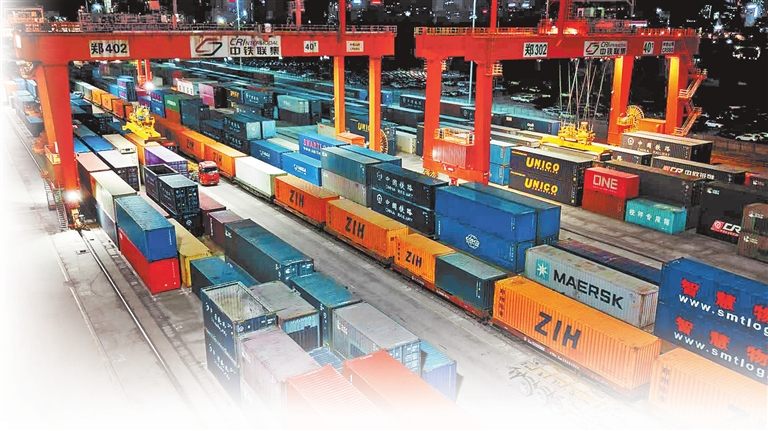
用时缩减近30% 河南首列全程时刻表中欧班列开行
He Nan Ri Bao· 2025-11-18 23:23
Core Viewpoint - The launch of the first full-schedule China-Europe freight train from Zhengzhou to Hamburg marks a new phase in precise and timely operations for the China-Europe Railway Express, enhancing supply chain stability for "Made in China" products [3][4]. Group 1: Operational Improvements - The full-schedule freight train operates according to a fixed timetable agreed upon by the railways of the countries along the route, significantly improving operational efficiency and reducing transit time [3][4]. - The new service has compressed the overall transit time by nearly 30%, saving over 100 hours compared to previous non-scheduled operations, which were subject to variable factors like scheduling and cargo transfer [4]. Group 2: Supportive Measures - The China Railway Zhengzhou Group has optimized the freight train's operational processes, including cargo entry, shunting operations, and vehicle inspections, to minimize waiting and transfer times [4]. - Zhengzhou Customs has established a collaborative regulatory mechanism with customs along the route, implementing an "advance declaration" model to expedite customs clearance and enhance the efficiency of cargo inspections [4]. Group 3: Growth Metrics - In the first ten months of this year, Zhengzhou Customs supervised 151,000 TEUs (Twenty-foot Equivalent Units), a year-on-year increase of 12.5%, and monitored 1.541 million tons of goods, up 9.2% [5]. - The number of China-Europe freight trains departing from Zhengzhou reached 2,616, representing a year-on-year growth of 49.4%, positioning Zhengzhou among the top in national growth rates [5].
湖北口岸出入境人数创6年新高 免签政策与航线扩张加速开放
Chang Jiang Shang Bao· 2025-11-11 23:29
Core Insights - The total number of inbound and outbound travelers at Hubei ports has exceeded 1.5 million as of November 9, 2025, marking a new high in nearly six years and surpassing the total for the entire year of 2024 [1] - The increase in foreign travelers, which reached over 334,000, represents a year-on-year growth of 11.7% [1] - Hubei is becoming a significant gateway for international exchanges in Central China, driven by visa-free policies, expanded flight networks, and improved customs facilitation measures [1] Group 1: Foreign Traveler Growth - The number of foreign travelers entering Hubei directly from its passenger ports reached 168,000, showing a remarkable year-on-year increase of 39.5% [2] - Over 100,000 foreign travelers utilized visa-free and transit visa-free policies, accounting for more than 60% of the total foreign arrivals [2] - The primary sources of these foreign travelers include Southeast Asia, Europe, and North America, with purposes spanning tourism, business, and family visits [2] Group 2: Airport Performance - Wuhan Tianhe International Airport, as a central aviation hub, has seen a significant recovery and expansion of international routes, currently operating 19 international and regional passenger routes [2] - Cumulatively, Tianhe Airport has recorded over 1.3 million inbound and outbound travelers, with foreign travelers numbering 235,000, reflecting year-on-year growth of 21.14% and 33.70% respectively [2] - Other regional airports, such as Yichang Sanxia International Airport and Enshi Xujiaping International Airport, are also experiencing growth, with Yichang ranking second among non-capital cities in Central China for outbound and inbound travelers [3] Group 3: Customs Efficiency Improvements - The rapid increase in passenger and cargo flow has necessitated higher management and service standards at Hubei ports [4] - A new policy implemented at Wuhan Tianhe International Airport allows eligible international transfer passengers to bypass border inspection, reducing transit time to as little as 8 minutes [4] - The number of inbound and outbound flights at Ezhou Huahu International Airport has surged by 97%, with measures in place to expedite customs procedures for foreign crew members [4] Group 4: Future Projections - Hubei's port construction is accelerating, with improvements in customs environments, policy benefits, and expanded flight networks [5] - The total number of inbound and outbound travelers in Hubei is projected to exceed 1.7 million in 2025, setting a new record [5]
广州边检所辖口岸将实施3项移民管理新政
Zhong Guo Xin Wen Wang· 2025-11-04 05:53
Core Points - The National Immigration Administration has introduced 10 innovative measures to support the expansion of open services for high-quality development, with three key policies being implemented at the Guangzhou border inspection station [1][2] Group 1: Smart Customs Clearance - Starting from November 5, the Guangzhou Pazhou Passenger Port and Nansha Passenger Port will be among the first waterway ports in the country to promote smart customs clearance services, allowing eligible residents from mainland China and Hong Kong, Macau, and Taiwan to use facial recognition for quick passage [1][2] - This smart customs policy significantly enhances the convenience of customs clearance, which is crucial for promoting economic and trade exchanges in the Greater Bay Area [1] Group 2: 240-Hour Visa-Free Transit Policy - The implementation of the 240-hour visa-free transit policy will include five ports in Guangdong Province, including Guangzhou Pazhou Passenger Port, which is strategically located near the Canton Fair venue [2] - This policy aims to provide a seamless connection between the port and the venue, enhancing the international accessibility of the Canton Fair and strengthening its influence [2] Group 3: Online Entry Card Submission - From November 20, a nationwide policy for online submission of entry cards for foreigners will be implemented at Guangdong ports, allowing multi-language online applications while retaining paper submission options [2] - This system is designed to improve the convenience of entry declarations for international travelers, supporting the growth of inbound tourism and facilitating efficient movement of production factors [2]
禄口国际机场明起二十四小时过境免办边检手续
Nan Jing Ri Bao· 2025-11-04 03:21
Core Points - The implementation of a new policy allowing international transit passengers at Nanjing Lukou International Airport to bypass border inspection procedures will enhance the airport's convenience and support its development as a competitive international aviation hub [1][2][3] - The policy is part of ten innovative measures announced by the National Immigration Administration to support high-quality development and expand the scope of 24-hour direct transit without inspection [1][2] - Nanjing Lukou International Airport currently operates 34 international routes, with a focus on improving passenger experience and increasing international flight connections [2][3] Summary by Sections Policy Implementation - Starting November 5, international transit passengers holding tickets for connecting flights within 24 hours can transit through Nanjing Lukou International Airport without border inspection [1] - This change aims to optimize the long-standing inspection process, significantly improving transit efficiency and reducing wait times for passengers [1][2] Infrastructure and Services - Prior to the policy's implementation, the airport underwent modifications to the international transit area, including improved signage and upgraded information collection systems to enhance passenger guidance and service [2][3] - The airport has established a "one-stop" customs clearance model, allowing approximately 97% of compliant travelers to complete their checks and collect luggage efficiently, reducing overall clearance time by two-thirds [3] Impact on Passenger Flow - From January to August, Nanjing received 395,000 overnight international visitors, marking a 23.6% year-on-year increase, indicating a growing demand for international travel [2] - The new policy is expected to facilitate the opening and expansion of international routes, thereby enhancing the airport's overall connectivity and operational capacity [2][3]
11月5日起,经横琴口岸通关可“刷脸”通行!
Nan Fang Du Shi Bao· 2025-11-03 15:59
Core Points - The National Immigration Administration has announced ten innovative measures to support high-quality development and expand openness, effective from November 5 [1] - Hengqin Port will introduce a 240-hour visa-free transit policy and a smart quick passage system using facial recognition technology [1] - The announcement aims to enhance personnel mobility, promote deep integration between Hengqin and Macau, and support the construction of the Guangdong-Hong Kong-Macao Greater Bay Area [1] Group 1 - The implementation of the smart quick passage system at Hengqin Port is part of the overall plan to improve customs facilitation and enhance the level of openness [1] - The measures are expected to facilitate the construction of the Hengqin International Leisure Tourism Island and support Macau's development as a world tourism and leisure center [1] - The quick passage system has undergone multiple rounds of technical testing and is prepared for smooth implementation [1] Group 2 - Starting from November 20, Hengqin Port will also be included in the list of ports authorized to issue valid travel permits for Taiwan residents to enter mainland China [2]
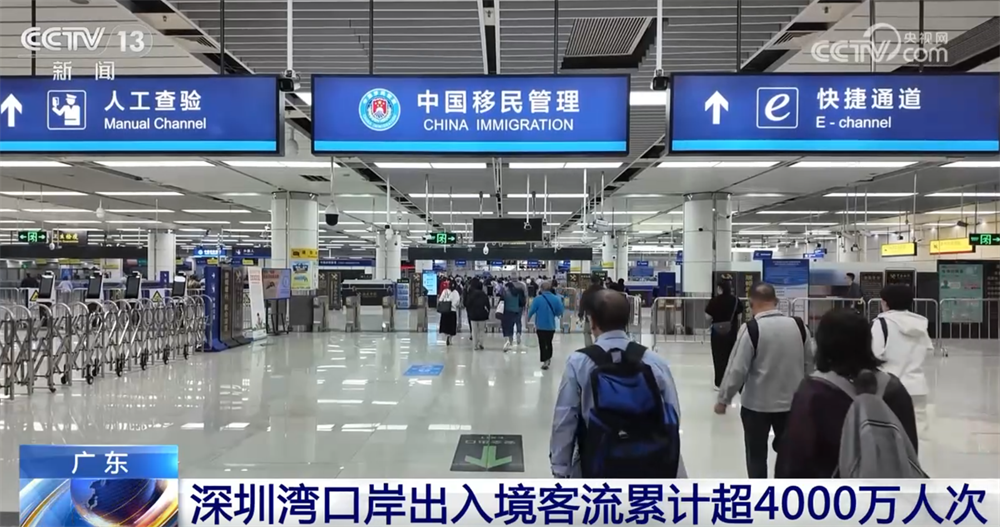
深圳湾口岸推出多项便利化措施 为十五运会提供“安全+高效+顺畅”通行体验
Yang Shi Wang· 2025-10-29 06:36
Core Insights - The Shenzhen Bay Port has seen a significant increase in cross-border passenger flow, surpassing 40 million trips by October 27, 2023, representing a 27% year-on-year growth, exceeding the total number of outbound and inbound passengers for the entire previous year [1] - The development of the Guangdong-Hong Kong-Macao Greater Bay Area has been accelerated, with upgrades in transportation infrastructure, cross-border payment methods, and customs clearance policies contributing to the rise in passenger flow [1] Group 1 - The Shenzhen Bay Port is designated as the recommended port for personnel and materials related to the upcoming 15th National Games, implementing various facilitation measures to ensure smooth cross-border passage [2] - The port utilizes the "one location, two inspections" advantage to streamline customs procedures, enhancing the efficiency of cross-border travel for event participants [2][6] - A dedicated channel for the National Games has been established, allowing for rapid passage of event personnel, with proactive coordination with relevant departments to ensure smooth customs clearance [6] Group 2 - The Shanghai beach volleyball team reported positive experiences using the green channel at Shenzhen Bay Port, highlighting the convenience provided for their travel to the National Games [4] - The Shenzhen Bay Border Inspection Station has implemented a comprehensive emergency service mechanism to assist participants with issues such as lost documents and urgent needs during the event [6]
乌海前三季度进出口总值超去年总额
Nei Meng Gu Ri Bao· 2025-10-25 00:38
Core Insights - Uhuai City's foreign trade import and export value reached 1.328 billion yuan in the first three quarters of this year, showing a year-on-year growth of 75.4%, surpassing last year's total trade value, indicating strong resilience and growth vitality [1] Group 1: Trade Performance - The city's chemical, metallurgy, and high-tech products have seen enhanced competitiveness in international markets, with traditional organic chemical exports reaching 475 million yuan, up 90.89%, and high-tech product exports at 361 million yuan, growing by 112.85% [1] - Uhuai City's trade with countries along the "Belt and Road" reached 602 million yuan, a year-on-year increase of 50.3%, while trade with RCEP member countries totaled 459 million yuan, up 67.52% [1] Group 2: Policy and Service Support - Uhuai Customs has implemented measures to enhance foreign trade quality and volume, including promoting advance declaration, appointment inspections, and self-service printing to reduce overall customs clearance time and lower institutional transaction costs for enterprises [2] - The customs authority has strengthened policy promotion and precise guidance through mechanisms like door-to-door service and one-stop service packages, ensuring that enterprises benefit from RCEP and other free trade agreements [2] - Implementation of differentiated management measures for AEO enterprises and batch inspection reforms has further accelerated cost reduction and efficiency improvements for businesses [2]