新型电力系统

Search documents
2025第八届中国能源产业发展年会在京举行
Ren Min Ri Bao· 2025-12-04 22:16
党的二十届四中全会《建议》提出,加快建设新型能源体系。持续提高新能源供给比重,推进化石能源 安全可靠有序替代,着力构建新型电力系统,建设能源强国。与会嘉宾认为,构建新型电力系统与建设 能源强国是战略目标与实施路径的深度绑定,建设能源强国是引领电力系统变革的顶层设计,构建新型 电力系统是实现能源强国的必由之路。新型电力系统作为新型能源体系的支撑和关键枢纽,通过关键技 术突破与产业升级,夯实能源强国的技术根基与产业实力。 《 人民日报 》( 2025年12月05日 06 版) 本报北京12月4日电 (渠沛然)12月4日,2025第八届中国能源产业发展年会在北京举行。年会以"构建 新型电力体系 建设能源强国"为主题。 (责编:牛镛、岳弘彬) 关注公众号:人民网财经 本届年会由中国能源报、中国能源研究会主办,G20青年企业家联盟中国总部联合主办,并设置"中东 能源投资论坛"等活动。中央和国家机关有关部门负责同志、外国驻华使节、地方政府主管部门代表、 中外企业负责人和专家学者等参加论坛。 ...
江苏分布式光伏新增装机量已超1650万千瓦
Xin Hua Wang· 2025-12-04 11:18
新华社南京12月4日电(记者何磊静)记者12月4日从国网江苏省电力有限公司获悉,截至今年11月 底的最新数据显示,江苏今年分布式光伏新增装机量已超1650万千瓦,总装机规模已达6221万千瓦,两 项指标均居全国首位。 在全国加快建设新型能源体系背景下,江苏新能源建设不断提速。截至今年11月底,江苏省新能源 装机总量已超1.1亿千瓦,其中分布式光伏占比约72%,成为能源结构调整的重要推动力。 "十四五"期间,江苏分布式光伏从不足800万千瓦,发展到如今超6220万千瓦,年均增量超千万千 瓦。为保障新能源消纳,江苏加快建设新型电力系统,通过提升分布式光伏调控能力、整合建设虚拟电 厂等举措,实现光伏发电高效消纳与灵活调度。 【纠错】 【责任编辑:邱丽芳】 "作为制造业大省,江苏电力需求旺、新能源消纳能力强。分布式光伏'自发自用、余电上网'的特 性,可以匹配广大企业的白昼用电需求,既能降低企业用能成本,又能实现绿色电力就近高效消 纳。"国网江苏电力经济技术研究院能源研究所所长谢珍建说。 ...
豫能控股(001896) - 001896豫能控股投资者关系管理信息20251204
2025-12-04 10:40
编号:2025-002 | 投资者 | 特定对象调研 ☑ | □分析师会议 | | --- | --- | --- | | 关系活 | □媒体采访 | □业绩说明会 | | 动类别 | □新闻发布会 | □路演活动 | | | □现场参观 | | | | □其他 | (请文字说明其他活动内容) | | 参与单 | 陈光 | | | 位名称 | | | | 及人员 | | | | 姓名 | | | | 时间 | 2025 年 12 | 月 4 日(星期四)下午 14:30-16:30 | | 地点 | 会议室 | 河南省郑州市金水区农业路东 41 号投资大厦 A 座 2507 | | 上市公 | | 董事会秘书:李琳女士 证券事务代表:魏强龙先生 | | 司接待 | | | | 人员姓 | | | | 名 | | | | | 1200MW | 1、问:鲁山抽水蓄能 1300MW 项目、林州弓上抽水蓄能 | | | | 项目当前建设进度及政策性金融工具额度使用情况。 | | | | 答:公司目前在建的鲁山抽水蓄能 1300MW 项目、林州弓上抽水蓄 | | 投资者 | 能 1200MW | 项目为国家重点项目,均 ...

宁波世茂能源股份有限公司关于2025年第三季度业绩说明会召开情况的公告
Zhong Guo Zheng Quan Bao - Zhong Zheng Wang· 2025-12-04 08:36
Core Viewpoint - The company reported a decline in financial performance for the first three quarters of 2025, with a focus on future industry development prospects in the context of global carbon neutrality and energy transition initiatives [2][4]. Financial Performance - For the first three quarters of 2025, the company achieved operating revenue of 234.99 million yuan, a year-on-year decrease of 12.38% - The net profit attributable to the parent company was 117.16 million yuan, down 5.89% year-on-year - The net profit after deducting non-recurring gains and losses was 78.53 million yuan, a significant decline of 29.51% year-on-year, primarily due to decreased demand from surrounding heating users and a drop in steam sales volume [2][4]. Industry Development Outlook - The company highlighted several key points regarding the future of the industry: 1. Promotion of clean and efficient coal utilization and acceleration of green and low-carbon energy transition 2. Development of new productive forces and transformation of renewable energy towards combined heat and power generation 3. Construction of a new power system to achieve clean and low-carbon energy transition [3][4]. Company Operations and Strategy - The company operates as a combined heat and power generation enterprise, primarily using municipal waste and coal as raw materials to provide industrial steam and electricity - The company emphasizes technological innovation and management model innovation to reduce costs and improve efficiency, aiming for high-quality development while ensuring safe and environmentally friendly production [5]. Shareholder Information - As of the end of the third quarter of 2025, the company had a total of 9,804 shareholders [4].

南方电网持续深耕改革“示范田”
Ren Min Ri Bao· 2025-12-03 22:40
Core Viewpoint - China Southern Power Grid Co., Ltd. (referred to as "Southern Power Grid") is actively implementing reforms in line with national strategies, focusing on high-quality development and establishing itself as a model for state-owned enterprise reform [1][4]. Group 1: Reform and Development - Southern Power Grid is committed to deepening reforms as a fundamental path to promote high-quality development, fostering a culture of proactive reform across all levels of the organization [1][4]. - The company aims to achieve significant breakthroughs and create exemplary practices that contribute to the high-quality development of the industry and the establishment of first-class enterprises [1][4]. Group 2: Function and Mission Enhancement - The company is enhancing its role in technology innovation, industry control, and safety support, aligning its reform direction with national strategies [2]. - Southern Power Grid is integrating digital and green initiatives to promote the construction of a new energy system and a new power system, establishing advanced technology and equipment in its operations [2]. Group 3: Market Development - The Southern Power Market has initiated continuous settlement trials, becoming the first multi-provincial unified electricity spot market in China, facilitating cross-regional optimization of electricity resources [3]. - The green trading system has been established, with a reported cumulative green electricity transaction volume of 4,441 billion kilowatt-hours since 2023, reflecting an annual growth rate of 499% from 2023 to 2025 [3]. Group 4: Institutional Reform - Southern Power Grid is breaking down institutional barriers to create a production relationship that aligns with the modernization process and high-quality development requirements [4]. - The company has integrated party leadership into its governance structure and has become a model for corporate governance among state-owned enterprises [4]. Group 5: Internal Motivation and Responsibility - The company has implemented a new operating responsibility system that emphasizes market-oriented operations and has been recognized as an advanced case in state-owned enterprise reform [5]. - A comprehensive responsibility system has been established to ensure accountability and performance evaluation across the organization [5]. Group 6: Legal Framework and Compliance - Southern Power Grid has developed a legal framework that balances accountability and due diligence, supporting its strategic themes and promoting compliance in operations [6]. - The company emphasizes the importance of reform and innovation as key drivers for success in the current historical context [6].
南网能源院 | 业务动态(总第53期)
Xin Lang Cai Jing· 2025-12-03 13:25
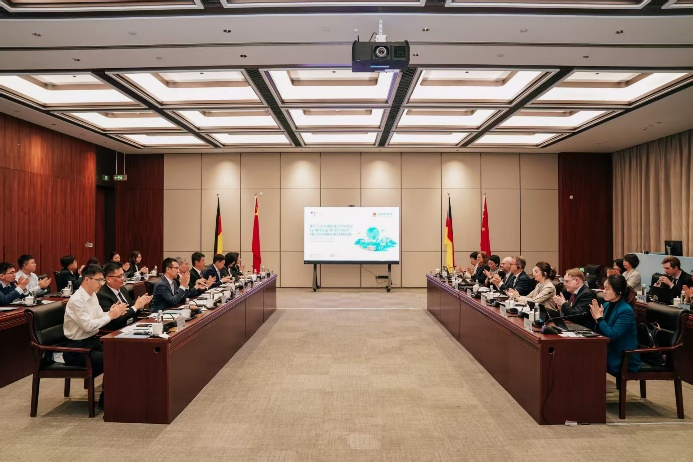
Group 1 - The strategic department director Zhang Xuan and postdoctoral researcher He Binghao attended the 13th meeting of the China-Germany Energy Working Group at the Global Energy Transition Forum, reviewing the 2024 work results and 2025 work plan, focusing on carbon capture, utilization, and storage, as well as power system flexibility [1] - Senior researcher Yuan Kanglong presented on "Research on the Enhancement of Southern Power Grid's Backbone Network Planning" at the 2025 National Power Grid Technology Exchange Conference, discussing the construction history and effectiveness of the backbone network [3] - The main network and system departments participated in a survey on "Key Equipment Technology and Engineering Applications of Flexible DC Grids," engaging with institutions like Zhejiang University and Tsinghua University to discuss foundational stability theories and key equipment development [5] Group 2 - Researcher Wang Haijin presented a report on "Key Technologies for Electricity-Carbon Accounting Based on Large Language Models" at the 6th International Forum on New Power Systems, highlighting the potential of advanced AI tools in improving the accuracy and efficiency of carbon accounting [7] - Researcher Li Yan discussed the planning layout and demonstration effectiveness of the new power system demonstration area in the southern region at the 2025 Autumn Academic Annual Meeting of "China Electric Power" [9] - Researcher Wang Haijin elaborated on the methodology of electricity-carbon accounting driven by large language models at the IEEE International Conference on Energy Engineering and Power Systems [12] Group 3 - The Guangzhou Electric Power Design Institute won three awards at the National Excellent Engineering Survey and Design Award, marking its first participation in this authoritative industry evaluation [10] - The main network department participated in the 13th International Conference on Power System Control, Operation, and Management, sharing innovative results and practical experiences in power grid planning [8] - The distribution network department conducted research on the "Electric Hong Internet of Things Operating System," focusing on digital architecture and smart terminal technologies to support the distribution network's planning [12] Group 4 - The 2025 Standard Design and Typical Cost System Document Review Meeting was held in Guangzhou, aiming to provide a scientific and unified technical basis for the planning, construction, and operation management of the Southern Power Grid [13] - The innovation management team from the enterprise management department visited Jiangsu Industrial Technology Research Institute to discuss typical experiences in traditional industry transformation [14] - The Yulin Power Supply Bureau engaged in discussions with the Southern Power Grid Energy Institute on the transformation requirements of new distribution systems [16] Group 5 - The investment department director Wu Hongliang and senior researcher Yang Yin held discussions with the deputy dean of Peking University's School of Urban Planning and Design on topics including the impact of ultra-fast charging technology on grid risks [19] - Researcher Wang Fengyun spoke at the 32nd China International Power Equipment and Technology Exhibition, discussing the role of hydrogen energy in new power systems [18] - Researcher Liu Ziyi participated in a preparatory meeting for the Global Sustainable Transportation Innovation Alliance, discussing green transformation and international carbon tax [21]

学习贯彻党的二十届四中全会精神 | 如何理解加快智能电网和微电网建设?
Xin Lang Cai Jing· 2025-12-03 13:21
2025年10月28日,《中共中央关于制定国民经济和社会发展第十五个五年规划的建议》全文发布。《建议》明确提出,全面提升电力系统互补互济和安全 韧性水平,科学布局抽水蓄能,大力发展新型储能,加快智能电网和微电网建设。 如何理解 加快智能电网和微电网建设? 2025年10月28日,《中共中央关于制定国民经济和社会发展第十五个五年规划的建议》全文发布。《建议》明确提出,全面提升电力系统互补互济和安全 韧性水平,科学布局抽水蓄能,大力发展新型储能,加快智能电网和微电网建设。 如何理解 加快智能电网和微电网建设? 《建议》提出:"加快智能电网和微电网建设。"这是党中央针对提升电力系统安全发展能力和能源保障水平作出的重要部署。2024年2月,习近平总书记 在二十届中央政治局第十二次集体学习时指出,要"推进电网基础设施智能化改造和智能微电网建设",对这项工作提出了明确要求。 智能电网是新型电力系统的重要组成部分,是适应高比例新能源快速发展的物理基础,包括主网、配电网以及分布式电源、储能装置等组成的微电网,具 有高度信息化、自动化、互动化的特征。加快建设智能电网和微电网,实现主配微网多级协同发展,有利于进一步提高电网对清洁 ...

电网ETF(561380)盘中涨超1%,近20日净流入超3亿元,政策优化持续推进
Mei Ri Jing Ji Xin Wen· 2025-12-03 08:33
12月3日,电网ETF(561380)盘中涨超1%,近20日净流入超3亿元。 华泰证券指出,输配电定价四大文件修订版发布,重点围绕新能源消纳利用、电力系统安全运行及 电网管理效能提升作出新制度安排,将推动输配电价政策体系"从优到精",对新型电力系统和全国统一 电力市场建设意义重大。新规从准许收益、准许成本、收入结构三方面优化。预计"十五五"期间电网投 资将超4万亿元,主网建设(尤其是跨省通道和西部电网补强)是重点方向,行业需求有望稳步增长。 每日经济新闻 【免责声明】本文仅代表作者本人观点,与和讯网无关。和讯网站对文中陈述、观点判断保持中立,不对所包含内容 的准确性、可靠性或完整性提供任何明示或暗示的保证。请读者仅作参考,并请自行承担全部责任。邮箱: news_center@staff.hexun.com (责任编辑:董萍萍 ) 电网ETF(561380)跟踪的是恒生A股电网设备指数(HSCAUPG),该指数从内地市场中选取收 入主要来源于电网设备相关业务的上市公司证券作为指数样本,以全面反映电网设备行业上市公司证券 的整体表现。 注:如提及个股仅供参考,不代表投资建议。指数/基金短期涨跌幅及历史表现仅供分析 ...
规模再创新高,全市场唯一的电网设备ETF(159326)盘中拉升,永福股份领涨
Mei Ri Jing Ji Xin Wen· 2025-12-03 02:34
东莞证券表示,"十五五"规划建议提出加快建设新型能源体系,持续提高新能源供给比重,推进化石能 源安全可靠有序替代,着力构建新型电力系统,建设能源强国。坚持风光水核等多能并举,统筹就地消 纳和外送,促进清洁能源高质量发展。加强化石能源清洁高效利用,推进煤电改造升级和散煤替代。全 面提升电力系统互补互济和安全韧性水平,科学布局抽水蓄能,大力发展新型储能,加快智能电网和微 电网建设。 电网设备ETF(159326)是全市场唯一跟踪中证电网设备主题指数的ETF,从申万三级行业分类上看, 指数成分股的行业分布以输变电设备、电网自动化设备、线缆部件及其他、通信线缆及配套、配电设备 为主,拥有较强的代表性。特高压权重占比高达65%,全市场最高。 12月3日,A股三大指数涨跌不一,电网设备板块企稳明显,截止10点07分,全市场唯一的电网设备ETF (159326)涨幅0.43%,成交额达4303万元,持仓股永福股份、思源电气、华通线缆、双杰电气、东材 科技、海兴电力等股涨幅居前。 电网设备ETF(159326)近期持续获资金关注,已连续4个交易日净流入,合计"吸金"超2.41亿元,最新 规模21.06亿元,创成立以来新高。 ...

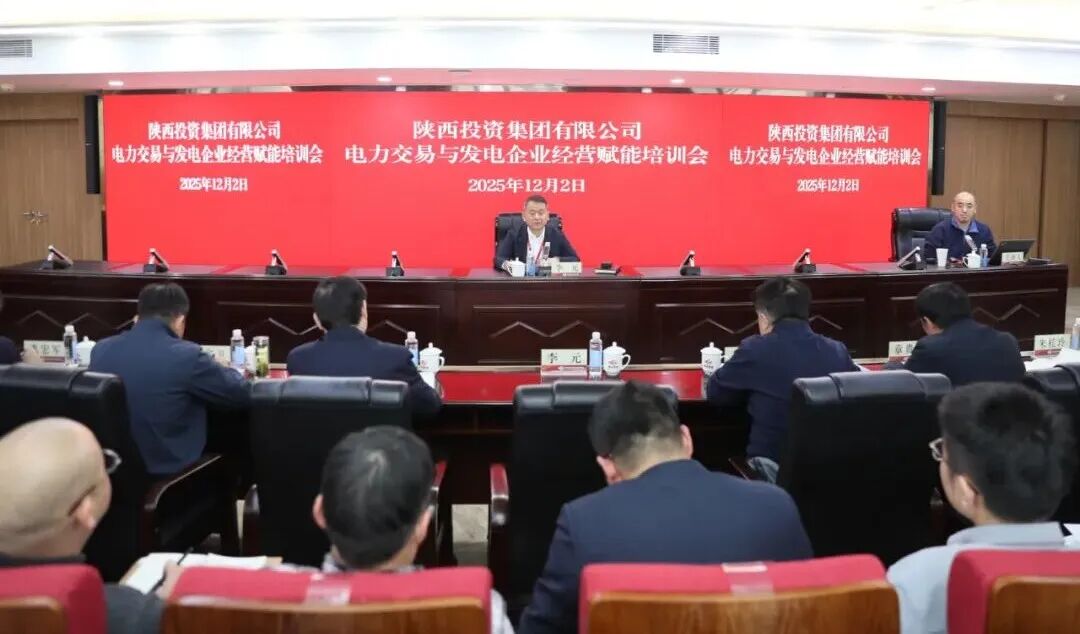
陕投集团举办电力交易与发电企业经营赋能培训会
Xin Lang Cai Jing· 2025-12-02 11:59
Core Viewpoint - The training session organized by Shaanxi Investment Group aims to implement the national energy security strategy and support the province's energy industry transformation and upgrade [1][5]. Group 1: Training Objectives and Content - The training featured Dr. Zhu Zhizhong, an expert from the National Development and Reform Commission, who provided insights on the electricity market operating environment, production-sales coordination, investment strategies, trading logic, and technical practices [3][7]. - The session aimed to equip Shaanxi Investment Group with authoritative and practical policy interpretations and operational guidelines to better adapt to the new electricity system construction [3][7]. Group 2: Strategic Directions and Goals - The meeting emphasized the need to scientifically formulate the "14th Five-Year Plan," focusing on three main directions: expanding installed capacity, enhancing coal-electricity coordination, and transforming energy services [4][8]. - The group is encouraged to actively participate in market competition, adopting a new business philosophy centered on electricity marketing, ensuring safety in production, and controlling costs as a regulatory measure [4][8]. - The company aims to establish a comprehensive marketing model that prioritizes efficiency and maximizes overall benefits, while also enhancing its core competitiveness in the energy sector [4][8]. Group 3: Commitment to Energy Supply Security - The meeting highlighted the importance of fulfilling the group's responsibility for energy supply security, treating the stable supply of energy, electricity, and heat as a major political task [4][8]. - A multi-faceted supply guarantee system is to be constructed, integrating stable coal production, active thermal power generation, clean energy collaboration, and technological empowerment [4][8]. Group 4: Participation and Attendance - The training session was conducted in a hybrid format, with approximately 400 participants, including department heads and relevant personnel from the group headquarters and Shaanxi Energy and Hydropower [5][9].