
Robotaxi

Search documents
历经9年特斯拉Robotaxi终落地,或成马斯克最大“印钞机”,中国Robotaxi商业化进程提速
Hua Xia Shi Bao· 2025-06-24 10:13
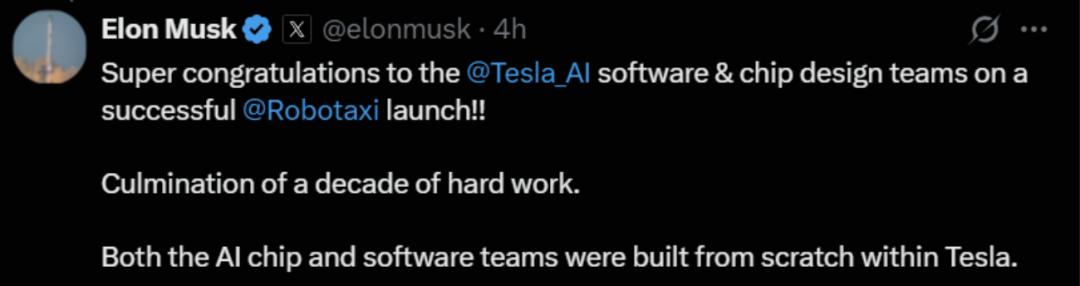
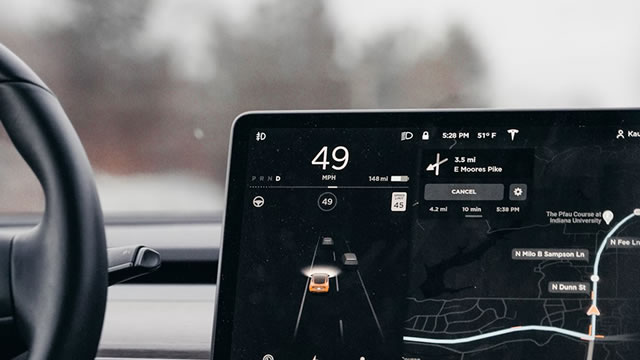
Core Viewpoint - Tesla's Robotaxi service has officially launched in Austin, Texas, marking a significant milestone in the development of autonomous driving technology, relying solely on cameras and AI algorithms rather than lidar [2][3][4]. Group 1: Service Launch and Operations - The Robotaxi service began on June 22, 2023, in a designated area of approximately 77.7 square kilometers, avoiding complex intersections [3]. - The service operates daily from 6 AM to midnight and excludes operation during adverse weather conditions [3]. - Initially, the service is invitation-only, with about 20 participants primarily consisting of Tesla employees and Powerwall users [3]. Group 2: Safety and Technology - Each Robotaxi is equipped with a safety monitor in the front passenger seat, and vehicles can be remotely controlled in emergencies [3][4]. - The service utilizes a unique visual-based approach, employing eight cameras to create a visual occupancy network, which is a cost-effective alternative to lidar systems [4][5]. Group 3: Data and Learning - Robotaxi vehicles can accumulate over 12 hours of real-world data daily, significantly enhancing the training of Tesla's Full Self-Driving (FSD) system [4][5]. - Tesla's existing fleet of over 6 million vehicles generates 1.6 billion frames of image data daily, contributing to the training of the largest autonomous driving neural network globally [5]. Group 4: Business Model and Market Potential - The pricing of $4.2 per ride is strategically lower than competitors like Uber, aiming to cultivate user habits rather than immediate revenue [5][6]. - Analysts estimate that operating 100,000 Robotaxis could generate $8 billion in annual revenue, with a gross margin exceeding 30% [6]. Group 5: Regulatory and Competitive Landscape - The Robotaxi initiative serves as leverage for Tesla in advocating for regulatory changes, aligning with Texas regulations on autonomous vehicles [6]. - In contrast to Tesla's approach, Chinese companies are rapidly advancing in the Robotaxi market, with projections indicating a market size of 2.93 trillion yuan by 2030 [7][8]. Group 6: Technological Differences - Chinese firms are adopting a multi-sensor fusion approach for better performance in adverse weather, while Tesla's visual-only method remains untested in extreme conditions [9]. - The competition in the Robotaxi space is intensifying, with various companies exploring different technological pathways and regulatory frameworks [9].


今日投资参考:Meta发布新一代AI眼镜 SAF价格持续上涨
Zheng Quan Shi Bao Wang· 2025-06-24 02:14
Market Performance - The stock indices in the two markets rose significantly, with the Shanghai Composite Index increasing by 0.65% to 3381.58 points, and the Shenzhen Component Index rising by 0.43% to 10048.39 points, while the North Star 50 Index surged by 1.54% [1] - The total trading volume in the Shanghai, Shenzhen, and North markets reached 1.1471 trillion yuan, an increase of approximately 55 billion yuan compared to the previous day [1] Industry Insights - The oil sector showed strong performance, with logistics, chemicals, semiconductors, non-ferrous metals, coal, pharmaceuticals, and brokerage sectors also rising [1] - The A-share market is expected to maintain a stable upward trend due to the expansion of equity public funds, the influx of medium to long-term capital, and supportive policy tools [1] AI Glasses Market - Meta has launched a new series of AR glasses in collaboration with Oakley, priced at $399 for the standard version and $499 for the limited edition, with pre-orders starting on July 11 [2] - The new AI glasses feature improved battery life and are designed for sports scenarios, which may enhance market acceptance and attention [2] Optical Lens Industry - The rise of smart glasses is creating new variables for the optical lens industry, with manufacturers collaborating directly with lens suppliers to address optical prescription issues [3] - Companies with strong manufacturing and R&D capabilities in the lens sector are expected to benefit from this trend [3] SAF Price Trends - The price of SAF (Sustainable Aviation Fuel) in Europe has risen to $2230 per ton, a 10% increase from the previous week and a 27% increase from the previous month [4] - The price of SAF in China has reached $1800 per ton, reflecting a 3% weekly increase and a 6% monthly increase [4] Military Industry Outlook - Global military spending is projected to reach approximately $2.7 trillion in 2024, a 9.4% increase year-on-year, driven by geopolitical tensions [5] - The demand for military materials such as titanium alloys and tungsten is expected to grow significantly, benefiting upstream companies in the military metal sector [5] Automotive Industry Concerns - The National Federation of Automobile Dealers has called for car manufacturers to optimize rebate policies and shorten the rebate payment period due to significant operational pressures faced by dealers [7] - Despite achieving sales targets, dealers are still struggling with losses in new car business [7] Gold Industry Development - A new implementation plan for the high-quality development of the gold industry has been issued, aiming for a 5-10% increase in gold resource capacity and a 5% increase in gold and silver production by 2027 [8] Energy Market Developments - The National Energy Administration is pushing for the establishment of a nationwide unified electricity market by 2025, focusing on provincial electricity spot market coverage [9] - Solar power generation capacity has seen a significant year-on-year increase of 56.9% in the first five months of 2023, reaching 108 million kilowatts [10] Robotaxi Commercialization - Tesla has initiated a Robotaxi pilot service in Austin, Texas, with the first ten Model Y vehicles, marking a significant step in the commercialization of autonomous taxi services [11]
Tesla Just Achieved a Big Milestone With Its Robotaxi Launch. But There's Another Potential Speed Bump Fast Approaching.
The Motley Fool· 2025-06-24 00:30
Group 1: Tesla's Robotaxi Initiative - Tesla has launched its first self-driving robotaxis for paying customers in Austin, Texas, marking a significant milestone for the company and its CEO Elon Musk [1] - The launch is seen as a step towards a fully autonomous robotaxi fleet, which many investors believe could create a substantial new business opportunity for Tesla [1] Group 2: Current Business Performance - Tesla's core business remains electric vehicles (EVs), with the company set to announce its second-quarter EV delivery figures in early July [2][3] - First-quarter deliveries were approximately 337,000, the lowest in over two years, raising concerns among investors about the impact of Musk's political ties on customer perception [3][5] Group 3: Sales Data and Competition - Sales data from Europe indicates a decline in Tesla's sales in April across several countries, including the UK, Netherlands, and France [5] - In China, Tesla is facing increased competition from BYD, which offers cheaper EVs and faster charging technology, potentially posing a greater challenge than political issues [6] Group 4: Analyst Expectations - Wall Street analysts project second-quarter deliveries to be around 400,000, representing a 10% year-over-year decline, although some analysts believe investors may overlook a potential miss [7][10] - Barclays analyst Dan Levy suggests that investor focus has shifted towards the robotaxi initiative rather than current delivery figures, while Wells Fargo analyst Colin Langan reports a 21% year-over-year decline in deliveries [8][9] Group 5: Investor Sentiment and Future Outlook - Despite negative headlines regarding EV deliveries, Tesla's stock has risen nearly 24% quarter-to-date as of June 20, indicating investor optimism about future initiatives [10] - If Tesla underperforms in EV deliveries, it may signal deeper issues within the core EV business, which could affect investor confidence in the company's future growth prospects [11][12]
特斯拉Robotaxi首秀看点不少,但也有人看不上
3 6 Ke· 2025-06-24 00:16
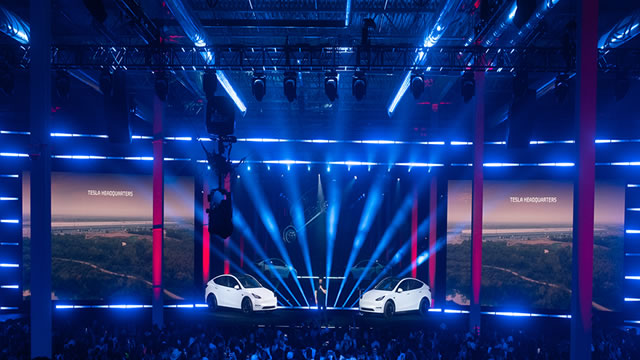
Core Viewpoint - Tesla's Robotaxi service officially launched on June 22, marking a significant milestone in the company's autonomous driving ambitions after nearly a decade of development [1][4]. Group 1: Robotaxi Launch Details - The initial rollout involves a limited fleet of 10 to 20 Model Y vehicles operating in a restricted area of South Austin, Texas, with service hours from 6 AM to midnight [2][4]. - Each vehicle is equipped with a safety driver, contrary to previous statements by Elon Musk about fully autonomous operation without personnel [6][8]. - The service achieved 112 rides in 13 minutes, covering nearly 500 miles, indicating strong initial demand despite system limitations [8]. Group 2: Competitive Landscape - Tesla's Robotaxi aims to operate at a significantly lower cost than competitors like Waymo, targeting a cost of $0.20 per mile compared to Waymo's $1.60 per mile [8][9]. - The hardware cost for Tesla's Robotaxi is estimated to be 20-30% lower than Waymo's, leveraging a vision-based system without lidar [9][11]. - The Robotaxi model allows Tesla vehicle owners to earn income by participating in the service when their cars are idle, potentially leading to a scalable business model [9]. Group 3: Market Growth Projections - Goldman Sachs projects the North American Robotaxi market will grow from approximately $300 million in 2025 to $7 billion by 2030, capturing 8% of the shared mobility market [10][11]. - In contrast, the Chinese Robotaxi market is expected to expand from $54 million in 2025 to $12 billion by 2030, with a compound annual growth rate exceeding 96% [10][11]. - The disparity in growth rates is attributed to lower hardware costs in China, facilitating faster commercialization of Robotaxi services [11][13]. Group 4: Industry Context and Challenges - Despite the positive reception of Tesla's Robotaxi, industry experts caution that the company faces significant challenges in technology, management, regulation, and ethics [4][10]. - Tesla's recent financial performance shows a decline in revenue and vehicle deliveries, indicating potential vulnerabilities amid increasing competition from companies like BYD [16][18]. - The successful launch of Robotaxi is seen as a pivotal moment for Tesla, potentially reshaping its business model and growth trajectory in the electric vehicle market [18].
Tesla robotaxi incidents caught on camera in Austin draw regulators' attention
CNBC· 2025-06-23 22:54
Core Points - Tesla's robotaxi service was launched in Austin, Texas, but faced scrutiny after videos showed erratic driving behavior [1][2] - The National Highway Traffic Safety Administration (NHTSA) is investigating the incidents involving Tesla's robotaxis [2][3] - The pilot service is limited to a small number of invited users and operates under specific conditions [4][5] Company Overview - Tesla's robotaxis are Model Y SUVs equipped with the latest Full Self-Driving (FSD) Unsupervised software and hardware [4] - The service currently involves fewer than 24 vehicles and operates only during daylight and in good weather, with a human safety supervisor present [4] Industry Context - Tesla's stock rose by 8% following the robotaxi launch, although it did not meet Elon Musk's previous promises regarding full autonomy and robotaxi deployment [5][6] - Competitors like Waymo and various Chinese companies have made significant advancements in the robotaxi space, with Waymo surpassing 10 million paid trips [6][7]
Tesla Stock's 9% Robotaxi Boost Lifts Elon Musk's Net Worth By $17 Billion
Forbes· 2025-06-23 19:35
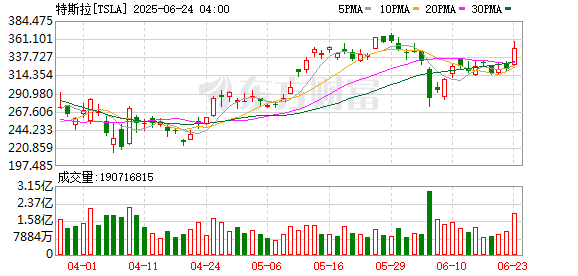
Core Insights - The initial rollout of Tesla's "robotaxi" driverless vehicle program led to a significant increase in Tesla's stock price, making CEO Elon Musk billions richer [1][2] - Tesla's stock surged by 9%, reaching a three-week high of over $350, contributing to a market capitalization increase of $94 billion [1][7] - The rollout involved a limited fleet of 10 to 20 Model Y vehicles, which impressed investors despite being far from Musk's ambitious goal of "hundreds of thousands" of driverless vehicles by 2026 [3][5] Stock Performance - Tesla shares increased by $29, marking a notable recovery from previous losses and reflecting a broader market rally alongside the S&P 500 and Nasdaq [1][4] - Musk's net worth rose by $17 billion, reinforcing his position as the world's wealthiest person, with a lead of over $175 billion over the next richest individual [2] Market Context - The robotaxi launch occurred in a geofenced area of Austin, Texas, and was met with cautious optimism from analysts, with Wedbush noting that the performance exceeded expectations [3] - The stock's recovery also coincided with a rebound from a previous significant drop related to Musk's public disputes, indicating resilience in investor sentiment [6] Competitive Landscape - The initial fleet of Tesla robotaxis is limited compared to competitors like Alphabet's Waymo, which has approximately 100 driverless vehicles operating in Austin [5] - The first robotaxis are Model Ys rather than the anticipated "cybercab," which has not yet been released, reflecting ongoing skepticism in the market [5]
X @Elon Musk
Elon Musk· 2025-06-23 13:51
RT Warren Redlich - Chasing Dreams 🇺🇸 (@WR4NYGov)Important thought about Robotaxi that deserves more attention.Robotaxi will save a 100,000 lives a year soon, and eventually over a million a year. ...
雷军宣布面向下个时代的智能设备;女子网恋20天被骗近600万;岚图高称小米YU7像网红奶茶岚图是高档香槟……
Sou Hu Cai Jing· 2025-06-23 04:15
Group 1 - Luo Yonghao clarified that he has not left the tech industry, stating that he was engaged in e-commerce from 2020 to 2021 due to contractual obligations, and has since been focused on R&D with his new company, Xihongxian [1] - He emphasized that the lack of public activity was due to the focus on development rather than a departure from the tech sector [1] Group 2 - He Yujun has completed the acquisition of Beijing Huanju Commercial Management Co., with the seller being Wang Sicong, son of Wanda Group's chairman Wang Jianlin [4] - The event was part of a product launch in Tai'an, Shandong, where He Yujun appeared as the chairman of Beijing Huanju and Xingjing Weiwang Group [2] Group 3 - Xiaomi responded to allegations regarding a sales representative disparaging other brands during a conversation about the Xiaomi YU7, confirming that the individual was not an employee and that the company prohibits such behavior [5] - The company urged consumers to verify information through official channels to avoid misinformation [5] Group 4 - Ningbo Dongfang University announced a tuition fee of 96,000 yuan per student per year for the 2025 academic year, along with a 2,000 yuan accommodation fee [6] Group 5 - Vipshop's Vice President Feng Jialu is under investigation for alleged corruption, with the company maintaining that business operations are normal and expressing zero tolerance for corrupt behavior [7] Group 6 - Apple has made its advertisement "The Parent Presentation" private after just one day of release, indicating a shift in its marketing strategy [8] Group 7 - Haier announced the establishment of Shanghai Zhaofu Intelligent Technology Co., focusing on L4 autonomous driving technology, with initial funding exceeding 3 billion yuan from Haier, Ant Group, and CATL [20][22] - The collaboration aims to enhance the safety and reliability of autonomous driving technology and promote its commercial application [22] Group 8 - Xiaopeng Huaitian appointed Du Chao as CFO and Vice President, aiming to strengthen financial management and investor relations [23] Group 9 - BYD refuted rumors regarding solid-state batteries being used in the Seal model, stating that such information is unverified and that the first model and specifications are not officially reported [24] Group 10 - Xiaomi officially announced the launch of the YU7 SUV on June 26, along with other products including the MIX Flip 2 and a new personal smart device [28]
X @Tesla Owners Silicon Valley
Tesla Owners Silicon Valley· 2025-06-22 19:57
Robotaxi Application - Tesla Robotaxi app 的快速浏览 [1] - 行业关注 Tesla Robotaxi 应用的潜在功能和用户体验 [1]
X @Elon Musk
Elon Musk· 2025-06-21 22:13
RT jimmah (@jamesdouma)Car ownership will evolve in a similar fashion to how landline phones changed with the coming of the cell phone. At first, few gave up landlines because cell phones weren’t a complete substitute. As cell phone networks improved in quality and ubiquity, the rationale for paying for an additional landline gradually went away and today relatively few people still have them. Businesses and older demographics are hanging on but it’s not mainstream. Similarly car ownership will continue wit ...