
交通强国

Search documents
完善现代化综合交通运输体系 为基本实现社会主义现代化取得决定性进展提供有力保障——访交通运输部党组书记、部长刘伟
Xin Hua She· 2025-12-23 14:06
Core Viewpoint - The article emphasizes the importance of improving the modern comprehensive transportation system as a crucial step towards achieving significant progress in socialist modernization in China, as outlined in the 14th Five-Year Plan [1]. Group 1: Achievements in Transportation - Over the past five years, the transportation sector has completed all 17 major indicators set in the 14th Five-Year Plan, with a total fixed asset investment of 18.8 trillion yuan, marking it as the most investment-intensive and fastest construction period [2]. - The national comprehensive three-dimensional transportation network has achieved over 90% completion of its main framework, with high-speed rail covering approximately 97.2% of cities with populations over 500,000 [2]. - The efficiency of comprehensive transportation hubs has significantly improved, with major cities in key urban agglomerations achieving two-hour connectivity [2]. Group 2: Future Development Paths - The 15th Five-Year Plan aims to enhance the modern comprehensive transportation system, focusing on building a high-quality national comprehensive three-dimensional transportation network with a completion rate of over 95% for its main framework [6]. - The plan includes four key areas: integration of transportation modes, safety enhancement, digital transformation, and green transition, emphasizing the need for a multi-modal transport system and the use of clean energy [7]. - The transportation sector will prioritize the construction of modern transportation infrastructure, service systems, equipment technology, and governance frameworks to support high-quality development [8][9][10].
新华社专访交通运输部党组书记、部长刘伟
Xin Lang Cai Jing· 2025-12-23 13:54
Core Viewpoint - The article emphasizes the importance of transportation as a foundation for national strength and modernization, highlighting the achievements and future goals of China's transportation sector as outlined in the 14th and 15th Five-Year Plans [1]. Achievements in Transportation - Over the past five years, China has completed a transportation fixed asset investment of 18.8 trillion yuan, marking it as the most significant investment period with rapid network construction [2]. - The main framework of the national comprehensive transportation network, consisting of "6 axes, 7 corridors, and 8 channels," has achieved over 90% completion [2]. - High-speed rail now covers approximately 97.2% of cities with populations over 500,000, while highways cover about 99% of urban areas with populations over 100,000 [2]. - The efficiency of comprehensive transportation hubs has significantly improved, with major cities in key urban clusters achieving two-hour connectivity [2]. Strategic Support - Key urban clusters such as Beijing-Tianjin-Hebei, Yangtze River Delta, and Guangdong-Hong Kong-Macau Greater Bay Area have enhanced connectivity, with direct highway links established between Xiong'an New Area and Beijing-Tianjin [2]. - The proportion of towns with access to tertiary roads has reached 90%, and over 95% of larger villages have access to paved roads [2]. Efficiency in Transportation Services - China ranks among the top globally in various transportation metrics, including port cargo throughput, which accounts for about one-third of the global total, and civil aviation passenger transport, which represents around 15% of the global total [2]. - The volume of freight transported by rail and water has increased by approximately 20% and 40%, respectively, with port container transport via rail and water growing at an annual rate of about 15% [2]. Advanced Technology and Equipment - Breakthroughs have been made in domestic large aircraft, cruise ships, and LNG carriers, with automated terminals leading globally in scale and technology [3]. - Pilot applications of drones, unmanned vehicles, and unmanned ships are being conducted safely and orderly [3]. Deepened Open Cooperation - Major projects such as the China-Laos Railway and the Peru Chancay Port have been completed and put into operation, enhancing international connectivity [3]. - The China-Europe Railway Express operates steadily, and new routes have been established to improve logistics efficiency [3]. Governance System Improvement - Key reforms in the transportation sector are being advanced, including the establishment of a unified and open transportation market and the completion of comprehensive administrative law enforcement reforms [3]. New Pathways for Development in the 15th Five-Year Plan - The 15th Five-Year Plan emphasizes the need to enhance the modern comprehensive transportation system, focusing on high-quality development and the integration of various transportation modes [4][5]. - The plan outlines the construction of a high-quality national comprehensive transportation network, aiming for a completion rate of over 95% for the main framework [6]. Focus Areas for the 15th Five-Year Plan - The plan highlights the importance of integrating transportation modes, enhancing safety, promoting digital upgrades, and transitioning to greener practices [7]. - Specific initiatives include improving urban transportation efficiency, developing multi-modal transport systems, and advancing smart transportation technologies [9][10].
今年预计完成交通固投超3.6万亿元 交通运输部:新增高速铁路超2000公里
Mei Ri Jing Ji Xin Wen· 2025-12-23 13:16
Core Viewpoint - The Ministry of Transport of China is focusing on enhancing the quality of transportation services to support economic and social development, with specific goals set for 2026 and beyond [1] Group 1: Economic Indicators and Future Goals - In 2025, transportation fixed asset investment is expected to exceed 3.6 trillion yuan, with new additions of over 2,000 kilometers of high-speed rail, approximately 8,000 kilometers of expressways, and about 900 kilometers of high-grade waterways [1] - The number of cross-regional passenger movements is projected to exceed 66 billion, with commercial freight volume expected to surpass 58 billion tons, both showing a year-on-year growth of around 3.5% [1] - For 2026, the focus will be on improving the national comprehensive transportation network, enhancing logistics efficiency, and fostering new productivity in the transportation sector [1] Group 2: Consumer Growth Areas - The small and micro car rental market is identified as a significant growth area, with the total number of small micro cars reaching 4 million and an expected annual growth rate of around 15% during the 14th Five-Year Plan [4] - The Ministry of Transport plans to address challenges in the car rental market by improving vehicle supply during peak times and enhancing the convenience of returning vehicles at transportation hubs [4] - The yacht and cruise consumption sectors are also anticipated to grow, with yacht registrations increasing at an annual rate of over 40% in the past three years, indicating a shift towards more accessible consumption [3] Group 3: Major Infrastructure Projects - The 14th Five-Year Plan has seen significant progress in the construction of a comprehensive transportation network, with major projects like the Shenzhen-Zhongshan Bridge and the Beijing-Harbin Expressway expansion completed [6] - The Ministry of Transport is planning to initiate several key projects during the 15th Five-Year Plan, including the Lion's Mouth Channel and Zhangjingao Yangtze River Bridge, to further enhance transportation infrastructure [7] - The overall investment in transportation fixed assets reached 18.8 trillion yuan, significantly improving the capacity and efficiency of the transportation system [6]
扩大游艇消费、打造自驾精品路!交通领域消费新场景要来了
2 1 Shi Ji Jing Ji Bao Dao· 2025-12-23 12:32
Core Insights - The transportation industry plays a crucial role in economic and social development, with significant investments and infrastructure improvements planned for the future [1][2][3] Group 1: Investment and Infrastructure Development - The expected completion of transportation fixed asset investment is over 3.6 trillion yuan, with new high-speed railways exceeding 2,000 kilometers and highways around 8,000 kilometers [1] - During the "14th Five-Year Plan" period, transportation fixed asset investment reached 18.8 trillion yuan, significantly enhancing transportation capacity and operational efficiency [2] - Major infrastructure projects such as the Shenzhen-Zhongshan Bridge and the Beijing-Harbin Expressway have been completed, marking significant progress in the national comprehensive transportation network [2] Group 2: Future Development Plans - The "15th Five-Year Plan" emphasizes accelerating the construction of a strong transportation nation and improving the modern comprehensive transportation system [3] - Key focuses include enhancing cross-regional coordination, integrating various transportation modes, and strengthening coverage in underdeveloped areas [3] Group 3: Artificial Intelligence in Transportation - The transportation sector is rapidly adopting new technologies, including the completion of approximately 1,700 kilometers of highways and the digital transformation of over 2,200 road and waterway facilities [4] - The Ministry of Transport has issued implementation opinions on "Artificial Intelligence + Transportation," aiming to integrate AI across various transportation modes [4][5] - Key areas of focus include developing AI-driven logistics solutions, enhancing operational efficiency, and reducing logistics costs [6][7] Group 4: Consumer Engagement and Market Expansion - The Ministry of Transport aims to create consumption scenarios in transportation, focusing on yacht and cruise consumption, small micro-car rental markets, and developing scenic self-driving routes [8][9][10] - The small micro-car rental market is projected to grow at an annual rate of approximately 15% during the "15th Five-Year Plan" period, with initiatives to optimize vehicle supply and enhance user experience [9] - The development of self-driving scenic routes will leverage national and provincial road resources to improve service quality for tourism [10]
“十五五”一批重大工程将建成!
中国能源报· 2025-12-23 10:51
Core Viewpoint - The article discusses the significant progress and future plans in China's transportation sector, highlighting the investment of 18.8 trillion yuan during the "14th Five-Year Plan" and the upcoming major projects in the "15th Five-Year Plan" aimed at enhancing the national comprehensive transportation network [1][2]. Group 1: Investment and Progress - The transportation sector has seen a total fixed asset investment of 18.8 trillion yuan during the "14th Five-Year Plan," leading to substantial improvements in transportation capacity and operational efficiency [1]. - The national comprehensive transportation network, characterized by the "6 axes, 7 corridors, and 8 channels," has been largely completed, connecting over 80% of county-level administrative regions and serving approximately 90% of the country's economic and population totals [1]. Group 2: Major Projects and Future Plans - A number of landmark projects have been completed, including the Shenzhen-Zhongshan Bridge, the expansion of the Beijing-Harbin Expressway in Liaoning, and the Changtai Yangtze River Bridge [1]. - The "15th Five-Year Plan" will focus on accelerating the construction of a modern comprehensive transportation system, with key projects such as the Lion's Ocean Channel, Zhangjingao Yangtze River Bridge, and the Western Land-Sea New Channel (Pinglu) Canal set to be operational [1][2]. - Additional projects like the G219, G331 border corridor, and the G228 coastal national road will also be expedited, along with preliminary work on major projects such as the Guangzhou New Airport [2].


“电”亮包银新通道 赋能边疆新发展——内蒙古电力集团全力护航包银高铁全线贯通
Zhong Guo Jin Rong Xin Xi Wang· 2025-12-23 09:47
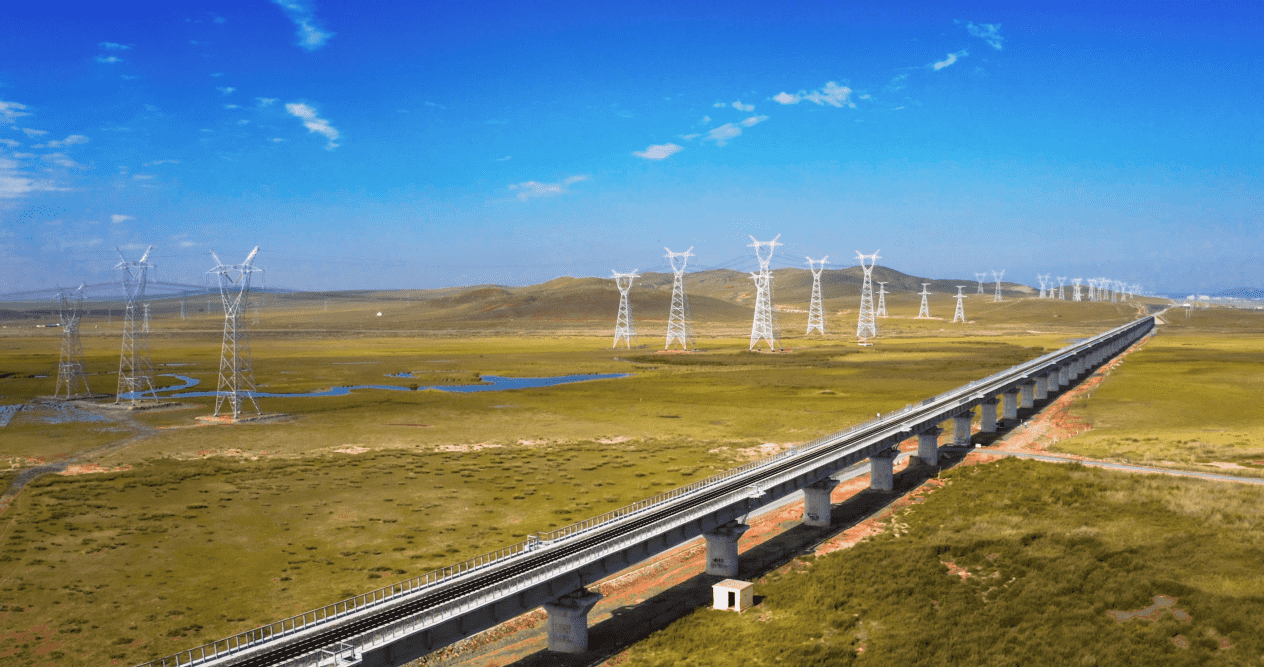
Core Viewpoint - The opening of the Baoyin High-speed Railway marks a significant advancement in connecting Inner Mongolia with other regions, facilitating economic development and enhancing energy infrastructure [1][3]. Group 1: Infrastructure Development - The Baoyin High-speed Railway spans 402.81 kilometers in Inner Mongolia, accounting for 77.5% of the total line length, and is a key part of China's "Eight Vertical and Eight Horizontal" high-speed rail network [3]. - The railway's completion is a practical implementation of the "Electricity First" strategy in border ethnic areas, improving the high-speed rail network layout in western Inner Mongolia [3]. Group 2: Power Supply Assurance - The Inner Mongolia Power Group has implemented a comprehensive inspection mode using drones and infrared temperature measurement to ensure reliable power supply for the Baoyin High-speed Railway [3]. - A total of 94 power transmission and distribution lines were relocated to facilitate the railway's construction, overcoming challenges related to time constraints and coordination difficulties [3][4]. Group 3: Technological Innovations - The Baoyin High-speed Railway's power supply system employs innovative technologies, such as synchronous AC withstand voltage testing, which minimizes power outages during testing, thus ensuring continuous electricity supply for over 130,000 users [4]. - The Inner Mongolia Power Group's commitment to balancing high-speed rail construction and public welfare is exemplified by their efforts to maintain power supply while supporting railway operations [4][6]. Group 4: Investment and Future Plans - The Inner Mongolia Power Group has invested approximately 357 million yuan in the Baoyin High-speed Railway project, constructing 192.1 kilometers of new 220 kV lines and 13 substations to ensure stable and safe operation [6]. - Future plans include ongoing power supply service support for the railway's operation, with preparations for peak travel seasons to enhance regional transportation and economic growth [6].
“十五五”时期交通运输部将谋划建设一大批重大工程项目
Xin Hua Wang· 2025-12-23 09:25
Core Viewpoint - The State Council Information Office held a press conference on December 23, highlighting the significant progress in major transportation projects under the "14th Five-Year Plan" and outlining future goals for the "15th Five-Year Plan" to enhance the transportation system in China [1] Group 1: Progress and Future Plans - The Ministry of Transport reported that the construction of the national comprehensive transportation network has achieved breakthrough progress [1] - During the "15th Five-Year Plan" period, the Ministry of Transport aims to accelerate the construction of a strong transportation nation and improve the modern comprehensive transportation system [1] - Plans include the construction of a large number of major engineering projects and the promotion of integrated transportation, safety enhancements, digital upgrades, and green transformation [1] Group 2: Service and Economic Impact - The initiatives are designed to better serve and guarantee the national economic cycle and facilitate convenient travel for the public [1]
交通运输部答大众新闻:“十四五”投资18.8万亿,青岛港董家口港区等工程建成
Da Zhong Ri Bao· 2025-12-23 08:48
Core Viewpoint - The press conference highlighted significant advancements in China's transportation infrastructure during the 14th Five-Year Plan period, with a focus on the construction of a comprehensive transportation network and upcoming key projects for the 15th Five-Year Plan period [2][4][6]. Group 1: Achievements during the 14th Five-Year Plan - The construction of major transportation infrastructure projects has progressed smoothly, achieving breakthrough advancements in the national comprehensive transportation network [4]. - The "6 axes, 7 corridors, and 8 channels" framework of the national comprehensive transportation network is largely completed, connecting over 80% of county-level administrative regions and serving approximately 90% of the national economy and population [4]. - Fixed asset investment in transportation reached 18.8 trillion yuan, significantly enhancing transportation capacity and operational efficiency [4]. Group 2: Key Projects and Future Plans for the 15th Five-Year Plan - The Ministry of Transport aims to accelerate the construction of a strong transportation nation, focusing on modernizing the comprehensive transportation system and planning several major projects [6]. - Notable projects expected to be completed during the 15th Five-Year Plan include the Lion's Mouth Channel, Zhangjingao Yangtze River Bridge, and the Eastern Hub Shanghai East Station [6]. - Additional projects such as the G219 and G331 border corridors, G228 coastal national road, and the improvement of the Sichuan-Tibet Highway G318 are also set to advance [6].

交通运输“十四五”投资18.8万亿元 “十五五”一批重大工程将建成
Yang Shi Xin Wen· 2025-12-23 07:33
"十五五"时期,交通运输部将继续锚定加快建设交通强国战略目标,加快完善现代化综合交通运输体 系,谋划建设一大批重大工程项目,加快推进交通运输一体化融合、安全化提升、数智化升级、绿色化 转型,加力贯通综合运输大通道,更好服务保障国民经济循环和人民群众便捷出行。 "十五五"期间,狮子洋通道、张靖皋长江大桥、西部陆海新通道(平陆)运河、东方枢纽上海东站等标 志性重大工程建成投运。G219、G331沿边大通道、G228沿海国道、川藏公路G318提质改造、沪渝蓉沿 江高速铁路、G3033奎屯至独山子至库车高速公路、大连金州湾国际机场综合交通枢纽等项目也将加快 建设。同时,还将加快推进G0412深珠通道、G1536莲花山通道、广州新机场等重大工程项目前期工 作。 (文章来源:央视新闻) 今天(23日),国务院新闻办公室举行新闻发布会,交通运输部综合规划司负责人金敬东介绍"十四 五"规划重大交通项目总体进展顺利,国家综合立体交通网建设实现了突破性进展。 "6轴7廊8通道"国家综合立体交通网主骨架已经基本贯通,连接了全国超过80%的县级行政区,服务全 国90%左右的经济和人口总量,交通固定资产投资达到18.8万亿元,交通运输 ...
学习贯彻党的二十届四中全会精神丨结合实际 让全会精神在基层落地落实
Yang Guang Wang· 2025-12-23 04:06
央广网北京12月23日消息 据中央广播电视总台中国之声《新闻和报纸摘要》报道,连日来,河 北、江苏、广西、北京大学结合自身实际、深入基层一线,开展多种形式的宣讲活动,让党的二十届四 中全会精神在基层落地落实、见行见效。 河北组建宣讲团结合各地实际情况,以鲜活案例和翔实数据开展宣讲,并围绕大家关心的民生保 障、治理效能等内容进行互动答疑。一场场主题鲜明、内容丰富的宣讲,将全会精神生动地传递给广大 党员干部群众,激发起大家干事创业的信心和热情。 河北石家庄市玉成社区党委书记王丽霞:我们要深入贯彻落实四中全会精神,坚定拥护"两个确 立"、坚决做到"两个维护",把思想和行动统一到党中央决策部署上来。立足本职岗位,将全会精神与 社区治理有机结合,用心用情提升社区居民服务和管理水平。 江苏持续开展线上线下"联学联讲"活动,强化省市区三级联动,开展对象化、分众化、互动化宣 讲。同时,构建"专家智囊+宣讲骨干+理论新锐"的宣讲矩阵,推动党的创新理论"飞入寻常百姓家"。 江苏省商务厅进出口公平贸易处工作人员薛荻瀚:党的二十届四中全会为"十五五"时期高水平对外 开放锚定了方向。我们将坚决贯彻落实全会精神,健全风险预警体系,增强企 ...