
京津冀交通一体化

Search documents
车流穿行,三地生活同城化
Xin Jing Bao· 2026-02-25 11:29
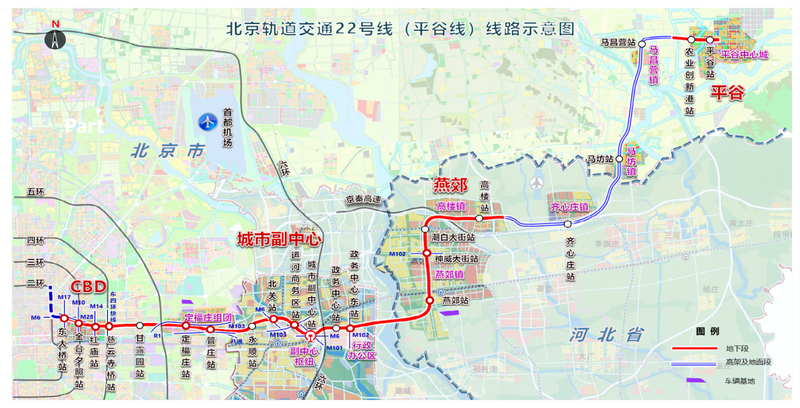
Group 1 - The core viewpoint of the articles highlights the rapid development of transportation integration in the Beijing-Tianjin-Hebei region, transforming it from a geographical area into a closely connected economic zone [1][2][6] - The Beijing Subway Line 22, expected to open by the end of this year, will significantly enhance cross-province commuting, creating a "1-hour traffic circle" between Langfang and Beijing [2][4] - The introduction of the "Dachang Special Line" bus service will provide a new commuting option for approximately 50,000 cross-province commuters, connecting them to the Beijing subway system [5][6] Group 2 - The Beijing-Tianjin intercity railway has reduced travel time between the two cities to just 30 minutes, facilitating a daily average of 225,000 trips by 2025 [6][7] - The launch of the Beijing-Tianjin-Hebei circular high-speed train will further enhance commuting efficiency, connecting key areas such as Beijing, Tianjin, and Xiong'an [8][10] - The "Eight Stations and Two Airports" transportation hub in Beijing is expected to handle over 12 million passengers during the 2026 Spring Festival, reflecting a 10% increase from the previous year [15][17] Group 3 - The integration of various transportation modes, including high-speed rail, subways, and buses, is reshaping commuting patterns and enhancing the overall travel experience for residents in the region [11][12][14] - The ongoing construction of the Xiong'an New Area's R1 line and its connection to Beijing's Daxing Airport is crucial for establishing a one-hour economic circle between the two areas [14][18] - The establishment of a coordinated management system for the "Eight Stations and Two Airports" framework aims to improve operational efficiency and reduce congestion in central Beijing [16][17]

今年我省将实施11个衔接京津干线公路项目
Xin Lang Cai Jing· 2026-02-16 23:41
Core Viewpoint - The Hebei province is set to implement 11 projects connecting the Beijing-Tianjin-Hebei expressway this year, aiming to enhance transportation integration in the region and improve the comprehensive traffic system of the Xiong'an New Area [1] Group 1: Transportation Infrastructure Development - Hebei will focus on improving the comprehensive transportation system of the Xiong'an New Area by implementing 8 key road network projects, including the completion of the Beijing-Xiong'an Expressway Phase II and the provincial road S603 [1] - The province plans to enhance road network connectivity by executing 11 projects that connect to the Beijing-Tianjin expressway, including the construction of the Tang-Lang Expressway and the expansion of the Jing-Tian-Tang Expressway [1] - The Tang-Lang Expressway, measuring 35.2 kilometers, will connect the Beijing-Tianjin expressway and is expected to be completed by 2028, significantly alleviating traffic pressure in Beijing [2] Group 2: Port and Airport Development - Hebei will commence the construction of four projects, including the third phase of the Caofeidian Port's mineral terminal, and complete five projects that will add 11 new berths and increase throughput capacity by 69 million tons [3] - The province will continue the construction of the Xiong'an city terminal and start three projects for the renovation of Chengde Airport, while also advancing the expansion of Shijiazhuang Airport [3] Group 3: Transportation Service Quality Improvement - Hebei aims to enhance transportation service quality by expanding the customized commuter bus service in the Beijing-Tianjin-Hebei region and optimizing interprovincial bus routes [3] - The province will focus on addressing transportation bottlenecks and improving collaboration with Beijing and Tianjin to enhance management and operational standards [3]
空铁联运助力旅客春运出行
Xin Lang Cai Jing· 2026-02-13 14:18
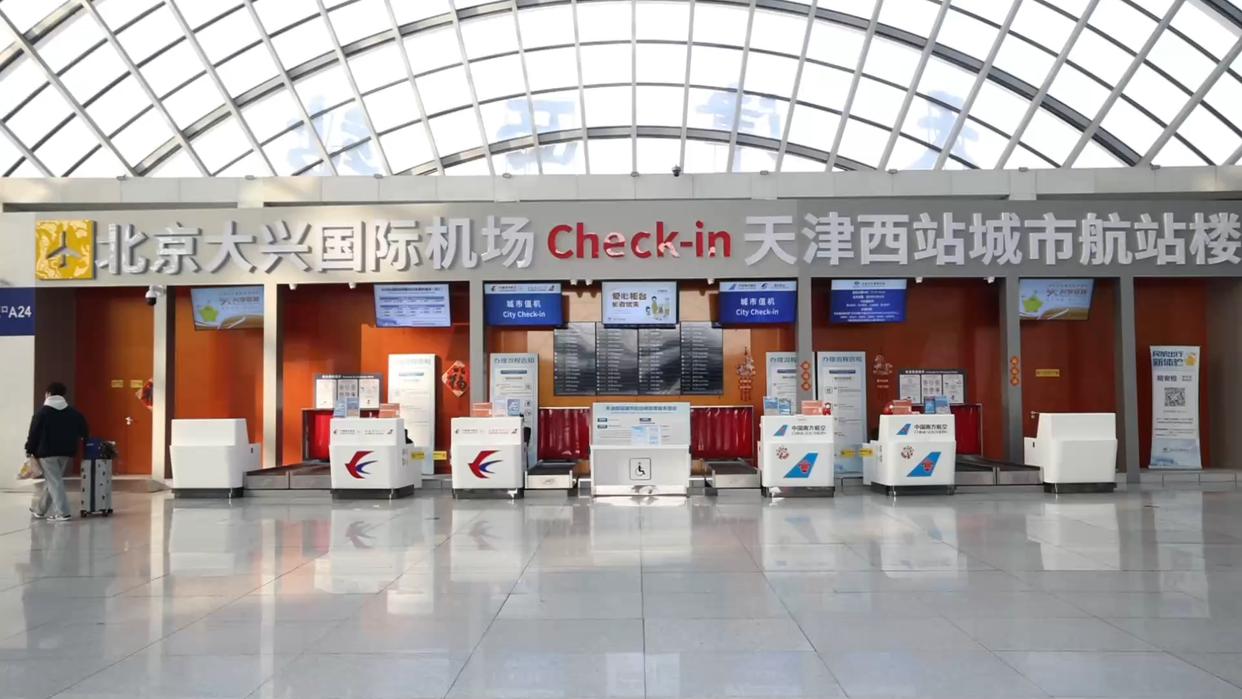
Core Viewpoint - The Beijing Daxing International Airport Tianjin West Station urban terminal is set to enhance transportation integration in the Beijing-Tianjin-Hebei region, marking a new phase in regional connectivity [2]. Group 1 - The urban terminal is expected to be completed and operational by June 2025, making it the first urban terminal located at a national railway hub in the Beijing-Tianjin-Hebei area [1]. - It will feature six check-in counters, providing services such as check-in and baggage handling [1]. - The terminal has already served nearly 1,000 passengers during its first Spring Festival [3]. Group 2 - The development of the urban terminal signifies the further expansion of rail passenger transport's influence and the enhancement of air-rail intermodal services [2]. - It will support the rapid development of the Beijing-Tianjin-Hebei integrated business district in the Hongqiao District of Tianjin, with its effectiveness expected to grow alongside the business district's development [2].
计划建成时间公布!河北要添2条新高速
Xin Lang Cai Jing· 2026-02-13 05:58
Core Insights - Hebei Province is advancing the integration of transportation in the Beijing-Tianjin-Hebei region with several highway projects planned for implementation by 2026 [1] Group 1: Project Details - The Tang-Lang Expressway will be 35.2 kilometers long, connecting the proposed Tianjin section and is expected to be completed by 2028, alleviating traffic pressure in Beijing and enhancing connectivity with Xiong'an New Area and eastern Hebei [1] - The Tang-Bin Expressway will span 44.8 kilometers, linking the Tangshan-Luan County and the Tianjin section, with a completion target of 2029, creating a new inter-provincial highway to strengthen transportation links in the Qin-Tang-Jin region [1] - The Beijing-Tianjin-Tangshan Expressway expansion will cover 6.8 kilometers, upgrading from a four-lane to an eight-lane road, with a planned completion in 2028, improving the transportation capacity and service level for direct routes from Beijing to Tianjin Port [1] Group 2: Additional Projects - The Lang-Zhu Expressway expansion will be 46.1 kilometers long, transitioning from a four-lane to an eight-lane configuration, with a completion goal of 2027, further enhancing the capacity of the capital's transit transportation corridor [2]
河北省机场总数达到29个
Xin Lang Cai Jing· 2026-02-12 03:05
Core Insights - The Hebei Provincial Government is advancing the integration of transportation in the Beijing-Tianjin-Hebei region during the 14th Five-Year Plan period [1] Group 1: Infrastructure Development - A world-class port and airport cluster is being accelerated in Hebei Province, with the completion of 11 projects including the Tangshan Port New Tian LNG supporting terminal [1] - The total number of port berths has reached 279, with a throughput capacity of 1.21 billion tons [1] - The number of container cooperation routes between Tianjin and Hebei has reached 12 [1] Group 2: Airport Expansion - The Xingtai Dalian Airport has been completed and put into operation, along with the addition of five general airports including Zhangbei and Weixian [1] - The total number of airports in Hebei Province has now reached 29 [1]
【新春走基层】一位05后春运志愿者的“跨城通勤”路
Xin Lang Cai Jing· 2026-02-08 12:21
Core Viewpoint - The article highlights the experience of Wei Hanyu, a university student volunteering during the Spring Festival travel rush, emphasizing the importance of community service and the convenience of transportation between Tianjin and Beijing [2][3]. Group 1: Volunteer Experience - Wei Hanyu, a first-year student at the University of International Business and Economics, volunteered at Beijing Chaoyang Station during the Spring Festival, assisting travelers, particularly the elderly, by providing wheelchair services [2]. - During her volunteer work, she pushed approximately ten wheelchairs in one day, noting a significant demand for such services during the travel peak [2]. - Wei expressed that the experience of directly helping travelers and receiving their gratitude made her feel that her work was meaningful and valuable [2]. Group 2: Transportation Convenience - Wei's commute from Tianjin Wuqing to Beijing Chaoyang Station takes over an hour, but the high-speed train reduces travel time to just over 20 minutes [3]. - The article mentions that Beijing plans to introduce new measures to enhance transportation convenience in the Beijing-Tianjin-Hebei region, including customized bus routes extending to surrounding areas [3]. - These improvements aim to make commuting easier for residents living a cross-city lifestyle, enhancing overall accessibility [3].
北京将引入武清至通州进京公交
Xin Lang Cai Jing· 2026-02-02 23:10
Core Viewpoint - Beijing plans to implement a new round of transportation facilitation measures for the Beijing-Tianjin-Hebei region, aiming to enhance connectivity and optimize traffic flow in the area [1] Group 1: Transportation Initiatives - The opening of the 22nd subway line (Hongmiao-Pinggu) is scheduled as part of the transportation facilitation measures [1] - The second batch of inspection stations, including Yingsi and Yongle, will undergo optimization and enhancement [1] - Customized commuter bus routes will be extended to surrounding areas of Beijing, including routes from Gu'an to Daxing Airport and from Dachang to the subway line 6 Luyang Station [1] Group 2: Infrastructure Development - The construction of the Xiong'an R1 line will be promoted, with conditions for trial operations with the Daxing Airport line expected to be met this year [1] - The M101 subway line construction will be advanced to improve transportation in the urban sub-center [1] - Preliminary research will be conducted for the renovation of the Tongyan Expressway node in the Canal Business District [1] Group 3: Road Traffic Optimization - The construction of the Tongyan Expressway and the East Sixth Ring Road rapid connection line will commence [1] - The Liuhe Bridge will be widened, and the old Jingyu line under East Sixth Ring Road will be renovated [1] - Traffic organization will be optimized for several roads, including Yongcui East Road and Yongcui West Road, transitioning from one-way to two-way traffic [1]
低客流公交站拟向旅游客车开放
Xin Lang Cai Jing· 2026-02-02 18:02
Core Viewpoint - Beijing has released the "2026 Traffic Comprehensive Governance Action Plan," focusing on multiple aspects such as the integration of transportation in the Beijing-Tianjin-Hebei region, optimization of traffic in urban sub-centers, and construction of road infrastructure. Group 1: Transportation Integration - The action plan includes the opening of the 22nd subway line (Hongmiao to Pinggu) and the extension of customized bus routes to surrounding areas of Beijing [2] - It aims to standardize the appearance and functionality of entry inspection stations and enhance the integration of transportation services with the construction of new bus routes from surrounding areas to major transit points [2] Group 2: Urban Sub-center Traffic Optimization - The plan promotes the construction of the M101 subway line and the initiation of the Tongyan Expressway and East Sixth Ring Road connection [3] - It includes the widening of Liuhe Bridge and the renovation of key road nodes to improve traffic flow in urban sub-centers [3] Group 3: Infrastructure Development - The plan emphasizes the completion of major road projects such as Badaling Road and the reconstruction of damaged roads, aiming to open 71 "dead-end roads" and complete 8 overdue projects [3] - It also includes the construction of new public transport routes and the optimization of existing bus lines to enhance connectivity [4] Group 4: Integration of Transportation and Tourism - The action plan proposes the development of a high-quality integration of transportation and tourism, including the creation of scenic routes and the transformation of the Beijing-Zhangjiakou railway for tourism [4] - It aims to improve public transport efficiency by expanding and adjusting bus routes in areas with weak coverage [4] Group 5: Digital Transformation in Traffic Management - The plan initiates a pilot project for intelligent traffic control on the Jingha Expressway, focusing on real-time traffic management based on flow data [5] - It aims to develop a city-level proactive traffic control platform and enhance infrastructure monitoring and management systems [5]
北京核心区公交车站将错时共享
Xin Lang Cai Jing· 2026-02-02 16:59
Group 1: Transportation Improvements - The 2026 Beijing Transportation Comprehensive Governance Action Plan aims to alleviate issues related to tourist bus parking and passenger drop-off in core scenic areas by implementing shared bus stop usage during off-peak hours [1] - The Xiong'an R1 line, connecting Xiong'an New Area to Beijing Daxing International Airport, is expected to be operational by mid-2026, facilitating a one-hour commute to key business districts in Beijing [2] - The plan includes the addition of 35,000 parking spaces in central urban areas, with 20,000 from new potential spaces and 5,000 from utilizing civil air defense projects [3] Group 2: Parking Management - The initiative will explore night-time limited parking around residential areas to increase parking resources, allowing parking from 7 PM to 7 AM the next day [3] - The action plan promotes "alternating traffic" management measures, with at least 20 points for optimization and improvement [4] - There will be enhanced management and maintenance of previously improved under-bridge spaces, including upgrades to 11 specific bridges [4]
北京将引入天津武清至通州公交
Xin Lang Cai Jing· 2026-02-02 14:56
Core Viewpoint - Beijing is focusing on green transportation development as part of the 2026 Comprehensive Transportation Governance Action Plan, which includes various initiatives to enhance public transit and connectivity with surrounding regions [1] Group 1: Transportation Infrastructure Development - The plan includes the completion of the Apple Garden Station renovation on Line 1 of the subway and the construction of 103 rail micro-centers [1] - A minimum of 20 new "short, frequent, and fast" bus routes will be launched to connect with subway stations [1] - The plan aims to open 71 "dead-end roads" and implement comprehensive repairs and environmental upgrades on the Second Ring Road [1] Group 2: Integration with Surrounding Areas - New measures for facilitating travel between Beijing and Tianjin will be introduced, along with the issuance of the 2026 Beijing-Tianjin Transportation Facilitation Work Plan [1] - The opening of Line 22 of the subway (Hongmiao to Pinggu) is planned, along with enhancements to second batch inspection stations for entry into Beijing [1] - Customized commuter bus routes will be extended to cover surrounding areas, including new bus services from Gu'an to Daxing Airport and from Tianjin Wuqing to Tongzhou [1] Group 3: Urban Center Traffic Optimization - The construction of the M101 line of the subway is set to improve traffic in urban sub-centers [1] - Preliminary research will be conducted for the renovation of the Tongyan Expressway node in the Canal Business District [1] - Road traffic organization will be optimized for several key routes, including the conversion of one-way streets to two-way streets [1]