
半固态电池

Search documents
海博思创:上半年发货约为9.5GWh,合资公司研发布局半固态电池
中关村储能产业技术联盟· 2025-10-18 09:20
Core Viewpoint - The company aims to become a global leader in energy storage system solutions, focusing on deepening domestic partnerships, exploring valuable storage applications, expanding overseas, and enhancing independent storage project investments through AI and big data capabilities [2][6][7]. Financial Performance - In the first half of 2025, the company reported revenue of 4.522 billion yuan, representing a year-on-year growth of 22.66% [2][9]. - Approximately 9.5 GWh of projects were shipped and recognized as revenue in the first half of 2025 [2][9]. Development Strategy - The company’s strategic focus for the next 3-5 years includes: 1. Deepening cooperation with large domestic power generation groups to maintain market leadership [2][6]. 2. Actively exploring commercially viable energy storage applications and extending the value chain [2][7]. 3. Accelerating overseas market expansion to enhance global influence [2][7]. 4. Increasing investment in independent storage projects and leveraging existing AI and big data analysis capabilities for backend operations [2][7]. Growth Drivers - The growth in 2025 is expected to be driven by: 1. Long-term growth trend in domestic energy storage scale [4][7]. 2. Rapid expansion in overseas markets, particularly in North America, Europe, and Southeast Asia [4][7]. 3. New application scenarios, such as the integration of high-power charging and energy storage, and the demand for energy storage in data center diesel replacement [4][5][7]. Technology and Innovation - The company has developed solid-state and sodium-ion battery applications for energy storage system integration, with a focus on half-solid-state battery technology [3][7]. - The company emphasizes the importance of digital modeling and AI applications in enhancing the trading value of energy storage systems [6][8]. Market Positioning - The company is transitioning from a device supplier to an energy service provider, focusing on the entire lifecycle of energy storage projects, including site selection, equipment selection, and backend operations [8]. - The management is committed to continuous technological innovation to enhance competitiveness and stabilize profitability amid intense market competition [8].

孚能科技(688567.SH):能量密度高达330-350Wh/kg的第二代半固态电池计划于2025年内量产
Ge Long Hui· 2025-10-15 08:27
Core Viewpoint - The company plans to mass-produce its second-generation semi-solid-state battery with an energy density of 330-350 Wh/kg by 2025, and the recent export control measures by the Ministry of Commerce have no significant impact on its current operations [1] Group 1: Impact of Export Control Measures - The majority of the battery products currently exported by the company are not included in the recent export control list, meaning core export categories are unaffected [1] - The company's Turkish facility has successfully ramped up its production capacity to 6 GWh, providing a stable supply for overseas markets and reducing reliance on direct exports from China [1] - The export control measures do not prohibit the export of related products; eligible companies can continue their export activities by completing the necessary application and reporting procedures [1]

联泓新科:公司开发的固态、半固态电池等新型电池关键功能材料主要包括固态电解质分散剂、硅碳负极粘结剂等
Mei Ri Jing Ji Xin Wen· 2025-10-15 04:08
Core Viewpoint - The company is developing key functional materials for solid-state and semi-solid-state batteries, which are now entering industrial application [2] Group 1: Key Functional Materials - The key functional materials developed by the company include solid electrolyte dispersants and silicon-carbon anode binders [2]
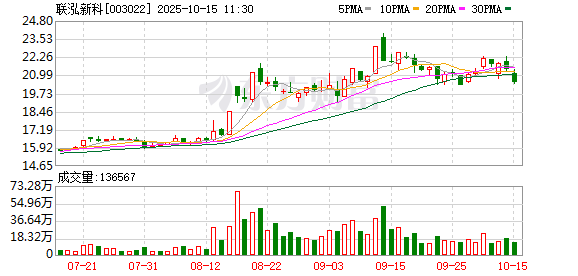
联泓新科:公司锂电添加剂VC装置已完成中交,试生产准备工作基本完成,即将投产
Mei Ri Jing Ji Xin Wen· 2025-10-15 04:07
Group 1 - The company has completed the construction of its lithium battery additive VC facility, which has a capacity of 4,000 tons per year, and is set to commence production in the third quarter of 2025 [2] - The products from the VC facility can be applied in semi-solid battery technology [2]
小摩解读中国电池出口管制:韩企承压,松下豁免,宁德无忧
Zhi Tong Cai Jing· 2025-10-11 13:07
Core Viewpoint - China has officially announced export control measures on batteries and related products, which will significantly impact the global new energy industry chain, but the measures are not a complete ban, rather a targeted control to balance industrial security and global cooperation [1] Group 1: Control Measures Timeline and Coverage - The export control measures were announced on October 9, 2023, and will take effect on November 8, 2025, focusing on high-value and strategically significant products and materials [2] - Controlled products include lithium-ion batteries with energy density greater than 300Wh/kg and key materials such as lithium iron phosphate (LFP) cathode materials and artificial graphite anode materials [2] - The control is based on an "approval system" rather than a complete ban, allowing for the export of non-controlled conventional battery products [2] Group 2: Forward-Looking Focus - The controls are not aimed at current mainstream products but are forward-looking, particularly targeting the semi-solid battery (SSB) sector [3] - Chinese battery companies have not yet significantly exported high-energy-density batteries, which are mostly in the research or small-scale production stages, thus having no immediate impact on conventional battery exports [3] - The rationale behind the policy is to safeguard the research and industrialization of next-generation battery technologies while maintaining China's competitive edge in the global battery supply chain [3] Group 3: Impact on Leading Companies - CATL (Contemporary Amperex Technology Co., Limited) remains unaffected by the controls and is viewed as a "safe asset" by institutions [4] - CATL's current exports primarily consist of conventional power and energy storage batteries, which are not included in the controlled categories [4] - The company is expected to see a 20% increase in production and a 10%-15% increase in shipment volume in Q3 2025, with net profit projected to exceed 1.8 billion yuan [4] Group 4: Supply Chain Differentiation - The impact on Chinese battery supply chain companies shows a "tiered difference," benefiting early movers with established overseas production capabilities [5] - Companies that have not established overseas production and rely on domestic exports may face challenges in sourcing key materials and obtaining technology licenses [6] Group 5: Global Supply Chain Effects - Korean battery manufacturers are under direct pressure due to their reliance on Chinese imports for key materials, which may lead to supply tightness [7] - Panasonic has achieved a 100% self-sufficiency in key materials through long-term partnerships, thus avoiding the impact of China's export controls [7] - The potential risks to global electric vehicle (EV) and LFP battery production need to be monitored, although the current approval system reduces the risk of large-scale disruptions [7] Group 6: Rational Perspective on Controls - The market's interpretation of the controls is becoming more rational, recognizing them as regulatory measures rather than outright bans [8] - The upcoming "Five-Year Plan Draft" is expected to clarify long-term demand for energy storage systems (ESS), providing new growth logic for battery companies [8] - Chinese battery companies' competitiveness in conventional categories remains intact, and their long-term market share is expected to stay strong due to ongoing overseas capacity expansion [8]

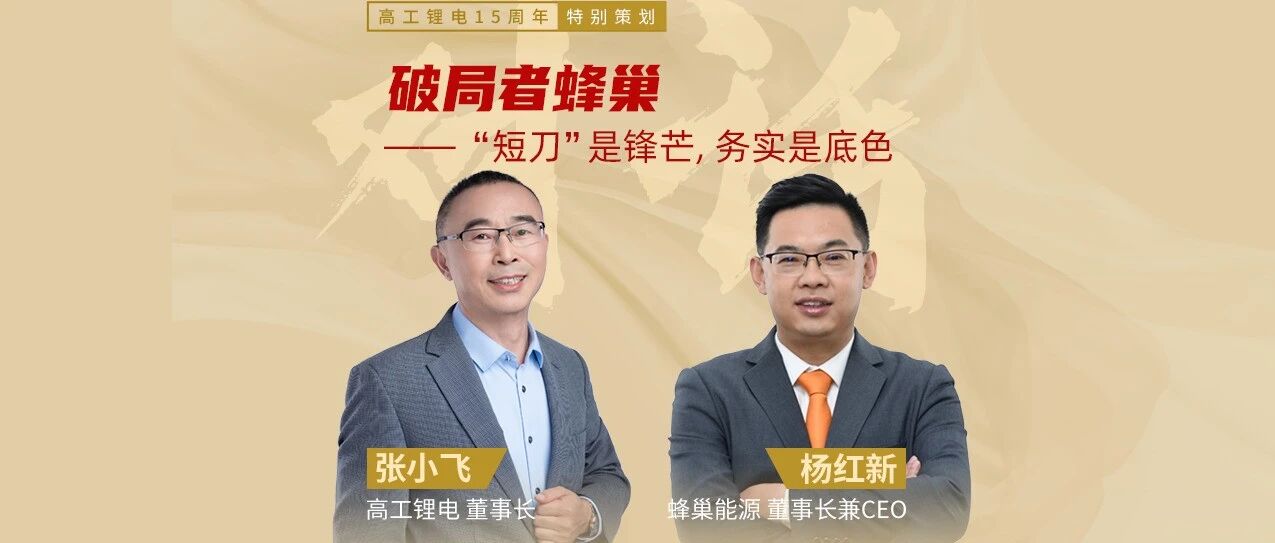
高工锂电15周年策划|飞哥对话杨红新:破局者蜂巢——“短刀”是锋芒,务实是底色
高工锂电· 2025-10-02 11:57
Core Viewpoint - The article highlights the rapid development of China's lithium battery industry, focusing on the unique position and innovative strategies of Honeycomb Energy, which has emerged as a significant player in the global market through its "short blade battery" technology [2][4][5]. Group 1: Company Overview - Honeycomb Energy was established in 2018, emerging as a "disruptor" in a seemingly saturated market [3][6]. - The company has achieved nearly 800,000 units of global shipments of its short blade batteries, with no safety incidents reported [4][11]. Group 2: Technology and Innovation - Honeycomb Energy's initial choice of the "stacking" process was driven by the need for higher energy density, particularly to address the expansion issues of silicon anodes [8][10]. - The company has developed a complete system around the short blade battery, focusing on safety, cost, and adaptability, with a production speed improvement from 0.6 seconds to 0.125 seconds per layer [10][11]. Group 3: Product Strategy - The strategy of "full domain short blade" allows Honeycomb to cater to various market needs by offering products ranging from 300mm to over 500mm in length [12][14]. - The company supplies batteries to multiple automotive manufacturers, including Stellantis and Geely, and has expanded its market presence in Europe and Southeast Asia [15][20]. Group 4: Market Positioning - Honeycomb Energy focuses primarily on power batteries while also aiming for high-end, profitable segments in the energy storage market [18][20]. - The company maintains a balanced approach between hybrid and pure electric vehicles, as well as domestic and international markets [19][20]. Group 5: Global Expansion - Honeycomb Energy emphasizes a long-term, industry-focused mindset for overseas expansion, prioritizing sustainable partnerships and local collaborations [23][27]. - The company has successfully established a factory in Thailand, achieving profitability through local partnerships [24][27]. Group 6: Future Outlook - The company anticipates four key trends in the next decade: full electrification across various sectors, continuous technological iteration, decreasing costs, and the global expansion of Chinese lithium battery technology [28][30][31]. - Honeycomb Energy plans to maintain a steady approach, focusing on product and technology excellence while targeting leadership in specific markets [32].
恩捷股份(002812) - 2025年9月26日投资者关系活动记录表
2025-09-29 01:20
Group 1: Industry Overview - The supply-demand dynamics in the diaphragm industry are improving due to a slowdown in new capacity additions, particularly in 2025, which is expected to benefit the overall industry [2] - The company's capacity utilization rate is leading in the industry, with a strong market position and increasing market share as downstream demand strengthens [2] Group 2: Product Innovations - The ultra-thin high-strength diaphragm has achieved a thickness reduction of over 28% while maintaining high strength and thermal stability, with a biaxial tensile strength exceeding 400 MPa and a puncture strength of over 560 gf, improving by more than 20% [3] - The significant enhancement in base film puncture strength reduces the risk of thermal runaway in battery cells, thereby improving safety [3] Group 3: Solid-State Battery Development - The company views semi-solid batteries as a transitional product towards all-solid-state batteries, which are currently in the early stages of industrial development and have higher costs [4] - The company is actively involved in the development of materials for both semi-solid and solid-state batteries, with production capabilities established for semi-solid battery diaphragms and ongoing investments in solid-state electrolyte materials [4][5] Group 4: Competitive Advantages - The company benefits from strong R&D capabilities and a comprehensive vertical innovation system, allowing for rapid product iteration and optimization [5] - Long-term stable partnerships with major global battery manufacturers enable the company to engage in technical exchanges and seize market opportunities effectively [5]

调研速递|国光电器接受投资者网上提问,透露多项业务要点
Xin Lang Cai Jing· 2025-09-19 12:24
Group 1 - The company held an earnings briefing on September 19, 2025, with key personnel including the chairman and CEO present to engage with investors [1] - The company has 30 years of experience using rare earth/neodymium-iron-boron magnetic materials in its micro-units, such as portable speakers and automotive audio systems [2] - The company emphasizes its commitment to timely information disclosure regarding any stock repurchase plans as per Shenzhen Stock Exchange regulations [3] Group 2 - The company's foreign sales account for 80% of its total revenue, with detailed revenue composition available in periodic reports [4] - The company is focused on its main business operations to enhance profitability and return value to shareholders, despite external market influences on stock performance [4] - The AI glasses project is in mass production planning but currently does not significantly impact main business revenue; updates will be disclosed if business volume meets disclosure standards [4]

沧州明珠:公司隔膜产品有应用于半固态电池
Zheng Quan Ri Bao· 2025-09-17 13:06
Group 1 - The company, Cangzhou Mingzhu, has indicated that its diaphragm products are being applied in semi-solid batteries and are currently in small batch supply [2]

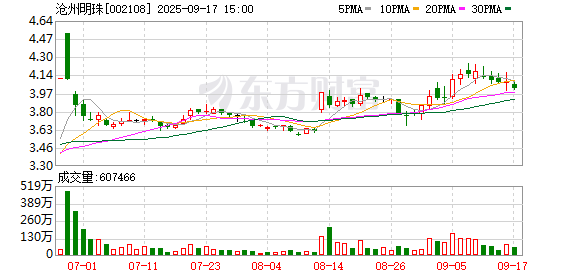
沧州明珠(002108.SZ):隔膜产品有应用于半固态电池,有小批量供应
Ge Long Hui· 2025-09-17 07:24
Group 1 - The company, Cangzhou Mingzhu (002108.SZ), has indicated that its diaphragm products are applicable in semi-solid batteries and are currently being supplied in small batches [1]