
历史修正主义

Search documents
高市“毒苗”是怎么长成的
Xin Hua She· 2025-11-19 07:30
高市早苗到底"水有多深"?一句话,她一路都是靠着安倍晋三这棵大树往上爬,外界都把她当成日 本前首相安倍的"政治门生"。 说到安倍,大家都不陌生:他是二战甲级战犯岸信介的外孙,坚决反对战后体制,修宪、扩军是他 的长期主张。安倍当首相时推动新安保法,解禁集体自卫权;卸任后曾公然放话"台湾有事就是日本有 事"。 而高市,比安倍更激进。她参拜靖国神社不是偶尔为之,而是多次公开去,造成很大争议。她早期 还曾卷入使用带有纳粹暗示宣传素材的风波,引起日本国内外强烈批评。有人指出,这样的宣传触及极 端主义象征,让人对她的历史观产生严重质疑。 她也在历史问题上多次发表争议性言论。她似乎在一定程度上淡化或美化日本侵略战争的历史,被 很多人批评为修正主义。她逻辑里,并不是纯粹反思过去,而更像在改写过去。 在政策上,她主张修订和平宪法、改自卫队为"国防军",还大幅增加防卫开支,推动日本拥有"对 敌基地攻击能力"。 谈到台湾,她疯狂强调"台湾有事",甚至上升为"日本存亡危机事态"。如此表态,在以往日本右翼 领导人里都极少见。 总而言之,高市的激进和癫狂,不只是军事鹰派,更是历史修正派。她参拜靖国神社、引发的纳粹 争议、对战争历史的模糊 ...
媒体关注:中方发布赴日提醒后,中国游客退订约50万张赴日机票
Huan Qiu Wang· 2025-11-18 12:06
Group 1 - Chinese airlines have seen approximately 500,000 flight tickets to Japan canceled since the Chinese government issued travel warnings, representing about 32% of total bookings to Japan [5][6] - This event is noted as the largest scale of ticket cancellations observed since early 2020, although the overall impact on the Chinese domestic airline industry is expected to be limited due to the relatively small size of the China-Japan route market compared to the overall domestic and international market [5][6] - The reduction in Chinese tourists is projected to significantly impact Japan's economy, with estimates suggesting that a halving of Chinese visitors could decrease Japan's GDP growth rate by 0.2 percentage points [6][7] Group 2 - Japanese retail and tourism companies experienced a sharp decline in stock prices following the news of the cancellations, indicating a direct market reaction to the geopolitical tensions [6][7] - The Japanese business community is reportedly shaken by the Chinese government's response, with industry leaders urging the Japanese government to de-escalate tensions to maintain economic exchanges [6][7] - The potential for continued measures from China could lead to further deterioration in Sino-Japanese relations, which may have long-term implications for both countries' economic prospects [7]
记者手记丨日本“熊出没”与政治“怪兽”搞事
Xin Hua She· 2025-11-18 09:21
Group 1 - The article highlights the alarming increase in bear attacks in Japan, with 88 reported incidents in October alone, resulting in 7 fatalities, primarily occurring in urban areas [1][2] - The rise in bear encounters is attributed to factors such as global warming affecting food sources for bears and the encroachment of human habitats into bear territories [2][3] Group 2 - The article discusses the resurgence of historical revisionism and militarism in Japan, exemplified by Prime Minister Sannae Takagi's controversial statements regarding Taiwan and territorial claims, which have drawn strong protests from China and South Korea [1][2] - The narrative suggests that Japan's historical education has been skewed, leading to a shift towards a more aggressive national identity, influenced by political figures like Shinzo Abe and the current administration [3][4] - The article indicates that the political climate in Japan is increasingly leaning towards right-wing nationalism, with public support for hardline policies growing among politicians [3][4]
记者手记|日本“熊出没”与政治“怪兽”搞事
Xin Hua She· 2025-11-18 08:49
Core Points - The article discusses the increasing frequency of bear attacks in Japan, with 88 reported incidents in October alone, resulting in 7 fatalities, primarily occurring in urban areas [1] - It also highlights the rise of historical revisionism and militarism in Japan, exemplified by controversial statements from Prime Minister Sanna Takashi and actions that provoke neighboring countries [1][2] - The article connects the environmental issues leading to bear attacks with the political climate in Japan, suggesting that both phenomena are influenced by deeper societal and historical factors [3] Group 1: Bear Attacks - In October, Japan experienced 88 bear attacks, with 7 resulting in death, indicating a significant increase in incidents [1] - Over 70% of these attacks occurred in urban or residential areas, causing public concern [1] - Experts attribute the rise in bear encounters to global warming affecting food sources and the encroachment of human habitats [2] Group 2: Political Climate - Prime Minister Sanna Takashi's remarks on Taiwan and territorial claims have drawn strong criticism from China and South Korea, highlighting Japan's contentious political stance [1][2] - The Japanese government has faced backlash for its historical revisionism, particularly regarding its military past, which has strained relations with neighboring countries [2][3] - The article suggests that the current political climate is a result of long-standing historical education biases and the influence of right-wing politics in Japan [3]
日本为何着急派官员来华协商?
Zhong Guo Xin Wen Wang· 2025-11-17 11:33
Core Points - Japan is sending a high-ranking official to China to negotiate following provocative remarks by Prime Minister Kishi Nobuo regarding Taiwan, indicating an attempt to ease tensions in Sino-Japanese relations [1][2] Group 1: Diplomatic Responses - China's strong reaction to Kishi's comments, which linked Taiwan's situation to Japan's collective self-defense, marks a significant escalation in rhetoric and is seen as a direct military threat to China [2][4] - The term "奉示" (formal notice) was used by Chinese officials in diplomatic communications, indicating a rare and serious protest against Japan's actions [3] - China has issued warnings to its citizens regarding travel to Japan and has prepared for substantial countermeasures against Japan's provocations [5] Group 2: Economic Implications - Japan's GDP decreased by 0.4% in Q3 2025, with a year-on-year decline of 1.8%, attributed in part to a reduction in tourists from China [7] - The negative sentiment towards Japan's government actions has led to significant declines in the stock prices of various consumer companies, indicating potential economic repercussions from diplomatic tensions [6][7] Group 3: Domestic Reactions in Japan - Former Japanese Prime Ministers and political figures have criticized Kishi's statements, emphasizing that Taiwan is a part of China and should not be a justification for military action [6] - Public protests against Kishi's remarks have emerged, reflecting growing discontent among the Japanese populace regarding the government's stance on Taiwan [6]
日媒:中国的反应“超出预期”
Huan Qiu Shi Bao· 2025-11-17 07:44
在7日举行的众议院预算委员会会议上,当被问及"台湾有事"是否属于安全保障相关法规定中可行使集 体自卫权的"存亡危机事态",高市早苗表示,"如果涉及武力行使,我认为这可能属于'存亡危机事态'的 情形。"日本TBS电视台报道称,高市早苗10日在国会上辩称,该发言是"基于最坏情况的假设",且"与 政府以往立场一致",明确表示不打算撤回。 共同社16日在另一篇报道中称,立宪民主党政策调查会长本庄知史16日在富士电视台的一档节目中,批 评高市早苗"对安全保障相关法律的理解不够充分",称其对台湾问题等认知也存在不足。一同出演该节 目的自民党代理政策调查会长田村宪久表示,"首相也在反省未能充分说明背景的问题,今后应该不会 再有此类发言。" 【解局】中国连发留学预警与赴日提醒,为何让日本感到担忧? 日本首相高市早苗近日在国会公然发表涉台错误言论,粗暴干涉中国内政,引发中方多部门强烈抗议, 并采取相应措施。16日,教育部发布2025年第4号留学预警:建议中国公民谨慎规划赴日留学安排。早 些时候,外交部和中国驻日本使领馆郑重提醒中国公民近期避免前往日本,已在日中国公民密切关注当 地治安形势,提高安全防范意识,加强自我保护。多家航 ...
专栏|什么样的“毒土”,长什么样的“毒苗”
Xin Hua She· 2025-11-15 15:14
Core Viewpoint - The article discusses the provocative statements made by Japanese Prime Minister Sanna Takashi regarding Taiwan, highlighting a pattern of historical revisionism, colonial mentality, militarism, and erroneous perceptions of China that underpin his actions [1][2][3]. Group 1: Historical Revisionism - Takashi has gained notoriety for his historical revisionism, questioning established narratives such as the Murayama Statement and denying events like the Nanjing Massacre, which reflects a lack of sensitivity to Japan's colonial history in Taiwan [1]. Group 2: Colonial Mentality Towards Taiwan - Takashi has previously visited Taiwan and collaborated with pro-independence forces, indicating a strong pro-Taiwan stance. His administration has appointed several pro-Taiwan officials, leading to provocative actions such as awarding honors to pro-independence figures [2]. Group 3: Militarism - Takashi has aligned himself with extreme right-wing factions advocating for a revival of Japan's militaristic past. His government is pushing aggressive military policies, including significant increases in defense spending and discussions to amend Japan's nuclear principles [2]. Group 4: Misconceptions About China - There is a prevailing trend among Japanese politicians, including Takashi, to misinterpret China's rise and historical context, often resorting to "China threat" rhetoric. This misjudgment could lead to significant diplomatic repercussions if continued [3].
新华社:什么样的“毒土”,长什么样的“毒苗”
第一财经· 2025-11-15 13:32
Core Viewpoint - The article discusses the provocative remarks made by Japanese Prime Minister Sanae Takaichi regarding Taiwan, highlighting the underlying historical and political motivations that shape her stance and actions [3][4][5]. Group 1: Historical Context - Takaichi's rise in politics is marked by a history of revisionism, questioning established historical narratives such as the Murayama Statement and denying events like the Nanjing Massacre, indicating a disconnect from Japan's colonial past in Taiwan [3]. - The article emphasizes that Takaichi's comments on Taiwan are not isolated incidents but rather part of a broader pattern of historical distortion that influences her approach to international relations [3]. Group 2: Political Alliances - Takaichi has previously engaged with pro-independence forces in Taiwan, leveraging her connections to strengthen ties with these groups, which reflects a strategic alignment with Taiwan's independence movement [4]. - Her administration has appointed several pro-Taiwan officials, indicating a systematic approach to fostering closer relations with Taiwan [4]. Group 3: Military Posturing - Takaichi's government is characterized by a push for military expansion, including significant increases in defense spending and a reevaluation of Japan's nuclear policy, which aligns with a broader militaristic agenda [4]. - Recent reports suggest that Takaichi has initiated discussions within her party to amend Japan's "Three Non-Nuclear Principles," indicating a shift towards a more aggressive military posture [4]. Group 4: Misconceptions about China - The article critiques the Japanese political landscape for harboring misconceptions about China, with politicians often resorting to "China threat" rhetoric as a political strategy, which Takaichi has adopted [5]. - It warns that if Japanese leaders continue to misjudge the geopolitical situation, they may provoke significant backlash from China [5].

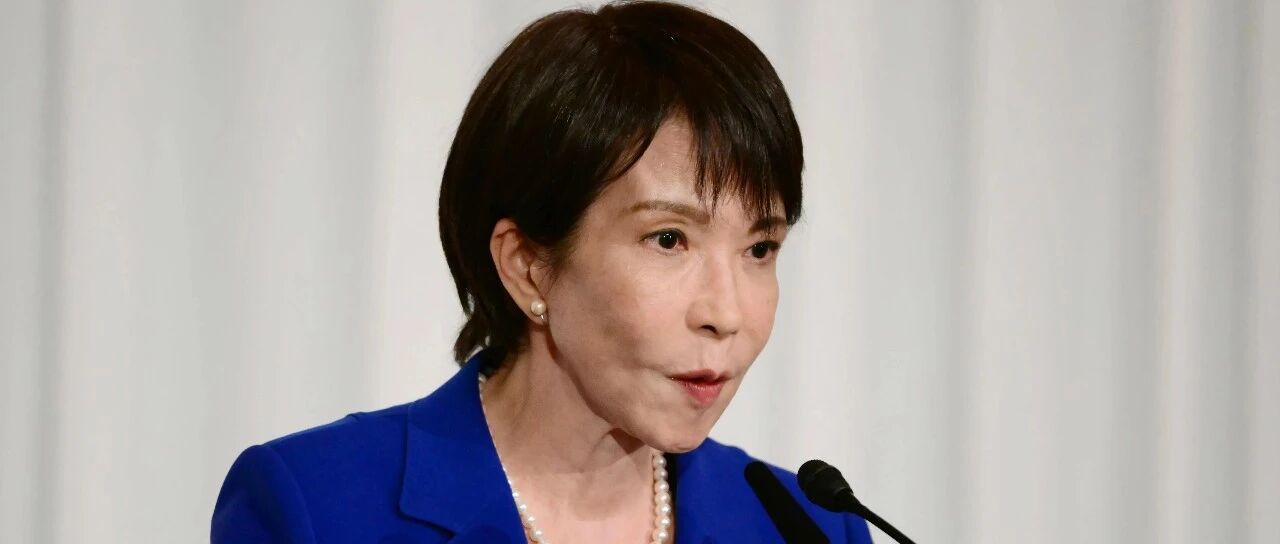
专栏丨什么样的“毒土”,长什么样的“毒苗”
Xin Hua Wang· 2025-11-15 13:18
Core Viewpoint - The article discusses the provocative statements made by Japanese Prime Minister Sanna Takashi regarding Taiwan, highlighting a pattern of historical revisionism, colonial mentality, militarism, and erroneous perceptions of China that underpin her actions [1][2][3]. Group 1: Historical Revisionism - Takashi has gained notoriety for her historical revisionism, questioning established narratives such as the Murayama Statement and denying events like the Nanjing Massacre, which reflects a lack of sensitivity towards Japan's colonial history in Taiwan [1]. Group 2: Colonial Mentality Towards Taiwan - Takashi has previously visited Taiwan and engaged with pro-independence forces, indicating a strong pro-Taiwan stance. Her administration has appointed several pro-Taiwan officials, leading to provocative actions such as awarding honors to pro-independence figures [2]. Group 3: Militarism - Takashi has aligned herself with extreme right-wing factions advocating for a revival of Japan's militaristic past. Her government is pushing for significant military expansion, including increased defense spending and discussions to amend Japan's nuclear policy [2]. Group 4: Misconceptions About China - There is a prevailing trend among Japanese politicians, including Takashi, to misinterpret China's rise and historical context, often resorting to "China threat" rhetoric. This misjudgment could lead to severe diplomatic repercussions if continued [3].
新华社:什么样的“毒土” 长什么样的“毒苗”
Xin Hua She· 2025-11-15 12:37
专栏丨什么样的"毒土",长什么样的"毒苗" 什么样的土,长什么样的苗。有毒的土壤,必然长出有毒的"苗"。 近日,日本首相高市早苗在国会答辩时悍然发表涉台露骨挑衅言论,进行武力威胁,发出战争叫嚣。在 中方一再提出严正交涉后,高市拒不承认错误,拒不收回谬论,拒不消除恶劣影响,更证明其涉台"狂 言"并非一时失言,而是其蓄谋已久的公然叫嚣。 其二,对台殖民情结"毒土"。高市之前多次窜访台湾,与岛内"台独"势力勾肩搭背,为后者打"日本 牌"牵线搭桥。高市上台后,以日本跨党派议员联盟"日华议员恳谈会"核心成员为"选才库",在自民党 高层和内阁安排多名"亲台派"心腹出任要职。不出所料,高市一上来就频频在台湾问题上搞小动作,如 安排"台独"分子领受日本皇室勋章,以至此番公然以武力威胁为岛内"台独"势力张目。 其三,军国主义幽灵"毒土"。高市上台前,与一帮鼓噪恢复"大日本帝国辉煌"的日本极右势力打得火 热,被这些沉浸于帝国旧梦的历史复辟主义者视为"最理想的首相人选"。高市对此心领神会,一上台就 大打"军事安保牌",抛出一连串激进的扩军政策设想,包括超常规增加军费、全面解除武器出口限制、 大力提升日本先发制人攻击能力等。15日, ...