
城市轨道交通建设

Search documents
东莞地铁1号线迎新进展,四个轨道交通站点启动招标
Nan Fang Du Shi Bao· 2025-07-30 09:29
Core Points - The Dongguan Metro Line 1 is progressing with new developments, including a recent tender announcement for the construction of traffic connections and surrounding facilities at four stations in the Dongcheng area [1] - The project involves the construction of non-motorized vehicle lanes, additional temporary parking spaces, signage, optimized bus stops, and weather-protected corridors, aimed at enhancing the accessibility and convenience of the stations [1] Summary by Categories Project Overview - The project is located in Dongcheng, Dongguan, and includes four stations: Lixin Station, Dongcheng South Station, Tongsha Park Station, and Niushan Station [1] - The total investment for the project is approximately 8.3 million yuan [1] Construction Details - The planned construction period is 64 days, focusing on traffic connections and surrounding facility improvements [1] - The tender includes landscaping, outdoor water supply and drainage, and electrical engineering [1] Timeline - The document acquisition period for the tender starts on July 29, 2025, at 08:30 and ends on August 18, 2025, at 09:30 [1] - The specific start date for construction will be determined based on the progress of the bidding process [1]


北京地铁新线二次环评 建设工期4年、5座车站可换乘
3 6 Ke· 2025-07-30 02:21
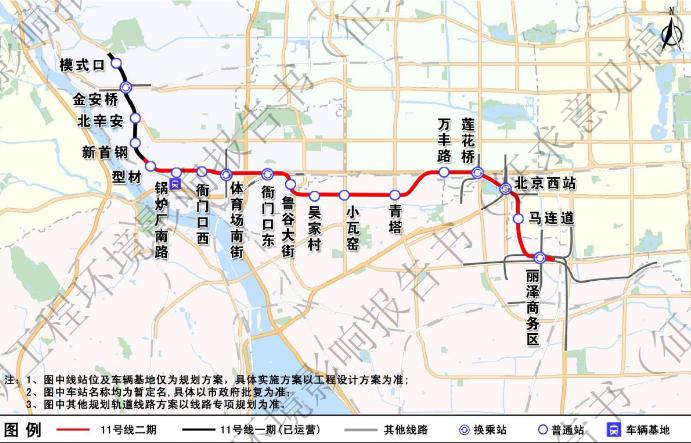
Core Viewpoint - The second phase of Line 11 of the Beijing subway is a highly anticipated project that aims to enhance connectivity across key functional areas in the city, with significant progress made in its planning and environmental assessment stages [1][7]. Group 1: Project Overview - Line 11 is a major east-west artery in Beijing, with the second phase extending from the existing terminus at Xinchao Steel Station to Lize Business District Station [2]. - The total length of the second phase is approximately 18.4 kilometers, which is an increase of 1 kilometer compared to the 17.4 kilometers planned in the third phase [4]. - The project will include 14 underground stations, with 5 stations allowing transfers to other transit lines [4]. Group 2: Technical Specifications - The maximum operating speed of trains on the second phase will increase from 85 kilometers per hour in the first phase to 100 kilometers per hour [1][7]. - The trains used will be the same A-type vehicles as in the first phase, initially configured with 4-car sets, with future flexibility to include 6-car sets [7]. Group 3: Timeline and Future Developments - The construction period for the second phase is set for 4 years, although specific start and completion dates will be determined by relevant government departments [1][7].
5号线西延段年内通车
Shen Zhen Shang Bao· 2025-07-17 23:07
Core Viewpoint - The extension of Line 5 in Shenzhen is set to enhance transportation efficiency in the southern region, creating a significant transit artery of approximately 50.526 kilometers with 37 stations, expected to open within the year [1][2]. Group 1 - The Line 5 west extension project has achieved dual power supply (35KV and 400V), ensuring stable electricity for equipment and necessary power for testing and debugging [1][2]. - The project spans 2.88 kilometers, starting from Huangbeiling Station and ending at the Grand Theater Station, with three new stations: Dongmen Road Station, Jianshe Road Station, and Grand Theater Station [1][2]. - The extension will allow direct access to the Grand Theater Station from Line 5 without needing to transfer to Line 2, significantly improving convenience for commuters [2]. Group 2 - The construction faced challenges due to dense urban infrastructure and complex underground networks, including the need to tunnel under existing structures like the Guangzhou-Shenzhen Railway [2]. - The successful completion of the dual power supply marks a critical milestone in the project, providing essential power for the operational readiness of the line [2].
壹探轨道|速看!济南地铁4、6、7、8、9号线又有新进展~
Qi Lu Wan Bao· 2025-07-17 05:59
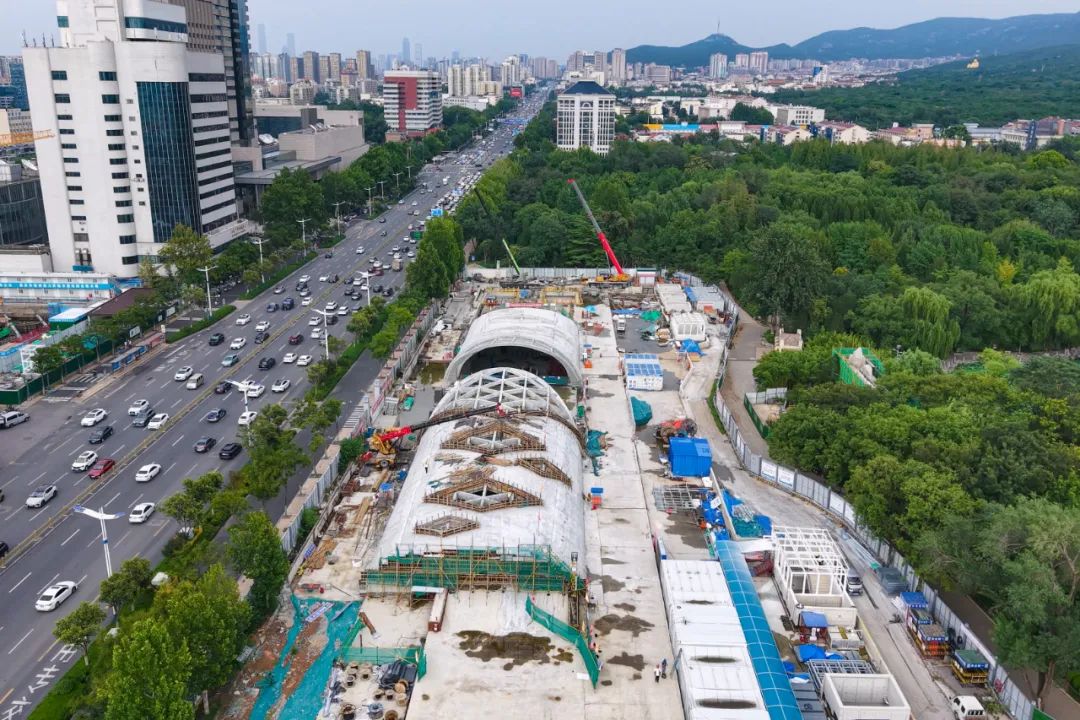
Core Insights - 2025 is a significant year for the construction of Jinan's rail transit, with multiple lines undergoing various stages of development [1] Group 1: Line 4 - All 33 stations have completed the main structure and are entering the dynamic debugging phase [3] - Electromechanical decoration has commenced across all stations [3] Group 2: Line 8 - The line consists of 14 stations, all of which have been capped and are now undergoing decoration and electromechanical installation [5] - The line has achieved bridge and tunnel connectivity and has initiated dynamic debugging [5] Group 3: Cloud Bus in Jinan High-tech East District - All 32 stations have been capped, with ongoing decoration and electromechanical equipment installation [7] - Dynamic debugging has started for the entire line [7] Group 4: Line 7 - All 32 stations are under construction, with 29 stations having completed the main structure [9] - 30 sections have achieved double-line connectivity, with civil construction entering a critical phase [9] Group 5: Line 9 - The line includes 23 stations, all of which are under construction, with 11 stations having completed the main structure [10] - 8 sections have achieved double-line connectivity, with 7 shield machines currently in operation [10] Group 6: Additional Line - A total of 12 stations are under construction, with 9 stations having completed the main structure [12] - 6 sections have achieved double-line connectivity, with 7 shield machines actively digging [12]
8号线未来“大变身” 广州北站与白云站将实现地铁直达
Nan Fang Du Shi Bao· 2025-07-16 03:30
Group 1 - The first shield tunneling machine "Li Dun Xian Feng" has successfully commenced operation for the Guangzhou Metro Line 8 North Extension, marking the official start of the shield construction phase [1] - The total length of the Line 8 North Extension is approximately 20 kilometers, crossing through Yuexiu District and Baiyun District, with 11 stations planned, including 8 transfer stations [2][3] - As of now, 15% of the civil engineering work for the North Extension has been completed, with one station having transferred rights and ten stations under construction [2] Group 2 - The North Extension will connect the existing Line 8, enhancing transportation links between the central urban area and the northern districts of Guangzhou, specifically Baiyun and Huadu [3] - The new line will fill the gap in rail transit coverage in the central northern part of Baiyun District and the central southern part of Huadu District, improving overall network connectivity [3]
城市24小时 | 东西两大省会,冲刺“700公里俱乐部”
Mei Ri Jing Ji Xin Wen· 2025-06-18 16:09
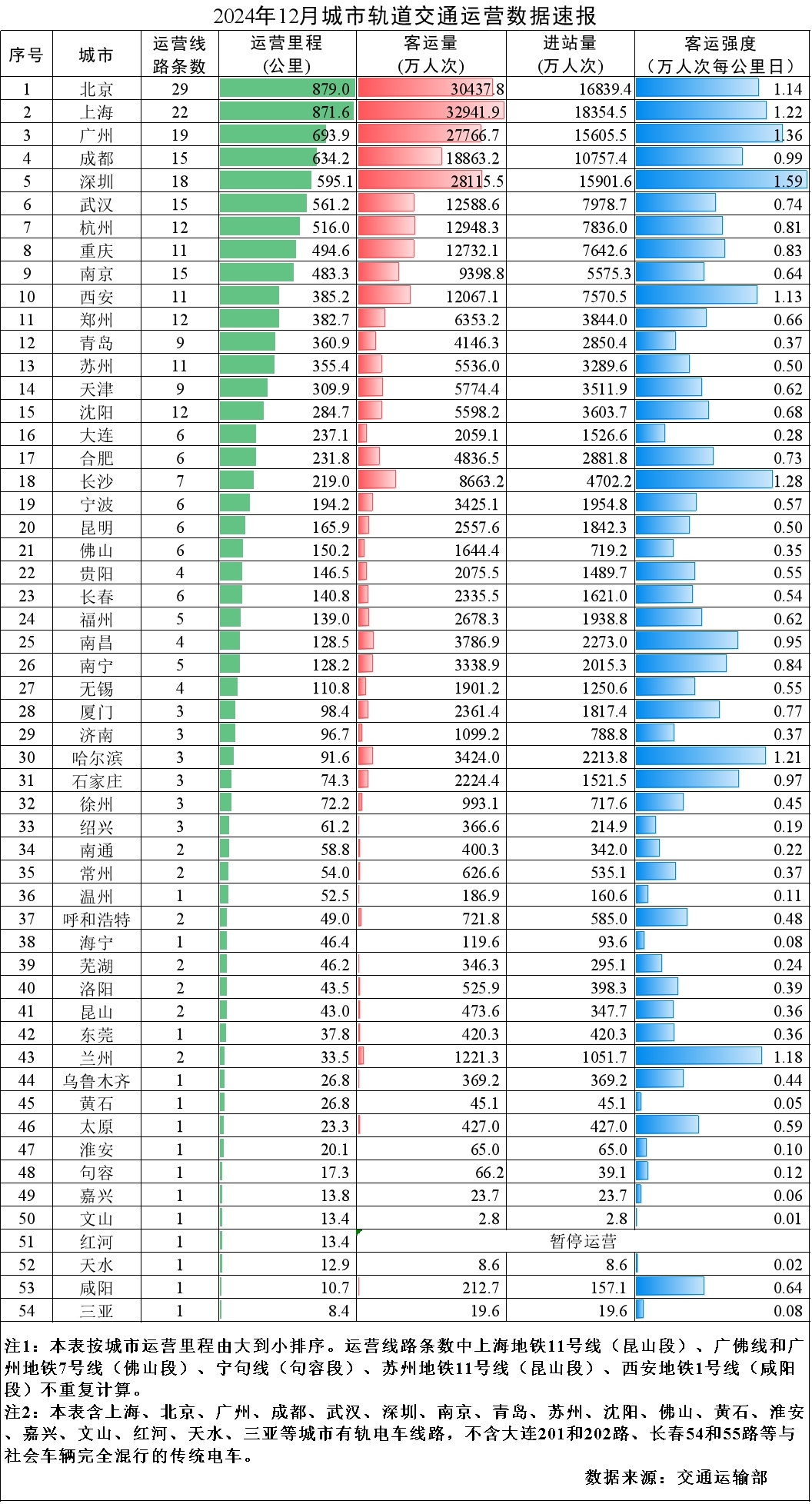
Group 1 - Chengdu's urban rail transit is accelerating with the full launch of trial operations for multiple new lines, including Line 10 Phase III, Line 17 Phase II, and Line 30 Phase I, aiming for initial operation this year [1] - The total length of the four lines expected to open this year in Chengdu is 87.5 kilometers, contributing to a projected total urban rail transit operating mileage of over 700 kilometers by the end of the year [1] - Chengdu's previous significant operational expansion occurred in 2020, when seven lines totaling over 200 kilometers were opened, pushing its urban rail transit mileage past 500 kilometers and ranking it fourth nationally [1] Group 2 - By the end of 2024, major cities like Beijing and Shanghai are expected to exceed 800 kilometers in urban rail transit operating mileage, creating a significant gap with other cities [2] - Guangzhou ranks third with an expected operating mileage of 693.9 kilometers, placing it in the same category as Chengdu, which is also projected to surpass 700 kilometers [2] - Other cities such as Shenzhen, Wuhan, and Hangzhou have also surpassed 500 kilometers in operating mileage, while Chongqing and Nanjing are at 400 kilometers [2] Group 3 - The operational statistics for major cities show that Beijing leads with 879 kilometers and a passenger volume of 30.44 million, followed by Shanghai with 871.6 kilometers and 32.94 million passengers [3] - Chengdu has 634.2 kilometers of operational rail with a passenger volume of 18.86 million, indicating a lower passenger intensity compared to other major cities [3] Group 4 - Guangzhou's government report indicates plans to complete three new metro lines totaling 74.5 kilometers this year, which will help it maintain its position as the third-largest urban rail system in China [7] - Both Chongqing and Nanjing are in a competitive race to expand their urban rail systems, with Nanjing's government aiming to open several new lines this year [8] Group 5 - Several cities, including Guangzhou, Suzhou, Zhengzhou, and Xi'an, have outlined plans to accelerate the approval of new urban rail transit construction projects in their government reports [9] - The trend indicates that urban rail construction will continue to focus on first-tier and economically strong second-tier cities, while approvals for third and fourth-tier cities will be more cautious [9]
城市轨交格局今年再变:成都广州破700公里,南京或超重庆杭州
Di Yi Cai Jing· 2025-06-17 14:21
Core Insights - The urban rail transit landscape in China is set to change significantly, with Chengdu's rail network expected to exceed 700 kilometers in 2023, marking a substantial increase in operational mileage [1][2][4] Group 1: Chengdu's Rail Expansion - Chengdu's rail transit group announced the commencement of trial operations for multiple new lines, including the 10th, 17th, and 30th lines, contributing to a total operational mileage expected to surpass 700 kilometers this year [1][2] - The Chengdu government aims to strengthen transportation infrastructure, with plans to open four new lines totaling 87.5 kilometers in length [2] - The completion of these new lines will enhance connectivity between various districts and support economic development in the region [3] Group 2: National Rail Transit Rankings - The number of cities in China with urban rail transit exceeding 500 kilometers will increase to nine, with Chengdu and Guangzhou both set to surpass this milestone [4][6] - Guangzhou's rail network is projected to reach 693.9 kilometers in 2024, maintaining its position as the third-largest rail network in the country [4][5] - The competition among cities like Nanjing, Chongqing, Xi'an, and Zhengzhou is intensifying, with Nanjing expected to surpass Chongqing in operational mileage, moving to the eighth position [5][6]
地铁2号线二期、5号线、7号线、9号线最新建设进度公布
Qi Lu Wan Bao Wang· 2025-06-16 06:44
Group 1: Metro Line 2 Phase II - The main structure of Longchuan Road Station has successfully topped out, achieving multiple records and completing the main structure 20 days ahead of schedule [3] - The station is part of the 8.9 km underground Line 2 Phase II, which connects the eastern part of Licang District with the city center and is expected to enhance transportation convenience for residents [3] Group 2: Metro Line 5 - The construction of the section between Changle Road Station and Eight Number Pier Station has achieved a breakthrough in shield tunneling technology under complex geological conditions, with a settlement control precision of 0.54 mm [5] - The completion of the protective pile construction at Lake Island Station has laid a solid foundation for subsequent excavation and structural work, finishing 69 days ahead of schedule [5] Group 3: Metro Line 7 - The main structure of all 7 stations in the second phase of Line 7 has been topped out, marking significant progress and multiple firsts in the construction timeline [6] - This line will facilitate rapid north-south connectivity, enhancing urban rail transit and boosting economic development along the route [6] Group 4: Metro Line 9 - The successful tunneling of the "Yongxing No. 1" shield machine under the墨水河 marks a record for the longest waterway crossing (130 meters) in the construction of Qingdao Metro Phase III [7] - The first phase of Line 9 is a key east-west backbone line in northern Qingdao, with a total length of 16.63 km and 13 stations planned [7]
广州地铁十二号线东、西段开通在即 地铁广州白云站预留六线换乘
Nan Fang Ri Bao Wang Luo Ban· 2025-06-13 07:52
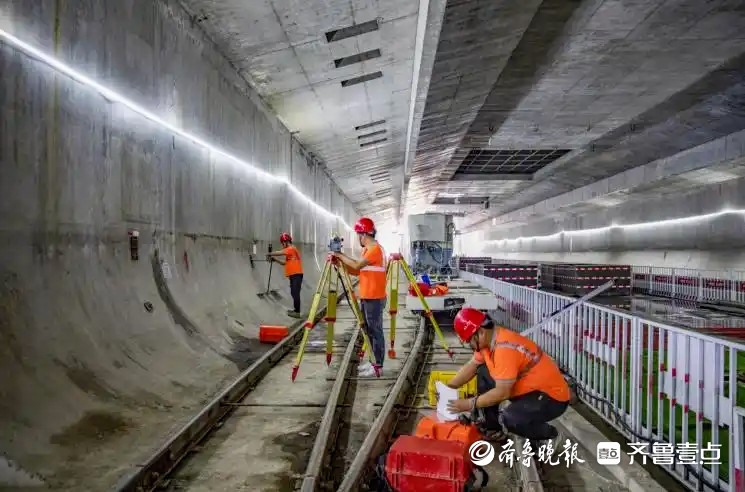
Group 1 - Guangzhou Metro is set to open two diagonal lines, Line 10 and Line 12, enhancing urban rail transit connectivity [1] - Line 12 spans approximately 37.6 kilometers with 25 stations, significantly improving service levels by integrating with existing lines [1] - The eastern section of Line 12 (from Ersha Island to South University Town) is 15 kilometers long with 9 stations, while the western section (from Xunfenggang to Guangzhou Sports Center) is 12.9 kilometers long with 9 stations [1] Group 2 - The Guangzhou Baiyun Station is the largest span station in the metro system, featuring a 24-meter column span and a total area of about 180,000 square meters [2] - Baiyun Station is designed as a modern comprehensive transportation hub, allowing for future connections to national rail and intercity traffic [2] - The station incorporates natural light and landscape elements into its design, reflecting the city's geographical features and enhancing the underground experience [2]
广佛东环等三条城际轨道线将在十五运前开通
Nan Fang Du Shi Bao· 2025-06-10 07:45
Core Viewpoint - Guangzhou's transportation network is set to improve significantly ahead of the 15th National Games, with the completion of three intercity rail lines enhancing connectivity to key business districts and transport hubs [1][2]. Group 1: Intercity Rail Developments - Three intercity rail lines, namely the Guangfo East Ring, the Suiguan-Shenzhen Pazhou branch, and the New Baiyun-Guangzhou intercity (from Baiyun Airport T2 to Zhuliu), are expected to be operational before the National Games [1]. - The Pazhou branch serves as a crucial link for the Suiguan-Shenzhen intercity railway into Guangzhou's core area, connecting with multiple existing and planned transport lines [1]. Group 2: Urban Transport Enhancements - The construction of four metro lines (including segments of Line 10, 12, 13, and 14) is being expedited to ensure they are operational before the National Games, providing convenient travel for residents and visitors [2]. - By the end of 2024, the total length of non-motorized vehicle lanes in the city is projected to reach 2,966 kilometers, representing a 144% increase from 2020 [2]. Group 3: Safety and Infrastructure Improvements - The city has completed upgrades to 211 flood control systems in tunnels, enhancing flood management capabilities [2]. - A digital upgrade of bridge safety management is underway, including the deployment of health monitoring systems and proactive collision warning systems [2].