无人配送

Search documents
刘强东强势“回归”乌镇,称“无人”时代每周只需工作一小时,建议向技术垄断企业征90%重税 | 巴伦独家
Sou Hu Cai Jing· 2025-11-07 06:00
Core Insights - Liu Qiangdong's return to the World Internet Conference signals a strong comeback for him in the internet sector after a low-profile period following an incident in 2018 [3][4] - His speech emphasized the future of logistics through automation and the potential for a significant reduction in logistics costs, which could enhance corporate profits and employee wages, thereby boosting consumer confidence and improving the economic structure [4][5] Group 1: Liu Qiangdong's Vision - Liu Qiangdong articulated a vision for "unmanned delivery" as the future of social logistics, with plans for the world's first fully unmanned delivery station to be operational by April next year [4][14] - He highlighted that reducing logistics costs from 14.1% to 6% of GDP could lead to substantial net profit increases for companies, which would in turn foster technological advancements and better employee compensation [11][12] Group 2: Strategic Moves by JD.com - JD.com has been actively expanding into new markets, including food delivery and the hospitality sector, indicating a shift from its traditional e-commerce platform image [6][8] - The company is investing heavily in robotics and AI technologies, aiming for a comprehensive layout in the robotics sector, which includes partnerships with various robotics companies [6][8] Group 3: Challenges and Considerations - The transition to unmanned logistics raises several challenges, including the need for advancements in solid-state battery production, safety regulations for autonomous vehicles, and user privacy concerns [8][12] - Liu Qiangdong's proposals for a reduced workweek and increased taxation on monopolistic tech companies to address social equity issues reflect a broader vision for the future of work and economic distribution [5][15]


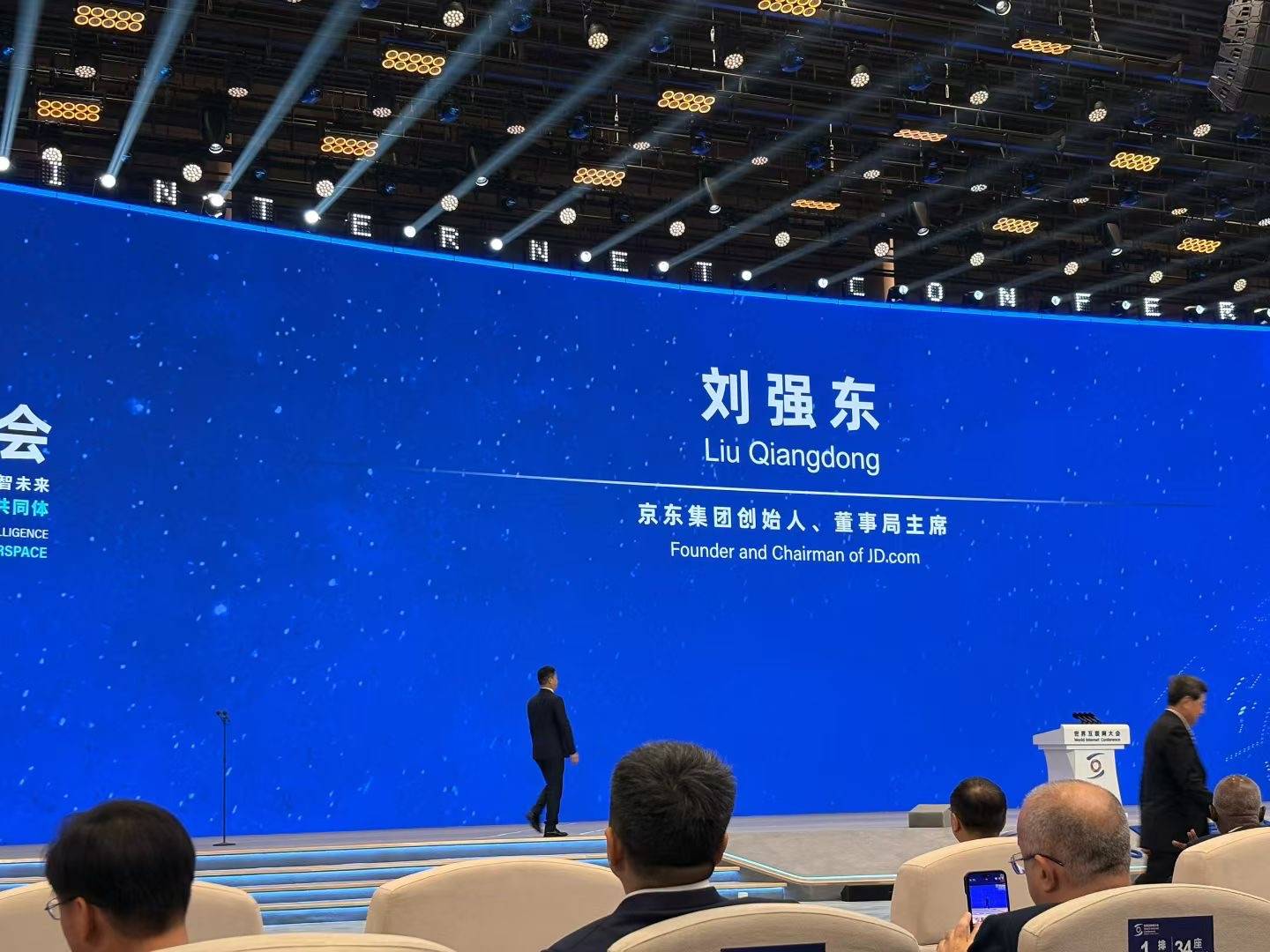
刘强东现身乌镇:明年4月将建立全球首个全无人配送站
Di Yi Cai Jing· 2025-11-07 04:39
Core Viewpoint - JD.com is set to build the world's first fully unmanned delivery station by April next year, featuring drones for aerial delivery and robots for ground logistics [1] Group 1: Company Developments - JD.com founder and chairman Liu Qiangdong announced the construction of a fully unmanned delivery station at the 2025 World Internet Conference [1] - The delivery station will utilize drones for takeoff and landing, while ground robots will be responsible for loading and delivering goods [1] Group 2: Logistics Innovations - JD.com is collaborating with numerous robotics companies to enhance the last-mile delivery process [1] - The plan includes using community robots to transport packages from unmanned vehicles to the community entrance [1]
刘强东现身乌镇:明年4月将建立全球首个全无人配送站
第一财经· 2025-11-07 04:24
Core Viewpoint - JD Group's founder and chairman Liu Qiangdong announced the construction of the world's first fully unmanned delivery station in April next year, featuring drones for takeoff and landing, unmanned delivery vehicles, and robots for loading goods [1] Group 1 - Liu Qiangdong emphasized the collaboration with numerous robotics companies to address the last-mile delivery issue, aiming for community robots to transport packages from unmanned vehicles to community entrances [1]

刘强东:明年4月将建立全球首个全无人配送站
Di Yi Cai Jing· 2025-11-07 04:17
Core Insights - JD.com founder and chairman Liu Qiangdong announced the construction of the world's first fully unmanned delivery station, set to launch in April next year [2] Group 1 - The unmanned delivery station will feature drones taking off and landing above, while delivery robots will operate below, with goods loaded directly by robots [2]
新石器巨额融资后,其他玩家能拿的钱不多了
Xi Niu Cai Jing· 2025-11-05 14:17
Core Insights - Neolix's recent $600 million Series D funding marks a significant turning point in the autonomous delivery sector, establishing a new phase of capital concentration and leaving limited financing opportunities for smaller players [2][3][4] Financing Landscape - Neolix has raised over 5.3 billion yuan, accounting for 60% of the total disclosed financing in the autonomous delivery sector, which is approximately 9 billion yuan since early 2025 [3] - The funding environment has shifted to a "head eats tail" scenario, where non-leading players face a severe capital shortage [3][4] Investment Strategy Shift - Investors have moved away from a diversified investment strategy to a preference for established players with proven performance, as seen in Neolix's ability to deliver over 10,000 vehicles and achieve profitability for six consecutive months [4][9] - The cost of investing in second or third-tier companies has increased significantly, making it less attractive compared to leading firms [4][9] Challenges for Smaller Players - Smaller companies are experiencing a tightening financing environment, with many unable to secure significant funding, leading to a vicious cycle of financial strain and business contraction [5][6] - The attractiveness of non-leading firms is declining as they face technological, cost, and supply chain disadvantages compared to Neolix [9] Strategies for Survival - Non-leading players are encouraged to pivot their financing strategies towards industry capital and specialized funds that align with their operational capabilities [11][12] - Focusing on niche markets and demonstrating clear profitability can help smaller firms attract investment, utilizing strategies like "debt-equity hybrid" models to mitigate risks [14][15]

拼融资、谋上市、打价格战,无人物流车赛道“卷疯了”
3 6 Ke· 2025-10-30 23:12
Core Viewpoint - The emergence of unmanned delivery logistics vehicles is rapidly transforming the logistics industry, with significant investments and competition intensifying among key players like New Stone and NineSight [1][4][5] Industry Overview - The industry is characterized by a few dominant players, with New Stone and NineSight leading the market, both having delivered over 10,000 units cumulatively [2][12] - The market is witnessing a surge in capital investment, with major financing rounds reported for leading companies, indicating a growing interest from top-tier investors [4][12] Market Dynamics - Increased competition is leading to a price reduction trend in the unmanned delivery logistics vehicle market, making cost control a critical factor for survival [5][25] - The market is projected to experience explosive growth, with sales expected to exceed 30,000 units by 2025, compared to only 5,100 units in 2024 [13][15] Technological Development - The industry has evolved from initial skepticism to a more favorable environment due to advancements in technology and supportive policies, allowing for legal operation of unmanned delivery vehicles [9][17] - Continuous technological iterations have improved the safety and efficiency of unmanned delivery vehicles, making them more viable for logistics applications [17][19] Competitive Landscape - Major internet companies like Meituan, JD, and Cainiao are entering the unmanned delivery vehicle space, intensifying competition and leading to potential price wars [21][24] - The cost of unmanned delivery vehicles has significantly decreased, with some models now priced below 20,000 yuan, prompting aggressive pricing strategies among competitors [25][26] Future Outlook - The demand for unmanned delivery logistics vehicles is expected to grow as logistics companies seek to reduce costs and improve efficiency, with projections indicating a potential market size of 600,000 units by 2030 [15][16] - The industry is at a critical juncture, with companies needing to capitalize on current demand while navigating the challenges of increased competition and pricing pressures [26]

9个月吸金86亿,资本重仓“无人区”
凤凰网财经· 2025-10-30 13:14
Core Viewpoint - The article highlights the rapid commercialization and growth potential of the unmanned delivery vehicle industry, predicting significant advancements and profitability for leading companies by 2025 [3][6]. Financing and Market Growth - Leading unmanned delivery companies have secured approximately 8.6 billion yuan in financing since the beginning of the year, with notable rounds including 1 billion yuan for New Stone and over 600 million dollars for NineSight [2]. - The industry is expected to reach a market size of around 500 billion yuan, with an anticipated increase of nearly 100,000 units in the coming year [6]. Commercialization Milestones - The critical threshold for the unmanned vehicle business is identified as 10,000 units, which enables a positive cycle of cost reduction, scenario validation, and scale expansion [4]. - New Stone and NineSight have both achieved the delivery of 10,000 vehicles, with New Stone projecting 1 billion yuan in revenue this year and full profitability by 2026 [4][11]. Operational Efficiency - Unmanned delivery vehicles are addressing significant pain points in the logistics sector, such as low vehicle utilization and high personnel costs, leading to cost reductions and efficiency improvements [9]. - For instance, Shunfeng's unmanned vehicles have reduced per-package costs by 1.32 yuan and improved efficiency by 30% [9]. Technological Advancements - The cost of unmanned delivery vehicles has decreased significantly, with New Stone's vehicle costs dropping from 200,000 yuan to 70,000 yuan between 2018 and 2023, and projected prices as low as 19,800 yuan for future models [14]. - The industry is transitioning from a research and testing phase to large-scale commercial operations, with a tenfold increase in development speed compared to the previous year [11]. Challenges and Regulatory Issues - Despite the rapid growth, the industry faces challenges related to technology, standards, and ecosystem development, particularly in maintaining stability during large-scale operations [17]. - Road rights and regulatory frameworks are significant barriers to scaling operations, with a lack of unified standards across regions increasing operational costs [18][19]. Future Outlook - The next decade is expected to see explosive growth in smart mobility, particularly in last-mile logistics and delivery services [16]. - Companies are exploring collaborative models to optimize resource utilization and reduce operational costs, such as partnerships with public transport entities [19].

五部门推出城市商业提质行动方案,扩大多元化商品供给
Huan Qiu Wang· 2025-10-30 01:04
Core Viewpoint - The Ministry of Commerce and other five departments have issued the "Urban Commercial Quality Improvement Action Plan," which includes 21 specific measures aimed at enhancing urban commercial environments to better meet the needs of citizens for a better life [1] Group 1: Specific Measures - The plan emphasizes the renovation of pedestrian streets and business circles, as well as the upgrade of business formats to diversify the supply of domestic and foreign products [1] - It promotes the integration of online and offline development, guiding commercial enterprises to collaborate with e-commerce companies through instant retail models [1] - The plan encourages e-commerce companies to partner with logistics firms to consolidate scattered demand orders, enhancing delivery efficiency through shared and centralized delivery systems [1] Group 2: Delivery Efficiency - The initiative aims to improve last-mile delivery efficiency and service quality by utilizing urban space for facilities such as front warehouses, smart lockers, and comprehensive delivery service stations [1] - It promotes the development of instant delivery and unmanned delivery services to enhance precise response capabilities [1]
新石器无人车获得6亿美元融资 无人配送为何吸引资本关注
Huan Qiu Wang Zi Xun· 2025-10-27 08:27
Core Insights - Neolix, a Chinese company focused on "unmanned delivery," has successfully completed a $600 million Series D financing round, setting a record for private equity financing in China's autonomous driving sector [1] - The financing was backed by a mix of Middle Eastern sovereign funds, domestic AI industry funds, and leading investment firms [1] - Neolix has achieved significant commercial milestones, delivering over 10,000 L4 autonomous vehicles, with a monthly delivery rate exceeding 2,000 units, making it the first company globally to surpass the "10,000-unit threshold" [1] Financing and Business Strategy - The financing reflects a broader belief in the need for a team capable of large-scale commercialization in the autonomous driving sector [2] - Neolix's strategy involves a "heavy" approach by focusing on logistics scenarios and providing end-to-end solutions for the urban delivery market, which is valued at trillions [2] - The company has adopted a "pure vision" technology route, which is more challenging but offers greater commercial potential compared to the traditional reliance on "lidar + high-precision maps" [2] Technological Innovation - Neolix's vehicles utilize a minimal sensor setup, consisting of only 13 sensors (1 lidar and 12 cameras), which enhances algorithm requirements and reduces hardware costs significantly [4] - The company's self-developed "vision-action" model supports end-to-end autonomous driving, facilitating easier compliance and mass production [4] Market Expansion and International Strategy - Neolix has received the first official public road autonomous vehicle license in the UAE and plans to deploy 5,000 unmanned vehicles there by the end of next year [6] - The Middle East is seen as an ideal testing ground due to its high logistics costs and favorable regulatory environment, allowing Neolix to avoid the compliance challenges associated with high-precision map data collection [6] - The company aims to replicate its domestic operational model internationally, transitioning from a "product supplier" to a "logistics service provider" [6] Financial Performance and Future Outlook - Neolix achieved continuous monthly profitability in the first half of the year and anticipates full profitability by next year [5] - The recent financing is intended to prepare for explosive growth, as the industry is expected to transition from initial development to rapid expansion [5] - The logistics market in China is substantial, with annual freight expenditures reaching 3 trillion, providing a solid foundation for Neolix's growth [8] Operational Challenges and Vision - Neolix recognizes the internal challenges of scaling operations to meet increased delivery volumes, emphasizing the need for innovation in product flexibility and customer service [9] - The company's vision positions unmanned vehicles as a new public infrastructure that enhances urban operational efficiency, with the potential to set global standards based on China's advancements [10]

无人车双十一迎来大规模采购潮,场景从快递向即时零售延伸
Nan Fang Du Shi Bao· 2025-10-25 09:01
Core Insights - The logistics industry is witnessing a significant shift towards the adoption of unmanned delivery vehicles, with major companies making large-scale purchases to enhance efficiency and reduce costs [1][4][5]. Group 1: Unmanned Vehicle Procurement - China Post has initiated a procurement project for 7,000 unmanned vehicles, including various sizes and services, with a framework agreement lasting four years [1][2]. - JD Logistics plans to purchase 3 million robots, 1 million unmanned vehicles, and 100,000 drones over the next five years to strengthen its position in smart logistics [1][4]. - Companies like Cainiao and Shentong Express are also investing in unmanned vehicles, with Shentong aiming to deploy 2,000 unmanned vehicles by the end of the year [1][5]. Group 2: Market Trends and Growth - The unmanned delivery vehicle market is expected to experience explosive growth by 2025, driven by technological advancements, cost reductions, and increased demand in the instant retail market [4][6]. - As of mid-2025, over 100 cities in China have opened road rights for unmanned delivery vehicles, with the total number of such vehicles exceeding 6,000, marking a 50% increase from 2024 [6][8]. Group 3: Cost Efficiency and Operational Benefits - Unmanned vehicles can significantly reduce delivery costs, with reports indicating a decrease of 30%-50% in last-mile delivery expenses [8][10]. - Companies like Zhongtong Express have noted that using unmanned vehicles can lower costs by 6-7 cents per package, enhancing operational efficiency [5][10]. Group 4: Expansion Beyond Traditional Delivery - The application of unmanned vehicles is expanding beyond the express delivery sector into urban logistics and instant delivery markets, indicating a potential for exponential growth [10][12]. - White Rhino is diversifying its operations to include campus delivery networks and retail replenishment, showcasing the versatility of unmanned vehicles in various logistics scenarios [12].