
非物质文化遗产保护

Search documents
邮储银行宁波分行助象山非物质文化遗产焕发新生
Zheng Quan Ri Bao Zhi Sheng· 2025-07-26 17:40
Group 1 - The traditional festivals of Kaiyang Festival and Xieyang Festival in Xiangshan are recognized as national intangible cultural heritage and have been integrated with the local economy, boosting the development of fisheries, tourism, and related industries [1] - Postal Savings Bank of Ningbo has provided financial services to support the protection and inheritance of intangible cultural heritage, injecting financial resources into traditional festival activities [1] Group 2 - The Kaiyang Festival marks the beginning of the fishing season for Xiangshan fishermen, who face financial challenges in preparing necessary supplies like diesel and fishing gear [2] - Fisherman Wu Hongbin sold his old boat and invested over 7 million yuan in a new vessel, but faced cash flow issues for renovations and equipment purchases, which were alleviated by a 3.04 million yuan ship mortgage loan from Postal Savings Bank [2] - Wu also utilized the bank's "Express Loan" product to secure an additional 300,000 yuan for diesel reserves ahead of the festival [2] Group 3 - The intangible cultural heritage extends to various segments of the fishing industry, with companies like Ningbo Tiannan Aquatic Products Co., Ltd. actively participating in seafood procurement during the festival [3] - Tiannan Aquatic Products reported daily transaction volumes exceeding 1 million yuan, necessitating sufficient working capital to support operations [3] - The company invested over 31 million yuan in expanding its facilities and equipment, leading to liquidity challenges, which were addressed by a 12 million yuan credit facility from Postal Savings Bank [3][4] Group 4 - Postal Savings Bank has developed specialized financial products to support the intangible cultural heritage-related industry chain, including flexible credit support for small and micro enterprises in the fishing sector [4] - The bank has conducted financial literacy campaigns to educate fishermen and businesses about financial policies, enhancing their financial awareness [4] - The bank aims to continue its efforts in supporting the transmission of intangible cultural heritage and economic development in the fishing community [4]

《意大利发展报告》发布——中意开启务实合作新阶段
Zhong Guo Jing Ji Wang· 2025-07-25 07:50
Core Insights - The "Italy Development Report (2024-2025)" highlights the necessity for pragmatic cooperation between China and Italy amidst a complex international landscape, emphasizing mutual benefits and global impact [1][2] Economic Cooperation - China and the EU have established a strong economic symbiotic relationship, with bilateral trade expected to reach $785.8 billion in 2024, making each other their second-largest trading partners [1] - Italy's economy is significantly affected by U.S. tariff policies, with exports to the U.S. accounting for 4% of its GDP, highlighting the importance of diversifying trade partnerships [2] Strategic Partnerships - 2024 marks a significant year for China-Italy relations, celebrating the 20th anniversary of their comprehensive strategic partnership and the 700th anniversary of Marco Polo's death, with various agreements signed to enhance cooperation [3] - The action plan for 2024-2027 aims to deepen collaboration across various sectors, including cultural exchanges and strategic alignment [3] Sectoral Opportunities - There is considerable potential for cooperation in the service sector, with China planning to expand its service industry, particularly in telecommunications, education, and healthcare, which aligns with Italy's strengths in tourism, healthcare, and education [3] - In artificial intelligence, both countries can learn from each other, with Italy looking to adopt China's advanced practices in AI application while China can benefit from Italy's regulatory frameworks [4] Cultural Exchange - Both countries hold significant cultural heritage, being recognized for their non-material cultural heritage, which presents opportunities for mutual learning and collaboration in preservation efforts [4]
为文化生态保护区注入新能量
Jing Ji Ri Bao· 2025-07-21 22:14
Core Points - The establishment of national cultural ecological protection zones aims to protect intangible cultural heritage as a holistic practice, integrating cultural and natural ecosystems [1][2] - These protection zones enhance the integration of culture and tourism, creating vibrant regional development opportunities and attracting tourists through immersive cultural experiences [2] - Challenges remain in balancing cultural protection with economic development, raising public awareness, and cultivating professional talent for cultural preservation [3] Summary by Sections Cultural Ecological Protection Zones - Recent additions to the list of national cultural ecological protection zones include Hakka Culture (Western Fujian), Wuling Mountain Area (Southwestern Hubei) Tujia and Miao Culture, and Jinzhong Cultural Ecological Protection Zone, among others [1] - The approach shifts from protecting individual intangible cultural heritage projects to a comprehensive system that includes the cultural and ecological environment [1] Economic and Tourism Development - Cultural ecological protection zones serve as quality destinations for cultural tourism, leveraging unique cultural resources and natural beauty to attract visitors [2] - The Jinzhong Cultural Ecological Protection Zone has developed various cultural tourism products based on its rich historical heritage, significantly boosting local tourism and economy [2] Challenges and Future Directions - The construction of cultural ecological protection zones faces challenges such as the need to balance cultural preservation with economic growth and to engage the younger generation in cultural transmission [3] - Effective cultural protection requires active participation from the community, particularly the youth, to ensure that cultural heritage remains a living practice rather than a static display [3]
《中国绣娘》新书发布及非遗图书影像捐赠暨刺绣文化推广仪式在京举行
Zhong Guo Neng Yuan Wang· 2025-07-21 13:33
Core Viewpoint - The event held on July 20, 2025, in Beijing focused on the launch of the book "Chinese Embroiderers" and the promotion of intangible cultural heritage, emphasizing the importance of preserving and innovating traditional Chinese embroidery culture [1][3][5]. Group 1: Event Overview - The event was organized by the Electronic Industry Press and featured notable guests including experts and leaders in the field of publishing and cultural heritage [1]. - The book "Chinese Embroiderers" represents a significant effort to document and promote Chinese embroidery culture through various media, including books and documentaries [3][5]. Group 2: Cultural Significance - The publication of "Chinese Embroiderers" is seen as a new exploration in the protection of intangible cultural heritage, aiming to spread Chinese culture globally [3]. - The event highlighted the integration of technology and traditional culture, showcasing a multi-faceted approach to cultural preservation [1][5]. Group 3: Contributions and Donations - The event included a donation segment where various cultural artifacts and the book were donated to the Capital Library, marking a significant step in the preservation of Chinese embroidery as part of the national collection [10][15]. - The donations included not only the book but also documentaries and embroidery works, creating a comprehensive approach to cultural transmission [10][15]. Group 4: Future Initiatives - The Electronic Industry Press plans to continue exploring innovative ways to promote traditional culture through various media formats, including books and documentaries [6]. - The Beijing City Library aims to build a more complete intangible cultural heritage gene bank and is actively seeking contributions from various sources to enhance its collection [15].

三亚出台非遗保护实施细则
Hai Nan Ri Bao· 2025-07-11 01:50
Core Viewpoint - The implementation details for the protection of intangible cultural heritage in Sanya have been established, focusing on a comprehensive protection system and the allocation of special funds to support various aspects of heritage preservation [1][2]. Group 1: Implementation Details - The "Implementation Details for the Protection of Intangible Cultural Heritage" will take effect on September 1 and remain valid until September 1, 2030, consisting of 7 chapters and 67 articles [1]. - A "five-in-one" protection system is constructed, covering special fund management, project evaluation, recognition of representative inheritors and groups, demonstration base management, and cultural ecological protection area establishment [1]. Group 2: Funding and Support - Special funds will be established to support nine key areas, including resource investigation and representative project protection, with inheritors receiving an annual subsidy of 6,000 yuan per person for activities such as teaching and research [1]. - Different types of projects will receive tailored protection, with an emphasis on regional protection for folk literature and customs, tourism integration for traditional music and dance, and encouragement for the development of modern cultural products in traditional crafts [1]. Group 3: Inheritor and Group Recognition - An innovative recognition system for "inheritor groups" has been established, providing equal protection for groups with two or more members collaborating and mastering core skills [2]. - Inheritors are required to fulfill obligations such as training successors, preserving physical materials, and submitting annual reports, with evaluations every two years [2].
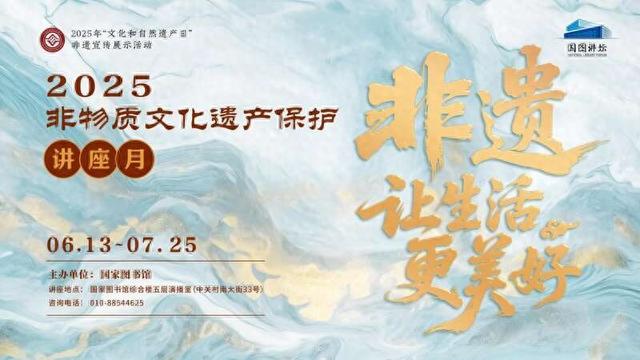
邵阳布袋戏走进国家图书馆“非遗讲座月”
Zhong Guo Qing Nian Bao· 2025-07-07 13:15
Core Points - The event titled "Lonely Theater Troupe, No Longer Alone" was held at the National Library of China, focusing on the historical development and contemporary transmission of the national intangible cultural heritage project, puppet theater (Shaoyang cloth bag opera) [1][3] - The event featured a documentary about Liu Yong'an, a national intangible cultural heritage representative inheritor, showcasing his life and experiences in the art of puppet theater [3] - Liu Yong'an shared his 50-year journey in the craft, while his grandson Liu Yu also participated, discussing the evolution of Shaoyang cloth bag opera from his childhood to the present [3] Event Details - The event included live performances of Shaoyang cloth bag opera, allowing attendees to experience the traditional art form firsthand [3] - The "Intangible Cultural Heritage Lecture Month" initiative was launched by the National Library in 2013, with the 2025 edition featuring six planned exchange and sharing activities [3] - Future collaborations are planned with provincial intangible cultural heritage protection centers in Guangdong and Shandong [3]
非遗新韵曲子戏 传承不息在白银
Xin Hua Wang· 2025-06-13 03:50
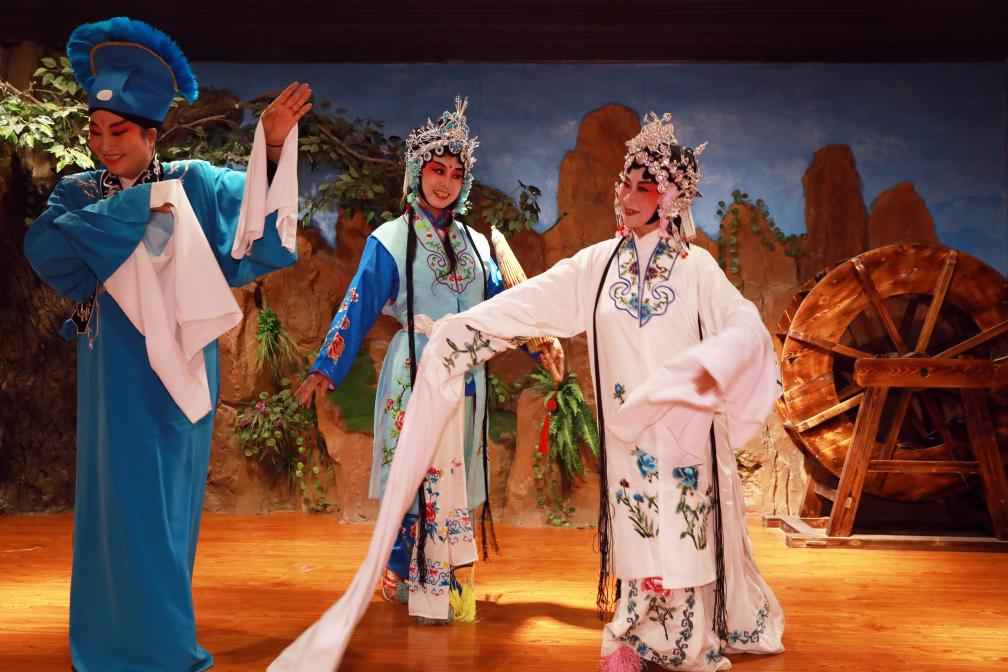
Core Viewpoint - The article highlights the successful preservation and development of the traditional art form "Quzi Opera" in Baiyin City, Gansu Province, emphasizing its cultural significance and ongoing efforts to innovate and engage the community [1][3][4]. Group 1: Cultural Heritage Preservation - Baiyin City has adopted a work policy focused on "protection first, rescue priority, reasonable use, and inheritance development" for the preservation of non-material cultural heritage, particularly Quzi Opera [3]. - The city has established two Quzi Opera training centers and one inheritance base, nurturing over 60 professional performers and creating a diverse team of inheritors [3][5]. Group 2: Artistic Innovation and Community Engagement - Recent efforts include the revival of traditional plays like "Xixiangdiao" and the creation of modern works such as "Nostalgia" and "Hope in the Fields," which reflect contemporary themes like rural revitalization [3]. - The Baiyin District Xixiangdiao Art Troupe, founded in 2017, actively engages in the transmission of Quzi Opera, public performances, and academic research, showcasing a strong community commitment to this art form [5]. Group 3: Future Development Plans - Future initiatives will focus on enhancing protection efforts through a collaborative model involving inheritors, platforms, and cultural centers, with an emphasis on discovering endangered tunes, training young inheritors, and digital preservation [5].
全球非遗传承人齐聚上海,探索千年技艺的现代之路
Di Yi Cai Jing· 2025-06-10 11:25
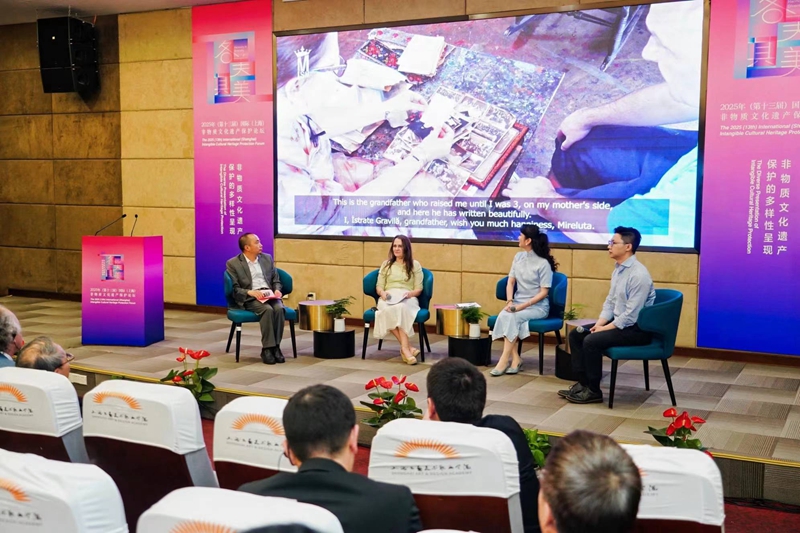
Core Viewpoint - The 2025 International (Shanghai) Intangible Cultural Heritage Protection Forum emphasizes the importance of international cooperation and cultural exchange in preserving intangible cultural heritage, showcasing diverse practices from various countries [1][3]. Group 1: Forum Overview - The forum, hosted by the Shanghai Museum of Arts and Crafts, Shanghai Arts and Crafts Vocational College, and Shanghai Intangible Cultural Heritage Protection Center, has become a significant cultural brand in Shanghai, promoting international exchange and cooperation in intangible heritage protection [3]. - The theme of this year's forum is "Each Beauty Its Own," focusing on international cooperation, cultural identity, social participation, and technological innovation in the field of intangible heritage [3]. Group 2: Cultural Presentations - The forum featured presentations from cultural leaders and artists from countries such as Uzbekistan and Kyrgyzstan, highlighting their traditional crafts and the historical significance of their intangible cultural heritage [4][5]. - The director of the National Museum of History and Culture of Kyrgyzstan discussed the importance of rock art in documenting the lives of ancestors, showcasing the evolution of artistic expression over centuries [4]. Group 3: Cultural Exchange and Influence - The director of the Indonesian Museum of Ceramics and Fine Arts presented research on the influence of Chinese culture on Indonesian culture, particularly in batik designs, illustrating the impact of cross-cultural exchanges [7]. - The forum included interactive experiences showcasing various Chinese traditional crafts, allowing international guests to engage with the cultural heritage of China [7]. Group 4: Challenges and Opportunities in Craftsmanship - The forum addressed the challenges faced by traditional crafts in the modern economy, emphasizing the need for innovation and adaptation to avoid the loss of traditional techniques [9][12]. - The president of the Uzbekistan National Art Institute highlighted government support for traditional crafts, including financial subsidies and tax incentives, which have revitalized interest in handmade products [12]. Group 5: Education and Future of Craftsmanship - Educational institutions in China are innovating their curricula to integrate traditional craftsmanship with modern skills, preparing students for diverse career paths in the arts and crafts sector [12][13]. - The president of Nanjing University of the Arts emphasized the need to integrate intangible heritage into daily life and modern design aesthetics to seize new market opportunities [13].
非物质文化遗产保护论坛聚焦多样性呈现 完善分类 濒危项目优先保护
Jie Fang Ri Bao· 2025-06-06 01:41
Group 1 - The forum on intangible cultural heritage protection was held in Shanghai, emphasizing the collective responsibility of society and humanity in preserving these cultural resources [1] - The theme of the forum was "Diversity in the Presentation of Intangible Cultural Heritage Protection," focusing on various forms of intangible heritage and social participation mechanisms [1] - Experts from multiple countries shared their practices and explorations in areas such as inheritance mechanisms, digital innovation, public participation, and international cooperation [1] Group 2 - China has established a comprehensive four-level directory system for intangible cultural heritage, with over 100,000 projects listed at various administrative levels [2] - Current challenges in intangible heritage protection include imbalances in protection efforts, conflicts between commercialization and authenticity, and the need for improvements in the inheritance system [2] - The average age of national-level intangible cultural heritage representatives is over 65, indicating a lack of successors and insufficient support for the transmission of these cultural practices [2]
范长青女士主持课题荣获中国智慧工程研究会一等奖,推动非物质文化遗产保护创新发展
Jiang Nan Shi Bao· 2025-06-03 06:51
中国智慧工程研究会对范长青女士及其团队的研究成果给予了高度评价。研究会表示,范长青女士的课 题研究体现了高度的创新性和实践价值,其团队展现出了卓越的科研能力和团队协作精神。研究成果对 于推动非物质文化遗产保护领域的发展具有重要意义,不仅在国内处于领先水平,在国际上也具有一定 的影响力。范长青女士的杰出贡献为非物质文化遗产保护事业树立了典范,激励着更多专业人士投身于 非物质文化遗产保护研究和实践。 此次获奖对于范长青女士及其团队而言,是一个新的起点。范长青女士表示,她将继续带领团队深化研 究,拓展研究成果的应用范围,与更多非物质文化遗产保护机构分享经验,共同推动行业进步。同时, 她也将积极参与国际学术交流,将中国非物质文化遗产保护的成功经验推向世界,为全球非物质文化遗 产保护事业贡献力量。 近日,非物质文化遗产保护领域传来喜讯,范长青女士主持的课题《跨文化心理咨询在促进非物质文化 遗产保护中的应用研究》荣获中国智慧工程研究会职业素养专业委员会科研成果一等奖。这一殊荣是对 范长青女士在非物质文化遗产保护科研领域杰出贡献的高度认可,也为非物质文化遗产保护事业注入了 新的活力。 中国智慧工程研究会作为全国性一级社团组 ...