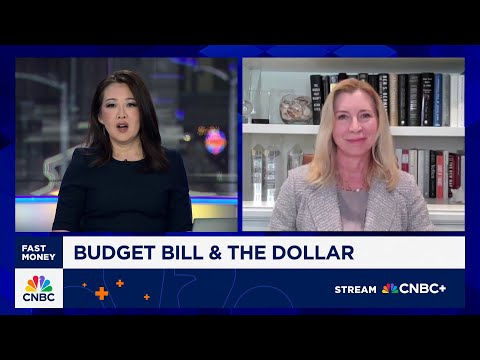
Dollar Weakness

Search documents
Gold ETFs to Watch as the Metal Hits Fresh Highs
ZACKS· 2025-09-22 17:26
Core Insights - Gold's rally is expected to continue, supported by the Federal Reserve's recent interest rate cuts and anticipated further cuts later in the year [1][2] - The price of gold has increased by 11.19% over the past month and 41.48% year-to-date, driven by dollar weakness, central bank buying, and safe-haven demand amid geopolitical tensions [1][2] - The U.S. Dollar Index (DXY) has decreased by 1.21% over the past month and 10.24% year-to-date, contributing to the upward pressure on gold prices [5] Economic Indicators - The market anticipates a 91.9% likelihood of an interest rate cut in October and a 98.8% likelihood in December, which is expected to further weaken the dollar and boost gold demand [3][4] - Rising inflation concerns and legal uncertainties regarding tariffs under the Trump administration are adding to macroeconomic volatility, suggesting that gold's rally may persist [2] Investment Strategies - Gold is viewed as a crucial hedge in uncertain macroeconomic conditions, prompting investors to consider increasing their exposure to the precious metal [6] - Recommended ETFs for physical gold include SPDR Gold Shares (GLD), iShares Gold Trust (IAU), and others, with GLD being the most liquid option with an asset base of $116.49 billion [7][9] - For gold miners, options include VanEck Gold Miners ETF (GDX) and Sprott Gold Miners ETF (SGDM), with GDX also being the most liquid and having an asset base of $19.93 billion [10][11]
全球股票策略_美联储降息时该怎么做…… 通常情况与本次情况-Global Equity Strategy_ What to do as the Fed cuts... normally and this time
2025-09-22 01:00
Summary of Key Points from the Conference Call Industry or Company Involved - The report focuses on the implications of the Federal Reserve's rate-cutting cycle and its impact on various sectors and markets, particularly in the context of the global economy and investment strategies. Core Insights and Arguments 1. **Recession Outlook**: There is a low probability of a recession following the Fed's rate cuts, with historical data indicating that recessions occur 56% of the time after rate cuts. Current conditions do not show classic preconditions for a recession, such as commodity shocks or excess private sector leverage [5][10][12]. 2. **Market Bubble Risk**: If the Fed cuts rates by 1% by year-end, all seven preconditions for a market bubble would be present, with a 35% probability of a bubble forming in 2026. Historically, markets have risen by an average of 17% 12 months after a rate cut without a recession [5][21][26]. 3. **Technology Sector Performance**: The technology sector, particularly software, is expected to outperform following rate cuts, with historical data showing that tech stocks outperform 75% of the time in the 12 months after the first rate cut if there is no recession [3][30]. 4. **Dollar Weakness**: The dollar typically weakens following rate cuts, with historical data showing an 80% chance of a decline in the month after a cut. This trend supports investment in sectors that benefit from a weaker dollar, such as domestic European companies and certain U.S. sectors [4][38][45]. 5. **Emerging Markets (EM) Focus**: Emerging markets tend to outperform following Fed rate cuts, with a 75% success rate in the 12 months after a cut without a recession. Specific countries highlighted include Brazil and China, along with indirect plays like Reckitt Benckiser and Coca-Cola [5][75]. 6. **Sector Analysis**: - **Cyclicals vs. Defensives**: Cyclical sectors (excluding tech and financials) are currently priced for strong economic recovery, while defensives are recommended for stability. Financials are expected to outperform 75% of the time following rate cuts [7][73]. - **Gold Stocks**: Gold stocks are favored as they have historically risen after rate cuts, with a weaker dollar further supporting this trend [9][37]. 7. **Small Caps Sensitivity**: U.S. small caps are more sensitive to rate changes but have shown limited long-term performance following rate cuts due to their underweight in tech and overvaluation concerns [8][63]. 8. **Investment Recommendations**: The report suggests maintaining positions in tech stocks (Meta, MSFT, Amazon, TSMC), electrification companies (Eaton, Schneider), and gold stocks as preferred investments in the current environment [3][37][9]. Other Important but Possibly Overlooked Content - The report emphasizes the unusual nature of the current economic environment, drawing parallels to historical periods such as September 1998, where similar conditions led to significant market gains [26][28]. - The analysis includes detailed statistical data on sector performance following rate cuts, highlighting the importance of understanding historical trends in making investment decisions [74][75]. This comprehensive analysis provides a strategic framework for navigating the potential impacts of the Fed's monetary policy on various sectors and markets.
Dollar Weakness and Tighter Global Supplies Boost Crude Prices
Yahoo Finance· 2025-09-16 19:22
Core Insights - Crude oil and gasoline prices have surged, reaching 1.5-week highs, driven by a decline in the dollar index and concerns over reduced Russian oil exports due to increased Ukrainian drone attacks on Russian refineries [2][3]. Group 1: Price Movements - October WTI crude oil closed up by $1.22 (+1.93%) and October RBOB gasoline closed up by $0.0282 (+1.40%) [1]. - The dollar index (DXY) fell to a 2.5-month low, which is favorable for energy prices [2]. Group 2: Supply Dynamics - Ukrainian drone attacks have significantly impacted Russian oil infrastructure, leading to a reduction in crude exports and tightening global oil supplies [3]. - The Transneft Pipeline, which manages over 80% of Russia's oil, has restricted storage capabilities for firms [3]. - The Kirishi refinery, one of Russia's largest, has halted crude processing due to damage from a drone attack, affecting its annual processing capacity of over 20 million tons [3]. Group 3: Economic Indicators - Strong US economic data supports energy demand; August retail sales increased by 0.6% month-over-month, surpassing expectations of 0.2% [4]. - Manufacturing production in August unexpectedly rose by 0.2% month-over-month, contrary to expectations of a decline [4]. Group 4: Global Oil Storage - A decrease in crude oil stored on tankers is bullish for oil prices, with a reported decline of 7.2% week-over-week to 67.96 million barrels as of September 12 [5]. Group 5: Geopolitical Factors - Ongoing tensions from the war in Ukraine may lead to further sanctions on Russian energy exports, which could further reduce global oil supplies [6]. - The US has proposed imposing tariffs up to 100% on China and India for their purchases of Russian oil to pressure Russia into ending the conflict [6].
Clearest Plays Are EM Gains as USD Falls: 3-Minute MLIV
Bloomberg Television· 2025-09-16 08:44
Mark, let's find out what top of mind for you. We're working towards a Fed meeting. Of course, markets seem pretty peaceful with that still on the horizon, but you're spotting some dollar softness that you're putting down to the to the migrant story. We'll be back to talking about steepness and dollar softness on the back of that then. We very much are talking about that.I think one of the problems going into this week's Fed meeting, which is what everyone is eyeing, is that the trades have already played o ...

Fed has room to cut deeper if inflation stays tame, says FedWatch's Ben Emons
CNBC Television· 2025-09-05 22:27
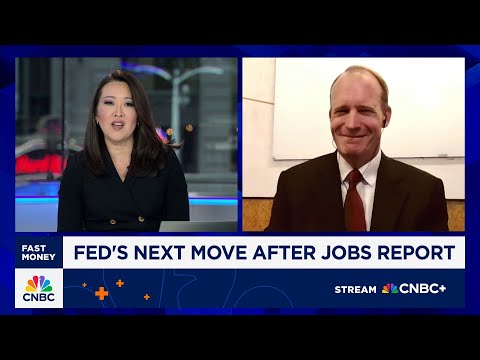
We're joined by Ben Emmens, founder and chief investment officer at Fed Watch Advisors. Ben, great to have you with us. >> Hey man, it was good to be on again.Thank you. >> So, we saw that record hit on the S&P 500 early in the session and then the market started really thinking like, uhoh, why do we really need so many cuts. Are you worried that there is a growth scare ahead of us.>> Not really. actually now because I I I've noted from the GDP data and even from some of the ISM and regional PMI data there' ...
Oil and Natural Gas Technical Analysis: Energy Market Eyes Rebound Amid Dollar Weakness
FX Empire· 2025-09-02 03:30
Core Viewpoint - The content emphasizes the importance of conducting personal due diligence and consulting competent advisors before making any financial decisions, particularly in the context of investments and trading [1]. Group 1 - The website provides general news, personal analysis, and third-party content intended for educational and research purposes [1]. - It explicitly states that the information does not constitute any recommendation or advice for investment actions [1]. - Users are advised to perform their own research and consider their financial situation before making decisions [1]. Group 2 - The website includes information about complex financial instruments such as cryptocurrencies and contracts for difference (CFDs), which carry a high risk of losing money [1]. - It encourages users to understand how these instruments work and the associated risks before investing [1].

中美经济数据传佳音 铜价本周冲击“四连涨”
Zhi Tong Cai Jing· 2025-08-29 06:48
Core Viewpoint - The demand outlook for copper remains positive, driven by strong economic data from major global economies, with prices expected to rise for the fourth consecutive week [1] Economic Indicators - Recent U.S. data shows that economic growth has exceeded initial estimates due to a rebound in business investment and trade, highlighting the resilience of consumer spending [1] - In China, the decline in industrial profits for July has narrowed compared to the previous month, indicating that capacity reduction measures may be alleviating competitive pressures among producers [1] Metal Price Trends - Copper, along with aluminum and nickel, has seen an approximate increase of 2% in August, while prices for lead and zinc have also risen slightly [1] - Analysts from Bloomberg Intelligence suggest that with the bearish outlook for the dollar still in play, prices for metals like copper and aluminum appear poised for short-term gains [1] Currency Impact - The recent fluctuations of the dollar against the G20 currencies are unlikely to alter the prevailing bearish trend for the dollar in the second half of the year [1]
美元走弱对关税带来的盈利压力有一定缓解作用-Dollar weakness provides a modest offset to tariff earnings pressure
2025-07-19 14:57
Summary of Key Points from the Conference Call Industry Overview - The focus is on the S&P 500 index and its performance amid the ongoing earnings season and tariff discussions [2][3][4]. Core Insights and Arguments - **Earnings Performance**: 61% of the 59 companies that reported 2Q results exceeded consensus earnings estimates, surpassing the historical average of 48%. The S&P 500 is forecasted to rise by 10% to 6900 over the next 12 months [2][3]. - **Tariff Impact**: The effective US tariff rate is expected to increase to 19% by early 2027, which is 3 percentage points higher than previous forecasts. Despite this, investors are optimistic about economic growth in 2026 [2][4]. - **Dollar Weakness**: The US dollar has depreciated by 7% year-to-date, with expectations of an additional 4% decline by year-end. This depreciation is projected to boost S&P 500 earnings per share (EPS) by approximately 2-3% for every 10% decline in the dollar [2][18][22]. - **Sector Performance**: Cyclical industries are outperforming, indicating that the equity market is pricing in solid GDP growth despite expectations for sluggish growth in the near term. Information Technology, Financials, and Communication Services have seen the most significant improvements in earnings revision breadth [2][13][14]. Additional Important Insights - **Investor Sentiment**: The equity market appears to be largely unconcerned by recent tariff hikes, with the S&P 500 reaching new record highs. Many investors believe that tariff rates will eventually stabilize at lower levels than currently indicated [7][13]. - **Economic Data**: Recent economic indicators show a smaller impact from tariffs on consumer spending, inflation, and the labor market than previously feared. For instance, June core CPI rose by 0.23% month-over-month, below expectations [10][13]. - **International Sales Exposure**: Companies with higher international sales exposure are expected to outperform those with more domestic sales due to the weakening dollar. The Nasdaq-100 generates 45% of its revenues outside the US, while the Russell 2000 derives only 20% from abroad [2][27][23]. - **Earnings Growth Forecasts**: The median stock in the international-facing basket is expected to grow earnings by 10% in 2026, while the domestic-facing basket is projected to grow by 11% [28]. Conclusion - The S&P 500 is positioned for potential growth despite tariff uncertainties and economic challenges. The weakening dollar is expected to provide a tailwind for earnings, particularly for companies with significant international exposure. Investors remain optimistic about long-term growth prospects, focusing on the potential for robust earnings in 2026 [2][14][27].
BCA's Marko Papic says It's dangerous to be bearish right now for this reason
CNBC Television· 2025-07-02 18:37
Market & Economic Outlook - The bond market has largely priced in the current fiscal situation, suggesting that a massive bond bearish environment may be overstated [1] - The US is perceived to be moving towards fiscal consolidation, despite consensus views to the contrary [1] - The market is pushing for rate cuts, influenced by factors such as the labor market and potentially President Trump [3] - Dollar decline tends to be stimulative for the economy [3] Fiscal Policy & Deficit - The recent bill is expected to slightly increase the deficit over the next 10 years, but the impact may be offset by revenue from tariffs [1] - Extending the 2017 tax cut is estimated to cost $4.5 trillion and is not considered particularly stimulative [1] - Post-pandemic US fiscal spending was unprecedented, matching levels during World War II and exceeding other major economies by four times [1] Monetary Policy - The Fed potentially has 450 basis points worth of cuts to enact [4] - The market may respond more to anticipated future actions (the "shadow chair") than to the current Fed chair's actions [5] US vs UK - The US differs from the UK due to a wider international appetite for US bonds, contingent on trade negotiations [1]
Trump's budget bill will sharply raise debt as a percentage of GDP, says Rebecca Patterson
CNBC Television· 2025-07-01 21:56
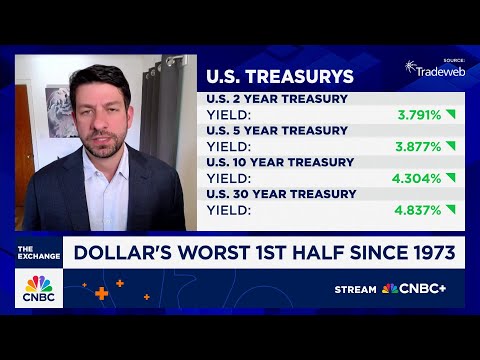
Dollar Weakness Factors - The US debt-to-GDP ratio is projected to increase from 100% to potentially 125% or higher in the next decade, leading to increased Treasury issuance [2] - Higher borrowing costs, resulting from increased Treasury issuance, could slow down the US economy, making it less attractive for foreign capital and reducing dollar demand [3] - Current dollar weakness is primarily due to reallocation out of US assets by investors, differing from historical instances driven by Fed rate cuts [7] Impact of a Weaker Dollar - A weaker dollar can benefit multinational corporations and the stock market in the near term, but slower growth poses a long-term negative impact [4] - While historically a weaker dollar has correlated with faster earnings per share growth, the current situation is different due to the cause of the dollar's depreciation [6][7] - Excessive currency strengthening can create concerns for entities like the European Central Bank if the Euro strengthens to 120% [10] Global Investment Implications - Emerging markets may benefit from a weaker dollar, as investors potentially reduce capital allocation to the US [9] - Some countries, like Taiwan and Switzerland, are intervening to manage their currency strength, highlighting potential challenges [11] - Continued and rapid dollar weakness could lead to stresses in currency markets and potentially spill over to other asset classes, raising concerns about global instability [12]