信息披露违规

Search documents
北京证监局:对元隆雅图、孙震、边雨辰采取责令改正行政监管措施
news flash· 2025-07-18 08:40
Core Viewpoint - Beijing Yuanglong Yatu Cultural Communication Co., Ltd. is facing regulatory measures due to information disclosure violations related to fabricated sales activities by an employee [1] Group 1: Regulatory Actions - The Beijing Securities Regulatory Bureau has issued corrective administrative measures against Beijing Yuanglong Yatu, its chairman Sun Zhen, and financial officer Bian Yuchen for information disclosure violations [1] - The company reported to the police regarding an employee's alleged forgery of company seals and sales contracts, which could affect financial statements for sales revenue in 2023, 2024, and the first quarter of 2025 [1] Group 2: Governance Issues - The incident highlights deficiencies in corporate governance and operational compliance within the company [1] - Sun Zhen and Bian Yuchen are held primarily responsible for the company's information disclosure violations [1]
西藏珠峰控股股东涉嫌信披违规被立案
Zhong Guo Jing Ying Bao· 2025-07-18 05:07
Group 1 - The core issue involves the investigation of the controlling shareholder, Tachen International, by the China Securities Regulatory Commission for suspected violations of information disclosure, which does not directly affect the operations of Tibet Summit [1][2] - Tachen International's shares in Tibet Summit have faced multiple legal issues, including a judicial freeze of 127 million shares due to debt disputes, leading to a significant reduction in its ownership stake from 350 million shares to 28.065 million shares, representing only 3.07% of the total share capital [1][2] - Following the announcement of the investigation, Tibet Summit's stock price dropped significantly, with a decline of over 7% at one point, closing at 10.41 yuan per share, a decrease of 6.38% [2] Group 2 - Tibet Summit's main business activities include the mining and processing of non-ferrous metals, with key products such as lead concentrate, zinc concentrate, copper concentrate, and crude lead [3] - The company has projected a substantial increase in net profit for the first half of 2025, estimating a range of 204 million to 306 million yuan, which represents a year-on-year growth of 59.31% to 138.96% [3]

持股全遭冻结又被立案,600338大股东控制权不保?
第一财经· 2025-07-16 15:17
Core Viewpoint - The stock price of Tibet Summit (600338.SH) has significantly dropped due to the investigation of its controlling shareholder, Xinjiang Tacheng International Resources Co., Ltd. (referred to as "Tacheng International"), for information disclosure violations, despite Tibet Summit's improved financial performance [1][3]. Group 1: Shareholder Violations - Tacheng International has faced multiple regulatory penalties for information disclosure violations, including a recent investigation by the China Securities Regulatory Commission (CSRC) [2][3]. - The company has previously been criticized for failing to disclose the freezing of its shares in Tibet Summit, which occurred in July 2021, until January 2024 [3][4]. - In 2022, Tibet Summit and its executives received a warning from the Tibet Securities Regulatory Bureau for not timely disclosing agreements related to debt compensation with third parties [4]. Group 2: Financial Performance and Debt Issues - Despite the challenges faced by Tacheng International, Tibet Summit's performance has improved, with a projected net profit increase of 59.31% to 138.96% year-on-year for the first half of the year [11]. - Tacheng International's financial situation is deteriorating, with significant debts amounting to approximately 1.5182 billion yuan, including tax liabilities [7][12]. - The shares held by Tacheng International in Tibet Summit have been subject to multiple low-price auctions, with recent sales indicating a significant discount compared to market prices [5][12]. Group 3: Control Risks - Tacheng International's shareholding in Tibet Summit has fallen below 8%, raising concerns about potential loss of control over the company [6][12]. - The current shareholder structure is fragmented, with any shareholder holding more than 5% potentially becoming the actual controller if Tacheng International's shares continue to be sold off [12]. - Despite its financial difficulties, Tacheng International continues to lend money to Tibet Summit, indicating a complex relationship between the two entities [12].


公司快评︱涉嫌信披违规被立案:西藏珠峰业绩向好,控股股东为何频频“踩雷”?
Mei Ri Jing Ji Xin Wen· 2025-07-16 04:00
Core Viewpoint - The investigation of Tachen International for information disclosure violations has raised concerns about the governance and reputation of Tibet Summit, despite the company's strong operational performance and growth potential in the lithium sector [1][2][3] Group 1: Company Governance and Control - Tachen International, the controlling shareholder of Tibet Summit, has seen its actual control over the company significantly diminished, with a current shareholding ratio of only 3.07%, all of which is frozen or pending freezing [2] - The governance structure is ambiguous, as the controlling shareholder lacks substantial control while still holding a key shareholder position, undermining market confidence in the company's governance stability [2] - Previous violations by Tachen International, including failure to disclose frozen shares and non-compliance with disclosure agreements, have damaged investor rights and the company's reputation [1][2] Group 2: Financial Performance and Growth Potential - Tibet Summit is expected to see a 59.31% year-on-year increase in net profit for the first half of the year, reaching 138.96 million [2] - The company's lithium salt projects and overseas resource reserves provide significant growth potential, indicating that the fundamental business performance is strong despite governance issues [2] Group 3: Regulatory Environment and Market Implications - The current regulatory framework emphasizes information disclosure, and the investigation into Tachen International serves as a warning that violations will be met with serious accountability, regardless of the controlling stake [2] - The situation highlights the importance of clear governance structures and responsible shareholders for long-term investment viability, as governance issues can overshadow strong financial performance [3]
独家!惊曝内幕
Zhong Guo Ji Jin Bao· 2025-07-15 11:44
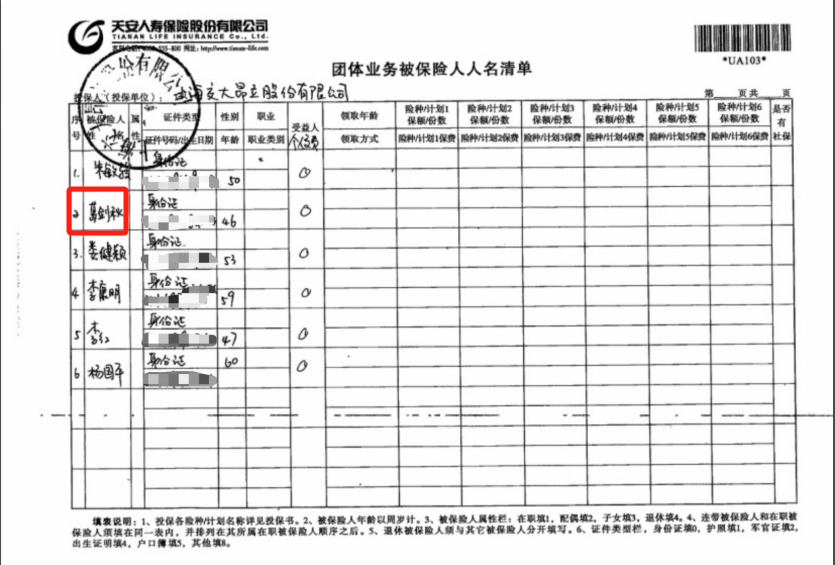
Core Viewpoint - The chairman of Jiaoda Onlly revealed potential illegal activities involving former executives, which may lead to issues of information disclosure and internal control within the company [1]. Group 1: Allegations of Misconduct - Five former executives, including Yang Guoping, are suspected of illegal activities related to the "purchase and refund of insurance," which has drawn the attention of government agencies [1][2]. - The "purchase and refund" behavior began to be investigated after a tax department request in November 2022, revealing inconsistencies between the number of insured and beneficiaries [2]. - In October 2016, Jiaoda Onlly invested 3.8 million yuan in group insurance, with the insured being former executives, and later refunded 3.79 million yuan to their personal accounts [3][5]. Group 2: Internal Control and Disclosure Issues - Jiaoda Onlly has not disclosed the "purchase and refund" activities in its announcements, raising concerns about internal control and information transparency [9]. - The Shanghai Securities Regulatory Commission issued a warning to Jiaoda Onlly for violations, including inaccurate disclosures of executive compensation in annual reports [9]. - The chairman stated that there are no records of board or shareholder approval for the relevant proposals, and the original documents for the compensation committee's review are missing [11]. Group 3: Financial Implications and Related Companies - From 2018 to 2019, Jiaoda Onlly executed similar "purchase and refund" actions involving over 16 million yuan [7]. - There are indications that Dazhong Transportation, where Yang Guoping also serves as chairman, may have engaged in similar activities, raising questions about overlapping personnel [8]. - The financial impact of these actions is significant, with Jiaoda Onlly reporting losses of nearly 700 million yuan in 2018 and 2019, while still rewarding the involved executives with substantial refunds [27].

江苏吴中被指连续四年财务造假,涉虚增营收18亿触发退市危机
Xin Lang Zheng Quan· 2025-07-15 09:06
Core Viewpoint - Jiangsu Wuzhong Pharmaceutical Development Co., Ltd. has been found to have multiple violations of information disclosure from 2018 to 2023, including concealing changes in actual control and inflating revenue and profits for four consecutive years, leading to a risk of forced delisting [1][2]. Group 1: Information Disclosure Violations - The company concealed the change of actual controller from Suzhou Wuzhong Investment Holdings Co., Ltd. to Qian Qunshan, misrepresenting Qian Qunying as the actual controller in annual reports from 2018 to 2023, resulting in long-term false records [2]. - From 2020 to 2023, the company inflated revenue by a total of 1.77 billion yuan through fictitious trade transactions with three subsidiaries and related parties, with annual inflated revenue detailed as follows: - 2020: 495 million yuan (26.46% of revenue) [2] - 2021: 469 million yuan (26.39% of revenue) [2] - 2022: 431 million yuan (21.26% of revenue) [2] - 2023: 377 million yuan (16.82% of revenue) [2]. Group 2: Financial Mismanagement - The company used fictitious trade procurement payments to transfer funds to related parties, with the balance of funds occupied increasing from 127 million yuan at the end of 2020 to 1.693 billion yuan by the end of 2023, representing a rise in net asset proportion from 6.88% to 96.09%, nearly depleting the company's assets [3]. Group 3: Operational Challenges and Market Reaction - Despite a temporary recovery in the medical beauty sector with a 4225.65% year-on-year revenue increase from the Korean product "AestheFill," the company forecasted a net loss of 40 to 60 million yuan for the first half of 2025, primarily due to increased impairment provisions for trade receivables [4]. - The company faces severe delisting risks, as the final penalties for financial fraud could trigger mandatory delisting clauses. The stock price dropped to 2.19 yuan per share on July 14, 2025, reflecting a market value loss of over 75% within the year [4]. Group 4: Industry Implications - The Jiangsu Wuzhong case highlights systemic governance failures in some listed companies, including concealment of actual controllers, financial fraud, and fund misappropriation, forming a chain of violations [5]. - This case serves as a warning to the market regarding the importance of truthful information disclosure as a cornerstone for the healthy operation of capital markets, indicating that any actions challenging this principle will ultimately incur consequences [5].


北交所今年上半年对6家券商投行记录执业质量负面行为
news flash· 2025-07-15 07:02
北交所最新通报了2025年上半年监管情况。记者了解到,北交所针对15家申报项目中存在的信息披露违 规、中介机构执业质量问题,采取公开谴责1次、出具警示函2次、口头警示10次、要求提交书面承诺8 次,涉及15家发行人、10家保荐机构、3家会计师事务所、1家律师事务所,23名保荐代表人、9名签字 注册会计师、2名签字律师等;针对6家申报项目中存在的中介机构执业质量问题,记录6次执业质量负 面行为,涉及6家保荐机构。针对在审项目开展现场督导或配合证监会派出机构开展现场检查3次,涉及 3个申报项目。(记者 林坚) ...
北交所“五问五答”(第二期)
北证三板研习社· 2025-07-14 09:56
Listing Process - The listing process on the Beijing Stock Exchange (BSE) consists of 8 steps: application, acceptance, review, deliberation, submission, registration, issuance, and listing. The typical time from acceptance to listing is generally 12 to 18 months based on the situation of several companies listed in 2025 [1]. Review Process - The review institution is established by the BSE. Within twenty working days from acceptance, the review institution issues the first round of review inquiries through the review system. The issuer and its sponsors must respond to these inquiries within twenty working days. The review consists of two parts: one focuses on the issuance and listing conditions, while the other examines the authenticity and completeness of information disclosure [2]. - If the BSE deems that no further inquiries are necessary after receiving the responses, it issues a review report and submits it for deliberation by the listing committee [3]. Pricing Methods for New Stock Issuance - There are three pricing methods for new stock issuance on the BSE: direct pricing, inquiry-based pricing, and competitive pricing. Direct pricing is preferred, with 228 companies using this method compared to 43 using inquiry-based pricing [4][5]. Suspension and Termination of Review - Suspension of review refers to a temporary halt in the review process, which can be resumed later. This usually occurs due to the issuer's initiative or objective circumstances, such as outdated financial data or changes in intermediary institutions. If the issues causing the suspension are resolved within a specified time, the review can be resumed; otherwise, it may lead to termination [6][7]. - Termination of review indicates a complete end to the review process, often due to the issuer's withdrawal, outdated financial data not being updated in time, or significant compliance issues. Historically, the BSE has seen only 3 cases of termination, while 204 companies have withdrawn their applications [7]. Common Violations in Information Disclosure - Common violations include: 1. Untruthful or inaccurate financial information, such as data falsification or significant accounting errors [8]. 2. Failure to timely disclose significant events that could impact stock prices, such as major lawsuits or shareholder actions [8]. 3. Non-disclosure of related party transactions, leading to penalties from regulatory bodies [9]. 4. Violations in performance forecasts, where discrepancies exceed 20% without timely corrections [8][9]. 5. Delays in announcing changes in shareholder equity or insider trading issues [9].
交大昂立前高管涉千万退保疑云:举报者成被查者 一场被“立案”反转的资本风暴
Xin Lang Zheng Quan· 2025-07-14 05:49
Core Viewpoint - The company, Jiaoda Onlly, has faced a dramatic turn of events following its high-profile media briefing on July 9, where it accused former executives of financial misconduct. Shortly after, the China Securities Regulatory Commission (CSRC) initiated an investigation into the company for alleged violations of information disclosure laws, highlighting a complex web of capital mismanagement and governance issues [1][3][6]. Group 1: Company Actions and Responses - On July 9, Jiaoda Onlly held a media briefing to announce that former executives allegedly misappropriated company funds through fraudulent insurance transactions, claiming to have gathered evidence and reported the matter to the police [1]. - The chairman, Ji Min, revealed that the police had issued a "no case" notice, indicating that the evidence may be insufficient for criminal charges, which raised questions about the company's communication strategy [2]. - Following the police's decision, the CSRC announced on July 11 that it would investigate the company for potential information disclosure violations, suggesting that the company's earlier disclosures may have been selective and misleading [3]. Group 2: Allegations and Investigations - The core issue revolves around the alleged "insurance purchase and cancellation" scheme, which is seen as a covert method for transferring funds illegally [4][5]. - Specific operations involved creating fictitious or overpriced insurance needs, quickly canceling policies to cash out, and redirecting funds to accounts controlled by former executives, raising concerns about the adequacy of evidence for criminal prosecution [5]. - The CSRC's investigation shifts the focus from whether former executives committed misappropriation to whether the current management acted in compliance with disclosure regulations [6]. Group 3: Financial Implications and Risks - The company faces significant challenges in pursuing civil recovery of losses due to the police's refusal to file a case, which complicates the burden of proof in civil litigation [6]. - If the CSRC finds the company guilty of disclosure violations, it could face penalties including fines up to 10 million yuan, and responsible executives could face fines and market bans [6]. - The company's financial health is precarious, with a reported 95% drop in net profit for 2023 and continued losses in early 2024, raising concerns about its ability to recover and maintain compliance with regulatory standards [6][7].
提高鉴别能力 远离财务造假 | 风险警示案例解读(二)
申万宏源证券上海北京西路营业部· 2025-07-14 01:53
Core Viewpoint - The article emphasizes the importance of compliance in financial disclosures and the severe penalties for financial fraud, highlighting the need for investors to recognize and avoid fraudulent activities [2][4][8]. Group 1: Financial Fraud Cases - In 2016, JH Group and AZ Shares engaged in misleading restructuring by inflating revenues and bank deposits for the years 2013 to 2015 [4]. - The information disclosure by JH Group contained false records and significant omissions, with the fraudulent activities involving substantial amounts and severe methods [6]. - The audit firm failed to perform due diligence, issuing a standard unqualified audit report that included false records [6]. Group 2: Regulatory Actions - The China Securities Regulatory Commission (CSRC) imposed strict penalties on AZ Shares, JH Group, and key responsible individuals, including lifetime market bans and market bans ranging from 5 to 10 years [8]. - Four intermediary institutions, including the audit firm, received maximum penalties for their involvement in the fraudulent activities [8].