
Autonomous Driving

Search documents
小马智行_自动驾驶出租车商业化运营推动单位经济效益;拓展新加坡和卡塔尔市场;目标价上调至 27.7 美元;买入
2025-09-23 02:37
Summary of Pony AI Inc. (PONY) Conference Call Company Overview - **Company**: Pony AI Inc. (PONY) - **Industry**: Autonomous Vehicle Technology, specifically focusing on Robotaxi services Key Points Business Expansion and Operations - Pony AI has initiated road testing of its Gen-7 Robotaxi in major Chinese cities including Beijing, Guangzhou, and Shenzhen [1] - The company has expanded its Robotaxi services from 15 hours per day to full 24/7 coverage in select areas [1] - Commercialization of fully-driverless Robotaxi services has begun in Shanghai's Pudong New area [1] - The company aims to scale its fleet to 1,000 vehicles by the end of 2025 [1] - Global expansion includes Robotaxi deployment in Qatar and a partnership with ComfortDelGro to enter the Singapore market [1][2] Financial Projections and Earnings Revision - Revenue projections for 2025-2032 have been revised upwards by 1% to 5%, primarily due to increased Robotaxi revenues from longer operating hours and expanded service areas [3] - Gross Margin (GM) is expected to change by -0.3 to 1.8 percentage points during the same period, influenced by product mix changes [3] - Operating Expense (Opex) ratio is revised down by 0.1 to 10.5 percentage points, reflecting improved operational efficiency [3] Target Price and Valuation - The 12-month target price for Pony AI has been revised to US$27.7 from US$24.5, based on a discounted EV/EBITDA method [7] - A 15x EV/EBITDA multiple is applied for the 2031E estimate, reflecting a correlation with EBITDA growth among global peers [7][12] - The target price reflects a potential upside of 33.8% from the current price of US$20.71 [14] Market Dynamics and Risks - The Singapore Ministry of Transport has set a target to deploy autonomous vehicles in public housing estates by the end of 2025, which is favorable for Robotaxi suppliers [2] - Key risks identified include regulatory challenges, supply chain issues, market growth for Robotaxis, personal information concerns, infrastructure readiness, pricing competition, and product liability [13] Financial Metrics - Projected revenues for 2025E are US$81 million, with a growth trajectory leading to US$3.941 billion by 2032E [8] - The company is expected to achieve a net income of US$631 million by 2030E, with a significant improvement in margins over the years [8] Conclusion - Pony AI is positioned for significant growth in the autonomous vehicle sector, with strategic expansions and improved financial metrics. The revised target price and positive market conditions suggest a favorable investment opportunity, albeit with inherent risks associated with the industry.
Stock market today: Dow Jones, S&P 500, Nasdaq rise as Nvidia stock surges on OpenAI deal
The Economic Times· 2025-09-22 19:56
stock surged back near an all-time high as the company announced plans to invest up to $100 billion in The Nvidia OpenAI deal represents one of the largest artificial intelligence investments, combining OpenAI's development capabilities with Nvidia's semiconductor technology for data center construction.Also read: Tesla stock reaches 2025 high amid self-driving focusTesla stock was positioned to close Monday at a 2025 high as investors anticipated the company's self-driving future and new product developme ...



Marti Technologies(MRT) - 2025 Q2 - Earnings Call Transcript
2025-09-22 13:30
Financial Data and Key Metrics Changes - Revenue increased by 70% from $8.4 million in H1 2024 to $14.3 million in H1 2025, primarily due to the monetization of the ride-hailing service [18][20] - Adjusted EBITDA improved from negative $11.3 million in H1 2024 to negative $6 million in H1 2025, indicating a significant reduction in operating losses [20] - Cost of revenues decreased by 25% from $9.9 million in H1 2024 to $7.4 million in H1 2025, reflecting efficiency measures [18][20] Business Line Data and Key Metrics Changes - Unique ride-hailing riders grew from 1.1 million to 2.3 million year-over-year, a 107% increase [10][17] - Registered ride-hailing drivers increased from 171,000 to 327,000, a 92% increase [10][17] - Average daily two-wheeled electric vehicles deployed decreased from 34.6 thousand to 24.8 thousand due to fleet decommissioning [18] Market Data and Key Metrics Changes - The company expanded its operations to six new metropolitan areas, increasing its reach to 10 cities, covering approximately half of Türkiye's population [6][7] - The share of riders based outside Istanbul grew from 13% to 24%, indicating strong demand in secondary markets [36][37] Company Strategy and Development Direction - The company is focusing on ride-hailing as its primary business model, transitioning from two-wheeled electric vehicles to capture the growing mobility market in Türkiye [3][4] - A significant investment plan for 2025-2026 aims to enhance operational capabilities and expand into new cities [6][21] - The introduction of AI engineering teams is expected to optimize pricing and improve rider and driver experiences [28][30] Management Comments on Operating Environment and Future Outlook - Management expressed confidence in achieving nearly double revenue from $18.7 million in 2024 to $34 million in 2025, driven by ride-hailing growth [4][20] - The company anticipates capturing a $3 billion annual revenue opportunity in the ride-hailing market as it scales operations [11][13] - Management highlighted the importance of local market knowledge and operational advantages in competing against global players [6] Other Important Information - The company is the largest electric vehicle operator in Türkiye and the number one urban mobility app on both iOS and Android [5] - The app redesign has improved user engagement, with weekly and monthly active users increasing by 16% and 12%, respectively [9] Q&A Session Summary Question: What is the target level for two-wheeled electric vehicles? - Management indicated that two-wheeled electric vehicles are integral to the service offering and will be reevaluated in summer 2026 based on customer needs and traffic to ride-hailing [24][25] Question: How is driver supply being managed? - There are no constraints in onboarding additional drivers, with driver acquisition costs being recouped within a month of service [27] Question: What are the current take rates compared to global benchmarks? - Current take rates are in the high single digits, with significant upside potential for future increases [34] Question: How does the company view growth versus profitability? - The company is prioritizing growth while maintaining low take rates to capture market share, with plans to optimize profitability in the future [42][43] Question: What is the regulatory environment for ride-hailing in Türkiye? - The company believes it is well-positioned to introduce and regulate new transportation services in Türkiye [49] Question: How is the company approaching its crypto treasury strategy? - The strategy involves diversifying non-operating cash into USD and Bitcoin as a store of value, with the majority still held in USD [52]
Lyft Surges on Waymo Robotaxi Deal: Is the Stock a Buy?
MarketBeat· 2025-09-22 11:45
Core Viewpoint - Lyft's stock experienced a significant increase following the announcement of a partnership with Waymo to launch an autonomous ride-hailing service in Nashville by 2026, indicating strong market confidence in Lyft's future prospects [1][2]. Partnership Implications - The partnership with Waymo, a leader in autonomous driving technology, positions Lyft favorably in the robotaxi market, as Waymo currently provides over 250,000 paid robotaxi rides weekly [2][3]. - Lyft's collaboration with Waymo suggests that it is seen as a worthy partner rather than a competitor, leveraging its substantial ride-hailing market share [3][4]. Competitive Landscape - Despite the positive partnership, Waymo's ability to operate independently in Nashville raises concerns about the long-term significance of the collaboration [4]. - Lyft's market position is challenged by competitors like Uber, which had gross mobility bookings of $23.7 billion compared to Lyft's $4.5 billion [5][6]. Analyst Sentiment - Following the partnership announcement, analysts raised their price targets for Lyft, with an average increase of 38%, although the consensus price target remains at $18.30, indicating a potential downside of approximately 17% from recent closing prices [7][8]. - Only a few analysts have price targets above Lyft's recent closing price, suggesting that many view the stock as overvalued [9]. Long-term Challenges - Lyft faces significant competition from established players like Uber and new entrants such as Tesla and Amazon's Zoox, which could threaten its market share [10]. - The company has not diversified into food delivery, a sector where Uber has seen substantial success, making it difficult for Lyft to compete effectively [11].

Wall Street Breakfast Podcast: Berkshire's Farewell To BYD
Seeking Alpha· 2025-09-22 10:58
Group 1: Berkshire Hathaway and BYD - Berkshire Hathaway has fully exited its 17-year investment in Chinese electric vehicle maker BYD, marking the end of a significant partnership [2][3] - The investment was initially recommended by Charlie Munger, and BYD's shares fell approximately 3% following the news of the exit [3] - Berkshire Hathaway's investment value in BYD was reported as zero as of March 31, down from $415 million at the end of 2024, after gradually reducing its stake to under 5% last year [4] Group 2: Nissan's ProPilot System - Nissan is set to launch the latest version of its ProPilot driver-assist system in collaboration with UK-based Wayve Technologies, aiming to compete with Tesla's Full Self-Driving (FSD) [5][6] - The new system is expected to be operational by March 2028 and will still require driver readiness, operating at Level 2 autonomy [6] - Nissan claims its system has superior situational awareness compared to Tesla's FSD, emphasizing safety with driver monitoring features [7][8] Group 3: Hamburger Helper Sales - Hamburger Helper has seen a sales increase of 14.5% in the year through August, as reported by its owner Eagle Foods [10] - The rise in sales is attributed to consumers seeking budget-friendly meal options amid rising grocery prices, reminiscent of its popularity during the inflationary 1970s [11]

Wall Street Breakfast Podcast: Berkshire Bids Farewell To BYD
Seeking Alpha· 2025-09-22 10:58
Group 1: Berkshire Hathaway and BYD - Berkshire Hathaway has fully exited its 17-year investment in Chinese electric vehicle maker BYD, marking the end of a significant partnership [2][3] - The investment was initially recommended by Charlie Munger, and BYD's shares fell approximately 3% following the news of the exit [3] - Berkshire Hathaway's investment value in BYD was reported as zero as of March 31, down from $415 million at the end of 2024, after initially investing $230 million for a 10% stake in 2008 [4] Group 2: Nissan's ProPilot System - Nissan is set to launch an updated version of its ProPilot driver-assist system in collaboration with UK-based Wayve Technologies, aiming to compete with Tesla's Full Self-Driving (FSD) [5][6] - The new system will still operate at Level 2 autonomy, requiring driver readiness to take control, with a rollout expected by March 2028 [6] - Nissan emphasizes safety features, including driver monitoring through internal cameras, and plans to introduce an autonomous vehicle ride-share service by 2027 [8][9] Group 3: Hamburger Helper Sales - Hamburger Helper has seen a sales increase of 14.5% in the year through August, attributed to consumers seeking budget-friendly meal options amid rising grocery prices [10][11] - The product's resurgence mirrors its popularity during the inflationary period of the 1970s, as consumers are also purchasing more economical food items like beans and rice [11]


AI汽车,撑起内存半边天
半导体芯闻· 2025-09-22 10:36
如果您希望可以时常见面,欢迎标星收藏哦~ 来源:内容 编译自 zdnet 。 在传统的PC和移动端内存市场依然停滞不前的同时,数据中心与汽车用内存正逐渐成为下一代增 长引擎。 据业内22日消息,全球DRAM市场预计将围绕数据中心与汽车领域实现增长。 市场调研机构TechInsights预测,全球DRAM需求将从2023年的203Eb(艾字节,1Eb=100万Tb) 增长到2030年的722Eb,扩大3.5倍以上。年均复合增长率(CAGR)达19.9%,其中汽车和数据 中心分别以27.6%与26.6%的增长率引领整体市场。 汽车内存需求同样因高级车载电子系统和自动驾驶的普及而快速增长。随着单车内存搭载量提升, 汽车与数据中心一起,有望成为未来内存市场的"双引擎"。 多家市场研究机构均预测汽车内存市场将稳步上升: Research and Markets指出,随着汽车与智能技术的深度结合,对高容量内存解决方案的需求正在 增加,这对市场增长起到积极作用。同时,电动车和混合动力车的普及也推动了对用于电池管理和 能效提升的先进内存系统的需求。 PC与移动市场增长乏力,2030年前后或成转折点 相比之下,移动与PC内存预 ...

Pony AI Expands In Singapore And Promises Driverless Rides In Punggol Soon
Yahoo Finance· 2025-09-22 10:23
Group 1 - Pony AI has entered the Singapore market by partnering with ComfortDelGro to deploy autonomous vehicles for daily commuting, focusing on fixed routes in the Punggol area [1] - The initiative aligns with Singapore's broader plan to integrate autonomous mobility into its public transport network, with operations expected to launch pending regulatory approval [1][2] - The collaboration was established through a Memorandum of Understanding signed in July 2024, following a pilot program in Guangzhou that began in March 2025 [3] Group 2 - Pony AI's ride-hailing platform experienced a 136% year-over-year increase in users in Q2, maintaining a satisfaction rating above 4.8 out of 5 [4] - The company has expanded its global presence, including a recent partnership with Qatar's Mowasalat "Karwa" to deploy autonomous vehicles, complementing existing partnerships in the Middle East [4] - Pony AI's stock has gained over 44% year-to-date, reflecting the growing traction of its autonomous driving technology in key markets [5]
WeRide to Launch GXRs and Robobus in Singapore as part of Grab's New Ai.R Autonomous Service
Globenewswire· 2025-09-22 09:14
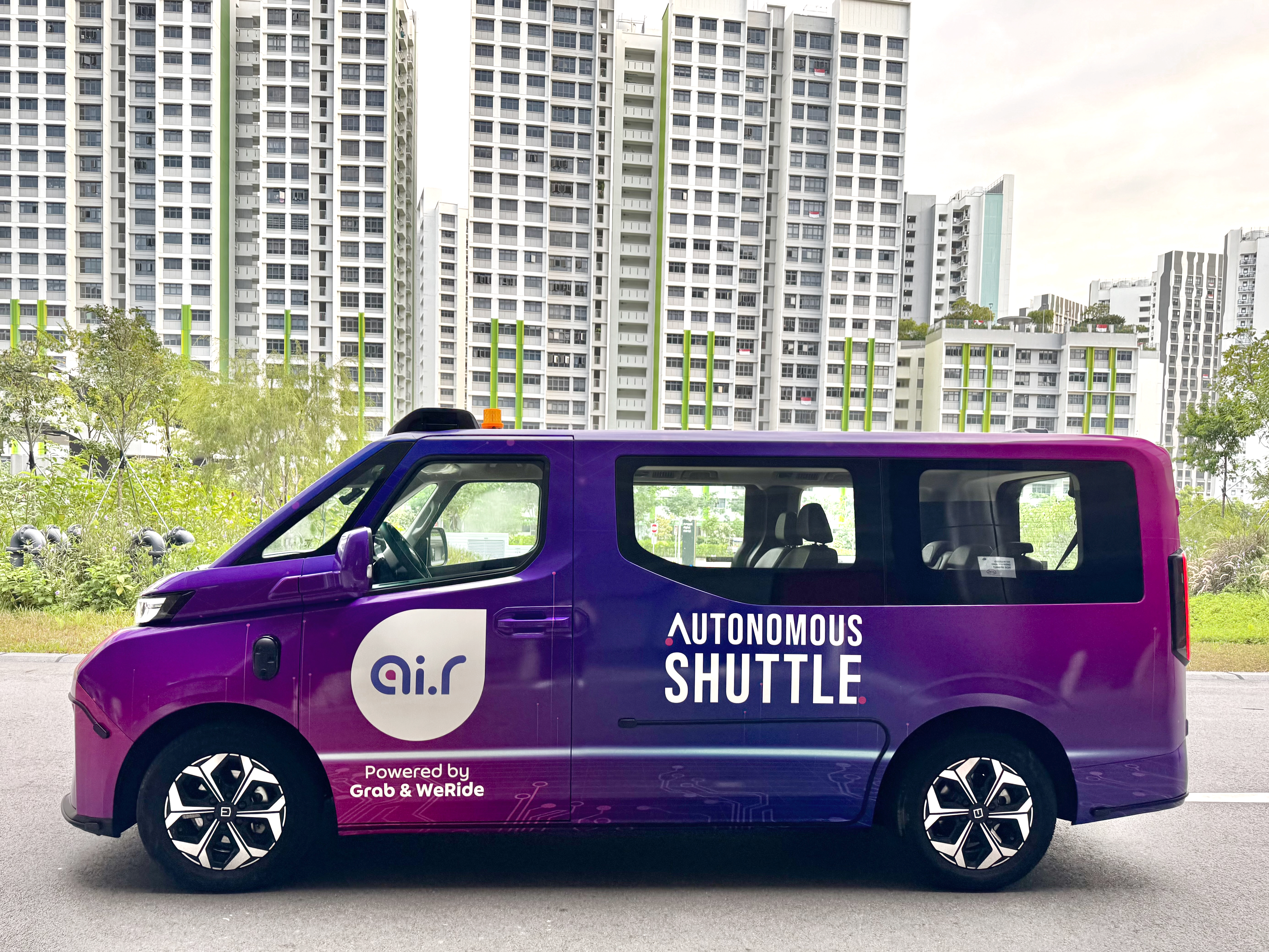
Core Viewpoint - WeRide, a leader in autonomous driving technology, is launching its autonomous vehicle service Ai.R in Singapore in partnership with Grab, marking a significant step in urban transportation in Southeast Asia [1][8]. Company Overview - WeRide is recognized as a global leader in the autonomous driving industry and is the first publicly traded Robotaxi company, having tested or operated its vehicles in over 30 cities across 11 countries [21]. - Grab is a leading super app in Southeast Asia, providing a wide range of services including mobility, deliveries, and digital financial services across eight countries [22]. Service Launch Details - The Ai.R service will operate in Punggol, Singapore, utilizing WeRide's GXR and Robobus vehicles, with a fleet of 11 vehicles initially deployed [2][6]. - Ai.R is the only service selected by the Land Transport Authority (LTA) to operate on two designated routes in Punggol [2][6]. Vehicle Specifications and Safety - The five-seater WeRide GXR and eight-seater Robobus have successfully passed Singapore's Milestone 1 (M1) assessment, confirming their ability to operate safely on public roads [4][6]. - Ai.R vehicles are equipped with advanced cameras and LiDAR technology, allowing them to detect objects up to 200 meters away and navigate safely even in adverse weather conditions [12]. Training and Safety Measures - Grab has initiated training for over 10 driver-partners to become autonomous vehicle Safety Operators, ensuring safety during the initial phase of the service [7][15]. - A trained Grab Safety Operator will be present on every Ai.R ride during the initial phase to monitor operations and ensure passenger safety [7][18]. Future Plans and Community Impact - By early 2026, Ai.R is expected to start taking its first batch of passengers, enhancing access to key amenities in the Punggol area [11]. - The service aims to improve connectivity within underserved neighborhoods, providing a smarter travel experience for residents [9][8].

Wall Street analyst updates Tesla stock price
Finbold· 2025-09-22 09:00
Electric vehicle manufacturer Tesla (NASDAQ: TSLA) has received a notable boost from Wall Street after Piper Sandler analyst Alex Potter raised his price target on the stock to $500, up from $400.The revision follows Potter’s recent trip to China, where he assessed the competitive landscape among EV manufacturers. Notably, Tesla shares have been under pressure in recent months, weighed down by rising competition from lower-cost Chinese EV makers.Potter noted that while Chinese automakers pose strong competi ...