
个性化定制

Search documents
研判2025!中国女性卫生用品行业产业链、市场规模、竞争格局及发展趋势分析:女性卫生用品消费要求不断提升,产业市场竞争日趋激烈[图]
Chan Ye Xin Xi Wang· 2025-04-09 01:20
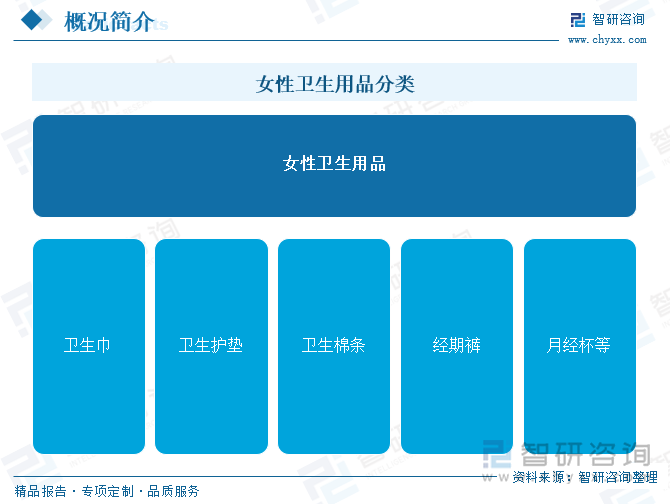
Core Insights - The women's hygiene products market in China is experiencing significant growth, with the industry size projected to increase from 56.3 billion yuan in 2018 to 66.9 billion yuan in 2024, reflecting a rising demand for high-quality products [1][10]. Industry Overview - Women's hygiene products, also known as absorbent hygiene products, are essential personal care items designed for menstrual and postpartum hygiene [1][6]. - The market for women's hygiene products accounts for over 60% of the total absorbent hygiene products market in China and more than 50% globally [4]. Global Market - The global women's hygiene products market is expanding, with a projected size of $45.42 billion in 2024 and an expected growth to $89.29 billion by 2033 [8]. - The Asia-Pacific region holds the largest market share at 35%, while North America is anticipated to experience the fastest growth during the forecast period [8]. Domestic Market - The domestic market is witnessing a shift towards mid-to-high-end products, driven by increased consumer awareness and demand for quality [10][19]. - Online sales channels for women's hygiene products have grown significantly, with their share rising from 27.48% in 2018 to 49.86% in 2024 [12]. Competitive Landscape - The market features a mix of foreign and domestic brands, with foreign brands like Procter & Gamble and Unicharm holding significant market shares due to their established quality and technology [14]. - Domestic brands such as Hengan International and Baiya Co. are gaining traction by focusing on brand marketing and product innovation [14][15]. Development Trends - The market is expected to continue expanding, driven by a large female population and increasing quality demands [19]. - There is a noticeable trend towards product diversification and personalized services to cater to varying consumer preferences [20]. - Environmental sustainability is becoming a key focus, with companies adopting biodegradable materials and reducing carbon footprints [22]. - The integration of online and offline sales channels is accelerating, with e-commerce playing a growing role in the market [23].

黄金饰品零售:金饰消费新浪潮——解码Z世代黄金市场的闪耀密码 头豹词条报告系列
Tou Bao Yan Jiu Yuan· 2025-03-20 12:01
Investment Rating - The report does not explicitly provide an investment rating for the gold jewelry retail industry Core Insights - The Chinese gold jewelry retail industry is driven by cultural significance, economic development, and consumer upgrades, facing challenges such as price volatility but continuing to grow through innovative design, brand building, and channel integration [1] - The market is experiencing a shift towards younger consumers who prioritize personalization and fashion, with significant seasonal demand fluctuations and intense competition [1][8] - The market size is projected to grow from 3710.49 billion RMB in 2025 to 4189.25 billion RMB by 2027, with a compound annual growth rate of 6.26% [34] Industry Definition - The gold jewelry retail industry in China involves the design, processing, and sale of various gold jewelry products, reflecting the cultural symbolism of wealth and prestige [1] Industry Characteristics - The industry features diverse business models, a clear trend towards younger consumer demographics, significant seasonal demand fluctuations, and intense competition [8] Market Segmentation - Gold jewelry can be categorized into pure gold, K gold, gold-plated, and gold-coated jewelry based on gold content and processing techniques [3][4][5][6][7] Development Stages - The industry has evolved through several stages: initial traditional markets, rapid brand and chain development post-reform, a period of adjustment due to price fluctuations, and currently entering a mature phase characterized by stable growth and diversified consumer demands [14][18] Consumer Trends - Young consumers (ages 18-35) are becoming the primary market force, emphasizing design, fashion, and brand narratives over traditional investment functions [11][27] Market Demand and Supply - The demand for gold jewelry is significantly influenced by seasonal events, with notable increases during weddings and festivals [12] - The rise in gold prices has led to a decline in gold jewelry consumption, with a 26.68% drop in consumption volume in the first half of 2024 [31] E-commerce Impact - The rapid growth of e-commerce, particularly among younger consumers, has become a major sales channel for gold jewelry, with platforms like Tmall and JD.com seeing significant engagement from the 18-34 age group [32][33] Future Outlook - The market is expected to continue expanding, driven by the rise of young consumers, increased income levels, and a growing demand for personalized products [39][40]



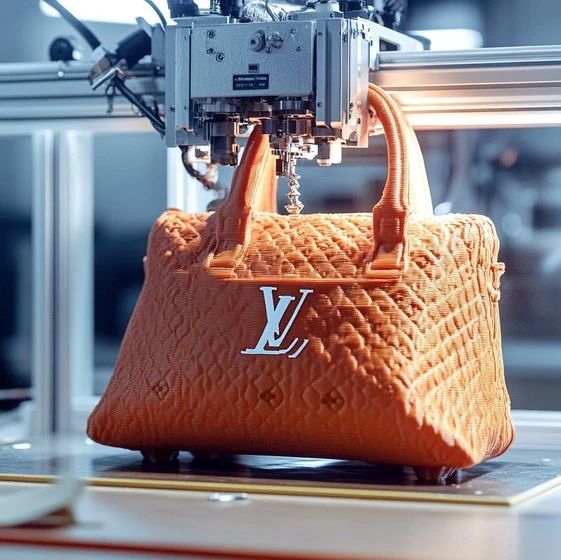
奢侈品自由不是梦:自制一个LV包,成本不到20块?
虎嗅APP· 2025-03-15 03:26
Core Viewpoint - The article discusses the emerging trend of using 3D printing technology to create luxury brand replicas at a significantly lower cost, enabling individuals to produce high-end fashion items at home [2][4][6]. Group 1: 3D Printing Technology in Fashion - 3D printing is a rapid prototyping technology that allows users to create three-dimensional objects by adding materials layer by layer based on digital models [5][6]. - The process of creating luxury items like LV bags can be done at home for as little as 20 yuan, making it accessible to a wider audience [4][6]. - Various luxury items, including Chanel and Gucci bags, can be replicated using 3D printing, showcasing the versatility of this technology in the fashion industry [7][8]. Group 2: Materials and Techniques - Common materials used in 3D printing include PLA (polylactic acid) and TPU (thermoplastic polyurethane), each with distinct properties suitable for different applications [12][17]. - PLA is biodegradable and easy to work with but lacks durability, while TPU offers better flexibility and strength, making it suitable for functional items [18][19]. - The cost of materials is relatively low, with PLA priced around 55 yuan per kilogram, allowing for affordable production of 3D printed items [15][18]. Group 3: DIY Culture and Community - The rise of 3D printing has fostered a DIY culture where individuals can create their own fashion items, leading to a community of enthusiasts sharing designs and techniques [25][26]. - Apps like "Bambu Handy" provide access to open-source models and tutorials, making it easier for beginners to start 3D printing [25][26]. - The trend has sparked interest in personalized and unique fashion items, allowing users to express their creativity and style [27][28]. Group 4: Industry Implications - Major fashion brands are also exploring 3D printing for their collections, with designers using the technology to create innovative and complex designs that were previously difficult to achieve [29][30]. - The ability to produce items quickly and with less waste aligns with the growing demand for sustainable fashion practices [30][41]. - 3D printing is seen as a way to enhance customization and reduce production times, which can be beneficial for brands looking to respond to market trends rapidly [41][42].

美容护理行业周报:AI+医美:技术创新与个性化定制引领行业发展-2025-03-11
CHINA DRAGON SECURITIES· 2025-03-11 15:13
Investment Rating - The investment rating for the beauty care industry is "Recommended" (maintained) [2][22]. Core Insights - The beauty care industry is experiencing significant growth driven by technological innovation and personalized services, with AI and big data being utilized to provide tailored solutions for consumers [4][22]. - The report emphasizes the importance of new material technologies and the rise of personalized services as mainstream trends in the medical beauty sector [22]. Summary by Sections Recent Market Performance - From March 3 to March 7, 2025, the Shenwan Beauty Care Index increased by 2.94%, with notable stock performances from companies like Kedi-B and Juzhi Biotechnology [7][8]. Industry News - The report highlights the successful launch of the "China Quality Flagship Store" by Hangzhou Meilai, which aims to redefine high-quality medical beauty standards through a comprehensive service system [12]. - Juzhi Biotechnology's patented recombinant human type IV collagen has been approved, marking a breakthrough in the medical beauty industry [4]. Key Company Announcements - Huadong Medicine's optical radiofrequency therapy device V30 has received acceptance from the National Medical Products Administration (NMPA), showcasing its multifunctional capabilities [10]. - Betaini's brand "Beforteen" has integrated AI technology for acne diagnosis, enhancing its product offerings [11]. Investment Recommendations - The report suggests focusing on companies with strong growth potential, including: 1. Marubi Biotechnology, known for its comprehensive brand matrix and product range [22]. 2. Juzhi Biotechnology, which is expected to grow rapidly due to the rise of recombinant collagen and domestic beauty trends [22]. 3. Betaini, which combines high cost-performance with strong product innovation [22]. 4. Aimeike and Longzi Co., which are expected to drive growth through flagship products and extensive product pipelines [22]. 5. Huadong Medicine, which shows strong potential in innovative drug development and medical beauty product pipelines [22].