数据要素市场

Search documents
北数所数据交易年均增长超200%
Sou Hu Cai Jing· 2025-06-26 23:22
Core Insights - Beijing International Big Data Exchange (BIDDE) has shown remarkable growth in the data factor market, with a cumulative data trading volume of 2250TB and an average annual growth rate exceeding 200% over the past three years [1][2] Group 1: Data Trading Growth - BIDDE has achieved a trading volume of 2250TB, with high-frequency data transactions exceeding 100 million calls [1] - The exchange has introduced 567 high-quality data sets, with 171 successfully traded, indicating a robust market demand and active participation [1] Group 2: Diverse Market Participation - Over 2500 entities from various sectors, including state-owned enterprises, internet companies, and multinational corporations, are participating in the trading [2] - Data trading applications are expanding beyond traditional uses to include AI model training, medical diagnostics, and scientific research [2] Group 3: AI Collaboration and Data Quality - BIDDE collaborates with over half of the leading AI model companies, providing 475 data sets across 32 industries, totaling 1814TB of data for model training [3] - The exchange has made significant advancements in multi-modal data quality and intellectual property compliance, enhancing AI model applications in various industries [3] Group 4: Data Asset Registration and Financing - A total of 342 companies have completed data asset registration, with 533 data asset certificates issued, and 24 companies have reported data assets exceeding 100 million yuan [4] - BIDDE has introduced standardized data asset pledge loan products, facilitating nearly 300 million yuan in loans for over 10 companies [4] Group 5: International Trade Support - BIDDE has successfully integrated credit data from 300 million enterprises across over 200 countries and regions along the Belt and Road, aiding companies in international expansion [5] - The exchange has established compliance mechanisms for cross-border data flow, enhancing the value of second-hand vehicle exports through historical data transactions [5] Group 6: Future Directions - BIDDE plans to focus on four key areas: improving data ownership and circulation systems, expanding data application scenarios, enhancing AI data set supply, and ensuring data flow security [5]
国家数据集团组建在即,盘点现有三类省级数据集团功能定位
2 1 Shi Ji Jing Ji Bao Dao· 2025-06-19 10:45
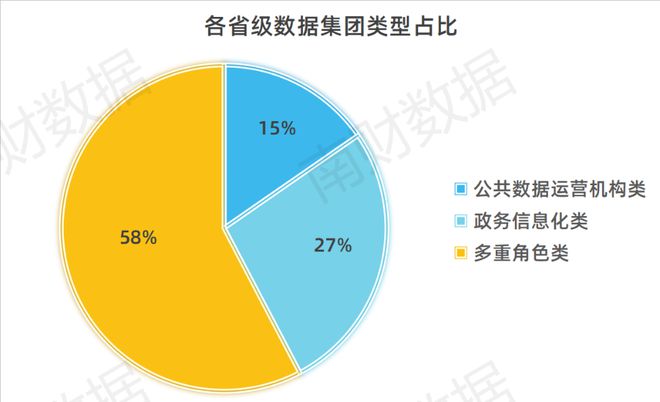
Core Insights - The establishment of provincial data groups across China has gained momentum since 2017, with at least 27 provinces and autonomous regions currently having set up their own data groups, with registered capital reaching up to 10 billion yuan [1][2] - The national data group alliance is set to be officially launched in October 2024, aiming to enhance data resource integration and sharing across various sectors [1] Grouping by Functionality - Provincial data groups can be categorized into three main types: 1. Public data operation institutions, which focus on compliance and the authorized operation of public data [2] 2. Government information technology groups, which primarily build digital government platforms and emphasize technical development and security [2][7] 3. Multi-role groups, which integrate various functions such as data resource consolidation, trading platform establishment, and rule formulation for data transactions [2][9] Public Data Operation Institutions - The number of public data operation institutions is limited, with most established in the last two years, primarily by state-owned enterprises, and 75% having registered capital between 1 billion to 5 billion yuan [6] - An example is the Sichuan Data Group, which was formed with a registered capital of 2 billion yuan and focuses on public data governance and operational services [6] Government Information Technology Groups - These groups are mainly responsible for building digital government platforms, with most established between 2018 and 2019, and a noticeable decline in new establishments in recent years [7] - The Guangxi Digital Government Group has achieved 100% coverage of its electronic government network across various administrative levels [9] Multi-role Groups - Multi-role provincial data groups represent the largest share and have significant registered capital, with over half having between 100 million to 1 billion yuan [9] - The Fujian Data Group, established in August 2021, has a registered capital of 10 billion yuan and serves as a primary developer of public data resources in the province [9] Data Asset Financing - Three regions have successfully implemented data asset financing, with Guangxi and Fujian completing financing of 10 million yuan each, and Henan securing 8 million yuan [11] - The Fujian Data Group's subsidiary secured a 10 million yuan credit approval through data asset financing [11] Recent Developments in Hubei - The Hubei Big Data Group was established in June 2025 with a registered capital of 5 billion yuan, aiming for significant revenue and investment growth by 2030 [12] - Hubei has also prioritized data infrastructure development, establishing multiple platforms to facilitate data flow and implementing policies to promote data circulation [13]

发力这一数据产业,武汉探索超大城市数字治理新模式
Di Yi Cai Jing· 2025-06-13 09:23
Core Viewpoint - Wuhan aims to enhance its data labeling industry significantly by 2027, targeting a scale exceeding 50 billion yuan and driving AI-related industry growth by over 100 billion yuan, positioning itself among the top in the nation [1][2]. Group 1: Industry Development Goals - By 2027, Wuhan plans to establish data labeling industrial parks, attract two leading data labeling enterprises, and nurture at least four benchmark companies in niche sectors and 20 high-growth SMEs [2]. - The data labeling industry is expected to achieve an annual compound growth rate exceeding 20%, with a focus on enhancing specialization, intelligence, and technological innovation capabilities [2]. - The city aims to create typical case studies of data labeling achievements, with related asset registration, product registration, and data trading activities exceeding 50 billion yuan [2]. Group 2: Action Plan and Measures - The "Three-Year Action Plan for the Development of Wuhan's Data Labeling Industry (2025-2027)" outlines 12 specific measures across five areas: accelerating industry aggregation, enhancing industry capabilities, promoting supply-demand matching, optimizing the industry ecosystem, and supporting data security applications [1][2]. - Wuhan encourages data labeling companies to participate in building high-quality industry data sets and to strengthen product applications in AI, while continuously promoting the development of leading data labeling tools [2]. Group 3: Public Data Resource Utilization - Wuhan is exploring an "overall authorization + individual authorization" operational model to stimulate the potential of public data elements, encouraging deep integration of public and social data [3]. - The city has established a unified management mechanism for data resources, creating a comprehensive digital resource system since the formation of the data bureau last year [3]. - By 2024, Wuhan's digital economy is projected to account for over 50% of its GDP, ranking 10th among China's top 100 digital economy cities and 6th in the Digital Ecosystem Index, advancing three positions from the previous ranking [3].
湖北组建大数据集团 系统布局数据要素市场
Zhong Guo Xin Wen Wang· 2025-06-06 17:03
Group 1 - The establishment of Hubei Big Data Group marks a significant step in Hubei's systematic layout of the data factor market and the construction of a new engine for digital economic development [1] - Hubei Big Data Group is a state-owned enterprise with a registered capital of 5 billion RMB, formed by six provincial enterprises [1] - The digital economy in Hubei is projected to grow from 2.6 trillion RMB in 2023 to over 3 trillion RMB in 2024, representing a 15.4% increase and accounting for 50% of Hubei's GDP [1] Group 2 - The new data group aims to invest in digital infrastructure, integrate public data resources, and create a data resource network across the province [1] - Focus areas include government, manufacturing, transportation, healthcare, and education, with plans to develop industry-specific AI models and promote the integration of humanoid robots and brain-machine interfaces [1] - Hubei Big Data Group has already completed the province's first electricity and finance data transaction and issued the first data property and asset registration certificate [2]
我店科技搭建的“异业联盟”是中小微企业破局存量时代的共生革命
Sou Hu Cai Jing· 2025-06-01 03:26
Core Insights - The article discusses how small and medium-sized enterprises (SMEs) in China are adapting to survive in a challenging economic environment characterized by a shift to a "stock economy" and the need for collaborative ecosystems [1][2]. Group 1: Survival Strategies in the Stock Economy - The transition to a "5% growth era" and the peak of internet traffic dividends have fundamentally disrupted traditional business logic, leading to a 42% year-on-year increase in customer acquisition costs for SMEs, while customer retention rates have fallen below 25% [4]. - The article emphasizes the shift from individualistic business models to collaborative ecosystems as a survival strategy for SMEs [2]. Group 2: Technological Advancements - Advanced technologies such as artificial intelligence, blockchain, and the Internet of Things (IoT) are enabling SMEs to achieve "technological equality" through collaborative alliances, allowing them to share resources and capabilities [6][7]. - The cost of technology investment for participating merchants is reduced to less than one thousand yuan, facilitating access to shared member profiles, smart replenishment systems, and dynamic pricing engines [7]. Group 3: Policy Support - The national "Together to Benefit Enterprises" initiative supports the development of inter-industry alliances, while local government reforms are promoting the digitalization of industrial clusters [8]. - In Suzhou Industrial Park, 37 manufacturing companies formed a "virtual factory" through the platform, increasing equipment utilization from 62% to 89% and reducing order delivery cycles by 40% [8]. Group 4: Ecosystem Development - The company has established a commercial network covering 17 industries and 170,000 merchants within three years, creating a unique digital ecosystem with three core mechanisms: a member value circulation system, an intelligent supply-demand matching engine, and a joint operation empowerment system [9][10][11]. - The member value circulation system allows for cross-store use of loyalty points, increasing annual consumption frequency by 2.3 times and average transaction value by 41% [9]. Group 5: Future Trends - The article outlines three evolutionary trends for inter-industry alliances: transitioning from traffic alliances to value alliances, evolving from commercial alliances to industrial communities, and expanding from domestic alliances to global ecosystems [16][17][18]. - The company has over 9.7 million active registered members and more than 160,000 alliance merchants, indicating significant growth and resource optimization [20]. Group 6: Entrepreneurial Insights - The article advises entrepreneurs to focus on selecting the right business model, particularly for those with merchant resources or those looking to enter the local life service sector [21].

研判2025!中国数据跨境流通行业发展背景、相关政策及市场现状分析:数据跨境流通政策体系不断完善,需求日益增长[图]
Chan Ye Xin Xi Wang· 2025-05-26 01:30
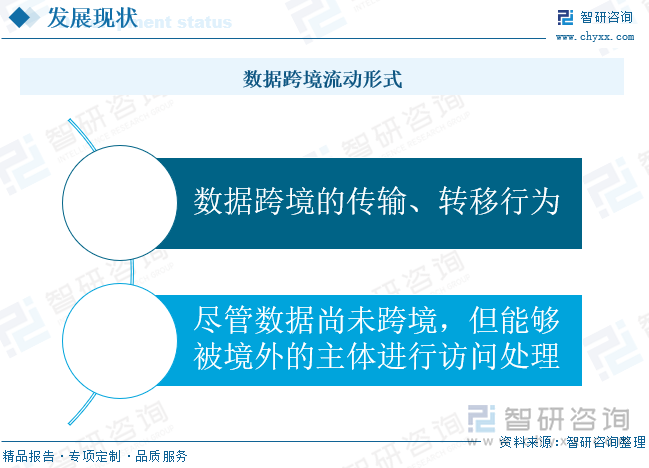
Core Viewpoint - The article emphasizes the importance of cross-border data flow as a critical component of global digital trade, highlighting China's role as a major player in this sector and the need for effective regulatory frameworks to ensure data security and personal information protection [1][19]. Group 1: Overview of Cross-Border Data Flow - Cross-border data flow refers to the transfer of personal information and data from one jurisdiction to another, encompassing both the physical transfer of data and access by foreign entities [2][14]. - The demand for cross-border data flow has surged due to the rapid growth of the digital economy, with global cross-border data flow reaching 99.7 million GBPS in 2022 and projected to exceed 180 million GBPS by 2024 [19]. Group 2: Regulatory Framework - China has established a comprehensive legal framework for cross-border data flow, including the Cybersecurity Law, Data Security Law, and Personal Information Protection Law, which set guidelines for data transfer and security assessments [14][16]. - The National Internet Information Office has introduced several regulations, including the Data Export Security Assessment Measures and the Standard Contract for Personal Information Export, to facilitate safe and orderly data flow [14][16]. Group 3: Market Dynamics - The digital trade sector in China is rapidly expanding, with digital service exports reaching 2.13 trillion yuan in the first three quarters of 2024, marking a 5.3% year-on-year increase [17]. - The data market transaction scale is expected to exceed 200 billion yuan in 2024, reflecting a growth of over 30% [10]. Group 4: Industry Development Background - Data is recognized as a key production factor in the digital economy, with global data production expected to grow from 39.9 ZB in 2018 to nearly 160 ZB by 2024 [4][8]. - The increasing importance of data has led to a focus on developing data resource utilization and marketization in China, with a projected data production volume of 41.06 ZB in 2024, a 25% increase year-on-year [8].
全国首套数据交易系列标准落地应用
Xin Hua Cai Jing· 2025-05-14 12:17
Group 1 - The core viewpoint of the news is the launch of the first national data trading standard implementation action in Beijing, aimed at promoting the application of data trading standards and facilitating the construction of a unified national data market [1][2] - The action includes a comprehensive standard system developed by the Beijing International Big Data Exchange, covering general guidelines, service guidelines, and security assessments for data trading, providing a full range of standard support for data transactions [1][2] - The event also introduced 10 pilot units for the data series standards in Beijing and 10 pilot units in Chaoyang District, showcasing the practical application of these standards [1][2] Group 2 - A notable innovation is the release of the first standard implementation tool in the data trading field, which establishes a comprehensive security assessment system covering data providers, data demanders, and trading venues [2] - The tool is based on the local standard for data trading security assessment, allowing enterprises to accurately grasp the core essence of the standards and scientifically evaluate their security levels, significantly lowering the barriers to standard implementation [2] - By 2025, Chaoyang District aims to have 10 core enterprises involved in the formulation of data trading standards, 100 key enterprises participating in pilot implementations, and standard services covering 1,000 enterprises, enhancing the district's influence in the data trading sector [2][3] Group 3 - The Beijing International Big Data Exchange plans to focus on key directions, fields, and enterprises for ongoing standard implementation work, including the development of local standards for data productization, assetization, cross-domain circulation, and anonymization technologies [3] - The application of standards will be emphasized in key sectors such as advanced manufacturing, healthcare, finance, transportation, and energy, promoting the integration of data and real economy [3] - The initiative targets data-driven and innovative enterprises, providing standard support for high-quality development [3]
河南将开展数据要素市场培育行动 打造数据要素市场化配置改革综合试验区
Zhong Guo Chan Ye Jing Ji Xin Xi Wang· 2025-05-13 00:30
Core Viewpoint - The Henan Provincial Government has issued the "Henan Province Data Element Market Cultivation Action Plan (2025-2027)", aiming to establish a comprehensive data market and enhance data resource integration and utilization, positioning Henan as a key hub in the national data market [1] Group 1: Action Plan Goals - By 2027, a foundational system for data elements will be established in Henan, with high-level connectivity of data market facilities and effective supply of high-quality data products and services to meet market demand [1] - The plan aims to create leading data innovation applications and products in various sectors, including industrial manufacturing, modern agriculture, healthcare, cultural tourism, transportation, and meteorological services [1] - The goal includes achieving a cumulative transaction volume of 10 billion yuan at the Zhengzhou Data Trading Center and nurturing over 500 data backbone enterprises [1] Group 2: Infrastructure Development - The action plan outlines the implementation of foundational actions for data infrastructure, including the expansion of gigabit fiber network coverage and the establishment of a new internet exchange center in Zhengzhou [2] - By 2027, the plan targets the deployment of 270,000 5G base stations and 1.6 million 10G PON ports, positioning Henan as a significant computing power hub [2] - The plan includes the construction of over 10 large-scale computing centers with E-level computing power, aiming for a total computing power exceeding 120 EFlops by 2027 [2]
广州数据交易所(汕尾)服务基地揭牌
Nan Fang Ri Bao Wang Luo Ban· 2025-05-12 07:58
5月9日,广州数据交易所(汕尾)服务基地(下称"汕尾服务基地")正式揭牌运营,标志着全省一体化 数据要素市场进一步发展壮大。 这为数据要素市场的蓬勃发展提供了重要平台,也是汕尾主动融入数字经济发展浪潮、对接粤港澳大湾 区数据产业协同布局的重要举措。近年来,汕尾创新构建"政府引导+市场运作"模式,推动广州、深圳 数据交易所在汕尾设立服务基地,成为粤东西北唯一拥有2家数据交易所服务基地的地市。 深圳数据交易所汕尾数据要素服务工作站于2024年8月揭牌成立,是深圳数据交易所在粤东地区设立的 首个数据要素服务工作站。汕尾服务基地是广州数据交易所在粤东片区设立的首个数据服务基地,于去 年11月成立,5月9日正式挂牌。 汕尾服务基地构建了"3+8+N"数据服务体系,将围绕汕尾市重点发展规划,聚焦文旅康养、海洋牧场、 数字经济、新能源、数字金融、数字农业等领域精耕细作,不断创新数据要素服务领域的新产品、新业 态。该基地依托自主研发的从数据采集到应用全链条的一站式服务平台,实现数据"通、治、管、用、 营、安"全生命周期管理,挖掘和孵化特色数据产品。同时,其为市场主体提供基础配套、会员管理、 数据资产合规登记指引等三大基础服务 ...
江小涓:当前数字金融发展需要关注的若干问题|金融与科技
清华金融评论· 2025-05-10 10:31
Group 1 - The core viewpoint emphasizes the need for financial innovation to support the development of the data factor market, addressing challenges such as data asset valuation and risk management in financial institutions [1][2] - A significant bottleneck in the data factor market is the difficulty in valuing data assets, which hinders their use as collateral for loans. Financial institutions are hesitant to lend against data assets due to their rapid depreciation and uncertainty in valuation [2] - The increasing global influence of Chinese technology companies is leading to a rise in overseas listings, presenting both opportunities and challenges for domestic capital markets. If domestic markets do not enhance their attractiveness, high-quality companies may migrate abroad [4] Group 2 - New types of risks are emerging from the use of standardized AI algorithms in financial institutions, which can lead to homogeneity in risk assessment and potential market volatility due to collective investor behavior [5] - The importance of both digital intelligence and institutional innovation is highlighted, as the financial sector must not only focus on technological advancements but also on improving regulatory frameworks and market mechanisms to enhance competitiveness [6] - China's financial technology patent applications accounted for over 40% of the global total in 2022, indicating rapid technological advancement, yet there remains a need for systemic improvements to avoid inefficiencies in a highly digitized financial system [6]