
柔性制造

Search documents
巨能股份(871478) - 投资者关系活动记录表
2025-05-30 12:00
Group 1: Investor Relations Activity Overview - The investor relations activity was an earnings briefing held on May 28, 2025, via an online platform [3]. - Key attendees included the General Manager, Financial Officer, and Board Secretary of the company [3]. Group 2: Inventory and Production Management - Inventory turnover efficiency is affected by market demand fluctuations, and the company has a robust production management system to adjust project schedules dynamically [4]. - The capacity expansion plan aligns with regional market demand, considering local policy support and supply chain conditions for new production sites [4]. Group 3: Technological Development and R&D Investment - The company focuses on three main R&D directions: flexible manufacturing, intelligent systems, and large/heavy automation products [6]. - As of the end of 2024, the company holds 217 authorized patents, including 96 invention patents, establishing a strong technical barrier [6]. Group 4: Market Position and Financial Performance - In 2024, the automotive sector accounted for nearly 80% of the company's revenue, with approximately 23% from new energy vehicle-related businesses [10]. - The company reported revenue growth in 2024 but faced net profit losses due to lower-than-expected gross margins and increased operational costs [14]. Group 5: Strategic Responses to Market Challenges - The company employs a dynamic balance strategy between profit reinvestment and shareholder returns, adjusting based on industry cycles [7]. - To address competitive pressures, the company emphasizes customized solutions and continuous technological innovation to enhance customer loyalty [14]. Group 6: Supply Chain and Production Stability - The localization strategy for the supply chain has not significantly impacted production stability, supported by a multi-layer verification system for core components [11]. - The company has successfully transformed collaborative projects with universities and research institutions into practical production capabilities [6]. Group 7: Industry Trends and Future Outlook - The company anticipates that the 2024 initiative by the Ministry of Industry and Information Technology will promote the digital transformation and intelligent upgrade of the manufacturing sector [10]. - The company is committed to enhancing its capabilities in flexible, large-scale, and intelligent manufacturing to meet evolving market demands [13].
巨能股份:柔性制造与智能工厂解决方案领域持续新突破 一季度扭亏为盈
Zheng Quan Ri Bao· 2025-05-29 13:42
Core Viewpoint - The company, Ningxia Juneng Robot Co., Ltd. (referred to as "Juneng"), reported a revenue of 252.6 million yuan in 2024, marking a 16.65% increase year-on-year, despite a net loss attributable to shareholders. The company achieved a turnaround in the first quarter of this year with a revenue of 36.1 million yuan and a net profit of 1.82 million yuan [2] Group 1: Company Performance - Juneng's revenue for 2024 was 252.6 million yuan, a 16.65% increase compared to the previous year [2] - The company reported a net profit of 1.82 million yuan in Q1 2024, indicating a turnaround from previous losses [2] - The company is focusing on product innovation, market expansion, and cost control to enhance profitability [2] Group 2: Industry Trends - The Ministry of Industry and Information Technology and other departments have launched an initiative to cultivate smart factories, which will accelerate the digital and intelligent transformation of the manufacturing industry [3] - The manufacturing model is transitioning from single-machine production to flexible manufacturing, which emphasizes "small batch, multi-variety, and customized production" [3] Group 3: Flexible Manufacturing - Juneng is developing a unique path in flexible manufacturing, utilizing software algorithms and modular hardware design for efficient product switching [4] - The demand for flexible manufacturing lines is driven by the rapid technological iteration in the new energy vehicle sector and the need for quick adaptation in non-automotive industries [3][4] Group 4: Market Recognition - Juneng has been recognized for its contributions to flexible manufacturing and smart factory solutions, with several client factories being listed in the first batch of "Excellent Smart Factory" projects by the Ministry of Industry and Information Technology [5] - The company showcased its high-flexibility intelligent production line at the 19th China International Machine Tool Exhibition, demonstrating its "New Manufacturing Paradigm" [5] Group 5: Future Development Focus - The company plans to focus on three main R&D directions: flexible manufacturing technology, intelligent technology centered on industrial software, and large/heavy automation products to meet the demands of the new energy vehicle sector [6]

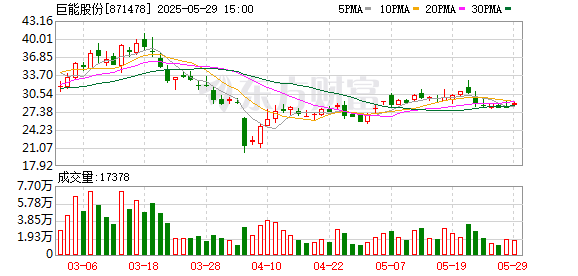
巨能股份(871478) - 投资者关系活动记录表
2025-05-28 10:50
Group 1: Revenue Breakdown - The company's revenue from the automotive industry accounts for nearly 80% in 2024, with the revenue from new energy vehicles making up approximately 23% of that total [4] - The cost of joint robots, which are primarily sourced externally, constitutes about 15% of the project's revenue [5] Group 2: Research and Development Focus - The company is focusing on three main R&D directions: 1. Flexibility: Increasing investment in flexible technology to meet the demand for "small batch, diverse, and customized" production from non-automotive sectors [6] 2. Intelligence: Establishing a wholly-owned software subsidiary in Xi'an in 2023 to focus on the development of smart factory management software [6] 3. Large/Heavy Automation: Developing automation products with specifications ranging from 2 tons to 10 tons in response to the trend of large integrated die-casting in new energy vehicles [7] Group 3: Software Development and Competitive Edge - Software is identified as one of the core competitive directions for the company, with plans to continuously increase investment in software R&D [8] - The demand for flexible manufacturing lines is driven by two main scenarios: 1. New energy vehicles requiring rapid switching capabilities due to fast product technology iterations [9] 2. Non-automotive sectors where products exhibit "small batch, diverse" characteristics, making flexible production lines essential [9] Group 4: Value Proposition of Flexible Manufacturing - The technical approach involves using software algorithms and modular hardware design to achieve compatibility and efficient switching between multiple product types, requiring minimal manual intervention [9] - The integration of mass production efficiency with flexible production capabilities helps clients meet future product iteration demands while avoiding repetitive investments in production lines [9]
6月来上海国际淀粉展现场感受食品配料与食品技术的碰撞
Huan Qiu Wang· 2025-05-22 07:20
Core Insights - The 19th Shanghai International Starch and Starch Derivatives Exhibition will take place from June 24-26, 2025, at the National Exhibition and Convention Center in Shanghai, focusing on the transformation of the starch industry towards nutrition, intelligence, and low carbon [1][5] - The Chinese corn starch market reached a scale of 92.7 billion yuan in 2023, with high-value-added product output increasing by 11.2% year-on-year [1] - The starch processing equipment market is expanding at an average annual growth rate of 8.2%, with demand for intelligent control systems surging by 37% [1] Industry Overview - The exhibition will cover five major sectors, including food ingredients, health natural raw materials, nutritional health products, pharmaceutical raw materials, and food processing machinery, with an expected exhibition area of over 200,000 square meters [1] - More than 2,500 exhibitors and 120,000 professional visitors are anticipated, providing a comprehensive view of the entire industry chain [1] Exhibitor Participation - The exhibition has attracted numerous well-known domestic and international companies, including SANGUAN WONGSE INDUSTRIES, BENEO ASIA, and others, showcasing advanced starch processing technologies and equipment [2] Innovation and Collaboration - A new "Starch Processing Equipment Display Area" will be introduced, promoting a dual-core driving model of "raw materials × machinery" to foster innovation and collaboration within the industry [5] - The event will also feature a "Discovery Tour" to explore the starch industry chain, highlighting the journey from raw materials to deep-processed products [5] Forums and Discussions - The "2025 Potato Starch and Deep Processing Industry Development Forum" will be held on June 24, focusing on global starch industry changes and technological innovations [6] - The "2025 Starch Industry Chain Development Conference" will take place on June 25, inviting industry experts to analyze market trends and opportunities [9] Cultural and Educational Aspects - The exhibition will include a cultural and educational area titled "Natural Chain," combining traditional Chinese calligraphy with modern technology to explore the complexities of potato starch [10]
优机股份: 2025年度向特定对象发行可转换公司债券募集说明书(修订稿)
Zheng Quan Zhi Xing· 2025-05-20 12:28
Core Viewpoint - Sichuan Youji Industrial Co., Ltd. plans to issue convertible bonds to raise funds for the transformation of its intelligent valve production line, with a total investment of approximately 121.34 million yuan, of which 120 million yuan will be raised through this bond issuance [3][8]. Company Overview - The company specializes in the research, design, manufacturing, and sales of customized machinery and components, primarily providing fluid control equipment and components for the oil and gas chemical industry, as well as engineering and mining machinery components [8][9]. - As of December 31, 2024, the total share capital of the company is 101,521,378 shares, with a shareholding structure that includes both unrestricted and restricted shares [8][9]. Industry Characteristics - The customized machinery and components industry is a foundational sector for high-end equipment, receiving strong support from national policies aimed at promoting advanced manufacturing and intelligent production [9][10]. - The industry is characterized by a diverse range of applications across various sectors, including oil and gas, mining, and general machinery, which helps mitigate the impact of fluctuations in individual sectors [18][20]. Market Dynamics - The mechanical equipment and components industry is closely tied to the overall macroeconomic cycle, with demand influenced by national investment in infrastructure and industrial projects [18][20]. - The industry has seen a steady increase in exports, with the total import and export volume of mechanical goods exceeding 1.17 trillion USD in 2024, marking a 7.5% year-on-year growth [16][17]. Competitive Landscape - The company has established a strong reputation and customer base, recognized by international firms such as Emerson and Honeywell, and has become a key supplier for major state-owned enterprises in China [21]. - The industry faces significant barriers to entry, including supply chain management, brand loyalty, and technological expertise, which favor established players [20][21].
树立智造高地新标杆赋能生产模式革新
Zhong Guo Zheng Quan Bao· 2025-05-13 21:49
Core Insights - The company, JN Robotics, is a pioneer in providing intelligent manufacturing solutions, focusing on automation production lines, automated auxiliary units, and smart factory management software systems [1][2] - JN Robotics aims to transform its clients into smart factories by utilizing modular design and intelligent scheduling systems to achieve flexible manufacturing [1][2] Group 1: Intelligent Factory Development - JN Robotics has delivered over 2,000 automated production lines to more than 400 enterprise clients, showcasing its commitment to building "factories that create smart factories" [1] - The company has participated in the national intelligent factory cultivation initiative, providing customized services to help clients transition from automation to intelligence [2][3] Group 2: Demonstration Projects - A notable project in Xi'an for the company Fastech has been recognized as one of the first exemplary intelligent factories by the Ministry of Industry and Information Technology, achieving a 70% increase in production efficiency and a 14% reduction in energy consumption [2] - The project also enabled continuous unmanned production for six hours, demonstrating the effectiveness of JN Robotics' solutions [2] Group 3: Technological Integration - JN Robotics integrates technologies such as industrial robots, machine vision, and intelligent sensors to create automated production lines, particularly in the mining equipment sector [3] - The company has established a comprehensive solution library based on market demand, allowing for rapid response to client needs [2][3] Group 4: Flexible Manufacturing - The rise of flexible manufacturing is changing traditional mass production methods, with JN Robotics optimizing scheduling strategies using artificial intelligence to maximize production efficiency and equipment utilization [4] - The company showcased a highly flexible intelligent production line at the 19th China International Machine Tool Exhibition, emphasizing its role as an enabler of industrial transformation [4]
家联科技(301193) - 2025年5月8日投资者关系活动记录表
2025-05-09 03:54
Group 1: Market Strategy - The company aims for a synergistic development approach through "Asian R&D + Global Manufacturing + Local Deepening," focusing on both domestic and international markets [1][2] - Short-term performance will be supported by external sales recovery and global capacity expansion, while long-term growth is driven by domestic consumption trends and global demand for green low-carbon products [2] Group 2: Raw Material Management - The company manages raw material price fluctuations through futures hedging, which helps mitigate risks associated with international oil price volatility and market supply-demand dynamics [3] Group 3: Product Profitability - Full biodegradable products have lower profit margins compared to plastic products due to higher production costs; however, as industry regulations tighten, the profit margins for compliant products are expected to improve [4] Group 4: Capital Operations - Currently, there are no plans for capital operations as the company focuses on optimizing its industrial layout and releasing production capacity across its subsidiaries [5] Group 5: Production Capacity in Thailand - The production base in Thailand is operational, with orders being gradually transferred and sufficient production capacity to meet market demand [6] Group 6: Competitive Advantages - The company emphasizes "green, intelligent, and high-end" development, offering a diverse product range and one-stop green solutions, supported by strong R&D capabilities and stringent quality control [7][8]
巨能股份董事长孙文靖:做优“制造智能工厂的工厂”
Shang Hai Zheng Quan Bao· 2025-05-08 18:43
Core Viewpoint - The article highlights the advancements and achievements of Juneng Co., particularly in the field of intelligent manufacturing and automation, showcasing its role as a leader in providing automated production lines and solutions for various industries [1][2][4]. Group 1: Intelligent Manufacturing Solutions - Juneng Co. has successfully delivered a major project for FAW Jiefang, featuring fully automated production lines that significantly enhance production efficiency and reduce the need for manual labor [1]. - The company has established itself as a key partner for FAW Jiefang, marking its first billion-yuan contract and enhancing its influence in the intelligent manufacturing sector [1][2]. - Juneng Co. has developed a "factory of factories" concept, focusing on transforming traditional production lines into automated and intelligent systems, thereby increasing production capacity for its clients [2][4]. Group 2: Customer Service and Support - The company operates a remote proactive service platform that monitors over 2,000 automated production lines across the country, allowing for immediate technical support and maintenance [5][6]. - This service model has garnered high customer satisfaction and laid a stable foundation for long-term partnerships, contributing to clients' digital and intelligent transformation [6]. Group 3: Flexible Manufacturing - Juneng Co. is at the forefront of flexible manufacturing, utilizing modular design and AI technology to create production lines capable of handling multiple product types efficiently [7][8]. - The company addresses the growing demand for personalized production in the manufacturing sector, particularly in the electric vehicle industry, by providing customized automated production lines [7][8]. Group 4: Future Directions - The company aims to continue advancing intelligent manufacturing and flexible production methods, focusing on overcoming key technological challenges and promoting broader adoption of these models across the industry [8].
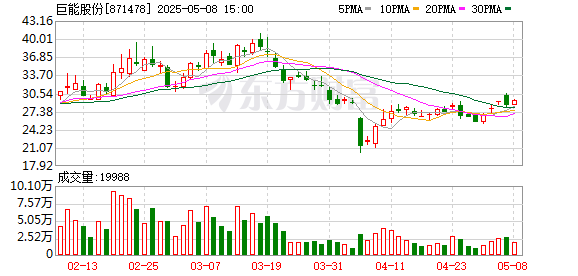
首季中国经济观察丨工厂“黑科技”背后的产业新变迁——首季中国经济一线调研报告之三
Xin Hua She· 2025-04-19 05:43
Core Viewpoint - The article highlights the transformation of China's manufacturing sector through the integration of advanced technologies, such as robotics and digital twin technology, leading to enhanced production efficiency and innovation in the industry [1][4][10]. Group 1: Technological Advancements - The introduction of humanoid robots in factories, such as the 5G smart factory in Ningbo, showcases the practical application of robotics in manufacturing processes [2][3]. - In Chongqing, the implementation of new technologies in aluminum production has resulted in a 30% increase in recycling capacity, with the company's output doubling year-on-year [4]. - The use of digital twin technology allows for the creation of virtual factories, enabling precise simulation and verification of production processes, thereby reducing trial and error costs [4][5]. Group 2: Production Flexibility - The Seres automotive super factory in Chongqing demonstrates flexible manufacturing capabilities, allowing for mixed-line production of multiple vehicle models based on customer orders, leading to a 180% increase in electric vehicle orders [6][7]. - The shift towards data-driven production processes enhances efficiency, with traditional industries experiencing a 12% reduction in carbon emissions through smart upgrades [7][8]. Group 3: Quality and Supply Chain Improvements - The establishment of over 230 exemplary smart factories has led to a 50.2% reduction in defect rates, with advanced quality control systems implemented across various manufacturing sectors [8][9]. - The integration of digital design tools and shared manufacturing resources is accelerating the formation of a collaborative supply chain ecosystem, with an 83.5% adoption rate of digital design tools among industrial enterprises [9]. Group 4: Innovation and Research Integration - The article emphasizes the role of factories in bridging the gap between innovation and production, with examples of research projects transitioning to industrial applications in Chengdu [10][11]. - The establishment of new models, such as "factory + research" and "factory + testing," is facilitating the conversion of technological innovations into production capabilities [12]. Group 5: Future Outlook - The Chinese government aims to build 10,000 5G factories and develop over 20 pilot cities for "5G + industrial internet" applications by 2027, indicating a strong commitment to advancing smart manufacturing [12].
力鼎智能推动技术迭代升级——柔性制造破解效率难题
Jing Ji Ri Bao· 2025-04-14 22:11
Core Viewpoint - The manufacturing industry is shifting towards a "multi-variety, small-batch" processing model, which presents challenges such as high unit costs and production management difficulties, prompting the need for flexible manufacturing systems to enhance efficiency and adaptability [1][2]. Group 1: Flexible Manufacturing System - The company, Liding Intelligent Equipment (Qingdao) Group Co., Ltd., has developed a flexible manufacturing system that integrates various equipment and utilizes intelligent software for dynamic scheduling and flexible configuration to optimize production efficiency [1][2]. - This flexible production line can quickly adjust production parameters and processes to accommodate different vehicle components, significantly improving production efficiency compared to traditional lines that require extensive setup time [2][3]. Group 2: Research and Development - Since 2016, the company has been developing its first-generation flexible control system scheduling software, evolving through practical adjustments and integrating mechanical and electrical design to meet real production needs [3]. - The company invests over 10% of its annual revenue in R&D and has a highly skilled R&D management team, with over 65% of its workforce dedicated to research and development [3].