
智能工厂

Search documents
中国中车:2025年营收净利双增长
Zhong Guo Zheng Quan Bao· 2026-03-28 08:48
Core Viewpoint - China CNR reported a revenue of 273.06 billion yuan for 2025, marking a year-on-year growth of 10.79%, with net profit attributable to shareholders reaching 13.18 billion yuan, reflecting a 6.4% increase [1] Group 1: Financial Performance - The company achieved a net profit of 13.18 billion yuan and a net profit excluding non-recurring items of 10.98 billion yuan, with respective year-on-year growth rates of 6.4% and 8.2% [1] - The railway equipment business generated a revenue of 123.61 billion yuan, up 11.9%, driven by increased sales in high-speed trains and locomotives [1] - New industry business revenue reached 103.12 billion yuan, a growth of 19.39%, primarily due to the rise in clean energy equipment sales [1] Group 2: Strategic Initiatives - China CNR is focusing on a "one core, two businesses, and one first-class" strategic positioning, advancing its dual-track and dual-cluster business layout in rail transit and clean energy equipment [1] - The company signed new orders totaling 346.1 billion yuan in 2025, with international business revenue reaching 34.82 billion yuan, a year-on-year increase of 22.88% [2] Group 3: Research and Development - R&D investment for 2025 amounted to 18.16 billion yuan, maintaining a high intensity in R&D efforts [3] - The company has made significant advancements in rail transit equipment, including the commercial operation of the world's first carbon fiber subway train and the testing of hydrogen-powered trains [3] Group 4: Shareholder Returns - In 2025, China CNR initiated a mid-term dividend distribution of 3.16 billion yuan and proposed a cash dividend of 3.44 billion yuan, totaling 6.6 billion yuan, which represents 50.08% of the net profit attributable to shareholders [4] - The company has consistently implemented dividends for 18 years, with a cumulative dividend total of 67.04 billion yuan, maintaining a high cash dividend ratio of around 50% over the past three years [4]

瑞晟智能(688215.SH):2025年度净利润3527.19万元,同比增加120.44%
Ge Long Hui A P P· 2026-02-27 10:23
Core Viewpoint - 瑞晟智能 (688215.SH) reported a significant increase in both revenue and net profit for the fiscal year 2025, indicating strong operational growth and effective market positioning [1] Financial Performance - The company achieved an operating revenue of 434 million yuan, representing a year-on-year growth of 12.06% [1] - The net profit attributable to the parent company was 35.27 million yuan, which is an increase of 120.44% year-on-year [1] - The net profit attributable to the parent company after deducting non-recurring gains and losses was 34.23 million yuan, reflecting a substantial growth of 231.42% year-on-year [1] Business Development - The company leveraged its core competitive advantages to actively respond to industry trends and market demand changes, leading to steady growth in its smart factory equipment business [1] - The development of the computing power server business has driven steady increases in both the scale and efficiency of the main business revenue [1] - Increased contributions from long-term equity investments have effectively enhanced the overall profitability of the company, providing significant support for performance growth [1]

新春走基层| 智能工厂“不打烊”,中国“智造”开新局
Xin Lang Cai Jing· 2026-02-22 06:37
Group 1 - The core viewpoint of the article highlights the transformation of China's manufacturing industry towards intelligent factories, driven by data and automation technologies [1][3]. - Ningbo Steel's factory exemplifies this shift, utilizing AI systems for real-time analysis and automated grading of scrap steel, resulting in a 30% reduction in R&D cycles, an 18% increase in per capita production efficiency, and a 12% improvement in energy utilization [1]. - The article notes that as of now, China has established over 35,000 basic-level, 8,200 advanced-level, and 500 excellent-level intelligent factories, along with 15 leading-level intelligent factories [3]. Group 2 - Qingdao Haier Central Air Conditioning Co., Ltd. was recognized as one of the first leading-level intelligent factories, showcasing advanced levels of customization and integration in its operations [3]. - The implementation of the intelligent factory gradient cultivation action by six departments in 2024 is accelerating the construction of intelligent factories across the country [5]. - Major cities like Beijing, Shanghai, and Guangzhou are setting ambitious goals for AI and manufacturing integration, aiming for comprehensive coverage of intelligent factories and significant increases in robot density by 2028 [5].

新春走基层 | 深海一号海底钻云上算
Xin Lang Cai Jing· 2026-02-18 23:26
Core Viewpoint - The article highlights the advancements and operational efficiency of the "Deep Sea One" gas field platform, emphasizing the importance of domestic technology and innovation in enhancing energy security and production capabilities in China's deep-sea oil and gas sector [1][2][4]. Group 1: Technology and Innovation - The "Deep Sea One" platform utilizes 16 mooring lines, each enduring a pull of 300 to 400 tons, ensuring stability in the ocean [2]. - The platform has achieved complete domestic production of mooring cables, which were previously imported, showcasing significant advancements in local manufacturing capabilities [2]. - The team has developed a fully autonomous system for monitoring and managing hydrate blockages, enhancing operational efficiency [3]. Group 2: Operational Efficiency - The platform has supplied over 14 billion cubic meters of gas since its inception, contributing to both the Hainan Free Trade Port and the Guangdong-Hong Kong-Macao Greater Bay Area [4]. - The implementation of "smart completion" technology has improved drilling efficiency by 30%, allowing for real-time monitoring and remote control of drilling operations [3]. - The integration of digital twin technology and AI algorithms has led to a 40% reduction in energy consumption per unit of output [3]. Group 3: Strategic Importance - The development of the "Deep Sea One" gas field is positioned as a strategic initiative to enhance China's energy self-sufficiency and security [2]. - The platform is recognized as the starting point for China's deep-sea oil and gas exploration, marking a significant milestone in the industry [4].


2025年我国规上酿酒企业实现营业收入8200多亿元,规上精制茶加工企业营收超1200亿元
Xin Lang Cai Jing· 2026-02-14 04:05
Group 1 - The tea industry and liquor industry in China have a combined scale exceeding 2 trillion yuan, with significant contributions to tax revenue and economic stability [1][2] - By 2025, the revenue of large-scale refined tea processing enterprises is expected to exceed 120 billion yuan, with the entire industry chain scale surpassing 1 trillion yuan and creating over 6 million jobs annually [1][2] - The liquor industry is projected to achieve revenues of over 820 billion yuan by 2025, with advancements in digital transformation, green development, and brand building [2] Group 2 - The development quality of the tea and liquor industries has been continuously improving since the 18th National Congress, with a rapid pace of transformation and upgrade [2] - A significant portion of tea and liquor brands have been recognized on international platforms, showcasing Chinese cultural charm [2] - New business models such as "satellite+" tea planting, smart factories, new-style tea drinks, and tea tourism integration are accelerating in the tea industry [1][2]
智能工厂梯度培育持续加速
Jing Ji Ri Bao· 2026-02-10 22:14
Core Insights - The establishment of leading intelligent factories is a strategic initiative for China to seize opportunities in industrial intelligence development and build future manufacturing competitive advantages [1][2][3] - The first batch of 15 leading intelligent factories has been announced, covering key industries such as equipment manufacturing, raw materials, and electronic information, showcasing beneficial explorations in manufacturing models [1][3] Group 1: Intelligent Factory Development - Over 70% of business scenarios in leading factories have integrated artificial intelligence, with more than 6,000 vertical models developed, driving the application of over 1,700 key intelligent manufacturing equipment and industrial software [1] - The intelligent factory of Xuzhou Heavy Machinery Co., Ltd. is recognized for its agile delivery of mobile cranes, achieving centralized control and dynamic visibility throughout the customer order to delivery process [1] Group 2: Performance Improvements - The transformation to leading intelligent factories has resulted in an average production efficiency increase of 29% and a reduction in product defect rates by 47% [2] - These factories serve as models for high efficiency, precision, flexibility, and quality in production, facilitating a shift from "local optimization" to "global optimization" in manufacturing [2] Group 3: Industry Impact and Future Plans - Leading intelligent factories are not only producing high-end products but also extending into scalable customization, industry chain collaboration, and predictive maintenance, transitioning from "product manufacturers" to comprehensive providers of "products + services + solutions" [2] - The Ministry of Industry and Information Technology plans to further implement intelligent manufacturing projects, support leading enterprises in exploring future manufacturing models, and promote knowledge sharing and best practices across the industry [3]
建设智能工厂 “领航”产业升级
Ren Min Ri Bao· 2026-02-10 22:10
Core Insights - The core focus of the article is on the development of intelligent manufacturing in China, emphasizing the role of smart factories as a key battleground in this transformation [1][3]. Group 1: Smart Factory Development - By the end of 2025, the Ministry of Industry and Information Technology and five other departments will announce the first batch of 15 leading smart factories, showcasing the extraordinary level and frontier exploration of intelligent manufacturing in China [1]. - The key advantage of smart factories comes from the high level of collaboration driven by artificial intelligence (AI), which has penetrated over 70% of business scenarios in leading smart factories [1]. - Starting in 2024, China will implement a gradient cultivation action for smart factories, establishing a four-level cultivation system: basic, advanced, excellent, and leading [1]. Group 2: Cross-Factory Collaboration - Leading smart factories are accelerating the breaking down of barriers and exploring cross-factory and cross-industry production collaboration and resource-sharing mechanisms, forming a "smart mother factory + replication promotion" model [2]. - For instance, Baosteel has innovatively constructed an "AI-driven predictive manufacturing" model, which anticipates market demand through AI algorithms, allowing for proactive resource allocation across the entire supply chain [2]. Group 3: Integration of Talent and Technology - The upgrade of smart factories involves not only the re-engineering of production processes and the promotion of technology applications but also the deep integration of innovative talent, intelligent equipment, and flexible production [2]. - In the first batch of leading smart factories, such as Gree Electric Appliances, traditional production lines coexist with intelligent welding equipment, where experienced workers transition to roles as AI trainers, converting their expertise into data and algorithms [2]. Group 4: Future of Workforce and Industry - The pursuit of higher efficiency necessitates the rediscovery and repositioning of human value, promoting the co-evolution of industry and laborers, which is a crucial mission for the future of smart factories [3]. - The current wave of technological revolution and industrial transformation is accelerating, intersecting with China's efforts to shift its economic development model, making the promotion of intelligent manufacturing a strategic move for future competitive advantage [3].
优势产业“优化提升” 先导产业“战略引领” 新兴产业跨过规模化门槛 上海制造力争三年再增百家“10亿+”
Jie Fang Ri Bao· 2026-02-07 03:24
Core Insights - Shanghai has approximately 10,000 industrial enterprises with an annual output value exceeding 20 million yuan, of which around 500 have an output value exceeding 1 billion yuan. By 2025, these "1 billion+" enterprises are expected to contribute over 60% of the output value of Shanghai's industrial enterprises and over 40% of industrial investment, serving as a stabilizing force for growth and investment [1] Group 1: Action Plan Overview - The action plan consists of "four major actions" with a total of 17 measures to support the achievement of its goals [2] - The "Structural Optimization and Upgrading Action" aims to enhance traditional advantageous industries, encouraging sectors like non-ferrous metals to strengthen specialty steel and expand light alloys [2] - The "Innovation and Fundamental Strengthening Action" supports enterprises in enhancing technological reserves, providing a one-time financial subsidy of 10 million yuan for companies investing over 10 million yuan annually in basic research [2] Group 2: Industry Support and Development - The "Resource Factor Support Action" focuses on talent, space, and funding, including policies to address industrial land lease renewals and promote low-interest loans for manufacturing [3] - By 2025, Shanghai's total industrial output value is projected to reach 4.07 trillion yuan, marking a return to the 4 trillion yuan level after two years [3] - Shanghai's industrial enterprises have seen a continuous decline in core cost factors, with direct industrial costs decreasing by 11.8 billion yuan in 2024 and an additional 10.33 billion yuan in 2025, leading to a cost of 81.5 yuan per 100 yuan of revenue, which is 4 yuan lower than the national average [3]
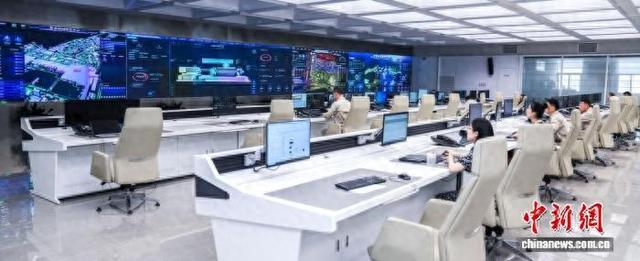
无人化场景无处不在 ——中石化宁波镇海炼化智能化生产线见闻
Jing Ji Ri Bao· 2026-02-06 21:59
Core Insights - The Ministry of Industry and Information Technology recently announced the first batch of 15 leading smart factories in China, with Sinopec's Ningbo Zhenhai Refining & Chemical Company being the only refining enterprise included [1] Group 1: Digital Transformation - Ningbo Zhenhai Refining has leveraged digital technology to drive business transformation and continuously upgrade its smart factory, achieving lean management from engineering construction to production operations [1] - The health management platform allows real-time scoring and automatic alerts for over 800,000 devices, significantly improving the efficiency of equipment management [2][3] - The platform generates health reports that enhance problem diagnosis efficiency and operational rhythm, shifting from reactive to proactive maintenance [3] Group 2: Advanced Monitoring and Automation - The company has implemented a 3D model for pipeline management, enabling precise location tracking of critical valves and reducing the time needed for fault identification [3] - The introduction of flying robots for inspection has replaced manual checks, allowing for 24/7 monitoring of critical areas and rapid detection of gas leaks [6][7] - Automation extends to various operations, including remote monitoring of electrical systems and automated control of processes, reducing reliance on human intervention [8] Group 3: Digital Twin Technology - The establishment of a digital twin factory creates a highly accurate 3D virtual mirror of the real factory, facilitating real-time synchronization of equipment status and production processes [4][5] - This technology allows for simulation and optimization of production parameters, enhancing product quality and execution efficiency [4] Group 4: Logistics and Operational Efficiency - The smart logistics management system has improved product dispatch efficiency by 40%, reducing vehicle waiting time from one day to under one hour [9] - The production command center provides real-time monitoring of operations across a 23.1 square kilometer area, enabling remote control and management of all equipment [9] Group 5: Economic Impact - The implementation of smart factory initiatives has led to an annual increase in efficiency exceeding 200 million yuan, with labor efficiency improving by over 50% [10] - The company aims to further enhance production efficiency and safety through the integration of AI technologies in its operations [10]
无人化场景无处不在——中石化宁波镇海炼化智能化生产线见闻
Zhong Guo Jing Ji Wang· 2026-02-06 20:39
Core Viewpoint - The Ministry of Industry and Information Technology has announced the first batch of 15 leading smart factories in China, with Sinopec's Ningbo Zhenhai Refining & Chemical Company being the only refining enterprise included in the list [1]. Group 1: Smart Factory Development - Ningbo Zhenhai Refining is Sinopec's largest integrated refining and chemical enterprise, leveraging digital technology to drive business transformation and continuously upgrade its smart factory [1]. - The company has implemented a health management platform that monitors over 800,000 devices, conducting three rounds of health checks daily, which enhances efficiency and reduces reliance on manual inspections [2][3]. - The health management platform provides tailored data views for each equipment operator, significantly improving problem diagnosis and operational rhythm [3]. Group 2: Digital Twin Technology - The establishment of a digital twin factory allows for the creation of a highly accurate three-dimensional virtual mirror of the real factory, synchronizing equipment status and production processes in real-time [4]. - This digital twin system aids in emergency management and is deeply integrated into daily production, optimizing production parameters and improving product quality and execution efficiency [4][5]. Group 3: Automation and Robotics - The company has introduced unmanned inspection robots that monitor critical areas, enhancing safety and operational efficiency by covering hard-to-reach spots [6][7]. - Automation extends to various operations, including real-time monitoring of electrical equipment and automated control of processes, reducing the need for manual intervention [8]. Group 4: Digital Management and Logistics - The logistics management system has improved efficiency by 40%, reducing the waiting time for trucks from one day to under one hour through automated processes [9]. - The production command center displays real-time operational dynamics across the 23.1 square kilometer site, allowing for remote control and management of all equipment [9]. Group 5: Economic Impact - The implementation of smart factory technologies has led to significant improvements in production levels and labor efficiency, generating over 200 million yuan in annual benefits and increasing labor efficiency by more than 50% [10]. - The company aims to further enhance production efficiency and safety by leveraging advanced AI models and platforms in future operations [10].
