计算机视觉

Search documents
暑期打比赛!PRCV 2025空间智能与具身智能视觉感知挑战赛报名即将截止~
自动驾驶之心· 2025-08-04 07:31
Group 1 - The competition aims to advance research in spatial intelligence and embodied intelligence, which are critical technologies for applications in autonomous driving, smart cities, and robotics [5][7] - The integration of reinforcement learning and computer vision is highlighted as a driving force for breakthroughs in the field [5][7] Group 2 - The competition is organized by a team of experts from various institutions, including Beijing University of Science and Technology and Tsinghua University, with sponsorship from Beijing Jiuzhang Yunjing Technology Co., Ltd [9][10] - Participants can register as individuals or teams, with a maximum of five members per team, and must submit their registration by August 10 [11][12] Group 3 - The competition consists of two tracks: Spatial Intelligence and Embodied Intelligence, each with specific tasks and evaluation criteria [20][23] - For Spatial Intelligence, participants are required to construct a 3D reconstruction model based on multi-view aerial images, while the Embodied Intelligence track involves completing tasks in dynamic occlusion scenarios [20][23] Group 4 - Evaluation for Spatial Intelligence includes rendering quality and geometric accuracy, with scores based on a weighted formula [22][21] - The Embodied Intelligence track evaluates task completion and execution efficiency, with scores also based on a weighted system [23][25] Group 5 - Prizes for each track include cash rewards and computing resource vouchers, with a total of 12 awards distributed among the top teams [25][27] - The competition emphasizes the importance of intellectual property rights and requires participants to ensure their submissions are original and self-owned [31][28]


《中国城市创投活力及城市创新力指数报告》发布:创投创新联动 头部城市差异化发展各显其能
Zheng Quan Shi Bao· 2025-07-30 19:09
Core Insights - The report released by Securities Times and Zhizhong highlights the rankings of Chinese cities in terms of venture capital vitality and innovation capability for 2024, with Shanghai, Shenzhen, and Beijing leading the way [1][2]. Group 1: Venture Capital Vitality - In 2024, Shanghai, Shenzhen, and Beijing maintain their top three positions in venture capital vitality, showing a significant gap from the fourth-ranked city, indicating a "head-led, tiered differentiation" pattern [2]. - Beijing ranks first in fundraising index due to its concentration of top financial institutions and national funding platforms, followed by Shanghai and Suzhou, with Nanjing and Shenzhen showing similar performance [2]. - Shanghai leads in investment index, with Beijing and Shenzhen closely following; the top ten cities show minor differences in investment indices, primarily consisting of first-tier and new first-tier cities [2]. - Shenzhen tops the exit index, breaking the previous dominance of Beijing and Shanghai in fundraising and investment, showcasing its efficiency in exits [2]. - The Yangtze River Delta region performs strongly, with Suzhou and Hangzhou both entering the top ten, while central and western cities are represented by Wuhan, Hefei, and Chengdu [2]. Group 2: Innovation Capability - Beijing, Shanghai, and Shenzhen occupy the top three positions in innovation capability index, with Beijing leading significantly due to its national laboratories (60% of the total), central enterprise R&D headquarters, and top universities like Tsinghua and Peking [2]. Group 3: Investment Trends in Key Sectors - In the investment landscape, the semiconductor and integrated circuit sector ranks among the top three in eight cities, including Shanghai, Shenzhen, and Suzhou, indicating a strong capital aggregation effect [3]. - Beijing leads in artificial intelligence (AI) as its primary investment sector, while Shenzhen ranks fourth in computer vision; Hefei's new materials and aerospace sectors also rank in the top five, reflecting a deep connection between local industrial resources and capital choices [3]. - The biopharmaceutical sector ranks in the top two in five cities, including Shanghai and Hangzhou, while medical devices rank second in Shenzhen, Suzhou, and Guangzhou, highlighting the sustained high interest in the healthcare sector [3].
2025-2031年实验室自动化设备行业全景深度分析及投资战略可行性评估预测报告-中金企信发布
Sou Hu Cai Jing· 2025-07-24 03:42
Core Viewpoint - The laboratory automation equipment industry is experiencing rapid growth driven by advancements in life sciences and testing sectors, with a focus on automation, standardization, and integration of technologies such as machine learning and digital twins [7][11]. Industry Overview - Laboratory automation refers to the use of technology to automate laboratory processes, enhancing efficiency and accuracy across various applications [2]. - The industry can be categorized into four stages of automation: single device automation, workstation automation, assembly line automation, and intelligent automation [2]. Development Trends - High-throughput, automated, and information-driven laboratory workflows are becoming the future standard [7]. - The integration of laboratory automation with technologies like machine learning and computer vision is expected to lead to smarter decision-making and adaptive processes [7]. - The domestic market is benefiting from supportive policies and an increased focus on public health, leading to rapid development and improvement in the integration and intelligence of domestic laboratory automation equipment [7][8]. Technical Barriers - Significant technical barriers exist in the industry, including: - **Equipment and Instrumentation**: High technical requirements for system integration and manufacturing of sequencing instruments, involving multiple disciplines [9]. - **Reagents and Consumables**: High-quality reagents are essential for accurate sequencing, with stringent production processes [10]. - **Data Analysis and Software Development**: The need for advanced bioinformatics to process large volumes of sequencing data presents a major challenge [10] [11]. Economic Indicators - The report outlines the economic indicators of the laboratory automation equipment industry in China from 2019 to 2024, including profitability, operational capacity, and debt repayment ability [11][12]. - The industry is characterized by a growing number of enterprises and increasing market scale, with a focus on enhancing production and sales efficiency [11][12]. Market Environment - The industry is influenced by various factors, including policy support, macroeconomic conditions, and social demand trends [11][12]. - The competitive landscape features both domestic and international players, with established companies in overseas markets leading in technology and market channels [7][11]. Future Outlook - The laboratory automation equipment market is projected to continue its growth trajectory, with forecasts indicating significant increases in market size and demand from 2025 to 2031 [11][12].

江苏两项目入选文旅部建设名单
Jiang Nan Shi Bao· 2025-07-22 13:48
Core Insights - The Ministry of Culture and Tourism has announced the second batch of technology innovation centers, focusing on interactive simulation amusement equipment and 3D animation production tools [1][2] Group 1: Technology Innovation Centers - The second batch includes two centers: one for interactive simulation amusement equipment and another for 3D animation production tools [1][2] - The first batch consisted of 11 units focusing on performing arts equipment, smart tourism, and cultural digitization [1] Group 2: Interactive Simulation Amusement Equipment Center - The center, based on XuZhou Top Interactive Intelligent Technology Co., aims to address key industry issues such as equipment intelligence and integration [1] - The center focuses on technical innovations in design, system integration, and content distribution for simulation amusement devices [1] - Top has over 30,000 square meters of modern standardized production base and is recognized as a leading enterprise in the amusement equipment technology sector [1] Group 3: 3D Animation Production Tools Center - The center, based on Jiangsu Yuanli Digital Technology Co., focuses on developing innovative 3D digital technology products and services [2] - It implements software systems related to computer vision and deep learning algorithms to enhance animation production efficiency [2] - Yuanli is recognized as a national "specialized and innovative" small giant enterprise, producing acclaimed animations and high-precision 3D scanning data packages [2]
如何创建高质量视觉数据集
3 6 Ke· 2025-07-21 03:43
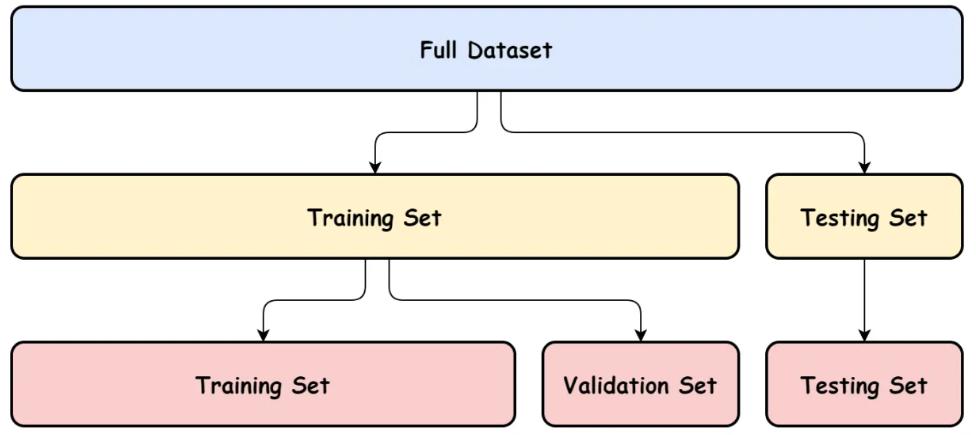
Group 1 - The importance of high-quality computer vision datasets is emphasized, as the adoption rate of AI in enterprises has increased by 270% over the past four years, driving rapid integration of computer vision applications [1][2] - High-quality data is crucial for training, validating, and testing computer vision models, as the performance of these models heavily relies on the quality and quantity of the data used [1][3] - The article outlines three types of datasets used in computer vision: training data, validation data, and testing data, each serving a specific purpose in model development [3] Group 2 - Five key features of high-quality computer vision datasets are identified: accuracy, diversity, consistency, timeliness, and privacy [5][6] - Low-quality data can lead to challenges such as overfitting and underfitting, which significantly impact model performance [7][9] - The article discusses techniques to maintain high-quality datasets, including reliable data collection, preprocessing, and appropriate dataset splitting [11][13] Group 3 - The future of computer vision datasets is shifting towards a data-centric approach, focusing on improving dataset quality rather than solely optimizing models [14] - The article highlights the role of image datasets in AI and machine learning, particularly in applications like medical imaging, autonomous vehicles, facial recognition, and retail analytics [15][16] - Ethical considerations in dataset creation are crucial to avoid bias and ensure fairness in AI systems [21][22] Group 4 - The article provides best practices for collecting high-quality image data, emphasizing the importance of clarity, resolution, and diversity [22][23] - Various sources for image data collection are discussed, including public datasets, web scraping, and custom data collection, each with its advantages and disadvantages [24][30] - Annotation techniques are critical for ensuring accurate model training, with different types of annotations suited for specific machine learning tasks [25][27] Group 5 - Quality assurance techniques are necessary to maintain high standards in dataset annotation and overall model performance [41] - Regular maintenance and updates of datasets are essential to keep AI models relevant and accurate in changing real-world conditions [46] - The article concludes that a systematic approach to creating effective image datasets is vital for building high-performance AI models [47]
暑假打比赛!PRCV 2025空间智能与具身智能视觉感知挑战赛启动~
自动驾驶之心· 2025-07-17 07:29
Core Viewpoint - The competition aims to advance research in spatial intelligence and embodied intelligence, focusing on visual perception as a key technology for applications in autonomous driving, smart cities, and robotics [2][4]. Group 1: Competition Purpose and Significance - Visual perception is crucial for achieving spatial and embodied intelligence, with significant applications in various fields [2]. - The competition seeks to promote high-efficiency and high-quality research in spatial and embodied intelligence technologies [4]. - It aims to explore innovations in cutting-edge methods such as reinforcement learning, computer vision, and graphics [4]. Group 2: Competition Organization - The competition is organized by a team of experts from institutions like Beijing University of Science and Technology, Tsinghua University, and the Chinese Academy of Sciences [5]. - The competition is supported by sponsors and technical support units, including Beijing Jiuzhang Yunjing Technology Co., Ltd. [5]. Group 3: Competition Data and Resources - Participants will have access to real and simulated datasets, including multi-view drone aerial images and specific simulation environments for tasks [11]. - The sponsor will provide free computing resources, including H800 GPU power for validating and testing submitted algorithms [12][13]. Group 4: Task Settings - The competition consists of two tracks: Spatial Intelligence and Embodied Intelligence, each with specific tasks and evaluation methods [17]. - The Spatial Intelligence track involves constructing a 3D reconstruction model based on multi-view aerial images [17]. - The Embodied Intelligence track focuses on completing tasks in dynamic occlusion simulation environments [17]. Group 5: Evaluation Methods - Evaluation for Spatial Intelligence includes rendering quality and geometric accuracy, with specific metrics like PSNR and F1-Score [19][20]. - For Embodied Intelligence, evaluation will assess task completion and execution efficiency, with metrics such as success rate and average pose error [23][21]. Group 6: Awards and Recognition - Each track will have awards, including cash prizes and computing vouchers, sponsored by Beijing Jiuzhang Yunjing Technology Co., Ltd. [25]. - Awards include first prize of 6,000 RMB and 500 computing vouchers, with additional prizes for second and third places [25]. Group 7: Intellectual Property and Data Usage - Participants must sign a data usage agreement, ensuring that the provided datasets are used solely for the competition and deleted afterward [29]. - Teams must guarantee that their submitted results are reproducible and that all algorithms and related intellectual property belong to them [29]. Group 8: Conference Information - The 8th China Conference on Pattern Recognition and Computer Vision (PRCV 2025) will be held from October 15 to 18, 2025, in Shanghai [27]. - The conference will feature keynote speeches from leading experts and various forums to promote academic and industry collaboration [28].

自驾搞科研别蛮干!用对套路弯道超车~
自动驾驶之心· 2025-07-11 01:14
Core Viewpoint - The article emphasizes the importance of learning from experienced mentors in the field of research, particularly in LLM/MLLM, to accelerate the research process and achieve results more efficiently [1]. Group 1: Course Offerings - The program offers a 1v6 elite small class format, allowing for personalized guidance from a mentor throughout the research process [5]. - The course covers everything from model theory to practical coding, helping participants build their own knowledge systems and understand algorithm design and innovation in LLM/MLLM [1][10]. - Participants will receive tailored ideas from the mentor to kickstart their research, even if they lack a clear direction initially [7]. Group 2: Instructor Background - The instructor has a strong academic background, having graduated from a prestigious computer science university and worked as an algorithm researcher in various companies [2]. - The instructor's research includes computer vision, efficient model compression algorithms, and multimodal large language models, with a focus on lightweight models and efficient fine-tuning techniques [2][3]. Group 3: Target Audience - The program is suitable for graduate students and professionals in the fields of autonomous driving, AI, and those looking to enhance their algorithmic knowledge and research skills [11]. - It caters to individuals who need to publish papers for academic recognition or those who want to systematically master model compression and multimodal reasoning [11]. Group 4: Course Structure and Requirements - The course is designed to accommodate students with varying levels of foundational knowledge, with adjustments made to the depth of instruction based on participants' backgrounds [14]. - Participants are expected to have a basic understanding of deep learning and machine learning, familiarity with Python and PyTorch, and a willingness to engage actively in the learning process [16][19].

中美AI差距有多大,AI竞争焦点在哪?《全球人工智能科研态势报告》全球首发
Tai Mei Ti A P P· 2025-07-03 10:36
Core Insights - The report titled "Global AI Research Landscape Report (2015-2024)" analyzes the evolution of AI research over the past decade, highlighting the competitive landscape between China and the United States in AI talent and publication output [2][7]. Group 1: AI Research Trends - The report identifies four distinct phases in AI research: initial phase (2015-2016), rapid development phase (2017-2019), maturity peak phase (2020-2023), and adjustment phase (2024) [4][5]. - The number of AI papers published globally increased significantly, with a peak of 17,074 papers in 2023, representing nearly a fourfold increase from 2015 [5][6]. - The year 2024 is expected to see a decline in publication volume to 14,786 papers, indicating a shift towards more specialized and application-oriented research [6]. Group 2: Talent Distribution - China has emerged as the second-largest hub for AI talent, with a total of 52,000 researchers by 2024, growing at a compound annual growth rate of 28.7% since 2015 [8]. - The United States leads with over 63,000 AI researchers, with significant contributions from institutions like Stanford and MIT, as well as tech giants like Google and Microsoft [8][9]. - Chinese institutions such as the Chinese Academy of Sciences, Tsinghua University, and Peking University are leading in terms of publication output and talent concentration [7][9]. Group 3: Institutional and Corporate Performance - The Chinese Academy of Sciences published 4,639 top-tier papers, while Tsinghua University and Peking University followed closely, showcasing China's institutional strength in AI research [7][9]. - In contrast, U.S. companies like Google, Microsoft, and Meta have a significantly higher average publication output compared to their Chinese counterparts, reflecting a disparity in research investment and output capabilities [9][10]. - The top three U.S. companies published 5,896 papers, which is 1.8 times the output of the top three Chinese companies [9][10]. Group 4: Gender Disparity in AI Talent - The report highlights a significant gender imbalance in AI research, with women making up only 9.3% of AI talent in China compared to 20.1% in the U.S. [12][13]. - Chinese institutions like Tsinghua University and Peking University have low female representation in AI, at 7.88% and 9.18% respectively, compared to 25%-30% in top U.S. institutions [12][13]. Group 5: Future Trends in AI Research - The report indicates that "deep learning" has been the dominant focus in AI research over the past decade, but its growth rate is expected to slow down, suggesting a need for new approaches [14][15]. - Emerging technologies such as "Transformers" are gaining traction, particularly in natural language processing and multimodal AI, indicating a shift in research focus [15]. - The integration of traditional AI fields with deep learning techniques is becoming more prevalent, reflecting a trend towards collaborative and interdisciplinary research [15].






实验室10篇论文被ICCV 2025录用
自动驾驶之心· 2025-07-02 13:54
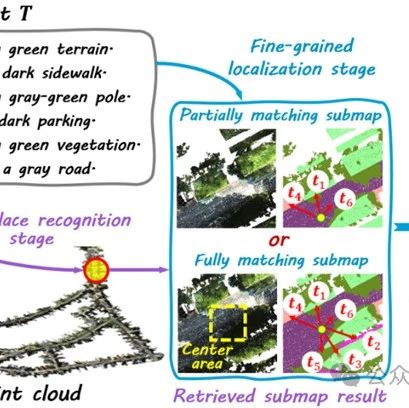
Core Insights - The article discusses the acceptance of 10 papers from a laboratory at the 20th ICCV International Conference on Computer Vision, highlighting advancements in 3D vision and related technologies [25]. Paper Summaries Paper 1: Domain-aware Category-level Geometry Learning Segmentation for 3D Point Clouds - This paper addresses domain generalization in 3D scene segmentation, proposing a framework that couples geometric embedding with semantic learning to enhance model generalization [1]. Paper 2: Hierarchical Variational Test-Time Prompt Generation for Zero-Shot Generalization - The authors introduce a hierarchical variational method for dynamic prompt generation during inference, significantly improving the zero-shot generalization capabilities of visual language models [3]. Paper 3: Knowledge-Guided Part Segmentation - A new framework is proposed that utilizes structural knowledge to enhance the segmentation of fine-grained object parts, improving understanding of complex structures [5][6]. Paper 4: TopicGeo: An Efficient Unified Framework for Geolocation - TopicGeo presents a unified framework for geolocation that improves computational efficiency and accuracy by directly matching query images with reference images [9]. Paper 5: Vision-Language Interactive Relation Mining for Open-Vocabulary Scene Graph Generation - This paper explores a model that enhances the understanding of relationships in open-vocabulary scene graph generation through multimodal interaction learning [11]. Paper 6: VGMamba: Attribute-to-Location Clue Reasoning for Quantity-Agnostic 3D Visual Grounding - The authors propose a mechanism that combines attribute and spatial information to improve the accuracy of 3D visual grounding tasks [13]. Paper 7: Meta-Learning Dynamic Center Distance: Hard Sample Mining for Learning with Noisy Labels - A new metric called Dynamic Center Distance is introduced to enhance the learning process in the presence of noisy labels by focusing on hard samples [15]. Paper 8: Learning Separable Fine-Grained Representation via Dendrogram Construction from Coarse Labels for Fine-grained Visual Recognition - The paper presents a method for learning fine-grained representations from coarse labels without predefined category numbers, enhancing adaptability to dynamic semantic structures [17]. Paper 9: Category-Specific Selective Feature Enhancement for Long-Tailed Multi-Label Image Classification - This research addresses the issue of label imbalance in multi-label image classification by enhancing feature sensitivity for underrepresented categories [19]. Paper 10: Partially Matching Submap Helps: Uncertainty Modeling and Propagation for Text to Point Cloud Localization - The authors redefine the task of text to point cloud localization by allowing partial spatial matches, improving the model's ability to handle real-world ambiguities [21].
极智嘉 全栈技术筑壁垒掘金仓储自动化黄金赛道
Sou Hu Cai Jing· 2025-07-02 09:30
Company Overview - Beijing Geek+ Technology Co., Ltd. (referred to as "Geek+") is launching its IPO from today until July 4, 2025, with plans to list on the Hong Kong Stock Exchange on July 9, 2025 [2] - The company plans to issue 140,353,000 H-shares, raising approximately HKD 2.358 billion at an issue price of HKD 16.80 per share [2] - Geek+ has attracted four cornerstone investors, collectively subscribing USD 91.3 million (approximately HKD 716.7 million) [2] Technology and Innovation - Geek+ has developed a comprehensive technology stack covering hardware, software, and algorithms, creating a significant technological moat [3] - The company introduced laser-vision fusion SLAM technology, achieving an average positioning accuracy of less than ±10mm, leading the industry [4] - The Hyper+ core algorithm platform is one of the most advanced in the AMR market, optimizing resource allocation and maximizing cost efficiency [5] - Geek+ has created the world's first universal robot technology platform, Robot Matrix, enhancing R&D efficiency by over 30% [6][7] - The company has filed over 2,000 patents by 2024, with its PopPick solution leading globally in compatibility and throughput efficiency [8] Market Landscape - The global AMR market is projected to grow from CNY 38.7 billion in 2024 to CNY 162.1 billion by 2029, with a CAGR of 33.1% [10] - The penetration rate of AMR in warehouse automation is expected to rise from 4.4% in 2020 to 20.2% in 2029 [10] - Key growth drivers include the booming e-commerce sector, increasing demand for logistics automation, and the need for manufacturing efficiency [13] - AMR robots have diverse applications across various industries, including logistics, manufacturing, healthcare, and food service [14] Competitive Advantages - Geek+ has established a global service network and collaborates with partners like Bosch Rexroth and Mujin, creating a complete ecosystem from hardware to systems [18] - The company has received strategic investments from firms like Warburg Pincus, Ant Group, and Intel, with net proceeds of approximately HKD 2.206 billion allocated for R&D and market expansion [19] - Geek+ maintains a leading market share in the AMR sector, with a revenue increase from CNY 790 million in 2021 to CNY 2.41 billion in 2024, reflecting a CAGR of 45% [23] - The company has a customer repurchase rate of 74.6%, indicating strong client retention and satisfaction [24] Industry Outlook - The intelligent logistics automation industry is experiencing rapid growth, with favorable policies supporting technological innovation and application promotion [15] - Advances in AI, machine learning, computer vision, and IoT are enhancing AMR robot performance and functionality [16] - The global labor shortage and the decline of China's demographic dividend are driving the shift towards automation, with Geek+ solutions reducing labor needs by 65% [17]