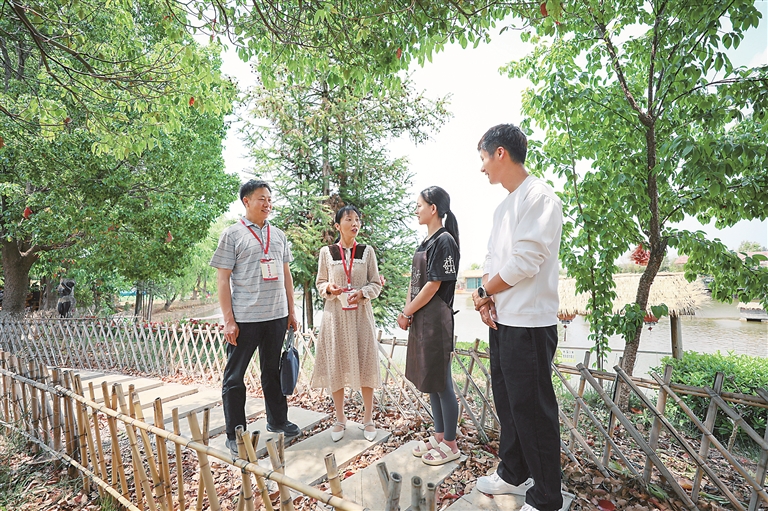
风腐同查同治

Search documents
纪检监察机关深入推进风腐同查同治为经济社会发展清障护航
Zhong Yang Ji Wei Guo Jia Jian Wei Wang Zhan· 2025-09-21 00:30
Group 1 - The emphasis on deep learning and implementation of Xi Jinping's governance theories is a significant political task for the disciplinary inspection and supervision system [1] - The mechanism of investigating and addressing both misconduct and corruption is being strengthened, focusing on the interconnection between "Four Winds" issues and corruption [2][4] - The integration of investigation and governance is crucial to eliminate the roots of misconduct and corruption, with a focus on systematic governance and reform [5] Group 2 - The Tianjin Hexi District's disciplinary inspection and supervision body is actively addressing issues of power abuse and forming "cliques" within state-owned enterprises [1][2] - The emphasis on a comprehensive approach to tackling corruption includes monitoring key areas such as infrastructure projects and research funding [2][4] - The establishment of joint working groups to scrutinize financial expenditures and ensure accountability in public spending is being implemented [2][4] Group 3 - The focus on systemic governance is evident in the efforts to address corruption in state-owned enterprises, particularly in project implementation and financial management [4][5] - The need for a holistic approach to tackle both individual cases and systemic issues is highlighted, with a focus on continuous improvement and reform [5] - The integration of case handling, corrective measures, and institutional building is essential for effective governance and to prevent the recurrence of misconduct [5]
深度关注 | 推动“一把手”廉洁履职用权
Zhong Yang Ji Wei Guo Jia Jian Wei Wang Zhan· 2025-09-11 00:33
Core Viewpoint - The article emphasizes the importance of strengthening supervision over key leaders, particularly the "first responsible person" in various organizations, to ensure integrity and compliance with regulations, thereby preventing corruption and promoting accountability [17][18]. Group 1: Supervision and Accountability - The Chongqing Municipal Commission for Discipline Inspection and Supervision has implemented measures to enhance the supervision of "first responsible persons" through various educational and corrective actions [3][10]. - The commission has focused on the analysis of serious violations of discipline and law by key leaders, leading to the establishment of improved management systems in procurement and government investment projects [3][4]. - A series of typical cases of corruption have been addressed, highlighting the need for strict accountability and the establishment of a robust supervisory framework [5][6][7]. Group 2: Anti-Corruption Measures - The article outlines the ongoing high-pressure stance against corruption, with significant cases being investigated and punished, such as the expulsion of former officials for serious violations [4][5]. - The commission has adopted a dual approach of punishment and prevention, targeting sectors with concentrated power and resources, including state-owned enterprises and public services [5][6]. - The integration of digital technologies, such as big data and artificial intelligence, has been emphasized to enhance the investigation and supervision processes [17]. Group 3: Systematic Governance - The article discusses the shift from individual case handling to systematic governance, aiming for comprehensive oversight mechanisms that address the root causes of corruption [13][16]. - The establishment of a digital management system for integrity records is highlighted, which aims to provide timely insights into the integrity status of leaders and facilitate effective supervision [15][16]. - Continuous improvement of the supervisory measures and the promotion of a culture of accountability among leaders are essential for fostering a clean governance environment [12][18].

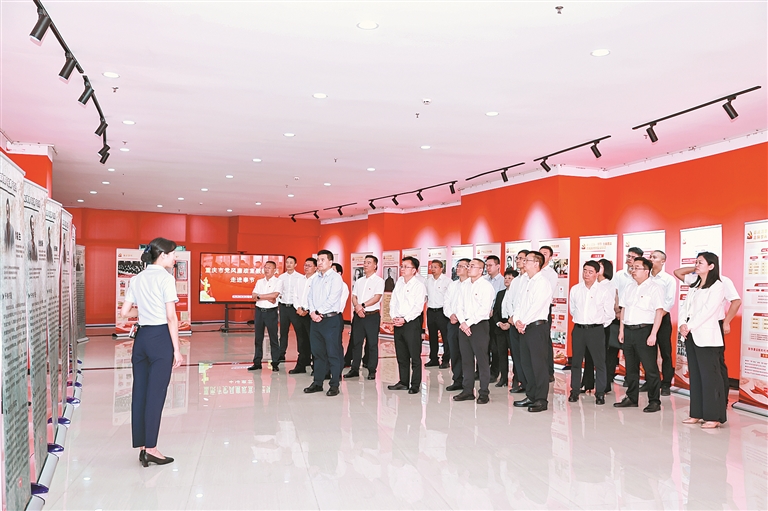
习近平作出重要指示强调 锲而不舍落实中央八项规定精神 推进作风建设常态化长效化 蔡奇主持中央党的建设工作领导小组会议并讲话 李希出席并讲话
Shang Hai Zheng Quan Bao· 2025-08-29 19:52
Group 1 - The core message emphasizes the importance of the Party's style as its image, which is crucial for public support and the Party's survival [1] - Continuous implementation of the Central Eight Regulations is highlighted as essential for building a disciplined and pure Party [1][2] - The meeting underlines the need for persistent efforts to address the "Four Winds" issues, promoting a long-term and normalized approach to style construction [2][3] Group 2 - The meeting recognized the significant achievements in the education and implementation of the Central Eight Regulations, with active participation from Party members and public support [3] - There is a call for deeper understanding and commitment to the importance of style construction in adapting to new challenges [3] - The need for a robust mechanism to identify and resolve style issues, enhancing supervision and accountability, is emphasized [3]
中央纪委国家监委通报
券商中国· 2025-08-28 23:34
Core Viewpoint - The article highlights the ongoing efforts and results of the Central Commission for Discipline Inspection and National Supervisory Commission in addressing violations of the Eight-point Regulation, with significant numbers of cases and disciplinary actions reported for July 2025 [1][3]. Summary by Sections Violations and Disciplinary Actions - In July 2025, a total of 25,420 cases of violations of the Eight-point Regulation were reported, with 32,905 individuals receiving criticism and disciplinary actions, including 22,621 receiving party and administrative sanctions [1][2]. - The types of violations included formalism and bureaucratism, with 10,843 cases reported, accounting for 84.5% of the total formalism and bureaucratism issues addressed that month [2][3]. Breakdown of Violations - Among the violations categorized as hedonism and extravagance, the issues of accepting valuable gifts and cash, improper dining, and unauthorized distribution of subsidies or benefits accounted for 52.2%, 24.3%, and 11.9% of the total hedonism and extravagance violations, respectively [2][3]. Level of Offenders - The breakdown of offenders included 3 cases at the provincial and ministerial level, 95 at the departmental level, 1,380 at the county and division level, and 23,942 at the township level and below, with the latter group making up 94.2% of the total violations [3]. Focus on Corruption and Governance - The article emphasizes the intertwined nature of corruption and misconduct, urging disciplinary bodies to address both issues simultaneously and to strengthen mechanisms for governance and oversight to prevent future violations [3].
中央纪委国家监委通报
中国基金报· 2025-08-28 14:28
Core Viewpoint - In July 2025, a total of 25,420 cases of violations of the Central Eight Regulations were investigated nationwide, with 32,905 individuals receiving criticism and education, and 22,621 individuals facing disciplinary actions, marking the 143rd consecutive month of reporting such data [1]. Summary by Sections Violations and Issues - In July, 10,843 cases were related to non-performance, non-action, and misconduct in fulfilling responsibilities, accounting for 84.5% of the total formalism and bureaucratic issues investigated [2]. - Among the issues of hedonism and extravagance, violations related to the acceptance of valuable gifts and cash, excessive dining, and improper distribution of allowances or benefits accounted for 52.2%, 24.3%, and 11.9% respectively [3]. Levels of Offenders - In July, 3 cases involved provincial and ministerial-level leaders, 95 cases involved departmental and bureau-level leaders, 1,380 cases involved county and division-level leaders, and 23,942 cases involved grassroots-level officials, with the latter group making up 94.2% of the total violations [3]. Anti-Corruption Efforts - The intertwining of corruption and misconduct is a prominent issue in the current anti-corruption efforts, necessitating a comprehensive approach to address both problems simultaneously [3].
践悟丨高标准严要求提高正风肃纪反腐能力
Zhong Yang Ji Wei Guo Jia Jian Wei Wang Zhan· 2025-08-28 00:31
Group 1 - The core viewpoint emphasizes the importance of strengthening the standardization, legalization, and normalization of disciplinary inspection and supervision work to enhance anti-corruption capabilities [1][2][3] - The need for a unified understanding and action among disciplinary inspection agencies in line with the directives from the General Secretary and the Party Central Committee is highlighted [2][3] - The relationship between standardization, legalization, and normalization is described as an organic whole, with each aspect supporting the others in achieving effective governance [3] Group 2 - The focus on addressing prominent issues and improving the quality and efficiency of case handling is crucial for achieving political, legal, and social effects [4][5] - The establishment of a quality system for case handling is necessary to ensure compliance with relevant regulations and to enhance the effectiveness of disciplinary inspection [5] - The integration of new corruption detection methods and evidence collection strategies is essential for tackling emerging and hidden corruption [5][6] Group 3 - The goal of building a high-quality, professional cadre team is emphasized to support the high-quality development of disciplinary inspection work [7][8] - The importance of strict internal management and supervision mechanisms is underscored to prevent misconduct among disciplinary inspection personnel [7][8] - Continuous improvement of work style and reduction of bureaucratic burdens on grassroots levels are necessary to enhance operational efficiency [8][10] Group 4 - The need for ongoing education and training in political and legal matters is highlighted to improve the overall competency of personnel in disciplinary inspection [9][10] - The establishment of a high-quality discussion mechanism is proposed to refine development indicators and enhance the effectiveness of disciplinary inspection work [11][12] - The implementation of a regular disciplinary education mechanism is essential to ensure that all personnel are aware of and adhere to disciplinary standards [12]
业务聚焦丨以同查同治严惩风腐交织问题
Zhong Yang Ji Wei Guo Jia Jian Wei Wang Zhan· 2025-08-27 01:34
Core Viewpoint - The intertwined issues of misconduct and corruption are critical challenges in the current efforts of party discipline and anti-corruption campaigns, necessitating a comprehensive approach to address these problems [1] Group 1: Strict Measures Against Corruption - The focus is on maintaining a high-pressure environment to deter corruption, employing strategies such as leadership case handling and expedited processing of complex cases [2] - There is a zero-tolerance policy towards the "Four Winds" issues, with strict enforcement of central regulations to combat violations and prevent the evolution of misconduct into corruption [2] - A mechanism for classifying and addressing misconduct and corruption cases has been established, emphasizing the need for thorough investigations into underlying issues such as bribery and power abuse [2] Group 2: Systematic and Comprehensive Solutions - Early intervention is prioritized to prevent issues from escalating, utilizing case studies for educational purposes to highlight the trajectory from misconduct to corruption [3] - Institutional frameworks are being strengthened to enhance accountability, with recommendations for improvements based on case analyses to tighten the regulatory environment [3] - Cultural initiatives are being promoted to foster integrity, integrating local cultural resources into anti-corruption education and activities [3] Group 3: Collaborative Efforts and Technological Integration - A responsibility chain is being reinforced to ensure accountability at all levels, with a focus on collaborative supervision and pressure transmission [4] - Internal and external cooperation mechanisms are being improved to enhance the effectiveness of anti-corruption efforts, including information sharing and joint operations [4] - The use of technology is being advanced to improve the precision and efficiency of monitoring and addressing misconduct and corruption [4][5]
深入推进风腐同查同治③筑牢拒腐防变思想防线
Zhong Yang Ji Wei Guo Jia Jian Wei Wang Zhan· 2025-08-17 00:13
Core Viewpoint - The emphasis on integrating the concept of investigating and addressing both corruption and misconduct into various aspects of case handling, rectification, and educational warnings, creating an effective closed loop of case handling, governance, supervision, and education [1] Group 1: Warning Education Initiatives - The establishment of a legal education base in Jinshan District, Shanghai, aims to enhance the impact and deterrence of warning education by organizing court hearings for party members to observe [1] - Suzhou's disciplinary inspection and supervision authorities have created a shared resource library for warning education, utilizing various media to enhance the effectiveness of educational initiatives [2] - The integration of "full-cycle management" into the investigation process ensures that warning education is planned from the outset, focusing on the analysis of misconduct and corruption trends [2] Group 2: Case Studies and Their Impact - The case of a former housing director in Luoyang highlights how minor infractions can escalate into significant corruption, emphasizing the need for vigilance from the outset [3] - The use of personal testimonies and case analyses in warning education has proven effective in conveying the dangers of corruption, as seen in the reactions of participants in educational sessions [3][4] - The case of a former state-owned enterprise leader in Anhui illustrates the importance of addressing early signs of misconduct, with educational materials reflecting the individual's moral decline [5] Group 3: Comprehensive Educational Approaches - The implementation of diverse educational formats, including video productions and public meetings, aims to deepen the understanding of the intertwined nature of misconduct and corruption [4][5] - Continuous collection and analysis of recent cases of misconduct and corruption are essential for developing targeted educational materials for party leaders [4][5] - The focus on specific sectors and the use of case studies to illustrate the consequences of misconduct are critical for reinforcing the message of accountability and ethical behavior [5]
健全机制深化风腐同查同治
Zhong Yang Ji Wei Guo Jia Jian Wei Wang Zhan· 2025-08-14 00:10
Group 1 - The core viewpoint emphasizes the integration of anti-corruption and discipline enforcement, advocating for a systematic approach to address both misconduct and corruption simultaneously [1][2] - The need to break away from fragmented governance models and implement a comprehensive strategy targeting both common and individual issues is highlighted [3][4] - The establishment of a robust supervisory system that coordinates various forms of oversight is essential for enhancing the effectiveness of anti-corruption efforts [2][5] Group 2 - The article stresses the importance of a clear responsibility transmission mechanism to ensure accountability at all levels of governance [4][5] - It discusses the necessity of integrating anti-corruption measures into broader political and administrative frameworks to enhance governance efficiency [3][4] - The focus on leveraging data and technology to improve the detection and prevention of corruption is underscored, aiming for a proactive rather than reactive approach [2][5]
学纪知纪明纪守纪 | 深入推进风腐同查同治
Zhong Yang Ji Wei Guo Jia Jian Wei Wang Zhan· 2025-08-13 00:04
Core Viewpoint - The article emphasizes the importance of deepening the integration of addressing both misconduct and corruption, highlighting their interrelated nature and the need for a comprehensive approach to governance and accountability [3][9][10]. Group 1: Understanding the Interconnection of Misconduct and Corruption - Misconduct and corruption are fundamentally interconnected, sharing common roots and often transforming into one another, necessitating a unified approach to tackle both issues effectively [3][7][10]. - The article discusses how minor misconduct can escalate into serious corruption, indicating that early intervention is crucial to prevent such transformations [3][5][7]. Group 2: Practical Requirements for Implementation - The article outlines the necessity of a systematic approach to integrate the concepts of addressing misconduct and corruption throughout all levels of governance, ensuring that both are treated with equal importance [4][11][12]. - It stresses the need for continuous monitoring and education to foster a culture of integrity and accountability within organizations [6][19]. Group 3: Effective Paths and Methods for Implementation - The article suggests employing targeted strategies to identify and address specific areas where misconduct and corruption are likely to intersect, thereby enhancing the effectiveness of governance measures [11][12][14]. - It advocates for a dual approach of investigating misconduct to uncover underlying corruption and vice versa, ensuring a comprehensive understanding of the issues at hand [11][14][18]. Group 4: Enhancing Governance and Accountability - The article highlights the importance of creating a cohesive framework that connects various supervisory and accountability mechanisms, ensuring that all efforts are aligned towards combating both misconduct and corruption [13][16][17]. - It emphasizes the need for ongoing education and awareness initiatives to reinforce the values of integrity and ethical behavior among all members of the organization [19].