Electric Vehicle (EV)

Search documents
VinFast Auto .(VFS) - 2025 Q1 - Earnings Call Transcript
2025-06-09 13:00
Financial Data and Key Metrics Changes - Net revenue for Q1 2025 was USD 657 million, a 150% increase year over year and largely in line with Q4 2024 [24] - Cost of goods sold for the quarter was USD 888 million, an increase of 113% year over year and down 25% quarter over quarter [24] - Q1 2025 gross margin was -35%, an improvement from -59% in the same period last year [25] - Net loss for the quarter was USD 712 million, with a net loss margin of -109%, compared to -226% in Q1 2024 [28] - Operating cash flow for the quarter was -USD 607 million, an improvement from -USD 500 million in Q1 2024 [29] Business Line Data and Key Metrics Changes - In Q1 2025, VinFast delivered 36,330 electric vehicles, a 296% increase year over year but a 32% decline quarter over quarter [6] - Two-wheeler deliveries reached 44,904 units, marking a 473% year over year increase and a 44% rise quarter over quarter [7] - B2C deliveries accounted for over 70% of total sales for three consecutive quarters through Q1 2025 [7] Market Data and Key Metrics Changes - In Vietnam, VinFast's market share of overall auto sales increased to nearly 40% in Q1 2025 from approximately 20% last year [13] - EV penetration in Vietnam reached nearly 40% in Q1, while BEV adoption in Indonesia was 7% and in The Philippines was only 3% [9] - VinFast's charging partner, V Green, has deployed over 2,000 charging locations across Indonesia, with approximately 16% operational [11] Company Strategy and Development Direction - VinFast is transitioning from a direct-to-consumer model to a dealer-based model to improve operational efficiency [26] - The company plans to double vehicle deliveries in 2025 and maintain strong momentum into 2026 [37] - New vehicle platforms and EE architecture are expected to drive long-term cost savings and operational efficiency [23][19] Management Comments on Operating Environment and Future Outlook - Management expressed optimism about improved operating leverage driven by economies of scale despite ongoing global macroeconomic uncertainties [5] - The company anticipates higher R&D spending in the coming periods to support the development of next-generation platforms and technologies [27] - Management highlighted the importance of scaling operations and optimizing costs as key factors for achieving profitability [37] Other Important Information - CapEx for Q1 2025 was USD 147 million, down 24% year over year and 40% quarter over quarter [28] - As of May 31, the company's liquidity stands at around USD 2.4 billion, including various loans and grants [30] Q&A Session Summary Question: Timeline for new factories in Vietnam, India, and Indonesia - All facilities in Asia are expected to start operations this year, with the India factory opening in July [34] Question: Key catalysts for investors in 2025 - Key catalysts include scaling operations, accelerating product development, and executing cost optimization [37] Question: Timing of CapEx and expected peak - The company plans to spend a total of USD 800 million in 2025, with over 50% allocated to R&D [42] Question: Expansion into the bus market - The company expects to deliver about 1,000 buses in Vietnam this year and is expanding into other markets [45] Question: Average selling price (ASP) trajectory - ASP for Q1 2025 was around USD 15,000, expected to remain under USD 20,000 for the full year [48] Question: Closing of B2C showrooms in North America and Europe - The transition to a dealership model is aimed at enhancing efficiency and scale globally [60] Question: Liquidity status - The company has disbursed USD 1.2 billion in loans and has a liquidity of approximately USD 2.4 billion [64]

A Little Bad News for Rivian and Lucid
The Motley Fool· 2025-06-07 15:05
Industry Overview - The electric vehicle (EV) market is experiencing a slowdown in consumer interest, with only 16% of respondents likely to purchase an EV as their next vehicle, the lowest level since 2019 [3] - The percentage of consumers who believe most cars will be electric within the next decade has decreased from 40% in 2022 to 23% in 2023 [3] Consumer Sentiment - There is growing pessimism regarding battery repair costs, total costs, and charging infrastructure, with 62% citing high battery repair costs and 59% mentioning purchase price as reasons for avoiding EVs [4] - The average transaction price for a new EV in March was $59,205, significantly higher than the overall average transaction price of $47,462 [5] - Concerns about running out of charge while driving and the lack of convenient public charging stations were noted by 56% and 55% of respondents, respectively [5] Legislative Impact - The Trump administration's budget bill aims to reduce federal incentives for battery manufacturing and could eliminate the $7,500 EV tax credit if approved by the Senate [6] - The bill also proposes new taxes of $250 for EV owners and $100 for hybrid owners to support infrastructure [7] Company-Specific Insights - Rivian is entering 2025 without major vehicle launches and stagnating deliveries, lacking visible catalysts for growth [1] - Lucid Motors has achieved six consecutive quarters of record deliveries and is ramping up production of its new Gravity SUV, providing some momentum despite the overall decline in consumer sentiment [1][11] - Investors in Rivian should look for buying opportunities as the company awaits the R2 launch, while Lucid's ongoing production increases may help sustain its growth [10][11] Market Dynamics - Despite the decline in consumer sentiment, first-quarter data showed a 16% growth in EV registrations and an increase in market share from 6.9% to 7.7% year-over-year, driven by demand pull-ahead effects [9]



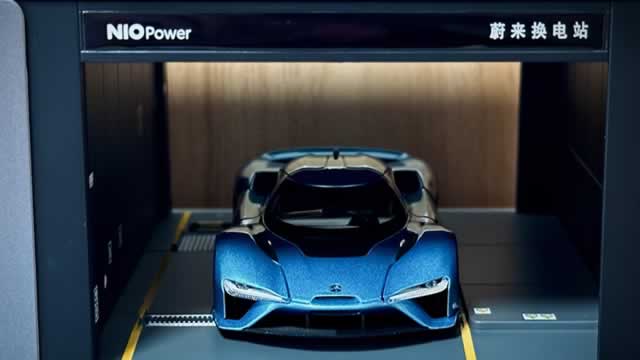
Is Nio Stock a buy Now?
The Motley Fool· 2025-05-25 12:15
Company Overview - Nio's stock has experienced significant volatility, currently down 94% from its peak of $67 per share in early 2021, raising questions about investment timing [1][2] - The company is making progress in China's competitive electric vehicle (EV) market, which is projected to grow by 16% annually by 2030 [1] Delivery and Growth - In April, Nio achieved a 53% increase in deliveries, rolling out 23,900 vehicles, including 19,269 premium smart EVs and 4,400 family-oriented units [3] - Citi forecasts Nio could deliver 63,000 units in the second quarter, indicating a 50% growth quarter over quarter [5] Product Launches - Nio launched its new brand, Firefly, a compact smart EV priced at $16,410, aimed at competing with established European city cars [4] Unique Selling Proposition - Nio's battery-swap service allows drivers to replace depleted batteries in 3 to 5 minutes, addressing charging time concerns [7] - The battery-as-a-service (BaaS) model enables customers to purchase vehicles without a battery, lowering initial costs and providing recurring revenue for Nio [8] Expansion Plans - Nio has approximately 3,100 battery-swap stations in China and plans for global expansion, although recent investment cuts have slowed growth in Europe [9] Financial Performance - Nio reported a loss of RMB 22.4 billion ($3.1 billion) last year, an increase from RMB 20.7 billion ($2.9 billion) the previous year, indicating ongoing high operating costs [11] - The company is exploring cost-saving measures to improve profitability amid intense competition and pricing wars in the Chinese market [16] Regulatory and Trade Concerns - There are regulatory risks for Chinese companies, including potential delisting from U.S. exchanges, although the likelihood is low [13] - Trade and tariff issues remain a concern, particularly with Europe imposing tariffs on Chinese-made EVs due to competitive practices [14]

2 Reasons to Buy Rivian Now
The Motley Fool· 2025-05-21 22:14
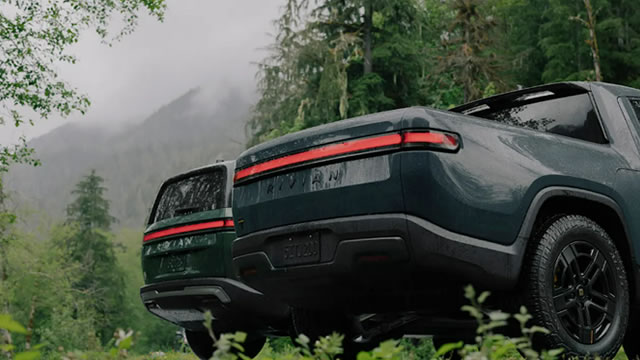
Core Viewpoint - Rivian is navigating a challenging environment with tariff uncertainties and delivery challenges while preparing for the launch of its R2 SUV, yet it has seen a 56% stock increase over the past year despite being below all-time highs [1] Operational Improvement - Rivian achieved its first quarter of gross profit in Q4 2024, with expectations for modest gross profit in full-year 2025, posting a gross profit of $206 million in Q1, down from $527 million the previous year [2] - The automotive division contributed $92 million and the software and services division contributed $114 million to the gross profit, alongside an 85% improvement in cash flow from operating activities compared to the prior year [3] Financial Milestones - The achievement of two consecutive quarters of gross profit unlocks a $1 billion payment from Volkswagen Group, marking a significant milestone for Rivian [4] - Rivian reduced automotive cost of goods sold by over $22,600 per vehicle delivered in Q1 compared to the previous year, resulting in five consecutive quarters of improving gross margin [5] Demand Generation - Rivian is launching its first major marketing campaign, focusing on real user stories and utilizing various media platforms to enhance brand awareness [8] - The company provided over 36,000 demo drives in Q1, aiming to increase consumer experience and drive demand ahead of the R2 launch [9] Future Outlook - Rivian's expected funding from Volkswagen, combined with $7.2 billion in cash and cash equivalents, is projected to support operations through the ramp-up of the R2 and R3 models, targeting a more mainstream consumer base and a path to positive free cash flow [11] - Despite being speculative and experiencing rapid cash burn, Rivian is positioning itself for a strong 2026, with recent profitability and marketing efforts providing reasons for optimism [12]
BERNSTEIN:电池行业周报(5 月 6 日)
2025-05-12 01:48
Summary of Key Points from the Conference Call Industry Overview - The conference call primarily discusses the **global energy storage** and **battery** industry, focusing on key players such as **CATL**, **SK Innovation**, **Samsung SDI**, and **Tianqi Lithium**. Core Insights and Arguments 1. **CATL's Hong Kong IPO**: CATL is planning to launch its share sale in Hong Kong during the week of May 12, with expectations to raise at least **$5 billion**, marking it as the largest IPO in the city in four years [3] 2. **SK Innovation's Financial Struggles**: SK Innovation reported a **net loss of Won 125.6 billion (US$88.4 million)** in Q1, attributed to falling oil prices and declining refining margins, despite increased battery sales [3] 3. **New Battery Safety Standards**: CATL's batteries comply with new Chinese safety standards effective from July 2026, which require batteries to avoid fire or explosion during thermal runaway events [3] 4. **SK IE Technology's Business Challenges**: SK IE Technology is struggling to sell its battery separator business and has halted plans for a new production facility in North America due to financial constraints and market conditions [3] 5. **Samsung SDI's Product Launch**: Samsung SDI will showcase its new high-density battery at the **2025 Interbattery Europe** exhibition, targeting the AI data center market [3] 6. **Hyundai and Kia's EV Strategy**: The companies plan to focus on budget-friendly electric vehicles (EVs) for both developed and emerging markets next year [3] 7. **Tianqi Lithium's Return to Profit**: Tianqi Lithium reported a net income of **CNY 104.3 million (US$14 million)** in Q1, recovering from previous losses due to increased production and sales [4] 8. **Albemarle's Market Outlook**: Albemarle anticipates continued pressure on high-cost lithium producers, with about **40% of global supply** at or below breakeven, and a third idled [8] 9. **LG Energy Solution's Recycling Initiative**: LG plans to establish a joint venture with Derichebourg to build a battery recycling plant in France, expected to process over **20,000 tonnes per year** [7] 10. **Porsche's Battery Production Reevaluation**: Porsche is reassessing its battery production plans, increasing expected special expenses from **€0.8 billion to €1.3 billion** due to slower EV uptake [7] 11. **BMW's Battery Factory Completion**: BMW has completed the central building of its new battery assembly plant in Bavaria, which will utilize large-volume cylindrical cells [7] 12. **Norway's EV Market Share**: In April, **97%** of new car registrations in Norway were electric, indicating a strong market for EVs [7] Additional Important Insights - **Market Dynamics**: The battery market is experiencing a divergence in performance among manufacturers, with some facing significant challenges while others adapt to new market conditions [19] - **Long-term Demand Growth**: Despite current price pressures, demand for lithium and batteries is expected to double in the long term, driven by the expansion of electric vehicles and energy storage systems [8] - **Investment Trends**: The industry is seeing a slowdown in investment for new projects due to low prices, which could hinder future supply growth [8] This summary encapsulates the key points discussed in the conference call, highlighting the current state and future outlook of the energy storage and battery industry.

F vs. TSLA: Which of These Auto Biggies is a Better Pick Amid Tariffs?
ZACKS· 2025-05-07 16:25
Industry Overview - The auto industry is facing significant challenges due to a 25% tariff on imported vehicles and another 25% duty on non-compliant auto parts, which could increase costs for automakers by tens of billions of dollars [1] - Demand for vehicles is expected to soften, and supply chain disruptions are likely to worsen, leading several automakers to cut back or pause their guidance [1] Case for Ford - Ford reported first-quarter 2025 earnings of $1 billion in EBIT, exceeding expectations, driven by cost-cutting and strong pricing in North America [3] - U.S. pickup sales reached their highest first-quarter levels in over 20 years, and the Model e division saw a 15% year-over-year increase in retail sales [4] - Ford is on track for $1 billion in net cost reductions this year, despite anticipating a $2.5 billion impact from new tariffs [5] - The company has paused full-year guidance due to tariff uncertainty but plans to provide updates in the second-quarter earnings call [6] - Ford's financial position is strong, with over $27 billion in cash and $45 billion in total liquidity, and it aims to return 40-50% of free cash flow to shareholders [7] Earnings Estimates for Ford - Zacks Consensus Estimate for Ford's current year EPS is $1.22, with a year-over-year growth estimate of -33.70% [9] Case for Tesla - Tesla is experiencing a decline in deliveries amid increased competition and missed earnings expectations in the first quarter of 2025 [10] - The company is implementing price cuts to stimulate sales, which is negatively impacting automotive margins [10] - Tesla's energy generation and storage segment is growing but is not yet large enough to offset pressures on vehicle sales [11] - The company held $37 billion in cash as of March 31, 2025, with a low debt-to-capital ratio of 7% [11] - Tesla is focusing on next-generation technologies, including robotaxi services and autonomous vehicles, but these projects face significant execution risks [12] Earnings Estimates for Tesla - Tesla's near-term outlook is uncertain, hinging on stabilizing its EV operations and progress on long-term innovations [13] Valuation Comparison - Tesla is trading at a forward sales multiple of 8.38X, significantly above the industry's 2.3 and its own median of 7.73X, while Ford has a forward sales multiple of 0.26X, below its 5-year average of 0.31 [16] Conclusion - Both Ford and Tesla are facing industry headwinds, but Ford appears to be in a better position due to its focus on cost reductions and commercial fleet strength [19] - Tesla is under pressure in its core EV business while pursuing ambitious long-term projects, making its stock vulnerable in the near term [20]


2 Stocks to Own Even With a Possible Recession Looming
The Motley Fool· 2025-05-03 08:14
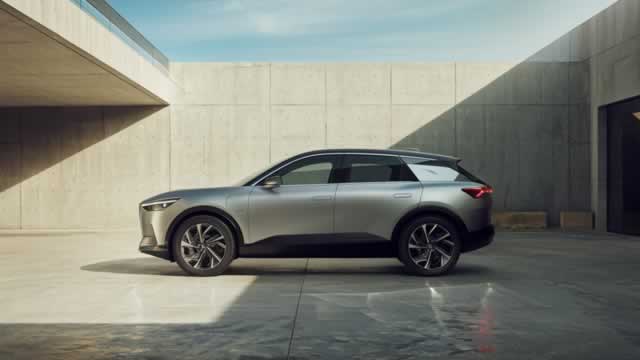
Group 1: Economic Outlook and Investment Opportunities - The probability of a U.S. recession in 2025 is estimated between 45% and 60%, influencing investment strategies [1] - Two stocks identified as potential buying opportunities during a recession are Ferrari and BYD [1] Group 2: BYD's Market Position and Strategy - BYD dominates China's new energy vehicle (NEV) market with nearly 30% market share as of March, significantly ahead of its closest competitor at 11.2% [3] - The company expects to double its international sales to approximately 800,000 units by 2025, despite not yet entering the U.S. market [3] - BYD's vertical integration and in-house component production lead to lower battery costs, providing a competitive advantage [4] - The transition to electric vehicles positions BYD favorably for future growth, even if a recession temporarily slows its progress [4] Group 3: Ferrari's Business Model and Resilience - Ferrari is characterized as an ultra-luxury automaker with strong brand power, pricing power, and impressive margins [5] - The super-wealthy demographic that purchases Ferrari vehicles is less affected by economic downturns, ensuring consistent demand [5] - Ferrari maintains exclusivity through a strict ownership process and limited vehicle deliveries, resulting in wait lists extending beyond two years [6] - The company’s vehicle deliveries are projected to grow in the mid to single digits annually, with improving margins due to strong pricing power [7] - Ferrari's margins are significantly higher than its peers and are on an upward trend, indicating durable competitive advantages [9] Group 4: Future Growth Potential - BYD is well-positioned for continued expansion in the EV market, with potential growth opportunities in the U.S. [10] - Ferrari's exceptional business attributes and improving margins make it a sound investment, especially if a recession leads to a lower valuation [11]


GM Trims Outlook, Halts Buyback Amid Tariffs: Sell the Stock Now?
ZACKS· 2025-05-02 13:50
Core Viewpoint - General Motors (GM) has revised its 2025 earnings forecast downward due to potential new U.S. auto tariffs, estimating a cost impact of $4-$5 billion [1][3][4]. Financial Outlook - GM now expects adjusted EBIT for 2025 to be between $10 billion and $12.5 billion, down from a previous range of $13.7 billion to $15.7 billion [4]. - Net income attributable to shareholders is projected to fall to between $8.2 billion and $10.1 billion, compared to earlier guidance of $11.2 billion to $12.5 billion [4]. - Adjusted automotive free cash flow is now expected to be in the range of $7.5 billion to $10 billion, lower than the previous forecast of $11 billion to $13 billion [4]. Impact of Tariffs - A significant factor in the downward revision is a projected $2 billion business hit from South Korea, where several key models are assembled [5]. - GM's CEO has indicated that tariff-related challenges will create significant disruption in the auto industry [2]. Stock Buyback and Analyst Revisions - GM has temporarily suspended its share buyback program until there is more clarity on the tariff impact, with $4.3 billion in repurchase capacity remaining [6]. - Analysts have begun to lower their EPS forecasts for GM for 2025, with further cuts anticipated [6]. Tariff Defense Strategy - GM aims to offset up to 30% of expected tariff-related costs through "self-help initiatives," including increasing U.S.-based vehicle and battery production [7]. - The company has increased its U.S. direct purchases by 27% since 2019, with over 80% of U.S.-built vehicle content meeting USMCA standards [8]. Market Performance - Year-to-date, GM shares have declined by 15%, which is better than Harley-Davidson's 23% drop, while Ford has seen a 2.8% increase [10]. - GM's stock trades at a forward price-to-sales (P/S) ratio of 0.25, significantly below the industry average of 2.19, indicating it may be undervalued [13]. Long-term Strategy - GM is progressing with its long-term electric vehicle (EV) strategy, being the 2 EV seller in the U.S. and achieving variable profit positive status for its EV lineup by late 2024 [16]. - The company ended the first quarter with $20.7 billion in cash and cash equivalents, indicating solid financial health [17].

Could Lucid Group Stock Help You Retire a Millionaire?
The Motley Fool· 2025-05-02 07:15
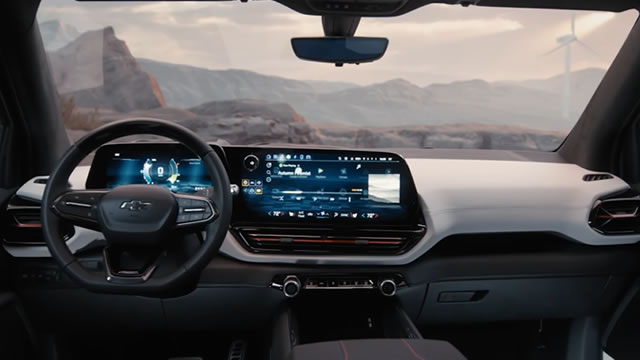
Core Insights - Lucid Group is positioned as a potential high-growth investment opportunity, similar to Tesla, with expectations of significant sales growth in the coming years [1][10] Company Strategy - Lucid aims to replicate Tesla's successful growth strategy, which began with high-performance vehicles and evolved to include more affordable models [2][5] - The company has launched its Air sedan and plans to introduce the Gravity SUV, expanding its vehicle lineup to compete with Tesla's offerings [6][7] Sales Growth Projections - Analysts predict Lucid's sales will grow by 82% in 2025 and 91% in 2026, leading to an overall sales increase of over 200% in the next 24 months [8] - Current annual sales for Lucid are over $800 million, but this is significantly lower than Tesla's nearly $100 billion revenue [6][8] Future Plans - By the end of 2026, Lucid plans to start production of mass-market vehicles, similar to Tesla's Model Y and Model 3, which could further enhance its growth trajectory [8] Financial Considerations - The company may need to raise additional capital through stock issuance or debt to support its growth plans, especially following the departure of its CEO [9]

Will X outage spell doom for Tesla stock?
Finbold· 2025-03-11 12:53
As Elon Musk’s only publicly traded company, Tesla (NASDAQ: TSLA) has become something of a surrogate for the public reaction to the fortunes of all his other firms and the billionaire’s own escapades.Under the circumstances, it may come as no surprise that during the March 10 session – the day when the social media platform X was experiencing a protracted global outage – TSLA shares collapsed a full 15.43% to their latest closing price of $222.15.The daily drop also ensured Tesla earned the dubious honor o ...