Micro LED

Search documents
利亚德:公司的Micro LED以大屏显示为主
Zheng Quan Ri Bao Wang· 2025-08-14 12:13
Group 1 - The company, LianYade (300296), is focusing on MicroLED technology primarily for large screen displays and is gradually expanding into small screen applications [1] - The company is currently collaborating with partners to develop AR glasses based on MicroLED optical technology [1]

利亚德(300296.SZ):目前与合作伙伴正开发基于Micro LED光机的AR眼镜
Ge Long Hui· 2025-08-14 07:15
Group 1 - The core viewpoint of the article is that LianYade (300296.SZ) is expanding its Micro LED technology from large screen displays to small screen applications, including the development of AR glasses in collaboration with partners [1] Group 2 - The company is currently focused on Micro LED technology primarily for large screen displays [1] - There is a strategic move towards small screen applications, indicating potential growth areas for the company [1] - The collaboration with partners for developing AR glasses based on Micro LED technology highlights innovation and future product offerings [1]
JBD获第10轮融资
Sou Hu Cai Jing· 2025-08-07 09:47
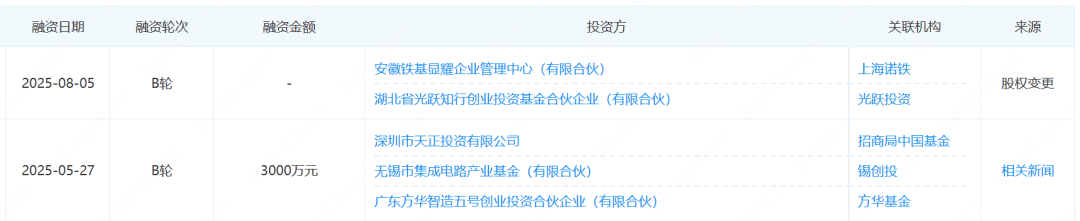
Group 1 - JBD has completed a B+ round of financing, with investments from Guangyue Investment and Shanghai Nuotie Investment, further strengthening its leading position in the MicroLED field [1] - This financing marks JBD's second round of funding in 2025 and the tenth round since 2018, attracting interest from major companies and institutions such as Ant Group and Geely Capital [3] - JBD's latest Micro LED module, "Hummingbird Mini II," has a volume of only 0.15 cubic centimeters and a weight of 0.3 grams, providing new possibilities for personalized and daily wear of AR smart glasses [3] Group 2 - The Micro LED display sector is experiencing a financing boom, with multiple terminal companies and AR glasses manufacturers frequently securing funding in the first half of 2025 [4] - A variety of companies in the Micro LED and AR optics sectors have raised significant amounts of capital, indicating a trend towards increased investment in AR glasses and related technologies [5] - An upcoming forum on October 15 will explore the commercialization and mass production of Micro LED and SiC optical waveguides, highlighting the industry's focus on technological innovation and collaboration [6]

最高超亿元,2家AR相关企业获融资
Sou Hu Cai Jing· 2025-08-05 10:18
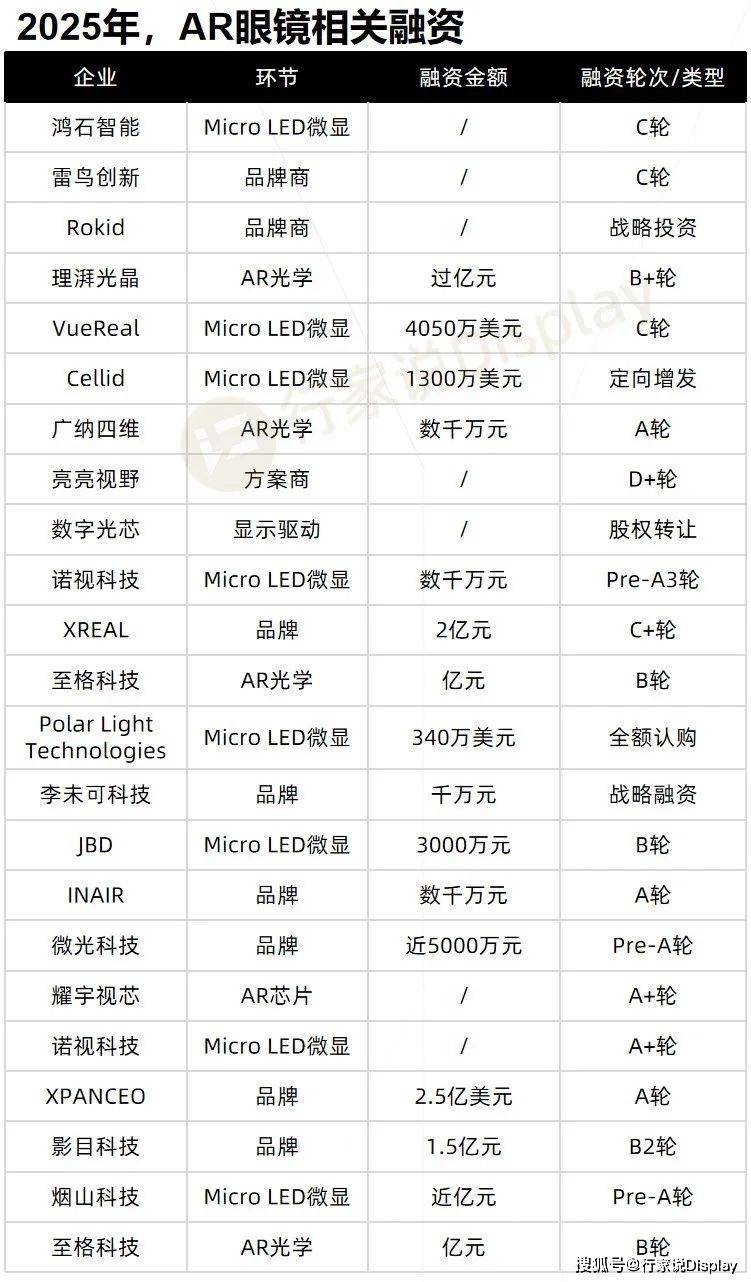
Group 1 - The core viewpoint of the articles indicates that the AR glasses sector is entering a financing boom, with multiple companies securing significant funding recently [1][2][5] - Chip Screen Semiconductor has completed a multi-million Pre-A round financing led by Zhonghang Capital, focusing on 8-inch silicon-based Micro LED production [1][5] - ZhiGe Technology, an AR optical manufacturer, has achieved two rounds of financing totaling over 100 million yuan within six months, indicating strong investor interest in AR technology [1][4] Group 2 - The financing data shows that terminal brand manufacturers are securing large amounts of funding, which constitutes a major share of AR-related financing, while upstream core hardware is becoming a hot investment area [4][5] - Major companies like Meta, Samsung, Apple, and Alibaba are actively investing in AR glasses, reflecting confidence in the AR technology market [5][6] - The industry is moving from concept to commercial realization, as evidenced by the increasing number of financing events and the involvement of large tech firms [6]
雷曼光电:发光芯片封装业务目前主要聚焦于Micro LED大尺寸超高清显示领域
Zheng Quan Ri Bao Zhi Sheng· 2025-07-30 09:40
Core Viewpoint - The company focuses on the packaging of light-emitting chips primarily in the Micro LED large-size ultra-high-definition display sector, with applications in specialized, commercial, and home display scenarios [1] Group 1 - The company's light-emitting chip packaging business is concentrated on the Micro LED technology [1] - Applications of the company's products include specialized displays, commercial displays, and home displays [1]

方寸之间,智见未来——AI智能眼镜的趋势与展望
2025-07-25 00:52
Summary of AI Smart Glasses Industry Conference Call Industry Overview - The smart glasses market is projected to reach 5 million units in sales by 2025, potentially doubling in 2026, indicating strong market potential for the integration of AI with smart glasses [1][2] - The global optical and sunglasses market is substantial, with demand expected to reach 2 billion pairs in the next three to five years, leading to a market space of 1 billion units for smart glasses [1][9] Core Insights and Arguments - Smart glasses are categorized into three main types: audio glasses, shooting glasses, and AR glasses, with a focus on shooting glasses due to their advantages in mass production, cost, and functionality [1][5] - The integration of functions in smart glasses is significant, allowing them to replace TWS earbuds and action cameras, monitor health metrics, and provide features like e-book reading and projection [1][8] - The combination of AI technology with smart glasses enhances human-computer interaction, making them effective personal assistants [3][4] Market Dynamics - The smart glasses industry has seen rapid growth, particularly benefiting from advancements in AI models, with sales reaching 1.52 million units in 2024 [2] - The average price of smart glasses, such as Xiaomi's priced at 1999 yuan, is considered reasonable given the quality of components used [15] - By 2035, it is estimated that 70% of traditional glasses will be smart, potentially leading to a market size of 1.4 billion units [9] Key Players and Competitive Landscape - Major companies involved in the smart glasses sector include Meta, Google, ByteDance, Baidu, Alibaba, and smartphone manufacturers like Xiaomi, Samsung, and Huawei [10][12] - The entry of various players, including those from VR/AR backgrounds, indicates a growing interest and investment in the smart glasses market [11] Technological Innovations - Electronic tinting technology is highlighted as a significant future direction for smart glasses, enhancing usability in various scenarios [16][17] - The application of waveguide technology is crucial for the development of lightweight and efficient display systems in smart glasses [19][23] Challenges and Opportunities - The traditional eyewear industry faces challenges in customization and the complexity of fitting processes during the transition to smart glasses [27] - The shift towards smart glasses is expected to increase industry concentration, with a few leading companies dominating the market [28][29] Future Trends - The smart glasses market is anticipated to become more concentrated, with leading companies collaborating with established brands to enhance market share and product value [28][29] - The demand for higher quality components, such as lenses with increased refractive indices, will drive up product prices and influence the entire supply chain [28][29]
政策落地做强产业优势 加速培育智能眼镜“上海品牌”
Zheng Quan Ri Bao· 2025-07-23 17:22
Group 1 - The core viewpoint of the news is the release of the "Shanghai Next-Generation Display Industry High-Quality Development Action Plan (2026-2030)" aimed at promoting innovation in display technology, particularly through smart glasses and various forms of augmented reality (AR) and mixed reality (MR) products [1][2] - The action plan emphasizes the development of next-generation display technologies such as Micro LED, silicon-based OLED, and flexible displays, while strengthening the supply capabilities in four core areas: optical waveguides, display chips, core equipment, and key materials [1][2] - Industry experts highlight that display technology is crucial for AR glasses, affecting image quality, product form, cost, and functionality, with display screens and optical modules accounting for 45% to 55% of total costs in AR glasses [1][2] Group 2 - The industry has not reached a consensus on display technology routes, with different companies like Google, Microsoft, and Apple adopting various approaches, indicating a need for collaborative efforts and innovation in application scenarios as outlined in the action plan [2] - The action plan aims to support the development of distinctive industrial clusters in areas such as Lingang, Jing'an, and Pudong, and to foster cross-enterprise technological collaboration through forums and industry alliances [2] - Shanghai is home to several companies that are forming a preliminary industrial chain cluster, including Shanghai Longqi Technology Co., Ltd. and Shanghai Xianya Information Technology Co., Ltd., which are positioned to benefit from the action plan [2] Group 3 - The industrial chain advantages in Shanghai are attracting investments from terminal manufacturers, with AR glasses company XREAL establishing its headquarters in Shanghai due to the concentration of key component manufacturers in the region [3] - XREAL has maintained the largest market share in the global AR market for three consecutive years (2022-2024), indicating the strategic importance of Shanghai in the AR industry [3] - The Shanghai Global Investment Promotion Conference highlighted the city's significance as a long-term development base for companies in the XR sector, further solidifying its role in the industry [3]
聚灿光电(300708):产销两旺推动业绩稳增长,红黄光产能快速释放
Hua Yuan Zheng Quan· 2025-07-23 07:06
Investment Rating - The investment rating for the company is "Buy" (maintained) [5] Core Views - The company's performance is driven by strong production and sales, with rapid capacity release in red and yellow light segments [5] - The company has successfully transformed into a full-color LED chip supplier, optimizing its product structure and improving profit levels [6] Financial Summary - The company achieved a revenue of 1.594 billion yuan in the first half of 2025, representing a year-on-year growth of 19.51% [6] - The net profit attributable to the parent company for the same period was 117 million yuan, with a year-on-year increase of 3.43% [6] - The gross margin for the main business in the first half of 2025 was 26.15%, an increase of 0.65 percentage points year-on-year [6] - The company expects net profits of 314 million yuan, 349 million yuan, and 405 million yuan for 2025, 2026, and 2027 respectively, with corresponding year-on-year growth rates of 60.31%, 11.25%, and 16.07% [5][6] Market Performance - The company has maintained strong production and sales, achieving historical highs in key performance indicators for the first half of 2025 [6] - The production capacity utilization rate reached 96.60% in the first half of 2025 [6] - The company is focusing on high-value-added businesses, with significant breakthroughs in high-end products [6] Growth Drivers - The company is advancing its "annual production of 2.4 million red and yellow light epitaxial wafers and chip projects," enhancing the synergy of red and yellow light with blue and green light chips [6] - The company is capitalizing on the rapid rise of markets such as small-pitch displays and full-color screens [6]
上海:推进全彩Micro LED等显示核心技术研发产业化
WitsView睿智显示· 2025-07-16 09:39
Core Viewpoint - Shanghai is committed to supporting the development of the electronic information industry, focusing on the growth of the smart glasses sector through strategic partnerships and technological advancements [1][2]. Group 1: Strategic Initiatives - A strategic cooperation agreement was signed for the production line project of Sunny Optical's 12-inch transparent substrate wafers for AR glasses, indicating a significant investment in the smart glasses industry [1]. - The Shanghai Municipal Economic and Information Commission emphasizes the importance of the electronic information industry, highlighting the establishment of a complete industrial chain in the region [1]. Group 2: Policy and Support Measures - Shanghai plans to strengthen policy guidance by developing a new action plan for smart terminals and displays, utilizing special funds to enhance support [3]. - The city aims to support technological breakthroughs in core display technologies such as lightweight, wide-field-of-view color waveguides and full-color Micro LED [3]. - Focus will be placed on key products in areas like AI PCs, AI smartphones, smart glasses, and robotics, promoting the development of Shanghai-branded terminal products [3]. - A multi-level talent plan will be implemented to stimulate innovation, ensuring that innovators have the necessary support [3].

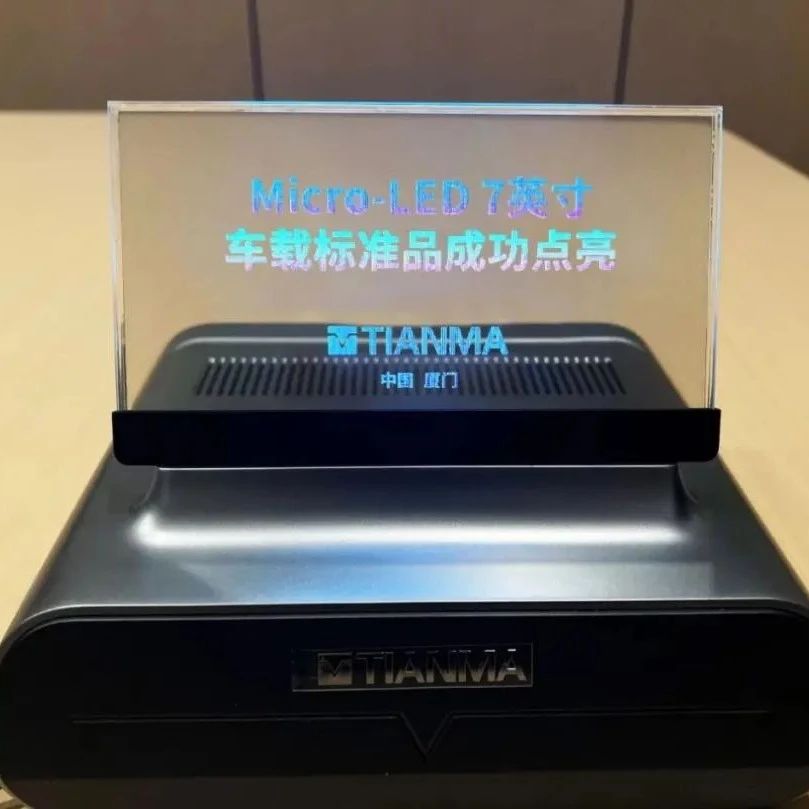
深天马官宣:成功点亮7英寸Micro LED车载标准品
WitsView睿智显示· 2025-07-10 07:09
Core Viewpoint - The article discusses the advancements and applications of Micro LED technology in the automotive sector, highlighting the successful launch of a 7-inch Micro LED standard product by Tianma Microelectronics, which showcases significant technical achievements and potential market growth in vehicle displays [2][5][11]. Group 1: Product Features and Technical Achievements - Tianma Microelectronics has successfully developed a 7-inch Micro LED product with a high transmittance rate of 61%, brightness of 1700 nits, NTSC color gamut exceeding 120%, a contrast ratio of 1,000,000:1, and microsecond-level response speed, making it suitable for automotive display applications [4][10]. - The product supports modular design, allowing for flexible configurations in various display scenarios, including HUD and central control screens, as well as panoramic HUD systems [4][5]. - The company has achieved full-process integration in its G3.5 Micro LED production line, overcoming key technical challenges such as backplane driving and mass transfer, enabling rapid capacity scaling [5][6]. Group 2: Market Trends and Future Outlook - Micro LED technology is gradually penetrating the automotive market, with applications in high-end production models, such as the Audi Q3, which features Micro LED headlights [7]. - Despite the slower adoption of Micro LED in vehicle displays compared to established LCD and OLED technologies, the unique characteristics of Micro LED, such as high brightness and contrast, are expected to attract more automotive manufacturers as the industry moves towards automation and smart connectivity [7][11]. - Various panel manufacturers, including Tianma, BOE, Innolux, AUO, and TCL, are actively showcasing their latest Micro LED automotive display solutions at trade shows, indicating a growing interest and potential for diverse applications in the automotive display sector [8][11].