
AR眼镜

Search documents
比依股份20260329
2026-03-30 05:15
Summary of the Conference Call for Biyi Co., Ltd. Company Overview - **Company**: Biyi Co., Ltd. - **Industry**: Home Appliances, specifically focusing on kitchen appliances and technology manufacturing Key Points and Arguments Business Transformation and Growth Phases - **Phase 1 (2018-2021)**: High growth driven by air fryer sales and partnership with Philips, with over 90% of revenue from exports and ROE exceeding 30% [3][4] - **Phase 2 (2022-2024)**: Transition period marked by declining air fryer demand and global inflation, leading to revenue fluctuations. The company diversified its client base and began producing coffee machines and environmental appliances [3][4] - **Phase 3 (2024-2025)**: Entering a recovery phase with projected revenue of CNY 2.06 billion in 2024 (+32%) and CNY 1.756 billion in the first three quarters of 2025 (+18.66%) [2][3] Production Capacity and Strategic Investments - **Ningbo Zhongyi Industrial Park**: A key production hub with a planned capacity of 25 million units annually, with the first phase expected to produce 10 million units by mid-2025 [4][5] - **Thailand Factory**: Set to begin operations in April 2025, aimed at mitigating tariff risks and supporting North American orders [4][5] Client Diversification - **Client Base**: Significant diversification with Chenyuan Technology expected to account for 20% of revenue in H1 2025, and European market share rising to 59% [2][3] Coffee Machine Business - **Market Growth**: The global coffee machine market is projected to grow from USD 15.3 billion in 2019 to USD 30.6 billion by 2024, with a CAGR of 15% [6] - **Revenue Contribution**: Expected coffee machine revenue to increase from CNY 100 million to CNY 600-700 million by 2026, driven by orders from SharkNinja [6][7] New Product Development - **Environmental Appliances**: Focus on fans and heaters, with revenue of CNY 27.02 million in 2024 and plans for new product launches in 2025 [8] - **Robotic Vacuums**: Initial product deliveries expected in H2 2025, with plans to increase ownership in the subsidiary producing these products [8] Investment in High-Tech Manufacturing - **AI and AR Glasses**: Strategic investment in leading companies in the optical waveguide sector, with a 8.6% stake in Lipaiguangjing, enhancing the company's technological capabilities [9] - **Valuation Impact**: Transitioning from traditional appliance manufacturing to a tech-driven model, potentially increasing valuation flexibility and growth prospects [9] Financial Projections - **Revenue Forecast**: Expected revenues of CNY 3.2 billion in 2026 and CNY 3.8 billion in 2027, with net profits of CNY 180 million and CNY 250 million respectively [2][9] - **Valuation Metrics**: Projected PE ratios of 20x for 2026 and 15x for 2027, with a current PS ratio of 1.1, significantly lower than the industry average of 1.52 [2][9] Additional Important Insights - **Strategic Shift**: The company is moving from a pure financial investor to a collaborative industrial partner, enhancing its manufacturing capabilities and market positioning [9] - **Growth Potential**: The anticipated compound annual growth rate of 35%-40% for 2026-2027 indicates strong future performance and value discovery opportunities [9]

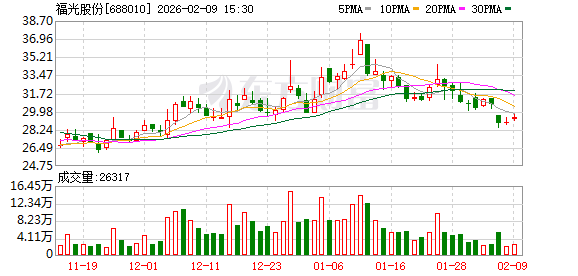
福光股份:定制产品作为航天工程等不可或缺的组成部分 面临稳定持续的市场需求
Zheng Quan Ri Bao· 2026-02-09 13:37
Core Viewpoint - Fuguang Co., Ltd. highlights the stable and continuous market demand for customized products in aerospace engineering, space exploration, and high-end equipment, driven by rapid industry development [2] Industry Summary - The security monitoring sector is experiencing intensified competition, with an increasing demand for high cost-performance products as high-end application scenarios remain to be further explored [2] - The automotive lens market is expected to grow significantly, supported by the automotive industry's role as a key pillar of China's economic development, along with advancements in technology and policy support [2] - The projection optical machine market is expanding in three main areas: AR glasses, automotive projection, and home smart projection, with core optical engines transitioning from technological exploration to large-scale application [2] - The precision and ultra-precision processing of optical components is driven by the demands of high-end equipment, medical, and photography industries, which require higher performance, accuracy, imaging quality, and user experience, thus boosting the market demand for optical components [2]


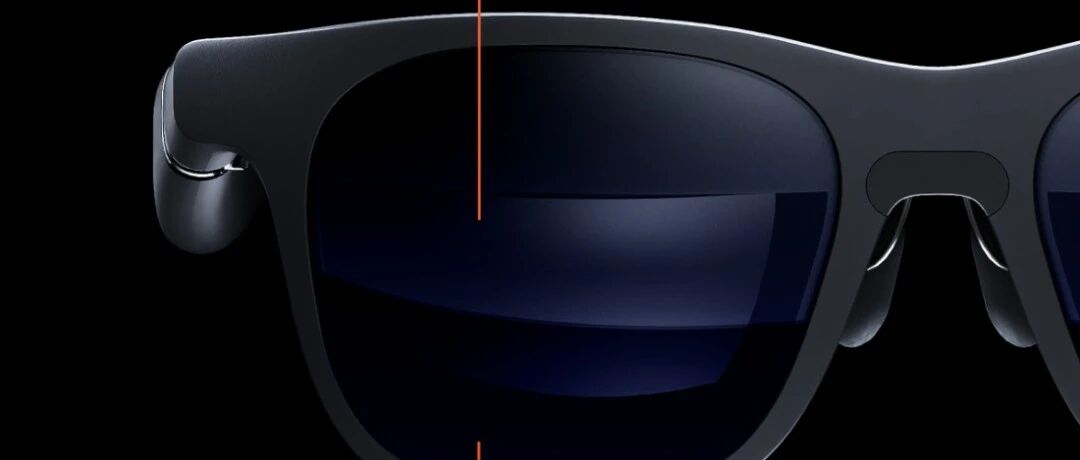
VITURE出手反击 XREAL全线产品或被禁产禁售|AR专利战第二回合
财联社· 2026-02-07 09:30
Core Viewpoint - The patent dispute between VITURE and XREAL represents a significant escalation in the competition within the XR glasses industry, highlighting the importance of technological innovation and patent rights in the global market [1][2]. Group 1: Patent Dispute Overview - XREAL initiated patent lawsuits against VITURE in Germany and the United States, prompting VITURE to file counterclaims in Chinese courts for patent infringement related to its electrochromic technology [1][24]. - The ongoing patent conflict illustrates the competitive landscape of the XR glasses industry, where companies are increasingly engaging in legal battles over technology patents [2][31]. Group 2: Technology and Market Impact - VITURE's core patent infringement claim against XREAL centers on its electrochromic technology, which allows AR glasses to adjust transparency based on lighting conditions, enhancing user experience [3][4]. - The introduction of electrochromic technology addresses previous challenges faced by AR glasses users, such as the need for physical light shields and privacy concerns [4][6]. - VITURE was the first to incorporate this technology into its ONE XR product in April 2022, achieving significant crowdfunding success and recognition [6][12]. Group 3: Competitive Landscape - The patent dispute has implications for both companies' market strategies, with VITURE asserting that its innovation is the true reason behind XREAL's legal actions [16][27]. - The global smart glasses market is projected to grow significantly, with IDC forecasting over 23.68 million units shipped by 2026, indicating a competitive environment where both Chinese and international brands are vying for market share [29][30]. - Chinese manufacturers accounted for 26.6% of global smart glasses shipments in the first half of 2025, reflecting a 64.2% year-on-year increase, showcasing their growing influence in the market [29][30]. Group 4: Future Implications - The ongoing patent disputes are expected to continue as the XR industry evolves, with the complexity of technology and varying legal frameworks across countries contributing to the likelihood of further conflicts [28][31]. - The situation serves as a case study for Chinese companies expanding into international markets, emphasizing the need for strategic management of intellectual property and competitive practices [31].
【研选行业】工程师红利+产业链优势,这个医疗细分领域龙头迎来“AI+出海”双催化,谁最可能复刻海外龙头千亿市值?(附重点公司)
Sou Hu Cai Jing· 2026-02-05 11:16
Group 1 - The demand for AR glasses and optical communication has surged over 40%, with a specific A-share company providing 78% of the global supply [1] - A leading company in a medical niche is experiencing a dual catalyst of "AI + going overseas," leveraging engineer advantages and industry chain benefits, raising questions about which company could replicate the overseas leader's trillion-yuan market value [1] - The first traditional Chinese medicine brain-computer interface equipment has been implemented, marking a breakthrough for future industries during the "14th Five-Year Plan" [1] Group 2 - Tencent is exploring the AI anime short drama market, with major players converging to ignite competition in a trillion-yuan industry [1]
华福证券:受益AR眼镜和光通信产业趋势 薄膜铌酸锂行业有望持续增长
智通财经网· 2026-02-05 03:05
Group 1: Core Insights - Lithium niobate is recognized as a fundamental functional material platform for integrated and guided optics, with its thin-film variant (TFLN/LNOI) enabling significant advancements in device miniaturization and integration density [1][2] - The demand for lithium niobate is expected to surge due to breakthroughs in large-scale production and thin-film technology, particularly in optical communication, RF devices, and consumer electronics [2] Group 2: Industry Trends & Competitive Landscape - China has become a global hub for lithium niobate manufacturing, accounting for 42% of global production capacity, with companies like Tiantong Co. achieving mass production of 6-inch lithium niobate and tantalum niobate crystals [2] - Jinan Crystal has captured 78% of the global supply of thin-film lithium niobate wafers in 2023, showcasing the competitive edge of domestic firms in critical segments [2] Group 3: Potential Growth Markets - In the AR glasses market, thin-film lithium niobate offers significant enhancements, including ultra-fast electro-optic response and improved color switching speed, with global AR glasses expected to reach approximately 1.06 million units by 2025, a 41% increase [3] - The optical communication sector is transitioning towards high-speed interconnects driven by AI computing, with the global optical module market projected to reach $9.43 billion in 2024, reflecting a 93% year-on-year growth in high-speed Ethernet module revenue [4]
未知机构:华西中小盘官媒点名SiC下游需求急速增长21人民日报报-20260203
未知机构· 2026-02-03 01:50
Summary of Conference Call Records Industry Overview - The focus is on the Silicon Carbide (SiC) industry, particularly in relation to the demand for SiC technology in data center transformers and other applications [1][2]. Key Points and Arguments - **Rising Demand for SiC**: A report from People's Daily indicates that the demand for data center transformers utilizing SiC technology is expected to surge, with projections extending to 2027 [1]. - **Delta Electronics Announcement**: Delta Electronics announced that Meituan's data center is utilizing their solid-state transformers (SST) equipped with SiC technology [1]. - **Market Misinterpretation**: Recent earnings forecasts from various SiC companies for 2025 have led to a misinterpretation in the market, suggesting a continued downturn in the industry. However, the actual market is trading on future demand growth, indicating a potential recovery [1][2]. - **Future Demand Projections**: The demand in three key areas—AI power, advanced packaging, and AR glasses—is expected to exceed current market levels by more than seven times [1]. - **Accelerated Production**: The downstream sector is rapidly expanding, with significant investments in new SiC wafer production facilities: - October: Completion of an 8-inch SiC wafer factory with a 5 billion investment [1]. - November: Commencement of mass production at an 8-inch SiC wafer line in Zhuzhou, capable of producing 360,000 wafers [1]. - January: Production line for 8-inch SiC chips expected to reach 720,000 wafers [1]. - **Capacity Shortage**: Current estimates suggest that the newly added demand for 8-inch wafers exceeds 2 million pieces, while global capacity for 8-inch substrates is currently below 200,000 pieces, indicating a significant supply-demand gap [1]. Additional Important Information - **Industry Transition**: The SiC industry is undergoing a transformation, moving away from the previous narrative of overcapacity to one of increasing demand driven by technological advancements [2]. - **Investment Recommendations**: Strong recommendations are made for specific companies in the SiC sector, including Tianyue Advanced, Jingsheng Electromechanical, Sanan Optoelectronics, Jingsheng Machinery, and Yujing Co., suggesting a bullish outlook on these stocks [2]. - **Financial Support for Expansion**: There are mentions of substantial financial backing for the establishment of new 8-inch SiC factories, including a 3.6 billion subsidy and an 8.3 billion credit line for construction [3].




未知机构:华西中小盘官媒点名SiC下游需求急速增长21人民日报报道-20260203
未知机构· 2026-02-03 01:45
Summary of Conference Call Notes Industry Overview - The focus is on the Silicon Carbide (SiC) industry, particularly its application in data center transformers and the anticipated growth in demand for SiC technology [1][2]. Key Points and Arguments - **Rising Demand for SiC**: A report from People's Daily highlights that the demand for data center transformers utilizing SiC technology is expected to surge, marking a significant trend for the future of transformers [1]. - **Recent Developments**: Delta Electronics announced that Meituan's data center is using their solid-state transformers (SST) equipped with SiC technology [1]. - **Market Misinterpretation**: Recent earnings forecasts from various SiC companies for 2025 have led to a misinterpretation in the market, suggesting a continued downturn in the industry. However, this is seen as a misjudgment, as the market is actually trading on future demand increments [2]. - **Future Demand Projections**: The demand in three key areas—AI power, advanced packaging, and AR glasses—is projected to exceed current market levels by more than seven times [2]. - **Accelerated Production**: The downstream sector is rapidly expanding, particularly in the AI power field, where demand significantly outstrips current supply capabilities [2]. Important Developments - **New Investments**: - Mitsubishi Electric completed an 8-inch SiC wafer factory in Shishui with a $5 billion investment [2]. - Onsemi received $3.6 billion in subsidies to build an 8-inch SiC factory [2]. - STMicroelectronics secured $8.3 billion in financing for an 8-inch SiC factory with a capacity of 720,000 wafers [2]. - Times Electric's 8-inch SiC wafer line in Zhuzhou has commenced mass production with a capacity of 360,000 wafers [2]. - Silan Microelectronics has initiated production on an 8-inch SiC chip production line with a capacity of 720,000 wafers [2]. - **Demand vs. Supply Gap**: Recent estimates indicate that the newly added demand for 8-inch wafers exceeds 2 million pieces, while current global capacity is below 200,000 pieces, highlighting a significant supply-demand gap [2]. Conclusion - The SiC industry is undergoing a transformation, moving away from previous perceptions of overcapacity. The surge in demand for 8-inch wafers is expected to drive the industry into a reversal phase, making current market corrections appear misguided. Strong recommendations are made for related stocks such as Tianyue Advanced, Jingsheng Electromechanical, Sanan Optoelectronics, and Yujing Co., among others [2].
手机遇冷眼镜预热,eSIM仍在等待“上桌”
Bei Jing Shang Bao· 2026-01-21 13:59
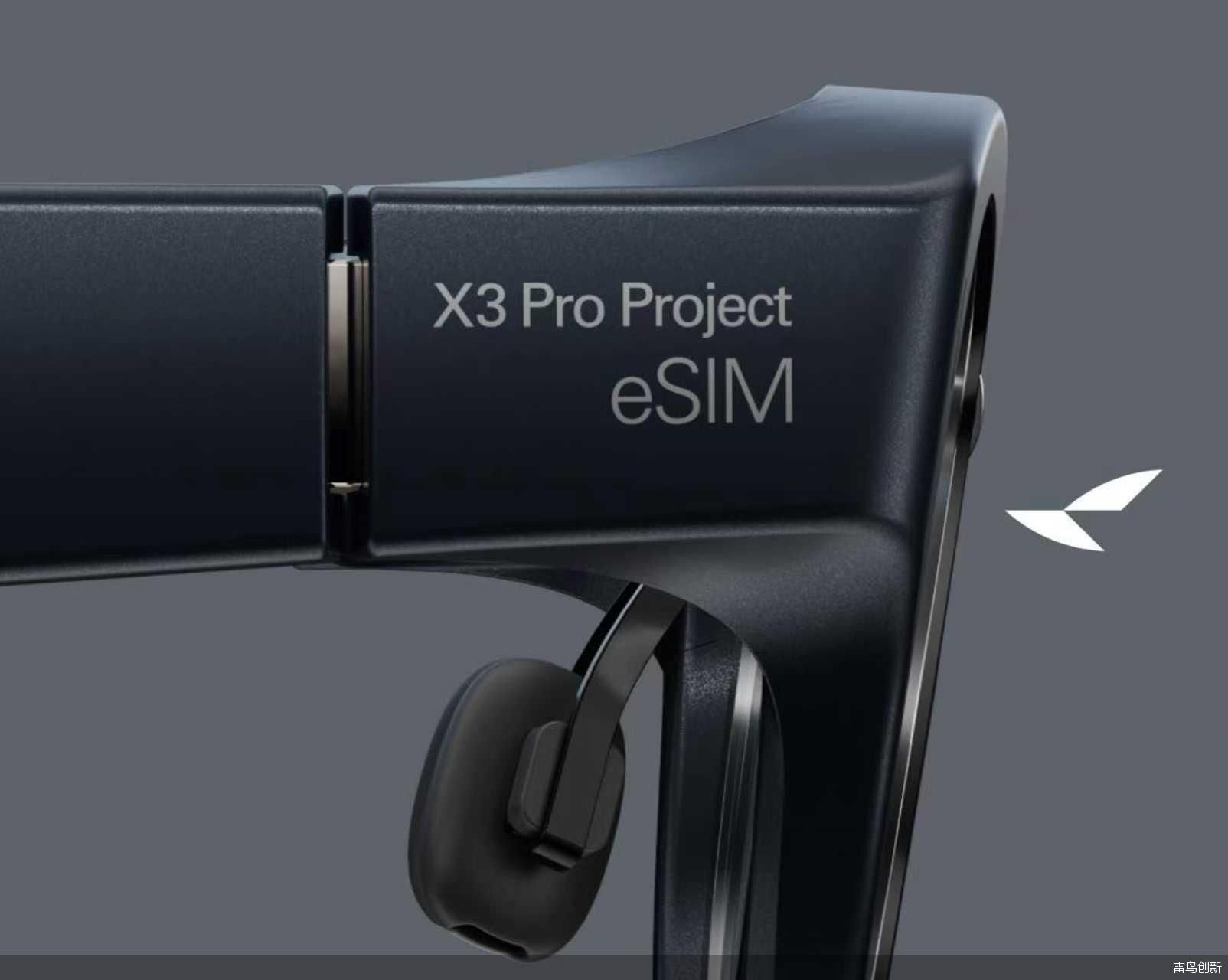
Core Insights - The demand for Apple's iPhone Air, which focuses on extreme thinness, is significantly lower than expected, leading to supply chain cutbacks and anticipated component discontinuation by the end of 2025 [1][3] - The eSIM technology, initially aimed at enhancing the iPhone Air's appeal, has not gained traction in the smartphone market, with manufacturers opting for dual support of physical SIM cards and eSIMs instead of fully adopting eSIM [1][4] Group 1: iPhone Air and eSIM Challenges - The iPhone Air's attempt to innovate in the smartphone market has revealed that consumers willing to pay for an ultra-thin experience are a niche audience [3] - Users are reluctant to purchase a device that compromises on essential features like battery life and camera quality for the sake of a lightweight design [4] - The cumbersome process of activating and switching eSIMs has contributed to slow adoption rates among users [4] Group 2: Shift to AR Glasses - The introduction of eSIM-enabled AR glasses by Thunderbird Innovation at CES 2026 represents a potential new avenue for eSIM technology, as AR glasses require compact designs that benefit from eSIM's lack of a physical card slot [6][7] - The strategic investment from major telecom operators in the AR glasses sector indicates a shift in focus towards integrating eSIM technology into new devices [6] - The compatibility of eSIM with AR glasses is seen as more promising than in smartphones, as the technology aligns better with the design and functional requirements of AR devices [7] Group 3: Future of eSIM in AR - While eSIM technology is mature and can be integrated into products with relative ease, it is not currently the primary focus for AR glasses, which prioritize optical display and spatial computing capabilities [8] - The potential for eSIM to become a necessity in AR devices hinges on advancements in technology and market conditions, particularly in scenarios like cross-border travel and IoT applications [9] - The industry acknowledges that while eSIM presents opportunities, the actual implementation and validation of its benefits will require time and further development [10]

“制造强国”实干系列周报-20260120
Shenwan Hongyuan Securities· 2026-01-20 03:27
Group 1: Commercial Aerospace Industry - The commercial aerospace industry is on an upward trend, with a positive outlook for future market performance[5] - Key focus areas include stable or potentially increasing value in manufacturing and launch sectors, as well as communication terminal components like baseband and RF chips[22] - Significant growth expected in satellite constellations, with G60 planning to launch 1,296 satellites by the end of 2027 and 15,000 by 2030, while GW plans to launch an average of 1,800 satellites annually post-2030[18] Group 2: Space Photovoltaic Equipment - New technologies such as heterojunction and perovskite are accelerating advancements in space photovoltaic applications, providing new demand scenarios[37] - The global supply landscape may change due to emerging applications, creating new incremental demand for equipment companies[37] - P-type HJT batteries are identified as the optimal choice for space photovoltaic technology due to their lightweight, high power density, and resistance to extreme environments[30] Group 3: Wind Power Sector - Goldwind Technology is a leading global wind power manufacturer, with a projected revenue of CNY 566.99 billion in 2024, reflecting a 12.37% year-on-year growth[49] - Taisheng Wind Power is expanding into commercial aerospace, with plans to start rocket storage tank production by mid-2026[54] Group 4: AI and AR Glasses - Meta's AI glasses are expected to double production capacity, driving market growth and enhancing consumer demand for high-end optical products[5]
造纸轻工周报:扩内需提消费下关注个护、潮玩、宠物等赛道,关注永艺股份报告-20251223
Shenwan Hongyuan Securities· 2025-12-23 07:44
Investment Rating - The report maintains a positive outlook on the industry, highlighting structural consumption opportunities and potential growth in various sectors [3][5][11]. Core Insights - The report emphasizes the importance of domestic consumption, particularly in personal care, pet products, and IP-driven trendy toys, as key areas for investment [3][5][6]. - Export opportunities are expected to improve as external disturbances diminish, with a focus on quality stocks in the export chain [3][11]. - The AI glasses segment is experiencing rapid development, with major players releasing new products that could benefit leading lens manufacturers [3][18]. - The paper industry is anticipated to see a recovery in demand and pricing, with a focus on companies like Sun Paper, Nine Dragons, and others [3][20][22]. - The home furnishing sector is undergoing consolidation, with a focus on companies that offer high dividend safety margins [3][23][25]. Summary by Sections Domestic Consumption - The report highlights the rise of domestic brands in personal care, recommending companies like Baiya and Dengkang for their strong offline channel competitiveness and product upgrades [6][7]. - In the pet products sector, companies like Yiyi and Yuanfei are recommended for their robust growth and global expansion strategies [7][8]. - The IP trendy toy market is driven by self-reward consumption, with companies like Chuangyuan and Guangbo positioned to benefit from this trend [8][9][10]. Export Opportunities - The report notes that external disturbances are lessening, with U.S. interest rate cuts expected to boost furniture consumption [11][13]. - Companies like Yutong Technology and Yongyi are highlighted for their strong global supply chain and potential for growth in overseas markets [13][14][15]. AI Glasses - The report discusses the transition from AI to AR glasses, with new products from Meta and others leading the market [18][19]. - Companies like Kangnait Optical are expected to benefit from the growing demand for integrated lens solutions [18]. Paper Industry - The report indicates a stabilization and potential rebound in paper prices, with companies like Sun Paper and Nine Dragons being key players to watch [20][22]. - The global market for pulp molding is also highlighted, with growth opportunities due to environmental considerations [16]. Home Furnishing - The report notes that the home furnishing industry is seeing accelerated consolidation, with companies like Gujia and Sophia being recommended for their strong market positions and dividend safety [23][25][27]. - The impact of real estate policies on the home furnishing market is discussed, with expectations for improved demand and valuation recovery [24][33].