
智能家居

Search documents
维信诺H1营收41.21亿元,同比增长4.79%
Ju Chao Zi Xun· 2025-08-22 07:01
Core Viewpoint - The company reported a slight increase in revenue for the first half of 2025, driven primarily by OLED product sales, despite a net loss attributed to shareholders. Financial Performance - The company achieved operating revenue of 4.121 billion yuan, a year-on-year increase of 4.79% [2][3] - The net profit attributable to shareholders was -1.062 billion yuan, showing a year-on-year improvement of 9.74% [2][3] - The net profit excluding non-recurring gains and losses was -1.118 billion yuan, reflecting a year-on-year increase of 14.63% [2][3] - The net cash flow from operating activities was 1.521 billion yuan, up 21.10% from the previous year [3] - Basic and diluted earnings per share were both -0.7604 yuan, an improvement of 10.49% compared to the previous year [3] - The weighted average return on equity was -21.16%, a decrease of 5.41% from the previous year [3] - Total assets at the end of the reporting period were 38.082 billion yuan, a slight decrease of 0.01% from the end of the previous year [3] - Net assets attributable to shareholders were 4.488 billion yuan, down 19.12% from the previous year [3] Product Development and Innovation - The company launched the world's first glass-based AMOLED ultra-high PPI product, which balances display quality and cost, potentially accelerating the price reduction and adoption of VR devices [2] - The company showcased smart home solutions at SIDDW2025, featuring various home electronic products equipped with AMOLED screens for enhanced human-machine interaction [2] Technological Advancements - The company introduced high-efficiency pTSF devices that reduce power consumption by over 12% and improve lifespan by 15% [4] - A wide color gamut pTSF device was released, significantly enhancing color purity and covering DCI-P3 and Adobe RGB color spaces while reducing power consumption by over 6% and increasing lifespan by 20% [4] - The company launched a 20Hz low-refresh-rate solution for LTPS mobile phones, achieving over 20% power reduction while maintaining flicker-free display in low brightness scenarios [4] - The world's first low-reflection COE flexible AMOLED technology was introduced, reducing power consumption by over 20% and decreasing module thickness by approximately 100um [4] Operational Efficiency - The company is enhancing operational efficiency through streamlined management processes and collaboration with the supply chain to achieve "increased efficiency, reduced costs, and improved quality" [4] - The Kunshan 5.5-generation AMOLED production line is optimizing product structure and upgrading capacity to support new market expansions [4] - The Gu'an 6th-generation flexible AMOLED production line is maintaining high operational rates to ensure quality delivery to core brand clients [4] - The company’s invested 8.6-generation AMOLED production line project reached the main building's completion in August this year [4]


中电港涨2.12%,成交额3.53亿元,主力资金净流入1399.02万元
Xin Lang Cai Jing· 2025-08-22 03:13
Group 1 - The core viewpoint of the news is that Zhongdian Port's stock has shown significant growth in recent months, with a year-to-date increase of 12.19% and a 5-day increase of 5.00% [1] - As of August 22, Zhongdian Port's stock price reached 22.66 CNY per share, with a market capitalization of 17.219 billion CNY [1] - The company has experienced a net inflow of main funds amounting to 13.99 million CNY, with large orders contributing to 24.99% of total buying [1] Group 2 - For the period from January to March 2025, Zhongdian Port achieved a revenue of 17.470 billion CNY, reflecting a year-on-year growth of 49.01% [2] - The number of shareholders for Zhongdian Port decreased to 85,100, while the average circulating shares per person increased by 3.29% to 5,138 shares [2] - Since its A-share listing, Zhongdian Port has distributed a total of 2.58 billion CNY in dividends [2]
万润科技涨2.06%,成交额2.15亿元,主力资金净流出606.50万元
Xin Lang Cai Jing· 2025-08-22 03:12
Group 1 - The core viewpoint of the news is that Wanrun Technology's stock has shown positive performance with a year-to-date increase of 6.43% and a recent 5-day increase of 7.40% [1] - As of August 22, Wanrun Technology's stock price reached 12.91 yuan per share, with a market capitalization of 10.913 billion yuan [1] - The company operates in the electronic industry, specifically in optical electronics and LED, and is involved in various concept sectors including plant lighting and smart home technology [1] Group 2 - For the first quarter of 2025, Wanrun Technology reported a revenue of 1.187 billion yuan, reflecting a year-on-year growth of 29.51% [2] - The number of shareholders increased to 138,200, while the average number of circulating shares per person decreased to 6,117 shares [2] - The company has distributed a total of 133 million yuan in dividends since its A-share listing, with no dividends paid in the last three years [2]

长虹美菱跌2.09%,成交额5690.18万元,主力资金净流出205.05万元
Xin Lang Cai Jing· 2025-08-22 03:12
Company Overview - Changhong Meiling's stock price decreased by 2.09% on August 22, reaching 7.96 CNY per share, with a trading volume of 56.90 million CNY and a turnover rate of 0.81%, resulting in a total market capitalization of 8.198 billion CNY [1] - The company has seen a year-to-date stock price increase of 1.66%, with a rise of 8.74% over the last five trading days, 4.33% over the last 20 days, and 9.94% over the last 60 days [1] - As of June 30, the number of shareholders decreased by 10.32% to 68,200, with an average of 0 circulating shares per person, unchanged from the previous period [1] Financial Performance - For the first half of 2025, Changhong Meiling reported a revenue of 18.072 billion CNY, reflecting a year-on-year growth of 20.90% [1] - The company has cumulatively distributed 1.409 billion CNY in dividends since its A-share listing, with 742 million CNY distributed over the past three years [1] Shareholding Structure - As of June 30, 2025, Hong Kong Central Clearing Limited is the fourth largest circulating shareholder, holding 15.2819 million shares, a decrease of 21.0752 million shares from the previous period [2] Industry Classification - Changhong Meiling operates in the household appliances sector, specifically in the white goods category, focusing on refrigeration appliances, air conditioners, and washing machines [1] - The company is associated with several concepts including C2M, Belt and Road Initiative, smart home, state-owned enterprise reform, and heat pump concepts [1]

蓝思科技跌2.01%,成交额15.45亿元,主力资金净流出1.43亿元
Xin Lang Cai Jing· 2025-08-22 02:41
Core Viewpoint - Lens Technology's stock price has shown significant growth this year, with a notable increase in trading activity and institutional holdings, indicating strong market interest and potential for future performance [1][2][3]. Group 1: Stock Performance - On August 22, Lens Technology's stock fell by 2.01%, trading at 27.77 CNY per share, with a total transaction volume of 1.545 billion CNY and a market capitalization of 146.747 billion CNY [1]. - Year-to-date, Lens Technology's stock has increased by 29.15%, with a 12.79% rise over the last five trading days, 17.57% over the last 20 days, and 34.86% over the last 60 days [1]. - The company has appeared on the "Dragon and Tiger List" once this year, with the most recent occurrence on April 7, where it recorded a net purchase of 107 million CNY [1]. Group 2: Company Overview - Lens Technology, established on December 21, 2006, and listed on March 18, 2015, specializes in the research, production, and sales of protective panels for electronic products, primarily smartphone screens [2]. - The company's revenue composition includes 82.63% from smartphones and computers, 8.49% from smart automotive and cockpit products, 4.99% from smart glasses and wearables, and 2.01% from other smart terminals [2]. - Lens Technology operates within the electronic industry, specifically in the consumer electronics sector, and is involved in various concept segments such as special glass and smart home technology [2]. Group 3: Financial Performance - For the first quarter of 2025, Lens Technology reported a revenue of 17.063 billion CNY, reflecting a year-on-year growth of 10.10%, and a net profit attributable to shareholders of 429 million CNY, up 38.71% year-on-year [2]. - The company has distributed a total of 9.465 billion CNY in dividends since its A-share listing, with 4.452 billion CNY distributed over the past three years [3]. Group 4: Shareholder Information - As of March 31, 2025, Lens Technology had 128,100 shareholders, an increase of 14.93% from the previous period, with an average of 38,760 circulating shares per shareholder, down 12.98% [2]. - Major shareholders include Hong Kong Central Clearing Limited, which holds 129 million shares, and various ETFs, with some experiencing a decrease in holdings [3].

协创数据涨2.01%,成交额4.63亿元,主力资金净流入1746.00万元
Xin Lang Cai Jing· 2025-08-22 02:41
Group 1 - The core viewpoint of the news highlights the recent performance and financial metrics of Xiechuang Data, indicating a positive trend in stock price and revenue growth [1][2] - As of August 22, Xiechuang Data's stock price increased by 2.01% to 96.80 CNY per share, with a total market capitalization of 33.504 billion CNY [1] - The company has seen a year-to-date stock price increase of 27.13%, with significant gains over the past 5 days (8.47%), 20 days (19.51%), and 60 days (20.94%) [1] Group 2 - For the first quarter of 2025, Xiechuang Data reported a revenue of 2.077 billion CNY, representing a year-on-year growth of 18.11%, and a net profit of 169 million CNY, up 4.29% year-on-year [2] - The company's main business revenue composition includes 60.16% from data storage devices, 30.48% from IoT smart terminals, and 9.36% from other categories [1] - Xiechuang Data has distributed a total of 139 million CNY in dividends since its A-share listing, with 114 million CNY distributed over the past three years [3]
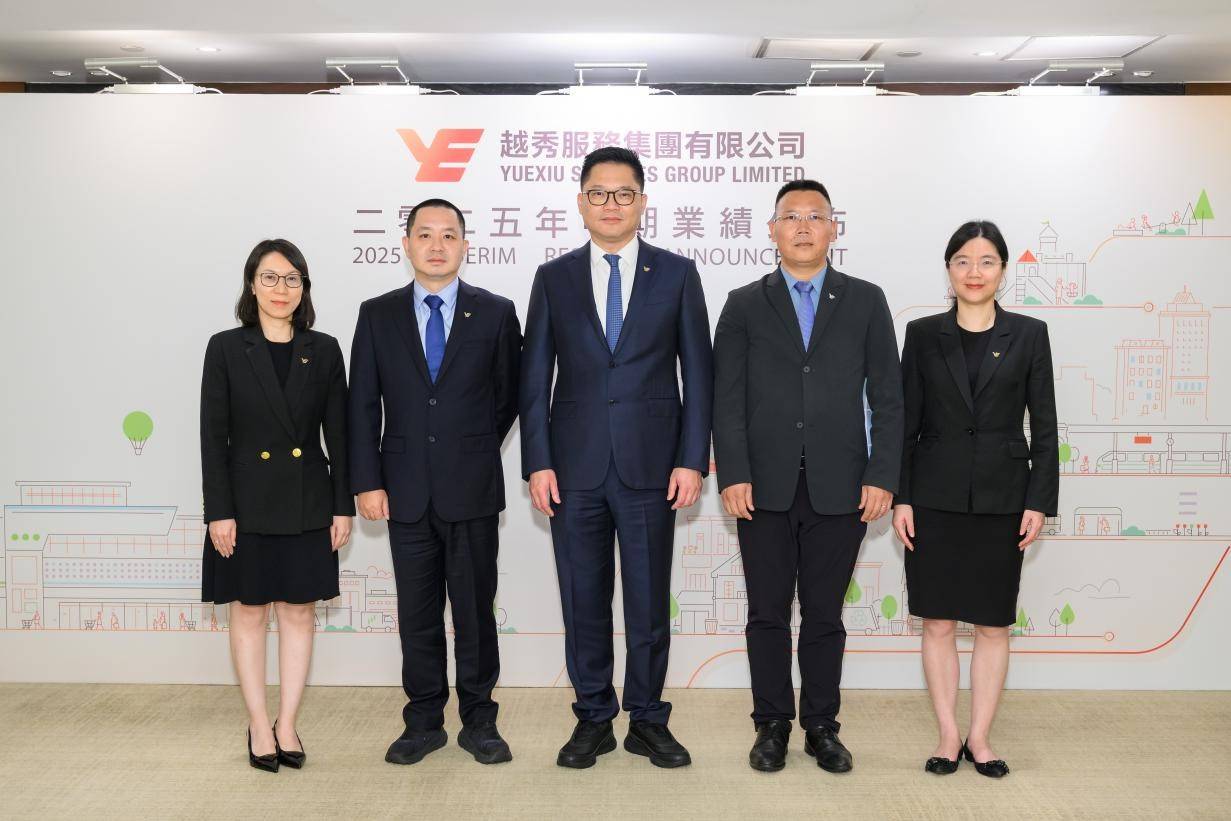
越秀服务王建辉:正在积极留意市场并购机会,关注智能家居、充电桩等同业公司
Sou Hu Cai Jing· 2025-08-21 10:36
Core Viewpoint - Yuexiu Services reported a solid performance in the first half of 2025, with a focus on quality market expansion amidst a challenging property management industry environment [2][3][4] Financial Performance - In the first half of 2025, Yuexiu Services recorded revenue of 1.962 billion yuan and a profit attributable to shareholders of 240 million yuan [2] - Commercial revenue was 370 million yuan, accounting for 18.9% of total revenue, while non-commercial revenue was 1.592 billion yuan, making up 81.1% [2] - The basic property management income reached 716 million yuan, reflecting a year-on-year growth of 19.2% [2] Market Expansion and Strategy - Yuexiu Services added a contract area of 5.96 million square meters in the first half of 2025, with notable projects including the Hong Kong Shipping Building and the National Pipeline Group South China Company [2] - As of June 30, 2025, the managed area was 72.31 million square meters, a 4.3% increase from the end of 2024, while the contracted area was 92.45 million square meters, up 4.2% [2] Industry Context - The property management industry is undergoing significant adjustments, with declining incremental benefits and pressure on profit margins due to price caps on property fees and reduced payment capabilities in some regions [3] - Yuexiu Services emphasized a focus on quality in market expansion, with 91% of its managed projects located in first- and second-tier cities [3] Service Quality and Pricing - The average property management fee for Yuexiu Services is 2.8 yuan per square meter, positioned at a relatively reasonable mid-to-high level within the industry [3] - The company successfully raised prices for four projects in the first half of 2025, with no projects experiencing price reductions [3] Cash Position and Investment Strategy - As of June 30, 2025, Yuexiu Services had cash and time deposits of 4.791 billion yuan, an increase of 89 million yuan from the end of 2024, with positive operating cash flow [3] - The management indicated a cautious yet proactive approach to investment opportunities, focusing on companies with high synergy, good operational quality, and reasonable valuations, as well as opportunities in related sectors like smart home technology and energy management [4]
华阳智能股价跌7.52% 盘中一度快速反弹2%
Jin Rong Jie· 2025-08-20 20:38
Group 1 - The stock price of Huayang Intelligent on August 20 was 59.99 yuan, down 4.88 yuan or 7.52% from the previous trading day [1] - The opening price on that day was 64.50 yuan, with a highest price of 64.50 yuan and a lowest price of 57.31 yuan, with a trading volume of 57,448 hands and a transaction amount of 343 million yuan [1] - At 9:38 AM on August 20, Huayang Intelligent's stock price experienced a quick rebound, increasing over 2% within 5 minutes, reaching a price of 61.57 yuan with a transaction amount of 58.18 million yuan [1] Group 2 - Huayang Intelligent's main business includes the research, production, and sales of micro motors and intelligent control systems, with applications in smart home and medical device sectors [1] - The company operates in sectors including motors, smart home, and medical device concepts [1] Group 3 - On August 20, the net outflow of main funds for Huayang Intelligent was 21.02 million yuan, accounting for 1.44% of the circulating market value [1] - Over the past five trading days, the cumulative net inflow of main funds was 4.26 million yuan, representing 0.29% of the circulating market value [1]
麦思智能引擎上涨2.31%,报3.949美元/股,总市值1.02亿美元
Jin Rong Jie· 2025-08-20 19:49
Group 1 - The core viewpoint of the article highlights the significant financial growth of MAAS, with a revenue increase of 1911.86% and a net profit increase of 798.03% as of December 31, 2024 [1] - MAAS's stock price rose by 2.31% to $3.949 per share, with a total market capitalization of $102 million [1] - The company aims to be a leading provider in smart home and enterprise services, focusing on enhancing global living quality through "technological intelligence" and "capital investment" [1] Group 2 - MAAS was established in 2010 and has a global strategic vision to identify high-quality enterprises with global investment and operational potential [1] - Key focus areas for MAAS include asset allocation, education and study abroad, cultural tourism, healthcare and elderly care, and family governance [1]
2025年中国智能家居产业链洞察:从芯片到场景,生态协同与无感交互引领产业升级
Tou Bao Yan Jiu Yuan· 2025-08-20 13:46
Investment Rating - The report does not explicitly provide an investment rating for the smart home industry Core Insights - The smart home industry in China is experiencing rapid growth and is becoming a significant development direction in the home sector, integrating various technologies and components from upstream to downstream [2] - The report aims to analyze the smart home industry landscape, detailing the current status and development trends in specific application scenarios such as whole-home intelligence and smart living rooms [2] Summary by Sections Smart Home Industry Midstream - The smart home industry in China has formed a regional clustering characteristic, with major enterprises concentrated in the eastern coastal provinces. Traditional home appliance giants dominate the market due to brand and channel advantages, while tech giants accelerate penetration through ecosystem layouts, squeezing the survival space of small and medium enterprises [4][18] Whole-Home Smart Applications - Whole-home smart systems achieve refined coverage of space functions and proactive environmental control through deep collaboration of multiple systems and scenario-based services, enhancing living experiences from security and lighting to health management, creating a safe, comfortable, and efficient smart living space [5][24] Smart Living Room Applications - The smart living room serves as a strategic high ground for scenario-based applications, integrating IoT, AI, and spatial interaction technologies to create an innovative living space that combines immersive audio-visual entertainment, intelligent health management, adaptive environmental control, and comprehensive device collaboration [6][27] Smart Home Industry Upstream - The smart sensor industry in China is thriving due to policy support and the acceleration of domestic substitution trends, with the market size growing from 738.9 billion yuan in 2019 to 1,336.2 billion yuan in 2023, reflecting a compound annual growth rate of 16% [12][14] - The wireless communication module market is expected to reach 3,444.3 billion yuan by 2024, driven by the expansion of the IoT ecosystem [14] Smart Home Application Ecosystem - The smart home application ecosystem includes various devices such as smart sensors, smart speakers, smart lighting, and smart appliances, which collectively enhance the user experience and functionality of smart homes [23] Smart Bedroom Applications - The smart bedroom is reshaping sleep health management through the integration of IoT, AI, and biological sensing technologies, addressing the significant sleep disorder issues faced by over 300 million people in China [31][33] Smart Kitchen Applications - The smart kitchen integrates air purification, health monitoring, and whole-home interconnectivity to create a closed-loop system for pollution prevention and personalized health management, enhancing both environmental safety and convenience [34][36] Smart Bathroom Applications - The smart bathroom is evolving from functional upgrades to a comprehensive health service and safety assurance system, utilizing AI algorithms and non-contact monitoring technologies [37][39] Smart Balcony Applications - The smart balcony revolutionizes traditional balcony spaces by integrating IoT, AI, and automation technologies, allowing for the intelligent fusion of laundry care, plant maintenance, and leisure activities [40][41]