新型电力系统

Search documents
聚焦“十五五”规划建议|加快建设新型能源体系 推动绿色转型发展
Xin Hua She· 2025-10-28 16:17
国家发展改革委主任郑栅洁介绍,到"十五五"末,新增用电需求绝大部分由新增清洁能源发电量满足。 "进入'十五五'时期,应对气候变化凸显非化石能源消费占比提升的重要性,地缘政治冲突风险进一步 加速能源供应链的重构进程,加快建设新型能源体系成为'必答题'。"华北电力大学国家能源发展战略 研究院执行院长王鹏说。 《建议》提出,持续提高新能源供给比重,推进化石能源安全可靠有序替代,着力构建新型电力系统, 建设能源强国。 中国华电集团有限公司副总工程师李立新表示,加快建设新型能源体系意味着能源结构将发生变 化。"在电源侧,过去作为主力电源的火电将转型为调节性电源,更多依靠新能源供电;在用户侧,能 源消费将更加绿色化低碳化。" 新华社北京10月28日电(记者王悦阳)"十五五"时期,更多绿电有望跨越山海,点亮万家灯火。10月28 日发布的《中共中央关于制定国民经济和社会发展第十五个五年规划的建议》明确提出,"加快建设新 型能源体系"。 新型能源体系以非化石能源为供应主体、化石能源为兜底保障、新型电力系统为关键支撑、绿色智慧节 约为用能导向。加快建设新型能源体系,既能够推动能源绿色低碳转型、支撑实现碳达峰碳中和,也是 保障国家 ...
恒实科技前三季度实现营收6.63亿元
Zheng Quan Ri Bao Wang· 2025-10-28 11:46
Core Viewpoint - Beijing Hengtai Shida Technology Co., Ltd. (referred to as "Hengshi Technology") reported a revenue of 663 million yuan for the first three quarters of 2025, outlining its strategic focus on traditional business stability, AI integration for digital transformation, and seizing opportunities in the new power system for digital energy transition [1] Group 1: Business Strategy - The company aims to solidify its traditional business operations while fully embracing AI to promote digital transformation for government and enterprise sectors [1] - Hengshi Technology is addressing challenges in the communication design sector by streamlining operations and enhancing efficiency in response to investment tightening and market competition [1] - The company is integrating digital consulting capabilities with design related to computing power centers to create a comprehensive solution from computing infrastructure design to future operations [1] Group 2: Digital Energy Sector - In the digital energy field, the company is focusing on core business optimization and restructuring personnel to enhance competitiveness through AI in traditional energy information [1] - Hengshi Technology is leveraging historical opportunities such as the establishment of a unified national market and the development of new power system regulation capabilities, expanding from Shenzhen and Hebei to cities like Shanghai, Guangzhou, and Shandong [1] - The company has already achieved certain transformation results in its digital energy initiatives [1]

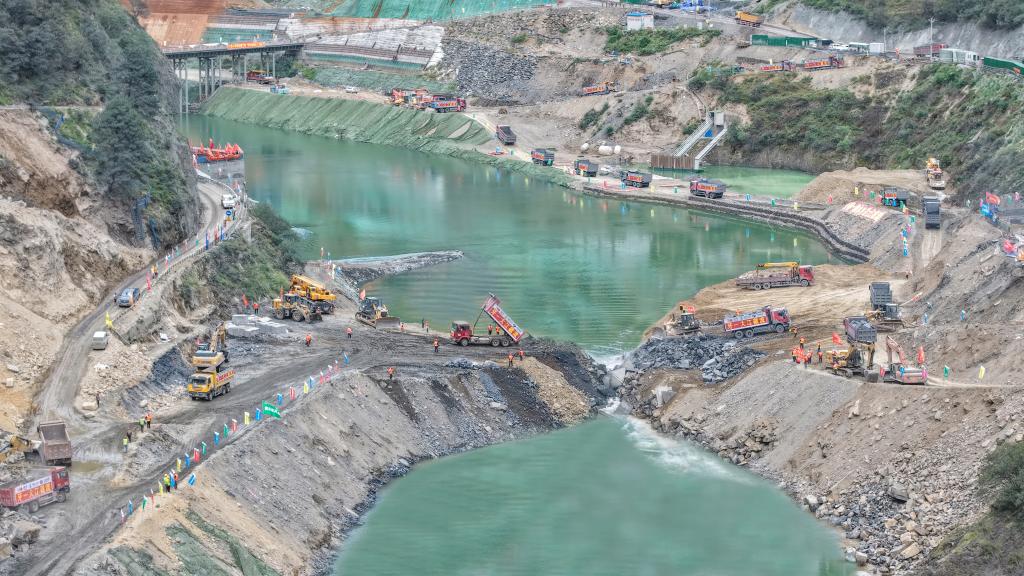
奔流大江按下“暂停键” 雅砻江流域首次实现两座大型水电工程同步截流
Xin Hua Wang· 2025-10-28 10:55
Core Viewpoint - The simultaneous river diversion of the Mengdigou and Yagen Hydropower Stations marks a significant milestone in the construction of large-scale hydropower projects in the Yalong River basin, facilitating the transition to the main construction phase of the projects [1][2]. Group 1: Project Details - The total installed capacity of the two hydropower stations is 2.7 million kilowatts, and this is the first time that large-scale hydropower projects in the Yalong River basin have achieved simultaneous river diversion [1]. - During the river diversion process, approximately 90,000 cubic meters of fill material were used, completed in less than 30 hours, which is crucial for subsequent excavation and concrete pouring [2]. Group 2: Environmental Impact - Once operational, the two hydropower stations are expected to save about 3.5 million tons of standard coal annually and reduce carbon dioxide emissions by approximately 9 million tons [4]. - The Mengdigou Hydropower Station will enhance grid capacity and support the development of wind and solar energy projects, potentially increasing its scale by 1.6 times [4]. Group 3: Strategic Importance - The timely river diversion and accelerated construction of the two hydropower stations will unlock the potential of the Yalong River as the first integrated water-wind-solar energy base in the country, enhancing the role of hydropower in peak load management within the power grid [7].

专访李琼慧:“十五五”能源转型迎两大机遇,零碳园区与市场化
2 1 Shi Ji Jing Ji Bao Dao· 2025-10-28 09:47
Core Insights - The article emphasizes the importance of accelerating the construction of a new energy system in China, focusing on increasing the share of renewable energy and ensuring a reliable transition from fossil fuels to a new power system [1][3]. Group 1: New Energy System Development - The "15th Five-Year Plan" aims to establish a new energy system with non-fossil energy as the main supply, supported by fossil energy as a backup, and a new power system as a key support [3][5]. - By 2025, the focus will be on implementing a new energy security strategy and enhancing the resilience of the power system [3][4]. Group 2: Achievements in Renewable Energy - During the "14th Five-Year Plan," China led the world in renewable energy scale, with wind and solar power installations exceeding 1.7 billion kilowatts, accounting for over 40% of global capacity [4][5]. - The renewable energy sector has contributed to a reduction of approximately 4.1 billion tons of carbon emissions globally, nearly one-tenth of the world's annual emissions [4][5]. Group 3: New Opportunities in the Energy Market - The establishment of national zero-carbon parks is expected to create new demands for distributed smart grids and carbon management platforms, requiring a 90% reduction in carbon intensity compared to current levels [2][7]. - The transition to a fully market-oriented renewable energy sector will compel companies to enhance their technological capabilities to compete effectively [2][5]. Group 4: Technological Innovations - Significant technological innovations include advancements in electric vehicles, lithium batteries, and photovoltaic products, as well as ultra-high voltage transmission technology [4][5]. - New business models such as integrated energy systems and green electricity supply are emerging, fundamentally changing the development patterns of the power grid [6][9]. Group 5: Zero-Carbon Park Standards - The core indicator for national zero-carbon parks is the carbon emissions per unit of energy consumed, with strict requirements for energy consumption and clean energy usage [7][8]. - The parks must primarily rely on green electricity, with a minimum of 50% of energy sourced from renewable sources [8][9].
倒计时2天丨第六届新型电力系统国际论坛暨第二十一届中国南方电网国际技术论坛即将举办!
中国能源报· 2025-10-28 02:43
Core Viewpoint - The sixth International Forum on New Power Systems and the 21st China Southern Power Grid International Technology Forum will be held from October 29 to 31 in Boao, Hainan, focusing on the theme of "Building a New Power System and Accelerating Energy Low-Carbon Transition" [1]. Group 1 - The forum aims to promote the synergy of digitalization and greening, facilitating the construction of new power systems and new energy systems [1]. - It will feature thematic discussions and keynote speeches from leaders of the National Energy Administration and the Hainan provincial government [1]. - The event will invite leaders and experts from major international organizations to participate in discussions and deliver keynote speeches [1]. Group 2 - Academics and experts will be deeply involved in academic discussions, including professors from key universities and research institutes dedicated to the construction of new power systems and new energy systems [1]. - The forum is designed to create a high-level academic exchange platform with an international perspective [1].
科大智能:拟投资不超过3.5亿元建设数字能源产业基地项目
Xin Lang Cai Jing· 2025-10-27 13:04
Core Viewpoint - The company, Keda Intelligent (300222.SZ), announced an investment of up to 350 million yuan in the development of a digital energy industry base, focusing on smart circuit breakers and smart ring network cabinets [1] Investment Details - The total investment for the project will not exceed 350 million yuan [1] - The project will be implemented by the company's wholly-owned subsidiary located in the High-tech Zone of Hefei City [1] - The construction period for the project is set for 5 years [1] Strategic Alignment - This investment aligns with the company's development strategy and aims to expand the sales scale of its digital energy business [1] - The investment is expected to enhance the company's profitability [1] Risks Identified - There are uncertainties related to land use rights acquisition [1] - Potential project implementation risks are noted [1] - There is a risk that operational performance may not meet expectations [1]

宁夏:“超级充电宝”链动绿色未来
Zhong Guo Xin Wen Wang· 2025-10-27 08:46
Core Insights - The article highlights the importance of new energy storage solutions in facilitating the green transition of the energy structure and ensuring the stability of the power grid [1][2] - The 100MW/400MWh compressed air energy storage project by Datang Zhongning is a significant development in this context, showcasing advancements in energy storage technology [1][2] Group 1: Project Overview - Datang Zhongning's compressed air energy storage project has a design efficiency exceeding 70%, with long storage duration, large capacity, and low unit cost, likened to a "super power bank" [1] - The underground gas storage facility is located 150 meters deep, using air as the storage medium, achieving zero carbon emissions and inherent safety [1] - Upon completion, the project is expected to generate an annual electricity output of 118 million kWh, sufficient to meet the annual electricity needs of nearly 100,000 households, and create tax revenue of approximately 45 million yuan [1] Group 2: Technological Advancements - The project faced challenges in selecting suitable sites for underground gas storage due to soft rock geological conditions, which were overcome through collaboration with top domestic research institutions [2] - The successful application of flexible sealing technology has significantly reduced the dependence of compressed air energy storage technology on geological conditions, marking a key breakthrough for the project [2] - This advancement not only lays a solid foundation for the project's implementation but also provides critical support for promoting compressed air energy storage technology in China's northern regions [2] Group 3: Future Developments - Based on the technical accumulation and practical experience from the Zhongning project, the company has completed a survey of potential energy storage sites across Ningxia, identifying four suitable locations for constructing 300MW-level compressed air energy storage projects [2] - The company has introduced an innovative model combining "green electricity direct supply + grid backup + surplus electricity online," successfully reducing the electricity price for data enterprises to 0.36 yuan per kWh [2] - This model not only bridges the collaboration gap between "source, grid, load, and storage" but also innovatively allocates energy resources, providing a replicable and scalable solution for new energy consumption and industrial upgrading [2]
安科瑞(300286) - 300286安科瑞投资者关系管理信息20251027
2025-10-27 08:32
Financial Performance - The company's revenue for the first three quarters of 2025 reached 837 million CNY, a year-on-year increase of 2.59% [1] - Net profit attributable to shareholders was 192 million CNY, up 21.31% year-on-year [1] - The gross profit margin for the first three quarters was 47.73%, an increase of 1.49 percentage points compared to the previous year [1] - The net profit margin improved to 22.96%, up 3.55 percentage points year-on-year [1] - Operating expenses for Q3 2025 were 224 million CNY, a decrease of 10.26 million CNY compared to the same period last year [1] Business Structure and Growth - EMS 2.0 and 3.0, along with virtual power plant platforms, are the core growth drivers, while traditional EMS 1.0 products have seen a decline [1] - Domestic business focuses on sectors like rail transportation and petrochemicals, showing clear growth; overseas business has also increased, particularly in Southeast Asia, Europe, and Brazil [1][2] - The company provides services in the data center sector, including power monitoring and energy management, with typical project sizes often exceeding one million CNY [2] Market Demand and Challenges - There is strong market demand for zero-carbon industrial parks, supported by national and local government policies [2] - The company is experiencing a transitional phase, with significant growth in targeted sectors, but traditional business declines are affecting overall revenue growth [2] - Some new business projects have longer cycles, which delays revenue recognition [2] Client Engagement and Strategy - Large client business, centered around EMS 3.0, is a significant focus, although the overall proportion of large clients has not been disclosed [2] - High repurchase rates from large clients can drive sales of hardware and systems, enhancing customer loyalty and enabling standardized solutions to be replicated across more clients [2]

倒计时3天丨第六届新型电力系统国际论坛暨第二十一届中国南方电网国际技术论坛即将举办!
中国能源报· 2025-10-27 06:43
南方电网公司将于10月29日至31日在海南博鳌举办第六届新型电力系统国际论坛暨第二十一届中国南方电网国际技术论坛。 论坛将以"共建新型电力系统,加快能源低碳转型"为主题,助力数字化、绿色化协同,促进新型电力系统和新型能源体系建设,全面 深化国内外新型电力系统交流合作。 论坛将组织新型电力系统各专业技术领域主题研讨、重磅演讲,邀请国家能源局相关领导、海南省政府相关领导参加论坛并发表致辞, 邀请大型国际组织的领导、专家作致辞、参与主题研讨活动、做主旨演讲等,邀请院士专家深度参与学术研讨活动,邀请联合研究院及 其他重点高校的教授学者参与论坛,邀请国内外致力于新型电力系统和新型能源体系建设的专业人士参会,打造具有国际视野的高水平 学术交流平台。敬请期待! 来 源:南 网 5 0 H z E n d 欢 迎 分 享 给 你 的 朋 友! 出品 | 中国能源报(c ne ne rgy) 推广 责编 | 李慧颖 ...
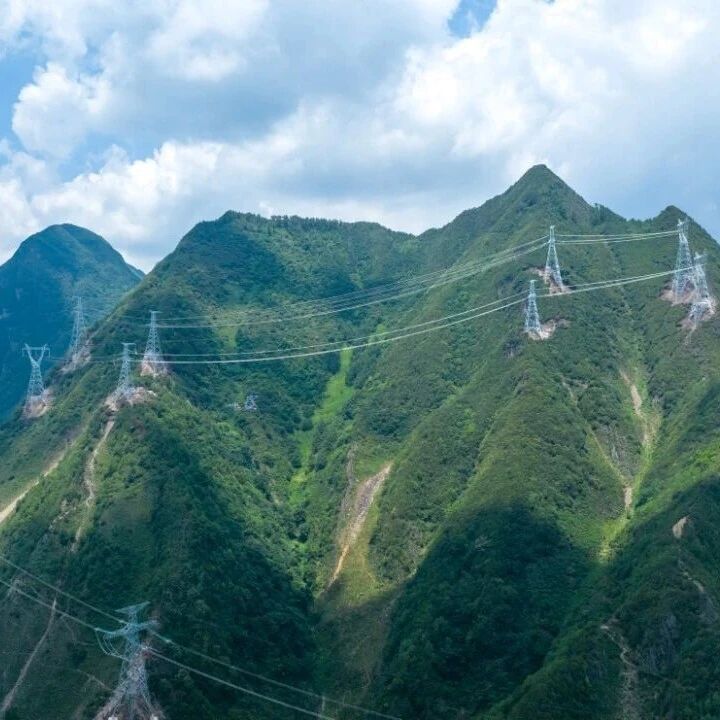
“十五五”,能源“超级快递”这样“闪送”“输绿”
中国能源报· 2025-10-27 04:29
Core Viewpoint - The article emphasizes the significant advancements and future prospects of China's power grid, particularly focusing on the development of ultra-high voltage (UHV) technology and its role in supporting the country's energy transition and high-quality economic development [1][3][4]. Group 1: Achievements during the 14th Five-Year Plan - The length of UHV direct current lines increased from 28,000 kilometers to over 40,000 kilometers, while UHV alternating current lines grew from 14,000 kilometers to over 20,000 kilometers [3][5]. - The cross-regional UHV direct current channels delivered a 70% increase in clean energy transmission compared to the end of the 13th Five-Year Plan [5][6]. - The UHV projects have transformed from a "backbone network" to a "main artery," enhancing the capacity for cross-province and cross-region power transmission to 370 million kilowatts, a 30% increase from the end of the 13th Five-Year Plan [5][6]. Group 2: Role of UHV in Renewable Energy Development - UHV projects have played a crucial role in facilitating the development of renewable energy, with the first integrated wind-solar-fire storage export channel and the first new energy base export channel successfully operational [6][7]. - By 2024, the cross-regional UHV direct current transmission of clean energy is expected to reach approximately 4,200 billion kilowatt-hours, accounting for nearly 60% of total transmission [6][7]. - Significant breakthroughs in core UHV equipment have been achieved, enhancing the self-sufficiency of the entire UHV industry chain [6][7]. Group 3: Technological Innovations and Digital Transformation - The integration of advanced technologies such as artificial intelligence, big data, and digital twins is enhancing the safety and reliability of the power grid [8][15]. - The white crane pond to Jiangsu project is the first to adopt hybrid cascade transmission technology, effectively addressing safety pressures in densely connected areas [9][10]. - The upcoming projects, including the southeastern Tibet to Guangdong-Hong Kong-Macao Greater Bay Area project, will set multiple world records in terms of capacity and altitude, showcasing China's leadership in flexible direct current technology [9][10]. Group 4: Future Outlook for the 15th Five-Year Plan - The 15th Five-Year Plan is expected to accelerate UHV construction, focusing on the development of new energy bases and enhancing the management of UHV projects to ensure timely commissioning [14][15]. - The transition to a new power system dominated by renewable energy will require the power grid to adapt and innovate continuously [14][15]. - The integration of supply services will evolve, positioning power companies as "energy managers" and "green partners," providing diverse energy efficiency and carbon management services [15][16].