
企业数字化转型

Search documents
企业数字化岗位大盘点--CIO
3 6 Ke· 2025-11-28 00:45
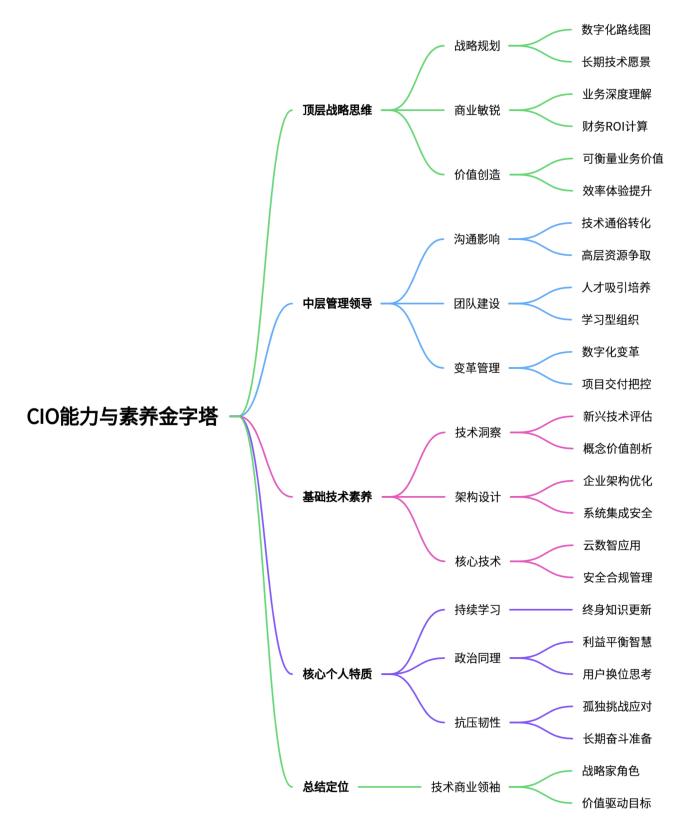
Group 1 - The role of CIO (Chief Information Officer) is crucial in digital transformation, requiring a blend of technical expertise and strategic vision [2][3] - Many companies misuse the term CIO, assigning it to roles that do not align with the strategic responsibilities expected of a true CIO, leading to a dilution of its meaning [1][9] - A qualified CIO must possess a pyramid structure of capabilities, ranging from foundational technical skills to management and strategic thinking [3][4] Group 2 - The foundational technical skills required for a CIO include foresight in technology trends and the ability to design enterprise architecture [4] - Management and leadership skills are essential for effective team collaboration and project management, enabling the CIO to drive digital transformation initiatives [5] - Strategic and business acumen is critical for aligning technology investments with business goals, requiring a deep understanding of the company's business model and financial metrics [5][6] Group 3 - The current state of CIOs in many traditional enterprises is challenging, as they often face a disconnect between their strategic role and the operational expectations placed upon them [8][9] - CIOs are frequently viewed as support roles rather than value creators, which hampers their ability to influence strategic decisions [9] - The structural challenges faced by CIOs include high expectations with low support and resources, leading to difficulties in executing digital transformation [9] Group 4 - To overcome these challenges, CIOs should adopt a proactive mindset, focusing on creating value rather than feeling victimized by their circumstances [10] - Emphasizing value-driven projects that address clear business pain points can lead to quicker wins and demonstrate the CIO's impact [11] - Enhancing communication skills to effectively convey technical value in business terms is essential for gaining support from leadership and other departments [12] Group 5 - Continuous self-investment in skills beyond technology, including business and management, is vital for a CIO's growth and adaptability [13] - Leveraging external partnerships and resources can help CIOs compensate for internal limitations and enhance their influence [14] - The overall strategy for CIOs should shift from passive execution to active business driving, focusing on targeted initiatives rather than broad approaches [15][16]

如何选择适合企业的AI数字人视频平台?8大主流方案深度对比!
Sou Hu Cai Jing· 2025-11-27 08:20
Core Insights - The demand for innovative marketing and content creation is increasing among enterprises, with AI digital human video production becoming a focal point [1][3] - Traditional video production processes are complex and costly, but advancements in technology have simplified and automated these processes, making them more accessible to businesses [4] Group 1: Trends in AI Digital Human Video Production - The emergence of enterprise-level AI digital human video platforms has significantly lowered operational barriers, allowing more companies to engage in video production [4] - Platforms like Fengping AI, Jianying, and Silicon-based Intelligence are leading the market by offering advanced technology and automation [4] Group 2: Choosing the Right AI Digital Human Video Platform - Companies should consider key factors such as ease of use, production efficiency, customization capabilities, and content quality when selecting a platform [8][24] - Fengping AI offers full-process automation, while Jianying integrates digital human features with video editing for a seamless experience [8][10] Group 3: Efficiency and Customization - Fengping AI can generate complete marketing videos in just 3 minutes, emphasizing "instant marketing" [10] - Customization options vary among platforms, with Fengping AI providing extensive templates and deep customization, while other platforms like Chanjing focus on virtual IP incubation [10][15] Group 4: Quality and Service - Platforms like Fengping AI and Kuaishou's Keling AI produce lifelike digital human images and high-quality video outputs [19] - Fengping AI offers localized deployment and professional support, while platforms like Jidream AI integrate closely with existing workflows for efficient content sharing [21] Group 5: Pricing Strategies - Different platforms have varying pricing models, with Jianying offering free basic functions and Fengping AI providing flexible pay-per-use options [23] - Platforms like Chanjing have higher starting prices, targeting brands with larger budgets [23] Group 6: Future Outlook - As technology advances, AI digital human video platforms will continue to innovate, enhancing their services for enterprises [24] - Digital human videos are expected to play a crucial role in marketing, brand promotion, and customer service, becoming essential tools for digital transformation [24]


企业数字化岗位大盘点 -- 网络工程师
3 6 Ke· 2025-11-25 00:48
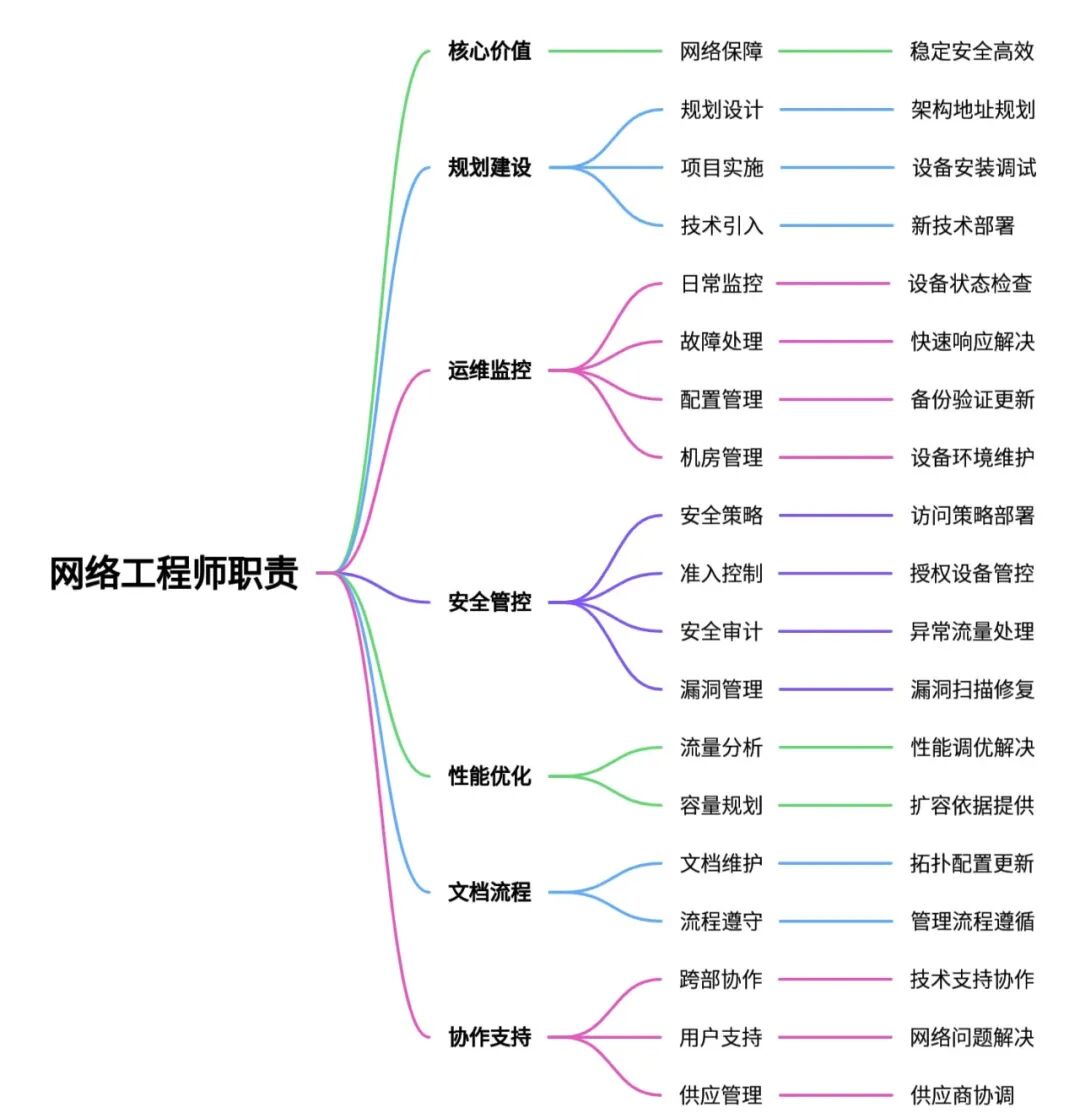
Core Insights - The article discusses the complex nature of digital transformation in enterprises, highlighting the challenges faced by network engineers in traditional companies, where roles are often not clearly defined and responsibilities are mixed [1] Group 1: Role of Network Engineers - The primary responsibilities of network engineers include building, maintaining, and optimizing internal and external network systems to ensure efficient and secure data transmission [2] - Key tasks involve network planning and construction, including developing long-term plans, designing network topologies, and overseeing project implementation [2][3] - Network operations and monitoring require continuous 24/7 monitoring of network devices, conducting health checks, and managing configurations and backups [3][4] Group 2: Network Security and Compliance - Network engineers are responsible for executing security policies, conducting vulnerability scans, and ensuring compliance with relevant laws and regulations [5][6] - They collaborate with security teams to respond to network attacks and ensure that network systems meet industry standards [6] Group 3: Challenges Faced by Network Engineers - In many traditional enterprises, network engineers are undervalued and their roles are often confused with general IT tasks, leading to a lack of recognition for their specialized skills [7] - The career progression for network engineers is often limited due to the nature of their work, which can hinder skill development and adaptation to new technologies [8] Group 4: Strategies for Self-Improvement - Network engineers are encouraged to redefine their roles by actively engaging with business needs and demonstrating the value of network optimization [9][10] - They should focus on proactive risk assessment, project involvement from the planning stage, and continuous skill enhancement through certifications and training in emerging technologies [10]
赋能企业发展 霸州举办资本市场专题培训会破解企业成长难题
Sou Hu Wang· 2025-11-24 01:56
Core Insights - The training session titled "Empowering Enterprise Development and Capital Markets" was successfully held in Bazhou, focusing on key needs such as enterprise financing, management optimization, and digital transformation [1][4]. - The event aimed to provide a high-quality learning and exchange platform for local enterprises to connect with capital markets and achieve high-quality development [1]. Group 1: Training Content - Experts from Shark Holdings and Beisha Capital delivered multi-dimensional professional lectures on critical aspects of enterprise development [3]. - The session on "Innovative Applications of Supply Chain Bills" showcased how supply chain bills can revitalize accounts receivable and convert credit into quality assets, providing new financing ideas for participating enterprises [3]. - In the "Building Enterprise Gene Map" segment, practical management methods were shared, including the formulation of "Job Responsibility Lists," guiding enterprises towards refined operational transformation [3]. - The "Digital Assets on Balance Sheet" topic included professional interpretations of new policies and demonstrations on quantifying intangible assets like customer data and R&D outcomes, helping enterprises unlock digital value [3]. Group 2: Participant Feedback - Attendees expressed that the training was practical and targeted, particularly highlighting the supply chain bill solutions from Jingxin Lian Tong as a viable financing pathway [4]. - A manufacturing enterprise representative noted that the training clarified financing strategies and provided direction for management upgrades and digital transformation [4]. Group 3: Economic Impact - The successful training session not only facilitated enterprises in connecting with capital markets but also injected new momentum into the high-quality economic development of Bazhou [4]. - Continuous professional training activities are expected to enhance enterprises' capital operation capabilities and modern management levels, fostering more quality market entities for regional economic development [4].

深度剖析:数字化系统应用不当,责任在谁?
3 6 Ke· 2025-11-24 01:23
Core Viewpoint - The article discusses the challenges faced by companies in effectively implementing low-code systems, attributing failures to both the technology itself and internal management issues within organizations [1]. Group 1: Issues with Low-Code Systems - Low-code systems have inherent technical, functional, and service-related issues that hinder their effective use [2]. - Initial hype around low-code technology often oversells its capabilities, leading to user distrust when the technology fails to meet expectations [3]. - The complexity of business needs is often overlooked, resulting in a reliance on extensive customization that many companies are ill-equipped to handle [3][4]. Group 2: Management Problems within Companies - Companies often fail to recognize internal management issues, such as planning and operational strategies, which impede the successful adoption of low-code platforms [5]. - Strong technical capabilities do not guarantee success if internal management mechanisms are flawed, leading to a disconnect between business and IT departments [5]. - Resistance from software developers fearing loss of control can create internal conflict, preventing low-code platforms from being utilized effectively [5]. Group 3: Digital Transformation Strategy Issues - Companies must adapt their digital transformation strategies as they progress; initial successes can lead to fragmented applications if not managed properly [7]. - A lack of unified planning can result in isolated applications that complicate system integration and increase operational costs [7]. - Effective digital transformation requires a systematic approach that aligns technology with organizational structure and business processes [8]. Group 4: Importance of Digital Transformation Strategy - The strategy for digital transformation is crucial for ensuring that technology genuinely enhances business operations [8]. - Companies often pursue large-scale digital projects without addressing core business needs, leading to disappointing outcomes [8]. - A pragmatic approach focusing on specific business pain points can drive significant change without overwhelming resources [8].
IT桌面运维外包服务商选择的深度分析与战略考量。
Sou Hu Cai Jing· 2025-11-23 23:56
在数字化转型日益深入的今天,企业选择IT桌面运维外包服务商已不再仅仅是寻求技术支持,而是在寻 找能够支撑业务持续发展的战略伙伴。这一选择过程需要系统性的考量和多维度的评估,其中技术实力 与专业资质构成了合作的基础门槛。优质的服务商应当保持技术人员占比不低于70%的合理结构,这不 仅是专业能力的体现,更是服务质量的保证。国际认证资质如ISO 27001和CMMI3级以上的认证,代表 着服务商在信息安全管理与软件开发过程方面的成熟度,而微软、思科等厂商的技术认证则直接反映了 团队的技术实力水平。 行业经验的深度积累往往成为服务商脱颖而出的关键因素。特别是在制造业等特定行业,熟悉工业控制 系统与办公系统的融合经验显得尤为重要。这种行业专长不仅体现在技术层面,更体现在对行业业务流 程和特殊需求的理解上。通过模拟真实业务场景下的网络故障,可以全面考察服务商的应急响应能力, 从问题定位的准确性到解决方案的有效性,再到文档记录的规范性,每一个环节都彰显着服务团队的专 业素养。 量化指标的验证为服务商选择提供了客观依据。从紧急问题的快速响应到系统稳定性的持续保障,再到 问题的一次性解决率,这些具体数字构成了服务质量的可衡量维 ...

网易低代码与栎偲融合,解锁企业高效开发新密码
Sou Hu Cai Jing· 2025-11-21 13:54
Core Insights - The rapid growth of digitalization has led to an explosive demand for software application development, with traditional methods facing challenges such as long cycles, high costs, and technical barriers [1][3] - Low-code development has emerged as a solution, with NetEase Low-Code becoming a preferred choice for many enterprises due to its powerful features and performance [1][3] - The combination of NetEase Low-Code and the unique offerings of the Lisi brand provides robust support for enterprises' digital transformation [1][4] Low-Code Platform - NetEase Low-Code allows for rapid application development through a visual interface and minimal coding, significantly enhancing development efficiency compared to traditional methods [3] - Traditional development can take months or even years, while using NetEase Low-Code can reduce project completion time from six months to just one month [3] - The platform lowers technical barriers, enabling non-professional developers to participate in application development, thus integrating business and technology [3] - NetEase Low-Code offers strong flexibility and scalability, allowing for easy integration with other systems to meet diverse business needs [3] Lisi Brand - Lisi brand specializes in low-code development assistance, providing highly customizable products tailored to various industries and business processes [4] - The brand emphasizes data security, employing advanced encryption and security strategies to protect sensitive enterprise data [4] - Lisi offers a rich library of templates and components, enabling developers to quickly build applications that meet specific business requirements, enhancing both efficiency and quality [4] Combined Solutions - The integration of NetEase Low-Code and Lisi's products offers comprehensive and efficient digital solutions for enterprises [5] - Developers can leverage Lisi's templates and components on the NetEase Low-Code platform to quickly create applications that fulfill business needs [5] - Lisi's security mechanisms ensure that applications developed on the NetEase Low-Code platform maintain data security and reliability [5] Digital Transformation - Digital transformation is essential for enterprises' survival and growth, with the combination of NetEase Low-Code and Lisi providing an efficient pathway [6] - This combined solution allows enterprises to quickly build applications that enhance internal management efficiency and operational levels [6] - The digital applications also improve customer experience and strengthen market competitiveness [6] Case Study - A retail enterprise utilized the combined solutions of NetEase Low-Code and Lisi to develop an integrated sales management system, significantly improving sales efficiency and customer satisfaction [7] - As technology continues to evolve, both NetEase Low-Code and Lisi will upgrade their offerings to provide advanced digital solutions for enterprises [7] - Companies are encouraged to embrace digital transformation and leverage the advantages of NetEase Low-Code and Lisi for sustainable development [7]


南京兴化商会到访辽宁麦露卡集团南京分公司,共探区域布局与平台发展新机遇
Jin Tou Wang· 2025-11-20 10:09
Core Insights - The visit by the Nanjing Xinghua Chamber of Commerce to the Liaoning Mailuka Group's Nanjing branch highlights the strategic importance of the branch in the East China region and its role in the group's ongoing business development in Jiangsu and the Yangtze River Delta [1][2] Group 1 - The Nanjing branch has been leveraging local resource advantages to deepen market expansion since its establishment [1] - The core business of the group focuses on supporting the digital transformation of private enterprises through the "Mailuka One Enterprise One Chain SaaS Service Platform" [1] - The platform includes a front-end procurement marketplace and a supply chain management backend, enabling the establishment of secondary sub-stations and achieving a comprehensive coverage of enterprise procurement process management [1] Group 2 - The platform allows precise matching of enterprise procurement needs with supplier resources, significantly reducing procurement costs and decision-making risks while enhancing digital procurement levels and overall market competitiveness [1] - During the discussion, both parties exchanged insights on industry development trends, business model innovation, and regional resource collaboration [2] - The Nanjing branch team shared practical cases related to the "One Enterprise One Chain" platform, focusing on digital transformation, supply chain efficiency improvement, and standardization of enterprise services [2] Group 3 - The Xinghua Chamber of Commerce expressed high recognition of Mailuka's technological strength and innovative model, anticipating multi-level cooperation with member enterprises [2] - The Nanjing branch aims to leverage the chamber's resource advantages to accelerate local business connections and explore collaboration paths in SaaS services and supply chain coordination [2] - The visit provided a significant opportunity for the Nanjing branch to integrate into the local business network and reinforced Mailuka Group's confidence in deepening its presence in the East China market [2]
网络安全保险试点扩围
Jin Rong Shi Bao· 2025-11-19 01:47
Core Viewpoint - The recent joint notice by the Ministry of Industry and Information Technology and the Financial Regulatory Administration aims to launch the second batch of cybersecurity insurance service pilot projects, enhancing the integration of cybersecurity and financial services, and promoting high-quality development in the cybersecurity industry [1] Group 1: Cybersecurity Insurance Market - The cybersecurity insurance market is increasingly recognized as a crucial tool for transferring and mitigating cybersecurity risks, especially as data breaches and cyberattacks rise significantly [2][3] - In 2024, there were at least 47.16 billion reported data breaches globally, a 354.3% increase from 10.38 billion in 2023, highlighting the urgent need for effective cybersecurity measures [2] - The average cost of data breaches for global enterprises rose from $4.45 million in 2023 to $4.88 million in 2024, marking a 10% increase [2] Group 2: Pilot Program Details - The second batch of pilot projects will focus on small and medium-sized enterprises (SMEs) and will target industries such as telecommunications, internet, manufacturing, and finance [5][6] - The first pilot program resulted in over 1,500 insurance policies with a total premium of over 150 million yuan and total coverage nearing 11.5 billion yuan, demonstrating strong market demand [4] Group 3: Risk Management and Prevention - Cybersecurity insurance promotes a comprehensive risk reduction model that includes preemptive measures, real-time interventions, and post-incident compensation, enhancing enterprises' ability to manage risks effectively [3] - The new pilot program aims to improve the cybersecurity risk management capabilities of SMEs, particularly those recognized for their specialization and innovation [6] Group 4: Industry Development Challenges - The cybersecurity insurance market in China is still in its early stages, facing challenges such as insufficient risk data for pricing and a lack of standardized operational guidelines [7] - There is a need for improved collaboration among various stakeholders in the cybersecurity insurance ecosystem to enhance service delivery and resource sharing [7] Group 5: Future Directions - To promote the healthy development of the cybersecurity insurance market, several strategies are proposed, including enhancing public awareness, accelerating standard development, and fostering innovation in service delivery [8] - The role of cybersecurity insurance is expected to evolve from merely compensating risks to becoming a key component in the digital economy's security framework, supporting the construction of a resilient digital infrastructure [9]
工信部:到2027年建成200个左右高标准数字园区
Xin Hua Cai Jing· 2025-11-18 15:04
Core Viewpoint - The Ministry of Industry and Information Technology released the "Guidelines for High-Standard Digital Park Construction," aiming to accelerate the establishment of high-standard digital parks and promote the digital transformation of various parks by 2027 [1][2]. Group 1: Digital Park Development Goals - By 2027, approximately 200 high-standard digital parks are expected to be established, achieving full coverage of digital transformation for industrial enterprises in the parks [1]. - The guidelines aim to significantly enhance the digital management and service levels of the parks, creating replicable and promotable models for intelligent empowerment in park development [1]. Group 2: Digital Transformation of Enterprises - The guidelines emphasize creating benchmarks for enterprise digital transformation, focusing on the leading industries within the parks [2]. - A general evaluation index system for manufacturing digital transformation will guide enterprises in their digital upgrades, including the establishment of manufacturing digital transformation promotion centers [2]. - The initiative encourages the exploration of "Artificial Intelligence + Manufacturing" applications and supports the gradual construction of smart factories [2]. Group 3: Infrastructure Enhancement - The guidelines call for the upgrading of digital infrastructure, including the advancement of 5G-A and 10G optical networks [2]. - There is a focus on optimizing computing power infrastructure to improve the efficiency of resource utilization across various computing applications [2]. Group 4: Digital Life Services - The guidelines propose upgrading digital life services within the parks, integrating online property management, intelligent security, and building visualization services [2]. - The development of smart living environments is encouraged through services like smart parking management and unmanned delivery of goods [2].