打新

Search documents
本周5只新股申购,新能源汽车动力系统龙头将登陆A股
Zheng Quan Shi Bao Wang· 2025-09-15 00:29
Group 1: New IPOs - This week (September 15 to 19), there are 5 new stocks available for subscription, including 1 from the Shenzhen Main Board, 3 from the ChiNext, and 1 from the Beijing Stock Exchange [1] - The ChiNext new stock, United Power, has an issue price of 12.48 CNY per share and a price-to-earnings ratio of 32.87, compared to the industry average of 28.3 [2] - United Power is a leading enterprise in the new energy vehicle power system, operating independently within the Inovance Technology system since 2016, and plans to raise 3.601 billion CNY through its IPO [2] - Another ChiNext new stock, Jianfa Zhixin, focuses on high-value medical device distribution and plans to raise 484 million CNY [3] - The Shenzhen Main Board new stock, Ruili Kemi, specializes in active safety systems for vehicles and aims to raise funds for various projects [3] - The ChiNext new stock, Yunhan Xincheng, is an innovative high-tech enterprise in electronic component distribution, planning to raise 522 million CNY [4] Group 2: Upcoming IPO Meetings - Three companies are scheduled for IPO meetings this week: Yuxun Co. for the Sci-Tech Innovation Board, Xin Guoyi for the ChiNext, and Yuanchuang Co. for the Shenzhen Main Board [5] - Yuxun Co. is a national champion in the optical communication field, focusing on the development and sales of optical communication chips, with an IPO fundraising target of 889 million CNY [6] - Xin Guoyi specializes in high-performance specialty functional materials, aiming to raise 638 million CNY through its IPO [6] - Yuanchuang Co. is a leading player in the rubber track industry, with a significant market share and plans to raise 485 million CNY [7]

IPO月度数据一览-20250905
GUOTAI HAITONG SECURITIES· 2025-09-05 09:12
- The report primarily focuses on IPO performance in August 2025, highlighting that the A-share market saw 8 new listings with a total fundraising amount of 40.93 billion yuan, a significant month-on-month decline in fundraising scale[3][10][18] - The average first-day increase for new IPOs in the Shanghai and Shenzhen markets was 272.76%, with no cases of breaking below the issue price, driven by low issuance PE ratios and the scarcity of new listings[3][14][18] - The report emphasizes the importance of "entry" strategies, recommending participation in low-priced, small-cap IPOs with high first-day increase potential, as well as large-cap IPOs with significant offline allocation[3][19][22]
上市新股受追捧 首日平均涨2.4倍
Shen Zhen Shang Bao· 2025-09-02 23:39
Group 1 - The core viewpoint of the articles highlights the significant performance of new stocks in the market this year, with an average first-day increase of 240% for 67 new stocks listed in the first eight months, and no stocks experiencing a decline on their debut [1][2] - Among the 67 new stocks, 60 had a first-day increase exceeding 100%, with 40 surpassing 200%, and 19 exceeding 300%, indicating a strong bullish sentiment in the market [1][3] - The top three performing new stocks based on first-day increase were Jiangnan New Materials (603124) at 606.83%, Guangxin Technology at 500.00%, and Dingjia Precision at 479.12% [1] Group 2 - The profitability of new stocks on their first day is notable, with 49 out of 55 new stocks yielding over 10,000 yuan per share, resulting in a "ten-thousand yuan meat sign rate" of 89.09% [2] - The highest single-sign profit was recorded at 64,900 yuan for Ying Shi Innovation, followed by Hongjing Optoelectronics at 59,100 yuan and Tongyu New Materials at 53,800 yuan [2] - The average turnover rate for the 67 new stocks was 79.44%, with 36 stocks exceeding an 80% turnover rate, indicating a high level of trading activity on the first day [3] Group 3 - The average increase since listing for the 67 new stocks is 238.17%, with some stocks, like Xingtou Measurement and Control, experiencing cumulative increases exceeding 10 times their initial price [3] - A senior private equity executive noted that the relatively low valuation of new stock issuances this year, combined with speculative trading by large investors, has led to significant price surges, although caution is advised against chasing high valuations [3]
港股市场“打新”赚钱效应骤升 递表数量回升至40家
Mei Ri Jing Ji Xin Wen· 2025-09-02 14:16
IPO Market Overview - In August, the A-share IPO market saw 11 companies pass the initial review, marking the highest monthly number since February 2024 [1][2] - A total of 6 companies had their IPOs terminated in August, maintaining a relatively low level [1][4] - Among the 11 companies that passed the review, 9 were approved, while one was deferred and another canceled [2] Company-Specific Insights - Tai Jin New Energy, which focuses on high-end green electrolysis equipment, faced inquiries regarding potential performance declines and extended product acceptance periods [2][3] - The average acceptance period for Tai Jin's products increased from 7-12 months in 2022-2023 to over 1 year in 2024 due to industry changes [3] - Longjin Photon and Lianxun Instruments were newly accepted for IPO, with projected revenues showing growth from 2022 to 2025 [6] Market Trends - The Hong Kong IPO market was highlighted in August, with 40 companies submitting applications, a significant increase from 21 in July [1][7] - A total of 25 A-share companies announced plans to list in Hong Kong, setting a new monthly record for 2025 [8] - In the Hong Kong market, 6 companies successfully listed in August, with notable first-day gains for several, indicating a strong "new share" market performance [8]
打新市场跟踪月报:北交所IPO提速,打新市场参与度上升-20250901
EBSCN· 2025-09-01 12:32
Quantitative Models and Construction Methods 1. Model Name: IPO Return Estimation Model - **Model Construction Idea**: The model estimates the returns of IPO investments by considering account size, subscription limits, winning rates, and IPO yield rates[47] - **Model Construction Process**: The model calculates the IPO return for a single account using the formula: $ \text{Single Account IPO Return} = \min(\text{Account Size}, \text{Subscription Limit}) \times \text{Winning Rate} \times \text{Yield Rate} $ For full subscription scenarios, the formula is: $ \text{Full Subscription Return} = \text{Subscription Limit} \times \text{Winning Rate} \times \text{Yield Rate} $ - Winning rate is based on actual IPO results - Yield rate is determined by the price difference between the IPO price and the first trading day price for registration-based IPOs, or the price difference on the opening day for non-registration-based IPOs[47] - **Model Evaluation**: The model provides a structured approach to estimate IPO returns under different scenarios, but it relies on historical data and assumptions, which may introduce subjectivity[47][72] --- Model Backtesting Results 1. IPO Return Estimation Model - **Main Board**: - August 2025: A-class return rate: 0.014%, C-class return rate: 0.013%[48] - Full subscription return: A-class: 6.8 million yuan, C-class: 6.4 million yuan[57] - **ChiNext Board**: - August 2025: A-class return rate: 0.066%, C-class return rate: 0.064%[48] - Full subscription return: A-class: 33.2 million yuan, C-class: 32.1 million yuan[57] - **Cumulative 2025 Returns**: - A-class: 1.134%, C-class: 1.035%[54] --- Quantitative Factors and Construction Methods 1. Factor Name: Winning Rate Factor - **Factor Construction Idea**: Measures the probability of winning IPO shares based on investor category and market conditions[30][31] - **Factor Construction Process**: Winning rates are calculated as the ratio of successful allocations to total applications, segmented by investor categories (A-class and C-class) and market boards (Main Board, ChiNext, etc.)[30][31] - **Factor Evaluation**: The factor effectively captures the allocation efficiency and competitiveness of different investor categories in IPOs[30][31] 2. Factor Name: Yield Rate Factor - **Factor Construction Idea**: Represents the profitability of IPO investments based on the price difference between the IPO price and the trading price[47] - **Factor Construction Process**: Yield rate is calculated as: $ \text{Yield Rate} = \frac{\text{Trading Price} - \text{IPO Price}}{\text{IPO Price}} $ - For registration-based IPOs, the trading price is the average price on the first trading day - For non-registration-based IPOs, the trading price is the average price on the opening day[47] - **Factor Evaluation**: The factor provides a direct measure of IPO profitability but may be influenced by market volatility and external factors[47] --- Factor Backtesting Results 1. Winning Rate Factor - **Main Board**: - A-class: 0.12‰, C-class: 0.12‰[30] - **ChiNext Board**: - A-class: 0.25‰, C-class: 0.24‰[30] 2. Yield Rate Factor - **Main Board**: - August 2025: 140.68%[23] - **ChiNext Board**: - August 2025: 302.58%[23]
X @Yuyue
Yuyue· 2025-08-30 10:06
Investment Opportunities & Risk - Many individuals view KYC (Know Your Customer) and managing multiple accounts as barriers to entry in the cryptocurrency space [1] - A significant portion of the market prefers high-risk, high-reward activities like 50x leverage trading in cryptocurrency contracts over lower-yield options such as staking and Initial Exchange Offerings (IEOs) [1] - The market presents numerous opportunities, and consistent participation in activities like staking and IEOs can help accumulate capital [1] - Reluctance to engage in KYC and manage multiple accounts is often due to laziness rather than insurmountable obstacles, hindering potential financial gains [1]
A股:新股巴兰仕上市大涨,中签股民有惊喜,但小散就别看了!
Sou Hu Cai Jing· 2025-08-29 00:11
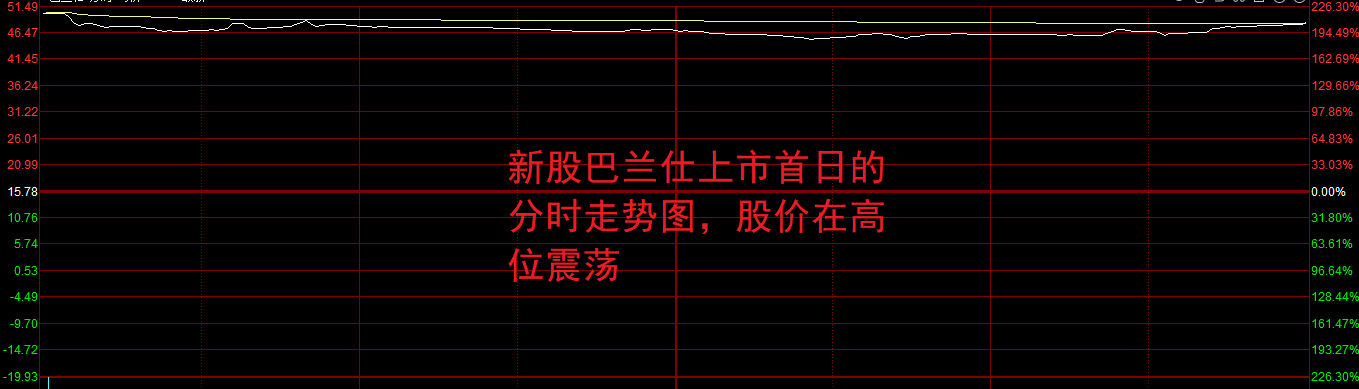
Group 1 - The core viewpoint of the news highlights the excitement surrounding the IPO of Balanshi, where investors eagerly anticipate the opening date, as "new share subscription" has become synonymous with easy profits in the current A-share market [1] - Balanshi's opening price was set at 50 yuan, representing a significant increase of 216.9% from the issue price of 15.78 yuan, which is expected to delight many investors who received allocations [1] - The cash subscription method for new shares on the Beijing Stock Exchange requires a substantial investment of at least 2 to 3 million yuan for 100 shares, making it inaccessible for many retail investors [1] Group 2 - The influx of substantial funds into the stock market is driven by the low yields of alternative investments, prompting investors to seek stable options in equities [2] - The market is demonstrating resilience, with the index showing a strong rebound after a brief dip, indicating an underlying strength in market dynamics [4] - The current market phase is characterized as transitioning from hesitation to optimism, with smart money beginning to accumulate shares as fearful investors exit [6]
年内新高!打新热潮回归!
Zheng Quan Shi Bao· 2025-08-26 13:53
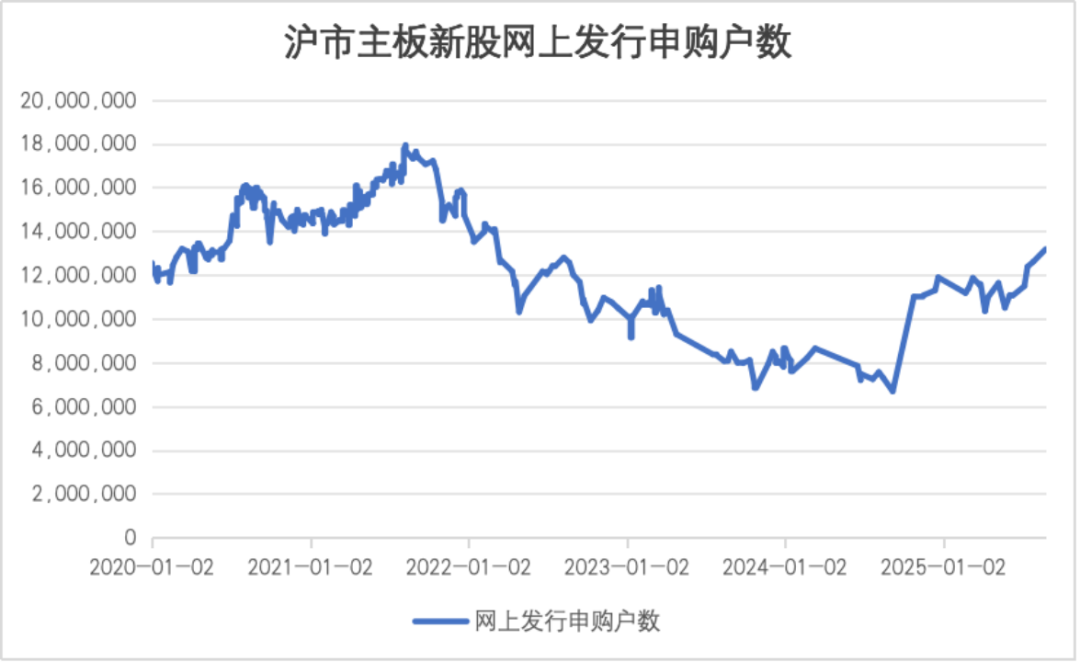
Core Viewpoint - The A-share market is experiencing a surge in new stock subscription enthusiasm, reaching a high level not seen in recent years, driven by improved market sentiment and significant participation from investors [1][2][3]. Group 1: New Stock Subscription Trends - As of August 25, the number of effective online subscriptions for Huaxin Jingke exceeded 13 million, setting a new record for the Shanghai Stock Exchange since March 2022 [1][2]. - The number of investors participating in new stock subscriptions in the Shenzhen Stock Exchange approached 15 million, reflecting a similar trend of increased interest [1][3]. - The number of online subscriptions for new stocks in the Shanghai Stock Exchange has nearly doubled over the past year, increasing by approximately 6.5 million investors [2]. Group 2: Market Performance and Investor Sentiment - The overall market recovery has led to a significant increase in new stock subscription numbers across various boards, including the Shenzhen Main Board, ChiNext, and STAR Market [3]. - The new stock market has shown a clear profit-making effect, with several new stocks yielding substantial returns for investors, such as Guangdong Jiankang, which saw a first-day price increase of 409.80% [4]. - The A-share market indices have shown strong performance, with the Shanghai Composite Index rising over 8% in August, and the Shenzhen Component Index increasing over 13% [5]. Group 3: Market Activity and Liquidity - The trading activity in the A-share market has also increased, with daily trading volumes surpassing 30 billion yuan, marking a significant milestone [6]. - Analysts suggest that the current market environment is entering a positive feedback loop, characterized by increased capital inflow and rising market prices [6]. - The improvement in market liquidity is supported by a favorable regulatory environment and ongoing investor interest, contributing to a more active trading atmosphere [6].
年内新高,打新热潮回归
Zheng Quan Shi Bao· 2025-08-26 13:10
Core Viewpoint - The A-share market is experiencing a significant increase in new stock subscription enthusiasm, driven by a recovering market sentiment, with record numbers of investors participating in new stock offerings [1][3][10]. Group 1: New Stock Subscription Trends - On August 25, Huaxin Jingke initiated online subscriptions, with valid subscription accounts exceeding 13 million, marking a new high since March 2022 for the Shanghai Stock Exchange [1][3]. - The number of investors participating in new stock subscriptions has surged, with nearly 15 million investors in the Shenzhen main board and a significant increase in the number of subscriptions across various boards, including the ChiNext and STAR Market [1][5][7]. - The number of online subscription accounts for new stocks in the Shanghai main board has nearly doubled over the past year, increasing by approximately 650,000 accounts [5][7]. Group 2: Market Performance and Investor Sentiment - The new stock market has shown a clear profit-making effect this year, with several new stocks yielding substantial returns for investors, such as Guangdong Jianke, which saw a first-day price increase of 409.80% [9][10]. - The overall market has been buoyant, with major indices like the Shanghai Composite Index rising over 8% in August, contributing to a positive investment atmosphere [10]. - The increase in investor enthusiasm for new stock subscriptions has led to a decrease in the winning rate for new stock allocations, with Huaxin Jingke's winning rate reported at only 0.01%, one of the lowest levels this year [11]. Group 3: Market Activity and Future Outlook - The trading activity in the A-share market has also seen a notable uptick, with daily trading volumes surpassing 3 trillion yuan, marking a new high for the year [13]. - Analysts suggest that the current market environment is entering a positive feedback loop, characterized by increased capital inflow, rising market prices, and further capital attraction [13]. - The overall improvement in market liquidity and the continuous emergence of market hotspots have contributed to the sustained upward trend in the A-share market [13].