绿色农业

Search documents
以马克思主义自然观引领绿色农业高质量发展
Xin Hua Ri Bao· 2025-09-04 23:16
Group 1 - The core viewpoint emphasizes the necessity of green agriculture as a sustainable development path guided by Marxist views on nature, promoting ecological and agricultural synergy [1] - The article highlights the importance of farmers' value recognition and willingness to participate in green agriculture, suggesting the use of various media to enhance their understanding of the relationship between ecological protection and high-quality agricultural development [1][2] - It advocates for the protection of arable land and pollution remediation as foundational actions for high-quality agricultural development, emphasizing resource supply principles and the need to reduce idle or abandoned farmland [2] Group 2 - The article discusses the optimization of agricultural industrial structure to enhance the value of green agriculture, suggesting the establishment of agricultural product processing chains and the integration of green agriculture with other industries such as tourism and education [2] - It stresses the importance of cultivating talent in green agriculture by attracting skilled individuals from universities and research institutions, as well as providing training for local farmers to understand the long-term value of green agricultural practices [3]
中国最北生态农业县4万亩小麦秋收过半
Zhong Guo Xin Wen Wang· 2025-08-29 09:06
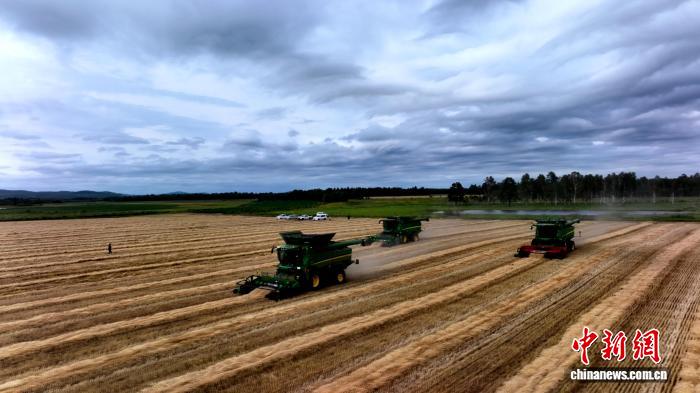
Core Insights - The wheat harvest in Huma County, the northernmost ecological agricultural county in China, has surpassed 50% completion, with expectations to finish by early September [1][3]. Agricultural Production - Huma County has cultivated 40,000 acres of wheat this year, with an expected yield of approximately 700 jin (about 350 kg) per acre [5]. - The county's agricultural conditions are challenging due to a short frost-free period of only 90 to 110 days, but it benefits from a high forest coverage rate of 71.2% and rich organic soil in river valley plains [5]. Technological Advancements - The county is leveraging low-altitude economic development to enhance agricultural productivity through mechanization and modern farming practices, including aerial protection and service companies [6]. - The area has seen a significant increase in green food certification, with over 1 million acres certified, contributing to 80% of the total agricultural output value [6]. Future Prospects - Huma County is set to be recognized as a national model for green agricultural development by 2025, highlighting its role as a benchmark for cold-region green agriculture [6].

第七届中阿博览会技术转移与创新合作交流会发布500项科技成果
Zhong Guo Xin Wen Wang· 2025-08-28 14:43
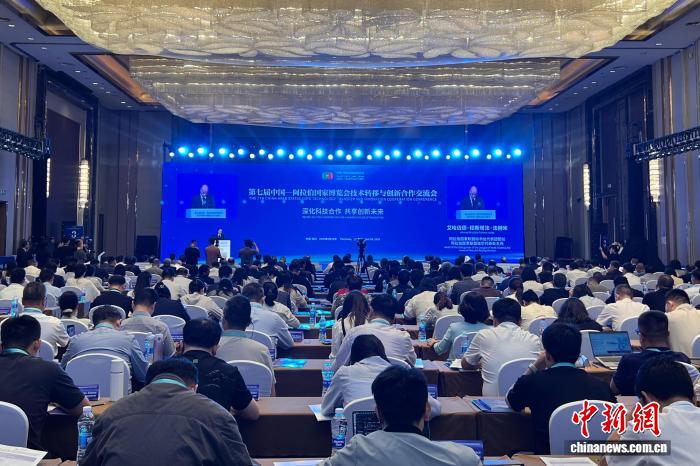
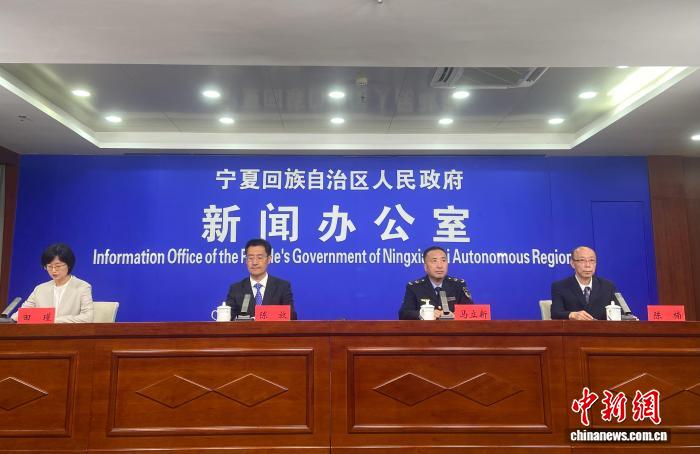
Core Viewpoint - The seventh China-Arab States Expo Technology Transfer and Innovation Cooperation Conference was held, showcasing 500 advanced applicable technology achievements and signing 13 cooperation agreements to enhance technology transfer and innovation collaboration between China and Arab countries [1][2]. Group 1: Technology Achievements - The conference presented 500 technology achievements collected from renowned institutions and enterprises in China, focusing on the development needs of Arab countries [2]. - The showcased technologies span six key areas: green agriculture, ecological protection, high-end equipment and intelligent manufacturing, new materials and modern chemistry, artificial intelligence and digital information, and clean energy [2]. Group 2: Cooperation Agreements - 13 cooperation projects were successfully signed, focusing on three core dimensions: platform construction, technology transfer, and talent services, creating a multi-dimensional cooperation matrix [2]. - The China-Arab Technology Transfer Center plans to establish sub-centers in Zhejiang, Beijing, and Shaanxi to build a nationwide collaborative network [2]. Group 3: Collaborative Initiatives - Agreements were signed with institutions such as Kazakhstan National Agrarian University and Ningxia University to collaborate on modern agricultural development and smart applications [2]. - Tsinghua University will jointly establish a laboratory with the National Higher School of Artificial Intelligence in Algeria, while Ningxia Academy of Agriculture and Forestry Sciences will collaborate with Egypt's National Research Center on desertification prevention [2]. Group 4: Event Activities - The conference will organize multiple rounds of specialized matchmaking and on-site inspections to create a "one-stop" channel for the 500 technology achievements to connect with users and capital in Arab countries [3].
富邦科技:上半年营收同比增长6.50% 现代农业营收同比增长13.31%
Zhong Zheng Wang· 2025-08-21 13:31
Core Viewpoint - Fubon Technology reported a revenue of 685 million yuan for the first half of 2025, marking a year-on-year growth of 6.50%, with a net profit of 61.22 million yuan and a net asset increase of 9.53% to 1.471 billion yuan, driven by its modern agriculture business and global expansion efforts [1] Group 1: Financial Performance - The company achieved a revenue of 685 million yuan, a 6.50% increase year-on-year [1] - The net profit attributable to shareholders was 61.22 million yuan [1] - The net assets reached 1.471 billion yuan, reflecting a 9.53% growth [1] Group 2: Business Segments - The modern agriculture segment generated revenue of 122 million yuan, growing by 13.31% [1] - The overall revenue from the additives business was 496 million yuan, with a year-on-year increase of 5.62% [1] - The company’s overseas revenue amounted to 320 million yuan, an 8.16% increase, accounting for 46.68% of total revenue [1] Group 3: Research and Development - Fubon Technology launched new green products including multifunctional coating agents and granulation additives [1] - The company is collaborating with OCP Group on various projects, including calcium magnesium phosphate fertilizers and TSP-MgO [1] - The company’s self-developed heavy metal remediation solution has completed customer trials and is recognized internationally for its feasibility [1] Group 4: Agricultural Innovation - The modern agriculture segment employs a new model focusing on soil, crop data, and tailored fertilization, conducting numerous field trials across several provinces [2] - Special fertilizers generated revenue of 42.99 million yuan [2] - The company is enhancing production efficiency and quality stability through technological upgrades in its platforms [2] Group 5: Industry Collaboration and Initiatives - Fubon Technology established the "Hubei Province Bio-Fertilizer Industry Innovation Alliance" to focus on technology, standards, and market expansion [3] - The company is involved in a "Million Mu Technology Assistance Project" to promote advanced agricultural techniques and products [3] - Future plans include a focus on technological innovation in various agricultural sectors, emphasizing green development [3]

贝斯美: 关于首发部分募投项目延期的公告
Zheng Quan Zhi Xing· 2025-08-19 16:22
Core Viewpoint - The company has decided to postpone the expected completion dates for certain fundraising projects due to the current market conditions and industry downturn, while maintaining the original investment purposes and scales [3][4][5]. Fundraising Overview - The company raised a total of RMB 43,177.50 million through the issuance of 30.3 million shares at a price of RMB 14.25 per share, with a net amount of RMB 39,297.76 million after deducting issuance costs [1]. - As of June 30, 2025, the company has allocated funds to various projects, including a technical transformation project for producing 6,000 tons of dimethylpentyl and a high-purity bauxite project [2]. Project Postponement Details - The expected completion date for the 6,000-ton dimethylpentyl technical transformation project has been postponed from September 2025 to September 2026 due to factors such as the pesticide industry's downturn and macroeconomic fluctuations [3][4]. - The decision aims to avoid risks associated with releasing production capacity during an industry low point, ensuring the safety and efficiency of the use of raised funds [3][4]. Impact of Postponement - The postponement does not involve changes to the project implementation entities, investment methods, or total investment amounts, and is not expected to adversely affect the company's normal operations [4][5]. - The board and supervisory committee have both approved the postponement, affirming that it aligns with the company's long-term development strategy and does not harm shareholder interests [5][6]. Regulatory Compliance - The postponement has been reviewed and approved by the board and supervisory committee, and is in compliance with relevant regulations and guidelines regarding the management of raised funds [6].
第二十四届长春农博会聚焦“四个农业”
Xin Hua She· 2025-08-15 11:42
Core Viewpoint - The 24th China Changchun International Agricultural and Food Expo opened on August 15 in Changchun, Jilin Province, showcasing modern agricultural achievements under the theme of "Technology Agriculture, Green Agriculture, Quality Agriculture, Brand Agriculture" [1] Group 1: Event Overview - The expo features eight major exhibition areas, including high-quality agricultural products and food, high-tech facilities, planting demonstrations, creative agriculture, premium livestock, agricultural machinery, modern seed industry, and agricultural culture [1] - Over 1,000 domestic specialty agricultural product companies participated, along with more than 260 domestic and foreign agricultural machinery companies, over 70 livestock and feed veterinary drug companies, and 30 agricultural input companies [1] Group 2: Highlights of Exhibits - The Jilin Province exhibition hall showcased high-quality agricultural products such as Jilin rice and fresh corn, attracting numerous visitors [1] - The "Ji" brand products from over 200 high-quality grain enterprises demonstrated the latest achievements in branding grain from black soil [1] - The agricultural machinery equipment area displayed the latest technological equipment from hundreds of domestic and foreign agricultural machinery companies, including unmanned plant protection machines, unmanned tractors, and large intelligent harvesters [1]
第二十四届中国长春国际农业·食品博览(交易)会今日开幕
Zheng Quan Shi Bao Wang· 2025-08-15 02:21
Core Viewpoint - The 24th China Changchun International Agricultural and Food Expo officially opened on August 15, focusing on themes of technological, green, quality, and brand agriculture [1] Group 1: Event Overview - The expo will last for 10 days and features eight special exhibition areas, including high-quality agricultural products and food, high-tech facilities, planting demonstrations, creative agriculture, premium livestock, agricultural machinery, modern seed industry, and agricultural culture [1] - The event aims to facilitate practical economic and trade exchanges, cultural tourism research, and cultural competitions [1]
第七届中阿博览会技术转移与创新合作交流会将发布技术成果500项
Zhong Guo Xin Wen Wang· 2025-08-14 19:30
Group 1 - The 7th China-Arab States Expo Technology Transfer and Innovation Cooperation Exchange Conference will be held on August 28-29 in Yinchuan, focusing on key areas such as artificial intelligence, clean energy, and green agriculture, with the release of 500 advanced applicable technology achievements [1][2] - The conference aims to deepen China-Arab technological cooperation, structured around one core idea, two main lines (technology transfer and innovation cooperation), and five major activity sectors [2] - Expected outcomes include the establishment of high-level international technology cooperation platforms like China-Arab Joint Laboratories and the Belt and Road Joint Laboratories, along with the formation of several signed projects [2]
呼伦贝尔市阿荣旗:千里沃野展新姿
Nei Meng Gu Ri Bao· 2025-08-12 09:48
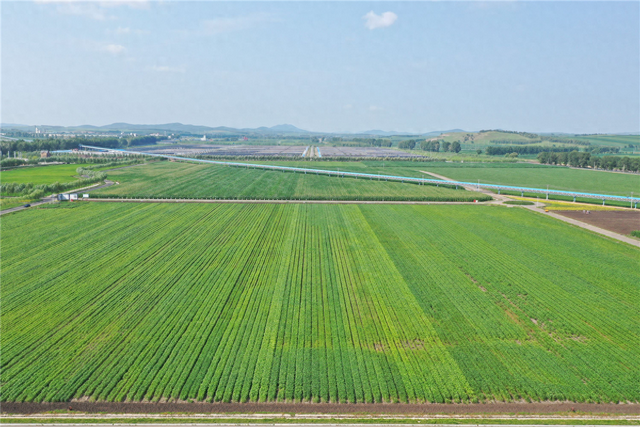
Economic Growth - The main economic indicators of A Rongqi showed steady growth in the first half of the year, with a GDP of 3.772 billion yuan, a year-on-year increase of 7% [3] - The total output value of agriculture, forestry, animal husbandry, and fishery increased by 5.7%, while the industrial added value above designated size surged by 32% [3] - Fixed asset investment rose by 23.4%, and per capita disposable income of residents increased by 4.9% [3] Agricultural Modernization - A Rongqi is focusing on agricultural technology to enhance productivity and promote green development, with advanced agricultural technologies being rapidly adopted [3][6] - The introduction of a large-scale intelligent precision spraying system has improved efficiency and reduced costs in weed control [3] - The use of drones for agricultural management has enabled efficient monitoring and management of crops, with one drone capable of covering 1,200 acres in a day [5] Water and Fertilizer Integration - A Rongqi has established a water-fertilizer integration demonstration area to enhance crop yield and resource efficiency [6][8] - The new technology has led to a reduction in fertilizer use by 2-3 kg per acre and water savings of 120-150 cubic meters, while increasing corn yield by over 100 kg per acre [8] - The promotion of water-fertilizer integration is part of A Rongqi's strategy to develop modern and green agriculture [8] Rural Revitalization - The region is developing key industries such as silkworm breeding and medicinal herbs, leveraging the "Hulunbuir" regional brand to promote local agricultural products [9] - A Rongqi is enhancing its e-commerce sector to help local products reach a wider market, transforming traditional businesses into online platforms [9][10] - The establishment of a comprehensive service platform has improved resource allocation and reduced costs for farmers [10] Livestock Industry Development - A Rongqi is advancing its livestock sector by introducing quality breeding sheep and promoting a "breeding + fattening" model for meat production [10] - The region is focusing on building a billion-yuan industrial cluster in grain, dairy, and meat production, with key enterprises leading the way [10][13] - The integration of renewable energy projects is also being pursued to support sustainable agricultural practices [13]
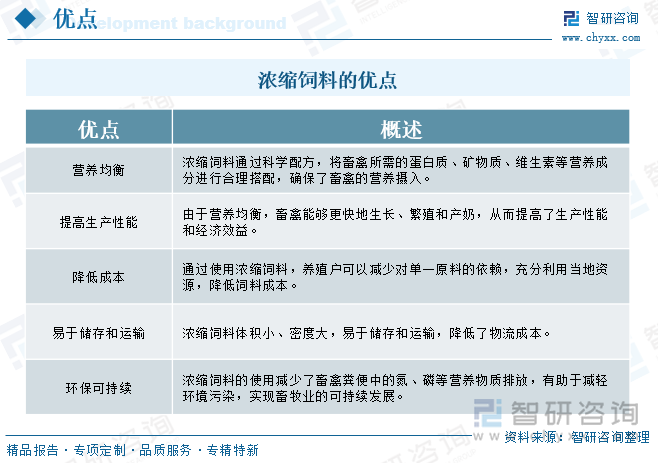
研判2025!中国浓缩饲料行业政策汇总、产业链、发展现状、竞争格局及未来趋势分析:上半年浓缩饲料产量下降1.5%,行业处于调整期[图]
Chan Ye Xin Xi Wang· 2025-07-30 01:17
Core Insights - The concentrated feed industry in China is experiencing a decline in production, with a projected output of 12.94 million tons in 2024, representing an 8.8% year-on-year decrease, primarily due to reduced demand from the livestock sector and rising raw material costs [1][11][19] - The average prices of concentrated feed are also on a downward trend, with specific prices for fattening pig feed at 5 CNY/kg (down 4.4%), layer chicken feed at 3.54 CNY/kg (down 4.4%), and broiler feed at 4.13 CNY/kg (down 5.5%) in the first half of 2025 [13][19] Industry Overview - Concentrated feed, also known as protein supplement feed, is a processed feed with moisture content below 12%, providing essential nutrients like proteins, minerals, and vitamins, and is characterized by high nutritional density and energy content [1][3] - The industry is currently in an adjustment phase, influenced by a decrease in livestock farming demand and increased raw material prices, leading to a shift towards mixed feed [1][11] Industry Policies - The Chinese government has introduced several policies to promote the development of the concentrated feed industry, including initiatives for healthy farming practices and the comprehensive utilization of agricultural by-products [5][6][22] - Key policies include the promotion of low-protein diets and support for the exploration and efficient use of new feed resources [6][22] Industry Chain - The concentrated feed industry chain consists of upstream raw materials (corn, sorghum, fish meal, etc.), midstream production processes, and downstream applications in livestock farming [7][11] Competitive Landscape - Large feed companies dominate the market due to their advantages in brand, scale, and technology, while small and medium enterprises face challenges in technology and market share [15][19] - Major players in the industry include New Hope Liuhe, Haida Group, and Beijing Dabeinong Technology Group [15][19] Development Trends - The industry is expected to see advancements in technology and product innovation, with a focus on personalized and high-end market demands [21] - There is a push for green development in response to stricter environmental regulations, encouraging companies to reduce pollution and improve resource efficiency [22] - The internationalization of the concentrated feed industry is accelerating, with opportunities for growth in export markets driven by initiatives like the Belt and Road [24]