
药品集中带量采购

Search documents
第11批国家组织药品集采报量:回应临床真实需求
Jing Ji Ri Bao· 2025-08-18 01:56
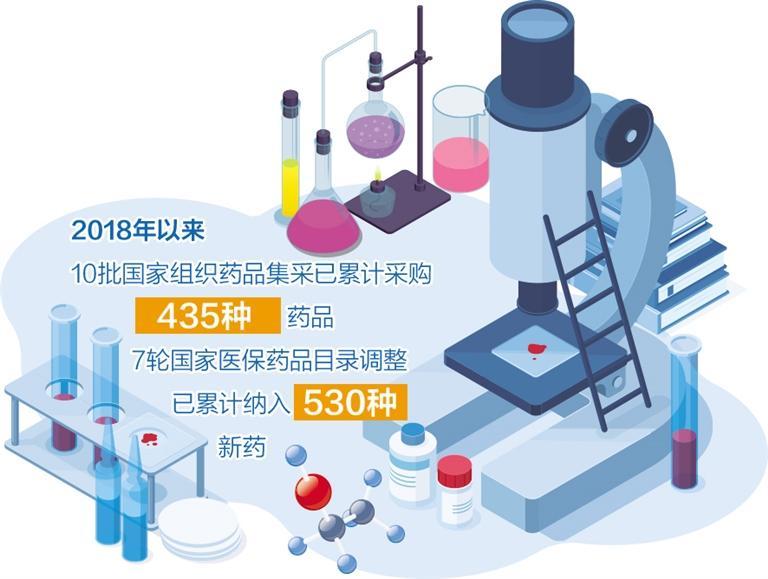
Core Viewpoint - The recent launch of the 11th batch of national drug centralized procurement emphasizes the importance of accurate reporting by medical institutions, introducing new rules to accommodate diverse medication needs while allowing for independent procurement of non-selected drugs outside the procurement agreement [2][5]. Group 1: Reporting Rules and Requirements - The reporting period for this centralized procurement is from August 6 to August 25, requiring participation from all public and military medical institutions [2]. - New reporting rules allow medical institutions to report either by drug name or by brand, providing flexibility in meeting clinical needs [2][4]. - Institutions can choose to report some drugs by name and others by brand, with no limit on the number of brands that can be reported [2]. Group 2: Demand Determination and Procurement - Medical institutions must consider clinical demand changes and ensure that total reported quantities are not less than 80% of the average procurement volume for 2023 and 2024 [4]. - For drugs with increasing usage trends, institutions are encouraged to report quantities at or above 100% of historical averages, while those with limited indications can report lower quantities based on actual usage [4]. - Institutions are allowed to adjust reported quantities based on specific circumstances, such as departmental changes or temporary usage [4]. Group 3: Procurement Flexibility and Market Dynamics - Institutions are encouraged to prioritize selected drugs but are not restricted to them; they can procure non-selected drugs based on actual needs [5]. - Since 2018, a total of 435 drugs have been procured through 10 batches of centralized procurement, which has helped reduce costs for patients and facilitated the inclusion of new drugs in the medical insurance list [5]. - The procurement process aims to maintain clinical stability, ensure quality, and prevent unethical practices such as collusion among suppliers [5].

优化规则满足群众多元用药需求
Jing Ji Ri Bao· 2025-08-18 01:30
Core Points - The eleventh batch of national drug centralized procurement has officially started, with new reporting rules that include an option for reporting by brand name to meet diverse medication needs [1][2] - Public medical institutions, including grassroots healthcare facilities, are required to participate in the reporting process from August 6 to August 25 [1] - The new reporting rules allow institutions to report either by drug name or by brand, providing flexibility in meeting clinical needs [1][2] Reporting Guidelines - If a reported brand is not selected, the corresponding volume will be managed by the province's main supply enterprise, and institutions must fulfill the agreement volume with that enterprise [2] - Institutions must ensure that total reported volumes are not less than 80% of the average procurement volume for 2023 and 2024 [2][3] - Institutions can adjust reported volumes based on actual needs, especially for drugs with fluctuating demand due to seasonal diseases or other factors [3] Clinical Needs and Procurement - The procurement policy encourages the use of selected drugs but allows for the purchase of non-selected drugs if clinical needs are not met [3] - Since 2018, a total of 435 drugs have been procured through 10 batches of centralized procurement, with ongoing adjustments to improve drug accessibility and quality for the public [3][4] - The procurement process aims to balance clinical stability, quality assurance, and fair competition among suppliers [4]
第十一批国家组织药品集采报量启动 优化规则满足群众多元用药需求
Jing Ji Ri Bao· 2025-08-17 23:56
Core Points - The eleventh batch of national organized drug procurement has officially started, with new reporting rules introduced to enhance the procurement process and meet diverse public medication needs [1][2] - Medical institutions are required to report their procurement needs from August 6 to August 25, 2023, and must participate in the reporting process as per government regulations [1][2] - The new reporting rules allow institutions to report by brand name, which respects clinical choices and addresses patient concerns about brand preferences [1][2] Reporting Rules - Medical institutions can report either by drug name or by specific brand, with no limit on the number of brands that can be reported [1][2] - If a reported brand is not selected, the procurement responsibility will shift to the main supplier in the province, and institutions must fulfill the agreement quantity with that supplier [2] - Institutions must ensure that total reported quantities are not less than 80% of the average procurement volume for 2023 and 2024 [2][3] Clinical Demand Considerations - Institutions are encouraged to report quantities based on actual clinical needs, with specific guidelines for drugs with increasing usage trends [2][3] - For drugs with uncertain demand, such as those related to seasonal diseases, institutions can adjust their reported quantities accordingly [3] - Institutions are allowed to reduce reported quantities for drugs with expected lower usage due to departmental adjustments or temporary needs [3] Procurement Principles - The procurement process will adhere to principles of maintaining clinical stability, ensuring quality, preventing collusion, and avoiding excessive competition [4] - Companies are advised to conduct cost-benefit analyses and engage in rational pricing while resisting illegal practices such as collusion [4] Historical Context - Since 2018, ten batches of national organized drug procurement have resulted in the purchase of 435 types of drugs, contributing to reduced costs for patients and facilitating the inclusion of new drugs in the medical insurance catalog [3]
第十一批国家组织药品集采报量启动—— 优化规则满足群众多元用药需求
Jing Ji Ri Bao· 2025-08-17 21:54
Core Viewpoint - The recent launch of the 11th batch of national organized drug procurement emphasizes the importance of accurate reporting by medical institutions, introducing new rules to enhance flexibility and meet diverse medication needs [1][2]. Group 1: Reporting Rules and Requirements - The new reporting rules include an option for reporting by brand name, allowing medical institutions to cater to diverse patient needs while avoiding a one-size-fits-all approach [1][2]. - The reporting period for this batch is from August 6 to August 25, and all public and military medical institutions are required to participate [1][2]. - Medical institutions can report quantities either by drug name or by brand, with no limit on the number of brands that can be reported [1][2]. Group 2: Demand Estimation and Compliance - Medical institutions must consider clinical demand changes and ensure that total reported quantities are not less than 80% of the average procurement volume for 2023 and 2024 [2][3]. - Institutions are allowed to adjust reported quantities based on actual needs, especially for drugs with expected decreases in usage due to departmental changes or temporary needs [3]. - For drugs not covered by basic medical insurance, such as special or international medical services, they can be excluded from the reporting scope [3]. Group 3: Procurement and Supply Management - If a reported brand is not selected, the corresponding quantity will be managed by the province's main supply enterprise, and institutions must fulfill the agreement quantity with that enterprise [2][3]. - Institutions are encouraged to prioritize selected drugs but are not restricted to them, allowing for flexibility in procurement based on actual clinical needs [3][4]. - Since 2018, a total of 435 drugs have been procured through 10 batches of national organized procurement, which has facilitated the inclusion of 530 new drugs in the national medical insurance directory [3][4]. Group 4: Principles and Market Conduct - The procurement process will adhere to principles of maintaining clinical stability, ensuring quality, preventing collusion, and avoiding market saturation [4]. - Companies are advised to conduct cost-benefit analyses and engage in rational pricing while resisting illegal practices such as collusion and bid-rigging [4].
国家医保局明确了,55种药品拟纳入第11批集采范围
21世纪经济报道· 2025-08-06 04:47
Core Viewpoint - The article discusses the ongoing optimization of China's drug procurement policy, emphasizing the principles of "stabilizing clinical use, ensuring quality, preventing collusion, and avoiding internal competition" as the country moves into its eleventh round of drug procurement, which includes 55 drugs [1][6][10]. Group 1: Drug Procurement Overview - Since 2018, China has conducted ten rounds of drug procurement, covering 435 drugs, with the eleventh round now initiated [1][6]. - The National Medical Insurance Administration (NMI) has stated that 480 companies submitted information for the procurement process, with an average of 15 companies per drug, and some drugs having over 40 companies participating [1][6]. Group 2: Optimization Measures - The NMI has optimized procurement rules, including allowing medical institutions to specify brands in their volume reporting and changing the price difference calculation method to not solely rely on the lowest bid [6][10]. - Quality assurance measures have been heightened, requiring that bidding companies have no violations of Good Manufacturing Practices (GMP) in the past two years [6][10]. Group 3: Market Impact - The eleventh batch includes a variety of drug forms, with oral sustained-release and injection drugs making up significant portions of the list [6][7]. - Notable drugs include cefazolin and famotidine, with over 30 companies eligible for bidding, indicating high competition [7]. Group 4: Financial Implications - The procurement process has saved approximately 440 billion yuan in medical insurance funds since 2018, with over 360 billion yuan saved from negotiations on older drugs, which has been redirected to innovative drugs [10]. - The shift in procurement policy is moving from a focus on low prices to a model that emphasizes quality, cost control, and reasonable profits [10][11]. Group 5: Regulatory Developments - The NMI is committed to maintaining a transparent and fair procurement process, with ongoing efforts to address issues of price fairness and quality assurance in the pharmaceutical industry [12].
480家药企竞逐第十一批集采,国家医保局强调理性报价
2 1 Shi Ji Jing Ji Bao Dao· 2025-08-05 09:17
Core Viewpoint - The National Medical Insurance Administration (NMIA) is advancing the 11th batch of drug procurement, focusing on maintaining clinical stability, ensuring quality, preventing collusion, and avoiding excessive competition in the pharmaceutical industry [1][2][6]. Group 1: Drug Procurement Process - Since 2018, the NMIA has successfully conducted ten batches of drug procurement, covering 435 types of drugs, with the 11th batch now underway [1][2]. - The 11th batch includes 55 drugs, with an average of 15 companies per drug, and some drugs having over 40 companies participating [1][3]. - The procurement process aims to optimize price calculations and ensure that the lowest bid is justified and does not fall below production costs [3][6]. Group 2: Market Impact and Drug Types - The 11th batch primarily includes oral sustained-release and injection forms, with 41.8% being oral forms and 40% being injections [3]. - Notable drugs in this batch include cefazolin, famotidine, and various oral sustained-release formulations, with some expected to exceed sales of 1 billion yuan [4][5]. - The NMIA has reported that the cumulative savings from drug procurement since 2018 amount to approximately 440 billion yuan, with over 360 billion yuan allocated for negotiated drug use [5][6]. Group 3: Regulatory and Quality Assurance - The NMIA emphasizes the importance of quality assurance, requiring that selected drugs have not violated production quality standards in the past two years [3][6]. - The regulatory framework has shifted from merely controlling costs to fostering a healthy industry ecosystem that prioritizes quality and reasonable profits [6][8]. - The NMIA is implementing stricter monitoring and evaluation measures for companies involved in drug procurement to ensure compliance and quality [6][7]. Group 4: Future Directions - The NMIA plans to continue normalizing and institutionalizing drug procurement, aiming to include all clinically necessary and reliable drugs in the procurement scope [8][9]. - Future reforms will focus on enhancing quality supervision throughout the drug lifecycle and improving communication among hospitals, insurance, and regulatory bodies [8][9].
保障人民健康 助力经济社会发展——国家医疗保障局介绍“十四五”时期医保工作情况
Zhong Guo Fa Zhan Wang· 2025-07-28 01:31
Core Viewpoint - The "14th Five-Year Plan" emphasizes high-quality development in medical insurance, aiming to enhance public health and support economic growth through comprehensive reforms in the healthcare system [1] Group 1: Medical Insurance Coverage and Reform - During the "14th Five-Year Plan," the basic medical insurance coverage rate is maintained at around 95%, with the number of insured individuals expected to reach 1.327 billion by 2024 [1] - The medical insurance information platform has been fully established, with cross-provincial direct settlement of medical expenses increasing from 5.37 million in 2020 to 23.8 million in 2024, a growth of 44 times [1] - Legislative efforts are ongoing to strengthen the supervision and management of medical insurance funds, with new regulations being implemented [1] Group 2: Payment System Reform - The medical insurance payment system has shifted from "post-payment" to "pre-payment," with over 170 billion yuan pre-paid to medical institutions in 2024 [3] - The settlement cycle has been reduced from 30 working days to no more than 20, with some areas achieving next-day settlements [3] - The annual clearing of medical insurance funds has been expedited, completing six months earlier than at the beginning of the "14th Five-Year Plan" [3] Group 3: Pricing and Service Quality - The National Medical Insurance Administration has introduced pricing guidelines for various medical services, aiming for consistent pricing and comparability across hospitals [4][5] - New pricing projects have been established to encourage high-quality services, such as bedside ultrasound and early infant care [5] - The administration is focusing on industry standards to promote a more regulated and transparent medical market [5] Group 4: Drug Price Management and Innovation - The administration supports pharmaceutical innovation by allowing market-driven pricing for most drugs, with government guidance only for specific categories [6][7] - Since 2018, 10 batches of centralized drug procurement have been conducted, covering 435 types of drugs, which has helped reduce drug prices and improve accessibility [7] - A special governance initiative for drug prices has been launched to standardize pricing for over 27,000 drug specifications [8] Group 5: Reform and Global Cooperation - The medical insurance system promotes both reform and openness, with ongoing efforts to implement successful healthcare models from various regions [9][10] - The administration aims to expand insurance coverage and enhance public awareness through improved mechanisms and digital empowerment [10]
产品价格大滑坡 福安药业上半年净利或“腰斩”
Zhong Guo Jing Ying Bao· 2025-07-25 07:46
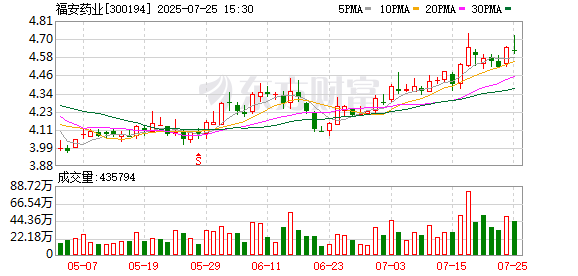
Core Viewpoint - Fuan Pharmaceutical (300194.SZ) is experiencing a significant decline in net profit for the first half of 2025, with projections indicating a drop of 39.95% to 53.81% compared to the previous year, contrasting sharply with a 20.69% growth in the same period of 2024 [3][5][6] Financial Performance - The company forecasts a net profit of 100 million to 130 million yuan for the first half of 2025, with a non-recurring net profit expected to be between 91 million and 121 million yuan, both showing substantial year-on-year declines [3][5] - In the first quarter of 2025, Fuan reported total revenue of 468 million yuan, down 42.22%, and a net profit of 69.04 million yuan, down 43.63% [5] - The company's net profit trajectory over the past two years has shown a "V" shape, with a net profit of 232 million yuan in 2023, up 13.32%, but heavily reliant on non-recurring gains [5][6] Market Dynamics - The decline in performance is attributed to the downward pressure on prices from national centralized procurement, with average price drops reaching 70% in the latest procurement round, particularly affecting the company's core products [6][7] - Fuan's main products, which include antibiotics and oncology drugs, account for 47.59% of total revenue and are significantly impacted by price reductions [7] Strategic Response - The company initially benefited from a strategy of "price for volume," which improved profit margins by reducing sales expenses, but this approach has reached its limits as price reductions continue [6][8] - Fuan is attempting to pivot towards innovative drugs and high-end generics to counteract the pressures from centralized procurement, although this transition is fraught with challenges [8][9] Research and Development - In 2024, Fuan invested 171 million yuan in R&D, representing 7.14% of its annual revenue, with several products receiving regulatory approvals [9] - The company is also exploring international markets, having received certifications for certain products in South Korea and passed FDA inspections for its subsidiaries, although overseas sales remain low at 3.17% of total revenue [9]

医药板块爆发,医疗ETF(159828)涨超2%,创新药ETF国泰(517110)、创业板医药ETF国泰(159377)涨超1%
Sou Hu Cai Jing· 2025-07-25 02:30
Group 1 - The pharmaceutical sector is experiencing a surge, with medical ETFs (159828) rising over 2%, and innovative drug ETFs (517110) and ChiNext medical ETFs (159377) increasing over 1% [1] - The National Healthcare Security Administration has initiated the deepening phase of centralized drug procurement, emphasizing principles such as "stabilizing clinical use, ensuring quality, preventing collusion, and countering internal competition" [1] - The 11th batch of centralized procurement rules has been significantly optimized, allowing medical institutions to select recognized brands and requiring lowest-priced companies to justify their pricing and commit to not pricing below cost [1] Group 2 - This adjustment aims to curb vicious price competition and shift the industry focus from "price wars" to "value wars," benefiting leading companies with stable production capabilities and strong cost control [1] - The National Healthcare Security Administration has conducted price governance for over 27,000 drug specifications, which is expected to further concentrate market share among high-quality leading enterprises [1] - The exploration of direct settlement of procurement and national negotiation drug consumables by the medical insurance fund aims to reduce the payment cycle for pharmaceutical companies from 6 months to under 30 days, significantly improving cash flow and overall operational efficiency in the industry [1]

国家医保局:按照“稳临床、保质量、防围标、反内卷”原则持续推进集采改革
Jing Ji Guan Cha Wang· 2025-07-24 08:16
Core Viewpoint - The Chinese government is actively promoting the "14th Five-Year Plan" with a focus on high-quality healthcare reforms, particularly through centralized drug procurement to lower drug prices and improve the healthcare ecosystem [1][2]. Group 1: Drug Procurement Reforms - The National Medical Insurance Administration has implemented 10 batches of centralized drug procurement since 2018, covering 435 types of drugs, which has effectively reduced drug prices and improved accessibility for the public [1][2]. - The 11th batch of centralized procurement has been initiated, optimizing procurement rules to ensure quality and prevent market manipulation, including a new pricing anchor that does not solely rely on the lowest bid [2]. Group 2: Credit Evaluation System - A credit evaluation system has been established to address issues like medical kickbacks and inflated drug prices, with 735 companies identified as untrustworthy by the end of 2024, affecting their procurement qualifications [2]. - The implementation of the credit evaluation system is shifting the market approach for pharmaceutical companies from high-price strategies to quality-focused management [2]. Group 3: Insurance Coverage and Financials - During the "14th Five-Year Plan," the basic medical insurance coverage rate has stabilized at around 95%, with an expected 1.327 billion insured individuals by 2024 [3]. - The cumulative expenditure of the medical insurance fund has reached 12.13 trillion yuan, with an annual growth rate of 9.1%, and a cumulative balance of 3.86 trillion yuan by the end of 2024 [3].