输入性通胀

Search documents
生猪期货与期权2025年5月报告-20250513
Fang Zheng Zhong Qi Qi Huo· 2025-05-13 14:00
Report Investment Rating - Not provided in the given content Core Views - In April 2025, the escalation of Sino-US tariffs put pressure on commodities, but agricultural products were relatively resilient, and the pig market was less directly affected. The far - end breeding cost was difficult to further reduce, and the spot price was stable due to the end of the seasonal off - season [3]. - In 2025, the pig slaughter volume increased year - on - year, but the pressure was not significant. The production efficiency of sows improved, but the overall increase in the number of breeding sows was limited [4]. - From May to June 2025, the probability of pig prices falling below the breeding cost is low. The feed cost is difficult to decline, and the upstream of the pig industry has not accumulated excessive risks [5]. - In the context of the expected increase in pig supply in the first half of 2025, attention should be paid to whether there are unexpected changes in the demand side. It is advisable to go long on pig futures when the price is below 13,000 points or buy call options near the cost [6]. Summary by Directory 1. Review of Pig Futures and Spot Prices in April 2025 - The escalation of Sino - US tariffs in April injected positive factors into the feed and breeding industry chain, with feed raw materials leading the rise in agricultural products [8]. - Pig futures prices opened high and closed low in April, and the 2505 contract made up for the premium to the spot. The current absolute and relative prices of pigs are at historical lows, and the ratio of pig to feed on the disk is close to historical lows [10][12][15]. - In April, the price of 7 - kg weaned piglets stopped rising and adjusted, the price of fattening pigs fell, and the price difference between standard and fat pigs inverted. The price of feed oscillated and rose, and the terminal consumption improved marginally [17][20][21]. - The spot price of pigs in the second quarter is prone to seasonal strength, with an average increase probability of 62% - 82% from May to August in the past [39]. 2. Pig Production Capacity and Slaughter Situation - The inventory of breeding sows has increased by about 5% compared with March 2024. The prices of culled sows and replacement sows remained stable in April [42][43]. - The production efficiency of single - sow has improved, and the gap between leading enterprises has gradually narrowed. Pig slaughter volume in May 2025 continued to increase due to the recovery of sow production capacity and improved production efficiency [45][49]. 3. Situation of Listed Pig Enterprises - In April, the slaughter volume of leading group companies decreased slightly month - on - month but increased significantly year - on - year. The sales volume of piglets of listed companies decreased month - on - month, and the asset - liability ratio of listed companies is at a historical high [54][55][58]. 4. Near - term Supply and Demand Fundamentals - In April 2025, the price difference between standard and fat pigs rebounded rapidly, and the price of fat pigs was lower than that of standard pigs. The slaughter weight in May is likely to fall seasonally and is currently at a historical high [62][65]. - The slaughter volume in May decreased seasonally but was higher than the same period last year, and the supply of standard pigs in the market was sufficient. The import volume of pork and offal decreased from the high level, and the expected import volume of beef in the second quarter will decline month - on - month [68][71][74]. - The frozen product inventory rebounded slightly from the low level in April. The current monthly average profit level is at the historical median. In April, both purchased piglets and self - breeding and self - raising were profitable, but the profit level decreased slightly [77][80][81]. 5. Pig Futures Price and Market Outlook - In April, pig futures prices opened high and closed low, and near - month contracts were more resilient than far - month contracts. The pig index is at a historical low, and the trading volume decreased slightly month - on - month and year - on - year [87][88]. - The 2505 contract rebounded from the low level in April to make up for the premium to the spot. The near - month contract is priced near the breeding cost, and the far - month contract has a low premium in the peak season [92][93][96]. - The basis is stronger than the same period in previous years. Attention should be paid to the regression mode of pig spot and futures in the second quarter. There may be opportunities for inter - month reverse arbitrage [99][102]. - In May, attention should be paid to the possible slaughter pressure when the weight is too high. The market volatility in the second quarter is expected to increase, and attention should be paid to the systematic fluctuations in the agricultural product sector caused by Trump's tariff policy [107][108].
17年来最危险时刻!人民币汇率跌至08年来最低
Sou Hu Cai Jing· 2025-04-15 17:07
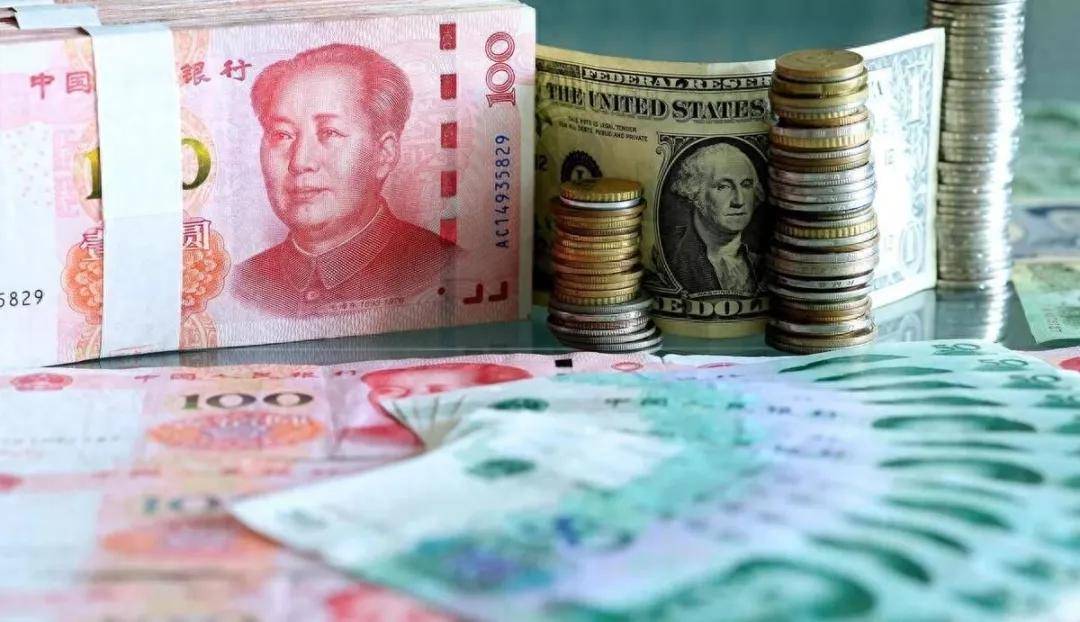
Core Viewpoint - The depreciation of the RMB is under significant pressure due to the ongoing US-China trade war and Federal Reserve policies, marking the largest strain since the 2008 financial crisis [1][4]. Impact on Import Costs - The depreciation of the RMB against the USD directly increases the import costs of commodities such as oil and iron ore, with a 1% depreciation leading to a cost increase of 0.8-1.2% [4]. - In 2024, China's reliance on foreign oil is projected to reach 73%, resulting in a 15% year-on-year increase in procurement costs for energy companies, which will compress profit margins in sectors like petrochemicals and aviation [4]. - High-tech product imports, including chips and precision instruments, will also see a cost increase, with companies like SMIC facing a 12% rise in procurement costs for technical equipment [4]. Inflationary Pressures - The depreciation of the RMB is expected to cause the food and consumer goods import price index to rise by 6.3%, with essential items like beef and milk powder experiencing price increases of up to 9.8% [5]. - The Consumer Price Index (CPI) in China is projected to rise by 3.5% year-on-year in 2024, exceeding the central bank's 3% warning line, complicating monetary policy balancing between growth and inflation control [6]. Debt Implications - The depreciation of the RMB increases the repayment costs for companies and local governments with foreign debt, with a 5% depreciation translating to an additional $140 billion in debt servicing costs for the $2.8 trillion foreign debt [8][9]. - Real estate companies, such as Country Garden and Vanke, are particularly affected, with the proportion of dollar-denominated debt interest payments rising from 12% to 19%, exacerbating cash flow challenges [9]. Capital Outflow Risks - Continuous RMB depreciation poses risks of capital outflow, as foreign investment may decline and domestic capital may seek higher returns in USD-denominated assets, especially given the current high US Federal Reserve interest rates [10]. Export Dynamics - While RMB depreciation theoretically enhances export competitiveness, it may lead to a reliance on low-end manufacturing, with high-tech product export share declining by 2.3 percentage points to 28.7% in 2024 [11]. - The withdrawal of foreign R&D centers and a shift in investment towards Southeast Asia by companies like BMW and Tesla indicate a potential decline in foreign investment attractiveness due to currency volatility [11]. Structural Changes and Future Outlook - Historical trends suggest that significant currency adjustments often accompany industrial upgrades, and the current low point of the RMB may represent a pivotal moment for China to advance beyond the middle-income trap and into higher value chains [12]. - Short-term challenges are anticipated as the economy adjusts to these changes, necessitating innovation and a robust domestic supply chain to enhance resilience against external shocks [12][13].