
公司治理

Search documents
中国银行完成公司章程修订,已获国家金融监督管理总局核准
Xin Lang Cai Jing· 2025-09-25 11:52
据悉,经国家金融监督管理总局核准修订后的公司章程全文,可在上海证券交易所网站 中国银行于2025年9月25日发布公告称,其2024年年度股东大会于6月27日审议批准了修订《中国银行股 份有限公司章程》的议案。近日,该行已收到国家金融监督管理总局核准公司章程修订的批复。 责任编辑:小浪快报 (www.sse.com.cn)和中国银行网站(www.boc.cn)查阅。此次公司章程的修订,标志着中国银行在公 司治理层面的进一步完善,后续其或基于新章程在经营管理等方面展开相应布局,值得市场关注。 点击查看公告原文>> 声明:市场有风险,投资需谨慎。 本文为AI大模型基于第三方数据库自动发布,任何在本文出现的信 息(包括但不限于个股、评论、预测、图表、指标、理论、任何形式的表述等)均只作为参考,不构成 个人投资建议。受限于第三方数据库质量等问题,我们无法对数据的真实性及完整性进行分辨或核验, 因此本文内容可能出现不准确、不完整、误导性的内容或信息,具体以公司公告为准。如有疑问,请联 系biz@staff.sina.com.cn。 ...

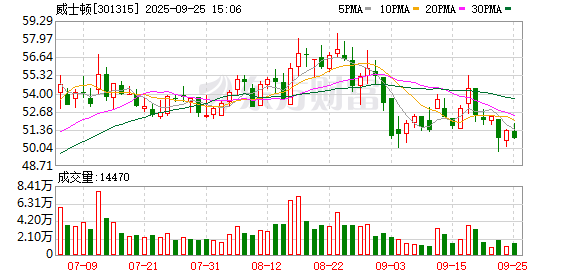
威士顿:公司会持续提高经营水平,增强综合竞争力,规范公司治理
Zheng Quan Ri Bao· 2025-09-25 07:05
Core Viewpoint - The company aims to continuously improve its operational standards, enhance its overall competitiveness, and standardize corporate governance to ensure that its stock price reflects its value and growth potential [2] Group 1 - The company announced on September 25 that it will focus on improving operational levels [2] - The company emphasizes the importance of enhancing comprehensive competitiveness [2] - The company is committed to standardizing corporate governance practices [2]

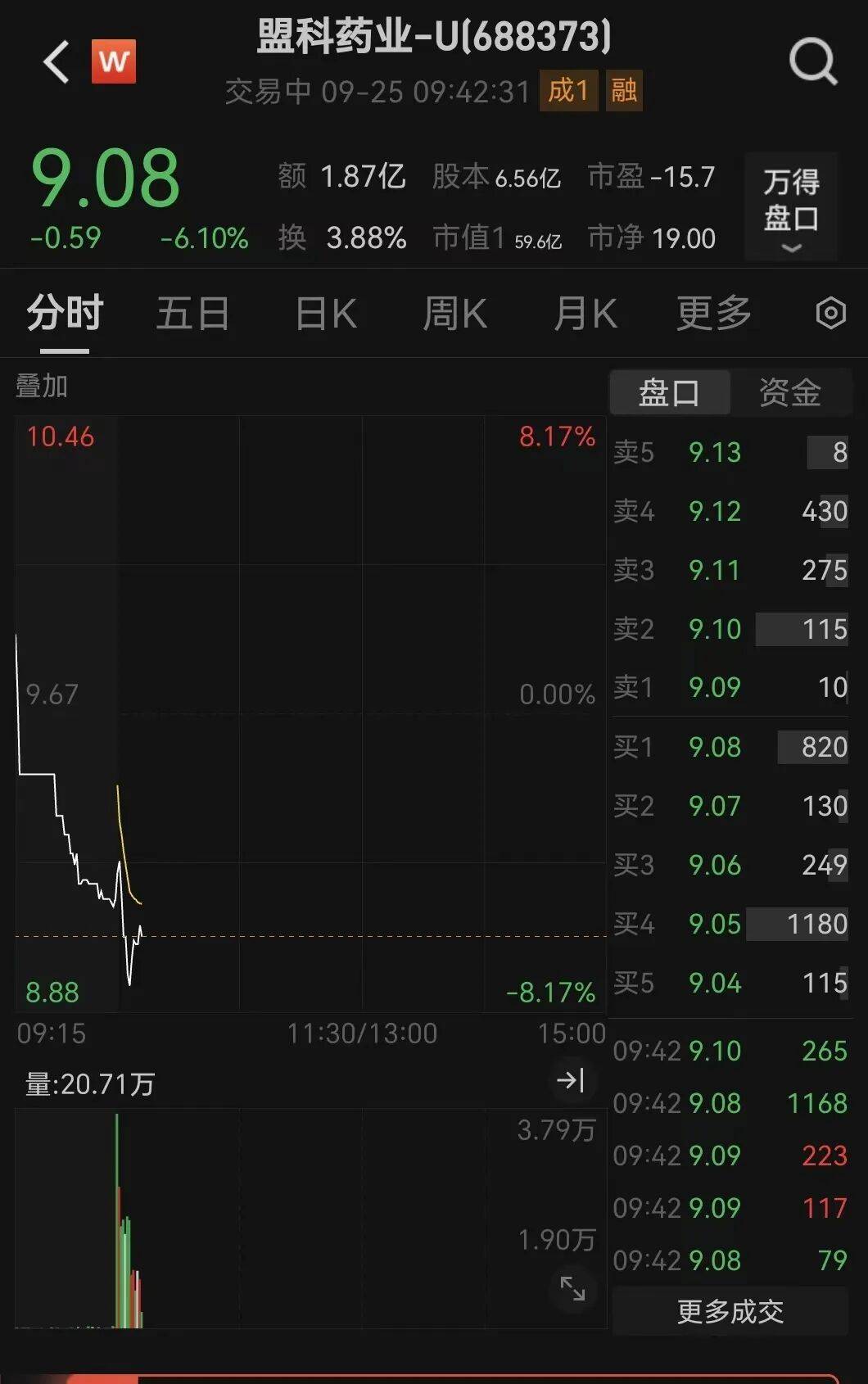
刚刚,688373大跌!“开战了”,第一大股东强势反击!提请罢免董事长等3名董事,并公开征集投票权反对部分议案
中国基金报· 2025-09-25 02:17
Core Viewpoint - The largest shareholder of Amgen Pharmaceuticals, Genie Pharma, has initiated a strong counteraction by proposing the removal of the chairman and three directors, while also publicly soliciting voting rights to oppose several resolutions at the upcoming shareholder meeting [2][6]. Group 1: Shareholder Actions - Genie Pharma voted against multiple resolutions at the extraordinary general meeting scheduled for 2025, including a proposed capital increase [2]. - Genie Pharma has proposed to remove ZHENGYU YUAN (the current chairman and general manager) and three other directors, while nominating three new candidates for the board [2][6]. - The company has been without a controlling shareholder or actual controller since its listing in August 2022, with Genie Pharma and Amgen Hong Kong being the two largest shareholders [2][17]. Group 2: Financial Performance - Amgen Pharmaceuticals has faced significant financial challenges, with net cash flow from operating activities showing negative figures from 2022 to mid-2025, totaling -2.4 billion, -3.29 billion, -4.47 billion, and -1.21 billion respectively [6]. - The company's revenue has increased over the years, but net profit losses have also expanded, with cumulative losses exceeding 1.3 billion from 2021 to 2024 [6]. - As of June 2025, the company's asset-liability ratio reached approximately 60%, and its net assets have decreased by 74.19% since its listing [9]. Group 3: Governance Issues - Genie Pharma criticized ZHENGYU YUAN for failing to fulfill his responsibilities, leading to long-term losses and the risk of delisting [6][9]. - The company has experienced significant delays in the progress of its IPO fundraising projects, which has adversely affected its operations [10]. - There are concerns regarding the strategic investment choices made by the company, particularly in relation to its collaboration with Haiqing Pharmaceuticals, which has faced regulatory penalties [12][14].


刚刚,688373大跌!“开战了”,第一大股东强势反击!提请罢免董事长等3名董事,并公开征集投票权反对部分议案
Sou Hu Cai Jing· 2025-09-25 02:01
Core Viewpoint - Genie Pharma, the largest shareholder of Amgen Pharmaceuticals, has initiated a strong counteraction by proposing the removal of the chairman and two other directors, while also publicly soliciting voting rights to oppose several resolutions at the upcoming shareholder meeting [1][6]. Group 1: Shareholder Actions - Genie Pharma voted against multiple resolutions, including a capital increase proposal, at the upcoming shareholder meeting scheduled for 2025 [1]. - The proposal includes the removal of ZHENGYU YUAN (Yuan Zhengyu), the current chairman and general manager, along with two other directors, and the election of three new directors [1][6]. - Genie Pharma's actions are a response to perceived failures in governance and management, particularly regarding the company's financial performance and operational decisions [6][12]. Group 2: Financial Performance - Amgen Pharmaceuticals has reported significant financial losses since its IPO, with cumulative losses exceeding 1.3 billion yuan from 2021 to 2024 [6][9]. - The company's revenue has shown growth, from 7.66 million yuan in 2021 to 130 million yuan in 2024, but net profit losses have also increased, reaching 441 million yuan in 2024 [6][9]. - As of June 2025, the company's asset-liability ratio has risen to approximately 60%, with net assets declining by 74.19% since its listing [9]. Group 3: Strategic Concerns - Genie Pharma has raised concerns about the delayed progress of IPO fundraising projects, which has hindered the company's operational expectations [9]. - The company has faced challenges in meeting financing conditions, leading to a loss of financing capabilities [9]. - There are concerns regarding the strategic partnership with Haiqing Pharmaceuticals, which has faced regulatory penalties, raising questions about compliance and business viability [10][12].
金正大生态工程集团股份有限公司第六届董事会第十三次会议决议公告
Shang Hai Zheng Quan Bao· 2025-09-24 21:28
Meeting Details - The 13th meeting of the 6th Board of Directors of Jinzhengda Ecological Engineering Group Co., Ltd. was held on September 24, 2025, in Shandong Province, with all 9 directors present [2][3] - The meeting was convened in accordance with the Company Law of the People's Republic of China and the company's articles of association [2] Resolutions Passed - The appointment of Mr. Yang Gongqing as the Chief Executive Officer (CEO) was approved, with a term lasting until the end of the current board's term [3] - The appointment of Ms. Hao Ailing as the financial officer was also approved, with a similar term [4] - A proposal to provide guarantees for the financing of subsidiaries was approved and will be submitted to the second extraordinary general meeting of shareholders in 2025 for review [4][5] - The decision to convene the second extraordinary general meeting of shareholders in 2025 was approved [6][7] Financial Guarantees - The company plans to provide guarantees for the financing needs of its wholly-owned subsidiaries, Guizhou Jinzhengda and Liaoning Jinzhengda, with a total maximum guarantee amount of 110 million RMB [12][15] - The financial risk associated with these guarantees is considered controllable and beneficial for the subsidiaries' operations [15] Shareholder Meeting Notification - The second extraordinary general meeting of shareholders is scheduled for October 21, 2025, with provisions for both on-site and online voting [18][19] - Shareholders must register by October 13, 2025, to participate in the meeting [21][26]

广东纬德信息科技股份有限公司
Shang Hai Zheng Quan Bao· 2025-09-24 20:45
Group 1 - The company has proposed to reappoint Tianjian Accounting Firm as the auditor for the fiscal year 2025, ensuring continuity and stability in audit work [2][53][74] - The board of directors and the supervisory board have both approved the proposal to reappoint Tianjian Accounting Firm, which will be submitted for shareholder approval [8][9][75] - The audit fees for 2024 were set at 800,000 yuan, with 600,000 yuan for financial report auditing and 200,000 yuan for internal control auditing [7] Group 2 - Tianjian Accounting Firm has a good investor protection capability, with a cumulative compensation limit exceeding 200 million yuan for professional risk funds and insurance [3] - The firm has faced four administrative penalties and 13 supervisory measures in the past three years, but has not faced criminal penalties [4] - The firm and its partners have maintained independence and have not faced any situations that could affect their independence [6][7] Group 3 - The company will hold its first extraordinary general meeting of 2025 on October 10, 2025, to discuss the reappointment of the accounting firm and other matters [12][69] - The meeting will be conducted both in-person and online, with specific voting procedures outlined for shareholders [13][15] - The company aims to enhance service for small and medium investors by providing reminders for the meeting and voting [16]

出清问题公司与精准问责并行 港股市场生态持续优化
Shang Hai Zheng Quan Bao· 2025-09-24 19:46
Wind数据显示,截至9月23日,已有42家港股公司退市,其中20家企业被取消上市地位,20家企业完成 私有化,2家企业自愿撤回上市地位 ◎记者 唐燕飞 在出清绩差公司的同时,香港监管系统也在持续加强对失职个人,尤其是上市公司高管的问责力度。 截至9月23日,今年港股市场迎来了64家IPO企业。与此同时,42家港股公司退市,退市企业数量约为 IPO数量的66%,港股市场"有进有退"的良性循环格局正在形成。 9月11日,中国普甜食品控股有限公司(下称"普甜食品")被取消上市地位。普甜食品退市根源可追溯 至内部的"致命伤"。2023年3月29日,普甜食品公告称延迟刊发2022年业绩报告,并发出盈利警告。延 迟刊发业绩报告的原因是公司需要更多时间处理审计师提出的未决要求,包括预期信贷亏损拨备统计 等。普甜食品未能解决审计机构的疑虑,是其停牌乃至退市的直接原因。 年内被港交所取消上市地位的还包括凯升控股、中国恒大、诺发集团、常满控股、中泛控股、西王特钢 等。"这些被强制退市公司有一些共性,如财务与合规持续恶化,无法满足持续上市的财务标准;信息 披露缺失,未能按期披露定期报告或重大事项;股价长期低迷,流动性趋于枯竭;治 ...
ST宏达修订《公司章程》及部分治理制度,完善公司治理体系
Xin Lang Cai Jing· 2025-09-24 10:46
Core Viewpoint - ST Hongda has announced the revision of its Articles of Association and the establishment of certain governance systems to enhance its corporate governance structure and protect the rights of shareholders [1][3]. Summary by Sections Articles of Association Revision - The company has changed its registration authority from Jiangsu Province's Zhenjiang Administration for Industry and Commerce to Shanghai Municipal Market Supervision Administration [2]. - The registered address has been updated to a new location in Shanghai [2]. - The legal representative can now be either the chairman or the general manager, with changes requiring a majority resolution from the board of directors [2]. - Minor adjustments have been made to the description of the share capital structure [2]. - Financial assistance conditions for acquiring shares of the company or its parent company have been clarified, with a limit of 10% of the total issued share capital [2]. Governance System Revisions - The company has revised and established 19 governance systems, including the Rules of Procedure for Shareholders' Meetings and the Rules of Procedure for Board Meetings [3]. - Special resolutions require approval from more than two-thirds of the voting shares held by shareholders present at the meeting [3]. - The revisions aim to improve the governance structure and operational standards of ST Hongda, ensuring the protection of the company's and shareholders' legal rights [3].

永安药业多项举措完善公司治理,经营范围与组织架构迎来调整
Xin Lang Cai Jing· 2025-09-24 10:45
Core Points - Yong'an Pharmaceutical Co., Ltd. announced adjustments to its business scope and board composition to enhance governance efficiency and adapt to operational needs [1][2] - The company plans to expand its business scope to include drug wholesale, import and export, and production and sales of pharmaceutical excipients, among other activities [1] - The board of directors will increase from 6 to 7 members, adding one employee representative director and one vice chairman, while the supervisory board will be abolished [1][2] Business Scope Adjustments - The previous business scope included the production and sales of APIs, food additives, and feed additives, as well as self-produced and sold products like ethylene oxide [1] - The new scope will include licensed projects such as drug wholesale and pharmaceutical excipients, along with general projects like chemical product production and technical services [1] Governance Enhancements - The company will revise parts of its articles of association, including increasing the number of board members and abolishing the supervisory board [1][2] - Eleven governance documents will be revised or established, including rules for shareholder meetings and board meetings, with three requiring shareholder approval [2]

炼石航空科技股份有限公司 董事会决议公告
Zhong Guo Zheng Quan Bao - Zhong Zheng Wang· 2025-09-24 04:24
Group 1 - The board of directors of Lian Stone Aviation Technology Co., Ltd. held its 20th meeting of the 11th session via telecommunication, with all 9 directors participating in the vote [1][3] - The board approved the nomination of Xiang Yongli as an independent director candidate to replace Li Bingxiang, who resigned after serving for 6 years [1][2] - The independent director candidate Xiang Yongli has committed to complete the required training and obtain certification recognized by the Shenzhen Stock Exchange [1][2] Group 2 - The board also approved a proposal to amend the company's articles of association to enhance corporate governance, in compliance with relevant laws and regulations [6][30] - The proposal to amend the articles of association will be submitted for approval at the upcoming extraordinary general meeting of shareholders [4][8] - The board decided to convene the third extraordinary general meeting of shareholders on October 10, 2025, to review the aforementioned proposals [8][11] Group 3 - The meeting will be held both in-person and via online voting, with specific voting times outlined for shareholders [12][21] - The record date for shareholders to attend the meeting is set for September 26, 2025 [13] - The meeting will take place at the company's conference room located in Chengdu, Sichuan Province [16]
