全面从严治党

Search documents
省政府党组(扩大)会议召开刘小涛主持
Xin Hua Ri Bao· 2025-10-10 23:35
Group 1 - The meeting emphasized the importance of implementing the significant tasks assigned to Jiangsu by General Secretary Xi Jinping, focusing on practical governance and effective execution of government work [1][2][3] - The government aims to enhance its capabilities in modern governance of religious affairs and deepen the "team-based" aid model for Xinjiang, aligning with local needs and leveraging Jiangsu's strengths [1][2] - There is a commitment to advancing ecological civilization reforms, promoting green and low-carbon production and lifestyle, and enhancing the quality of education and research in higher institutions [2][3] Group 2 - The government is dedicated to strengthening its internal construction by adhering to principles of loyalty, serving the people, pragmatism, and integrity, while maintaining alignment with the central leadership [3] - A focus on practical results and addressing public concerns is highlighted, with an emphasis on implementing reforms and development tasks effectively [3] - The meeting underscored the importance of strict governance and integrity within the political ecosystem of the government, ensuring compliance with party regulations and laws [3]
省委理论学习中心组举行学习会专题学习《习近平谈治国理政》第五卷持续增强学思想悟思想用思想的自觉性坚定性切实把学习成果转化为推动高质量发展的新成效信长星主持并讲话
Xin Hua Ri Bao· 2025-10-10 23:35
Core Points - The meeting emphasized the importance of studying "Xi Jinping's Thoughts on Socialism with Chinese Characteristics for a New Era" Volume Five as a key resource for understanding the party's latest achievements in promoting the modernization of Marxism in China [1][2] - The discussions highlighted the need to integrate the insights from Volume Five with previous volumes and Xi Jinping's directives for Jiangsu, focusing on practical applications to enhance high-quality development [3] Group 1 - The meeting was chaired by the Provincial Secretary, Xin Changxing, who underscored the significance of the volume in reflecting the party's contributions to building a community with a shared future for mankind [1] - Xin Changxing called for a deeper understanding of the strategic deployment of Chinese-style modernization outlined in Volume Five, emphasizing the importance of enhancing new productive forces and promoting common prosperity [2] - The need for a comprehensive understanding of Marxist principles as presented in Volume Five was stressed, aiming to improve the capabilities of officials in driving high-quality development and serving the public [2] Group 2 - The integration of learning from all five volumes of Xi Jinping's thoughts is essential, with a focus on practical application and continuous education for party members and officials [3] - The meeting aimed to transform learning outcomes into tangible results that contribute to Jiangsu's high-quality development [3]
乌兰被查,湖南省委:坚决拥护、完全赞成
Xin Jing Bao· 2025-10-10 02:00
10月9日消息,湖南省人大常委会党组书记、副主任乌兰被查。 会议强调,要增强反腐败斗争的政治定力,始终保持"两个永远在路上"的坚韧和执着,发扬彻底的自我 革命精神,坚决同一切违纪违法行为和腐败现象作斗争,不断拓展反腐败斗争的广度深度,以实际行动 深刻领悟"两个确立"的决定性意义、坚决做到"两个维护"。要扎实抓好以案促改促建促治工作,深挖全 省党的建设中存在的"病灶",以点带面、举一反三,持续推进突出问题专项整治,教育引导党员干部从 反面典型案件中受到警醒,筑牢拒腐防变的堤坝;坚持"当下改"与"长久立"相结合,进一步扎紧扎牢制 度笼子,健全风腐同查同治机制,不断提升腐败治理效能。要教育引导各级领导干部保持清正廉洁的政 治本色,以敬畏之心对待党纪国法,严格遵守廉洁从政各项规定,带头树立正确的权力观、政绩观,自 觉净化社交圈、生活圈、朋友圈,认真贯彻执行中央八项规定及其实施细则精神,严格教育管好亲属和 身边工作人员,当好良好政治生态和社会风气的引领者、营造者、维护者。全省各级党组织要自觉扛牢 管党治党政治责任,严明政治纪律和政治规矩,严肃党内政治生活,持之以恒净化政治生态,推动管党 治党责任层层传导、全面压实。 湖 ...
笔谈丨督促民生实事落到实处
Zhong Yang Ji Wei Guo Jia Jian Wei Wang Zhan· 2025-10-09 00:59
Core Viewpoint - The articles emphasize the importance of addressing corruption and misconduct at the grassroots level to maintain the integrity of governance and protect the interests of the public [1][2][3] Group 1: Supervision and Accountability - The focus is on accurately identifying issues related to corruption and misconduct, with a call for enhanced supervision that targets the concerns of the public [1] - A systematic approach is required to ensure that responsibilities are clearly defined among party committees, disciplinary inspection commissions, and functional departments [2] - Establishing a clear responsibility list and regular reporting mechanisms is essential for effective oversight and accountability [2] Group 2: Implementation and Effectiveness - The establishment of task, responsibility, and issue lists is crucial for effective problem-solving and management [3] - Utilizing information technology for data analysis can help in identifying irregularities in fund flows, supporting the investigation of fraudulent activities [3] - An open rectification mechanism and an "Internet + Supervision" platform are proposed to enhance transparency and broaden the sources of problem reporting [3]
实践与思考丨构建系统集成协同高效监督体系
Zhong Yang Ji Wei Guo Jia Jian Wei Wang Zhan· 2025-10-08 23:49
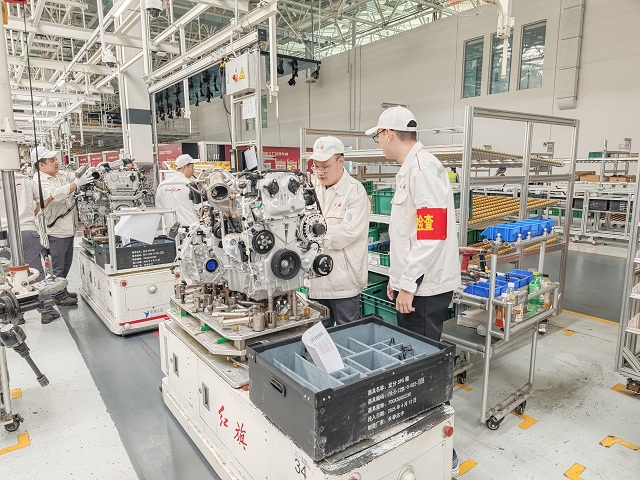
Core Viewpoint - The article emphasizes the importance of enhancing the supervision system of the Party and the state, with a focus on internal Party supervision as the leading force to ensure consistent leadership and oversight throughout the organization [1][2]. Group 1: Internal Supervision - Internal Party supervision is identified as the guiding principle for various types of oversight, ensuring that other supervisory bodies can effectively fulfill their roles [2]. - The supervisory group at China FAW Group Corporation is focused on strengthening Party leadership and implementing political responsibilities, enhancing the effectiveness of comprehensive supervision [1][2]. - The group is tasked with correcting deviations and establishing a leadership team for Party conduct and anti-corruption efforts, regularly analyzing the situation and organizing meetings to promote integrity [3][4]. Group 2: Accountability and Responsibility - The supervisory group emphasizes the need to hold key individuals accountable, ensuring that Party committees actively engage in internal supervision responsibilities [4][5]. - A joint working mechanism between the enterprise Party committee and the supervisory group is established to ensure accountability at all levels, with a focus on clear responsibilities and regular assessments [5][6]. - The group promotes a culture of accountability through regular reporting and analysis of responsibilities among leadership members [4][5]. Group 3: Collaborative Supervision - The article discusses the integration of various supervisory functions, including disciplinary, inspection, and stationed supervision, to create a cohesive oversight framework [6][7]. - The supervisory group aims to enhance collaboration with local disciplinary committees and other regulatory bodies to improve the effectiveness of oversight [7][8]. - A digital supervision platform is being developed to identify potential risks and ensure that supervision aligns closely with business operations [7][8]. Group 4: Training and Development - The supervisory group is committed to enhancing the political and professional capabilities of its members through targeted training programs [13][14]. - Emphasis is placed on the importance of theoretical education to ensure loyalty and reliability within the supervisory team [14][15]. - The group aims to create a supportive environment for its members, enhancing their sense of honor and belonging while maintaining strict oversight [15].


太湖局召开局务会议安排部署2025年四季度重点任务
Shui Li Bu Wang Zhan· 2025-09-30 15:24
Core Points - The meeting held by the Taihu Bureau focused on summarizing the third quarter's work and planning for key tasks in the fourth quarter [1][2] - Significant progress was reported in the implementation of key tasks, with some important breakthroughs achieved [2] Summary by Sections Third Quarter Work Progress - The Taihu Bureau has effectively advanced various key tasks as per the national water conservancy work conference directives, with notable achievements reported [2] Key Tasks for Fourth Quarter - The Bureau emphasized the need to implement the work plan based on Minister Li Guoying's instructions and the digital twin water conservancy system construction, with a report due to the Ministry of Water Resources by year-end [2] - Ensuring flood and water supply safety in the basin is a priority, with a focus on disaster prevention, typhoon defense, blue-green algae monitoring, and water supply security [2] - Accelerating the construction of key projects such as the Taihu treatment project and urging progress on the Taipu River and Wangyu River dredging projects [2] - Implementing the "four unifications" in basin management, adjusting the coordination mechanism for Taihu, and completing annual key tasks related to water resource management and rural water conservancy [2] - Strengthening institutional capacity, compiling the "Taihu Continuation Chronicle (2011-2025)," and developing the "14th Five-Year" water conservancy technology innovation plan [2] - Promoting strict governance within the party and ensuring the implementation of the responsibility list for strict governance [2] - Planning for the "14th Five-Year" period and key tasks for 2026 in preparation for the annual work meeting [2]
省委理论学习中心组进行集体学习
Da Zhong Ri Bao· 2025-09-30 01:05
Core Points - The meeting emphasized the importance of studying "Xi Jinping: The Governance of China, Volume Five" as a significant political task to enhance the understanding of Xi Jinping's thoughts and strengthen the party's theoretical foundation [2][3] - The discussions highlighted the need to grasp the latest achievements of Marxism in the context of Chinese modernization and the strategic deployment of high-quality development [3] Group 1 - The meeting was held on September 29, focusing on the collective study of "Xi Jinping: The Governance of China, Volume Five" to deepen the understanding of Xi Jinping's thoughts [2] - The meeting was chaired by Provincial Secretary Lin Wu, with participation from key members including Zhou Naixiang and Wang Yuyan [2] - The volume is described as an authoritative work that reflects the latest achievements of Xi Jinping's thoughts on socialism with Chinese characteristics [2] Group 2 - The meeting stressed the importance of internalizing and externalizing the principles of people-centered development, self-confidence, innovation, and problem-oriented approaches [3] - It called for a focus on the strategic deployment of Chinese-style modernization, emphasizing high-quality development and comprehensive deepening of reforms [3] - The meeting also highlighted the need for strict party governance, political supervision, and anti-corruption measures to create a clean political environment [3]
经典常谈丨一定要不断锤炼党性
Zhong Yang Ji Wei Guo Jia Jian Wei Wang Zhan· 2025-09-30 00:04
Group 1 - The core viewpoint emphasizes the importance of party character and discipline in maintaining unity and authority within the party, as highlighted by Xi Jinping [1] - The historical context of party character is rooted in Marx's writings, which stress the significance of a unified proletarian stance and the necessity of a strong party spirit for effective revolutionary action [1][2] - Engels critiques the lack of a proletarian class stance in certain socialist ideologies, asserting that a scientific theoretical foundation is essential for genuine revolutionary progress [2] Group 2 - The concept of party character is seen as a stabilizing force for the proletarian party, ensuring a consistent revolutionary direction and strong commitment among its members [3] - Lenin further develops the idea of party character, advocating for a centralized and disciplined revolutionary party, contrasting it with more fragmented political movements [3][4] - The Chinese Communist Party embodies the characteristics of a Marxist party, emphasizing the importance of party character education and the maintenance of its advanced and pure nature throughout its history [4] Group 3 - In the current era, the party faces complex international and domestic challenges, necessitating a focus on party character to enhance cohesion and effectiveness in governance [5] - Xi Jinping's assertion that issues of work style fundamentally relate to party character underscores the critical nature of this concept in contemporary political practice [5] - The call for deepening theoretical understanding and practical engagement in modernization efforts reflects a commitment to reinforcing party character and discipline among members [5]
南京市委表态
Xin Jing Bao· 2025-09-29 02:48
Core Points - The article reports the expulsion of Long Xiang, former Secretary of the Nanjing Municipal People's Congress, from the Party and public office due to serious violations of discipline and law [1] - The decision reflects the central government's commitment to strict governance and anti-corruption measures, emphasizing the Party's stance against corruption [1][2] - The meeting highlighted the need for all levels of leadership to learn from Long Xiang's case and strengthen their anti-corruption mindset [2][3] Group 1 - The expulsion of Long Xiang demonstrates the Party's firm attitude towards corruption and the importance of maintaining political integrity [1][2] - The meeting called for leaders to self-reflect on their understanding of self-revolution and to address personal shortcomings with courage [2] - Emphasis was placed on the necessity of adhering to political discipline and maintaining a clean lifestyle among Party members [2] Group 2 - The meeting reiterated the importance of prioritizing political construction and promoting the core values of Xi Jinping's thought among Party members [3] - There is a strong focus on continuing the anti-corruption campaign and enhancing supervision of key individuals within the Party [3] - The need for effective rectification of issues identified in inspections and a commitment to accountability at all levels of governance was stressed [3]
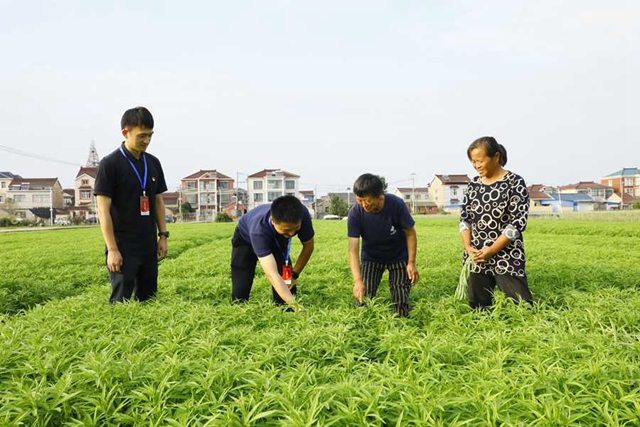
南京上下联动提级巡察重点村居推动全面从严治党向基层延伸
Zhong Yang Ji Wei Guo Jia Jian Wei Wang Zhan· 2025-09-29 00:15
Core Viewpoint - The article emphasizes the importance of enhancing inspection and oversight mechanisms at the grassroots level in Nanjing, Jiangsu Province, to address corruption and improve governance in rural communities, aligning with the central government's directives for comprehensive party discipline and rural revitalization [2][12]. Group 1: Inspection Mechanisms - Nanjing has organized seven inspection teams to conduct elevated inspections in 26 economically significant rural communities, aiming to extend strict party governance to the grassroots level [3][5]. - The inspection teams are composed of experienced personnel, including 16 leaders from the disciplinary inspection and supervision teams, to ensure effective oversight and problem identification [5][6]. - A total of 1,437 materials were collected from various departments to inform the inspection process, ensuring a comprehensive understanding of the local issues [6][11]. Group 2: Problem Identification and Resolution - The inspection teams utilized various methods, such as surveys and community engagement, to enhance public awareness and participation in the inspection process, receiving 232 complaints and conducting 917 visits [7][8]. - Specific issues identified include improper collection of construction deposits by village committees, leading to immediate corrective actions to halt such practices and refund the collected amounts [8][10]. - The inspections have led to disciplinary actions against officials involved in misconduct, reinforcing a zero-tolerance approach to corruption [9][10]. Group 3: Continuous Improvement and Accountability - Nanjing has established a "four-level accountability" mechanism to ensure that inspection findings are addressed at all levels of governance, with city leaders directly overseeing the implementation of corrective measures [10][12]. - The city is focusing on enhancing the management of collective economic resources and improving the governance capabilities of village committees through targeted recommendations and systemic reforms [11][14]. - The inspections aim to create a feedback loop where issues are not only identified but also systematically addressed, promoting a culture of accountability and continuous improvement in rural governance [12][13].