免费学前教育

Search documents
保教费减免,山东1.9万所大班幼儿先受益
Qi Lu Wan Bao· 2025-08-07 21:11
Core Viewpoint - The Chinese government is set to gradually implement free preschool education, starting with the exemption of care and education fees for children in their final year of preschool from the fall semester of 2025, which is expected to benefit families financially and promote birth rates [1][2]. Group 1: Policy Implementation - The policy will initially exempt care and education fees for children in the final year of preschool, directly benefiting approximately 12 million children in the upcoming fall semester [3]. - The financial impact of this policy is significant, with an expected increase in national fiscal expenditure of about 20 billion yuan for the current semester, which will correspondingly reduce family expenses by the same amount [3]. Group 2: Financial Details - For example, if a private preschool charges 600 yuan per month for care and education, and a public preschool charges 300 yuan, after the policy implementation, children in public preschools will not have to pay the fee, while those in private preschools will only need to pay the difference of 300 yuan [2]. - The policy will not cover additional fees such as bedding and meal costs, which will still need to be paid according to the preschool's standards [2]. Group 3: Future Considerations - There are discussions about the potential expansion of the fee exemption to cover all three years of preschool education, but this will require time and specific conditions to be met [3]. - The implementation of this policy is seen as a small step towards broader educational equity, with future improvements aimed at ensuring all children have equal access to preschool education funding [3].
免费学前教育来了,专家:财政资金的保障落实是关键
Xin Jing Bao· 2025-08-07 19:33
8月7日,国新办在国务院政策例行吹风会上介绍,国家统一实施的免保育教育费政策覆盖所有幼儿园大 班儿童,预计今年秋季学期将惠及约1200万人。后续将适时研究完善政策措施,让更多孩子享受到政策 红利。这一政策有何现实意义?免费学前教育在执行中可能面对的困难有哪些?新京报记者采访专家进 行解读。 免除公办幼儿园学前一年保教费 《意见》明确了推行一年免费学前教育政策。从2025年秋季学期起,免除公办幼儿园学前一年在园儿童 保育教育费。财政部副部长郭婷婷介绍,综合考虑我国国情,坚持尽力而为、量力而行,从幼儿园大班 开始免保育教育费,确保政策可持续。保育教育费占家庭学前教育总支出的比例较高,免除费用后,家 庭的教育支出将有效降低。仅今年秋季一个学期,全国财政将增加支出约200亿元,相应减少家庭支出 200亿元。 "考虑存在幼儿转学等情况,为了政策实施的可操作性以及公平性,将免费年份确定为入学的第三年是 一个较适当的时段。"中国教科院教育战略和宏观政策研究所所长、研究员吴霓提到。 免费的金额如何计算?北京青年政治学院学前教育学院副院长张浩然表示,各个地区的免费金额标准不 一样,要看当地政府制定的公办园收费标准。以北京为例, ...
【政策把脉】稳推免费学前教育 释放人口质量红利
Zheng Quan Shi Bao· 2025-08-07 18:41
Core Viewpoint - The Chinese government is gradually implementing free preschool education policies, marking a significant transition from "basic popularization" to "high-quality and inclusive" education, with over 90% gross enrollment rate achieved in preschool education [1][2]. Group 1: Policy Implementation - The key points for the gradual implementation of free preschool education include strengthening universal access, with coverage expected to reach approximately 12 million children starting from the fall semester of 2025 [2]. - The approach emphasizes a steady and orderly progression, ensuring sustainability while continuously researching and refining policy measures [2]. - Increased government investment is planned to reduce family education expenses, with a focus on precise financial support shared between central and local governments [2]. Group 2: Educational Impact - Preschool education is viewed as the "first button" of the national education system, serving as a barometer for public welfare and a catalyst for population quality [2]. - The initiative is not merely an expansion of educational benefits but aligns with the strategy of building a strong education system, addressing public expectations for affordable and quality upbringing, and connecting with global educational trends [2]. - The core value lies in transforming educational equity into a driving force for demographic quality dividends through institutional breakthroughs [2].
【政策把脉】 稳推免费学前教育 释放人口质量红利
Zheng Quan Shi Bao· 2025-08-07 18:27
Core Viewpoint - The Chinese government is gradually implementing free preschool education policies, marking a significant transition from "basic popularization" to "high-quality and inclusive" education, with over 90% gross enrollment rate achieved in preschool education [1][2] Group 1: Policy Implementation - The key points for the gradual implementation of free preschool education include strengthening universal access, with coverage expected to reach approximately 12 million children by the fall semester of 2025 [2] - The approach emphasizes a steady and orderly progression, ensuring sustainability while continuously researching and improving policy measures [2] - Increased government investment is aimed at reducing family education expenses through a "plus" in government funding [2] - Financial support will be precisely allocated, with funding shared between central and local governments [2] Group 2: Educational Impact - Preschool education is viewed as the "first button" of the national education system, serving as a barometer for public welfare and a catalyst for population quality [2] - The move towards free preschool education is not merely an expansion of educational benefits but aligns with the strategy of becoming an education powerhouse and addresses public expectations for affordable and quality upbringing [2] - The core value lies in transforming educational equity into a driving force for demographic quality dividends through institutional breakthroughs [2]
免保育教育费政策今年秋季学期实施 预计惠及1200万幼儿园大班儿童
Zheng Quan Shi Bao· 2025-08-07 18:22
Group 1 - The core viewpoint of the news is the introduction of a gradual implementation of free preschool education policy starting from the autumn semester of 2025, which will exempt public kindergarten senior class children from care education fees and provide corresponding reductions for private kindergarten children [1][2] - The policy is expected to benefit approximately 12 million children in the upcoming autumn semester [1][2] - The financial support for the policy will be jointly borne by central and local finances, with the central government covering 80%, 60%, and 50% of the costs for western, central, and eastern regions respectively [2] Group 2 - The Ministry of Finance has already allocated the necessary funds for the central government's share of the care education fee subsidies, which will be distributed soon [2] - The policy aims to reduce the financial burden on families regarding childbirth, upbringing, and education costs, as part of a broader initiative to create a family-friendly society [3]
免费学前教育补助资金央地共担
Bei Jing Shang Bao· 2025-08-07 15:27
8月7日,在国新办举行的国务院政策例行吹风会上,财政部副部长郭婷婷表示,国家统一实施的免保育 教育费政策覆盖所有幼儿园的大班儿童,预计今年秋季学期将惠及约1200万人。同时,后续还将统筹考 虑学龄人口变化、财力状况等因素,研究适时完善免费政策。免费学前教育逐步推行。 郭婷婷在会上介绍,国家统一实施的免保育教育费政策覆盖所有幼儿园的大班儿童,预计今年秋季学期 将惠及约1200万人。同时,鼓励各省结合实际巩固落实家庭经济困难儿童等群体的资助政策,做好兜底 保障。 郭婷婷还介绍,逐步推行免费学前教育是以政府投入的"加法",来实现家庭教育支出的"减法"。保育教 育费占家庭学前教育总支出的比重比较高,免除费用后,家庭的教育支出将有效降低。经测算,仅今年 秋季一个学期,全国财政将增加支出大约200亿元,相应减少家庭支出200亿元。 关于中央与地方分担免保育教育费财政补助资金情况,财政部科教和文化司司长许留庆表示,国务院办 公厅印发的《关于逐步推行免费学前教育的意见》明确,对因免保育教育费导致幼儿园收入减少的部 分,由财政对幼儿园予以补助,所需资金由中央财政和地方财政共同承担。其中,中央财政对西部、中 部和东部地区分别按照 ...
免费学前教育今秋惠及1200万儿童 中央财政资金已到位
Di Yi Cai Jing· 2025-08-07 14:23
Group 1: Policy Overview - The State Council has issued an opinion to gradually implement free preschool education, starting from the fall semester of 2025, which will exempt public kindergartens from charging care and education fees for children in their last year before primary school [1][3] - This initiative is seen as a milestone in the development of preschool education in China, aimed at addressing public needs, improving living standards, and promoting balanced population development [1][2] Group 2: Financial Implications - The policy is expected to benefit approximately 12 million children, with an estimated increase in national fiscal expenditure of about 20 billion yuan for the upcoming fall semester, which will correspondingly reduce family education expenses by the same amount [3][4] - The financial burden due to the exemption of care fees will be shared between central and local governments, with specific funding ratios based on regional economic conditions [3][4] Group 3: Implementation and Future Considerations - The Ministry of Finance has allocated sufficient funds for the implementation of the policy, ensuring timely distribution to kindergartens [4][8] - Future considerations include the potential extension of free education policies to earlier preschool years and high school, depending on economic and demographic factors [4][7] Group 4: Supportive Measures - The establishment of a comprehensive support system for childbirth and child-rearing is emphasized, which includes financial, service, and cultural support to create a favorable environment for families [2][10] - The government aims to create a multi-dimensional support framework that includes economic assistance, public services, and measures to alleviate the burden on families with multiple children [11]
惠及1200万儿童,中央财政资金已到位
Di Yi Cai Jing Zi Xun· 2025-08-07 14:21
Group 1: Policy Overview - The State Council has issued an opinion to gradually implement free preschool education, starting from the autumn semester of 2025, which will exempt public kindergartens from charging care education fees for children in their last year before primary school [2][5] - This initiative is seen as a milestone in the development of preschool education in China, aimed at addressing public needs, improving living standards, and promoting balanced population development [2][3] Group 2: Financial Implications - The policy is expected to benefit approximately 12 million children, with an estimated increase in national fiscal expenditure of about 20 billion yuan for the upcoming autumn semester, which will correspondingly reduce family education expenses by the same amount [5][6] - The funding for the policy will be shared between central and local governments, with the central government covering 80%, 60%, and 50% of the costs in western, central, and eastern regions respectively [5][6] Group 3: Educational Impact - The gross enrollment rate for preschool education in China is projected to reach 92% by 2024, aligning with the average level of high-income countries [4] - The implementation of the Preschool Education Law marks a new phase in ensuring equitable access to education for children, providing strong legal support for their rights [4][6] Group 4: Future Considerations - There are plans to consider extending the free education policy to the entire preschool period and potentially to high school in the future, depending on economic and social development [6][8] - The government aims to create a comprehensive support system for families, which includes financial, service, and cultural support to alleviate the economic burden of raising children [11][12] Group 5: Systematic Approach - The establishment of a multi-dimensional support system for childbirth and child-rearing is emphasized, which includes economic support, service support, and cultural support [12][13] - A recommendation has been made to create a "national childbirth support special fund" to address funding gaps, particularly in rural and central-western regions [13]

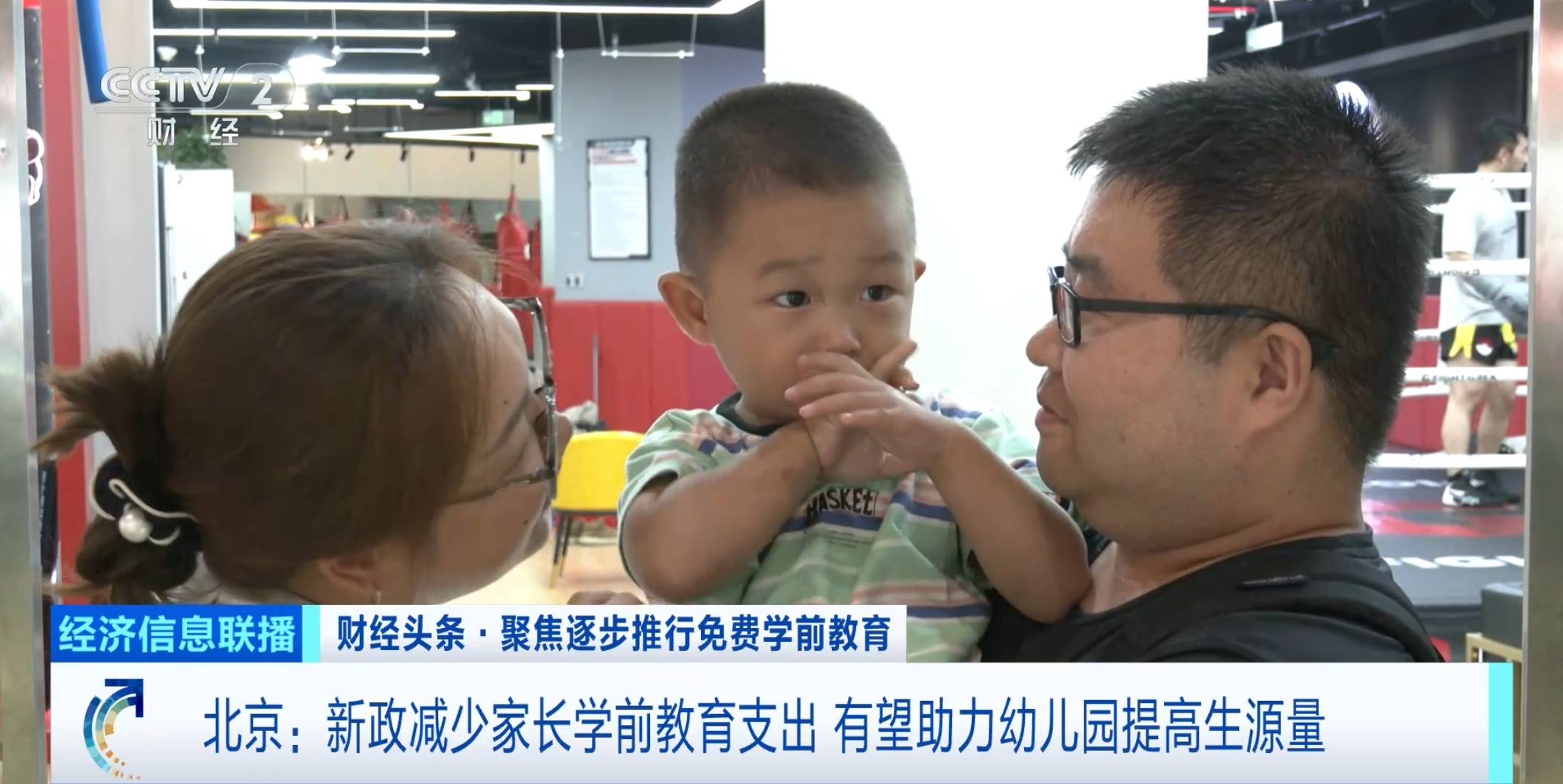
新政减少家长学前教育支出,有望助力幼儿园提高生源量!记者探访→
Sou Hu Cai Jing· 2025-08-07 14:16
Core Viewpoint - The Chinese government has introduced a policy to gradually implement free preschool education, starting from the autumn semester of 2025, which will exempt parents from paying childcare fees for one year of preschool education nationwide [1]. Group 1: Policy Impact on Parents - The new policy is expected to significantly reduce the financial burden on parents, with some parents, like Ms. Zhao, estimating savings of around 10,000 yuan due to this and previous birth subsidy policies [3]. - Many parents express satisfaction with the policy, indicating it will alleviate the economic pressures associated with raising children [3]. Group 2: Impact on Kindergartens - Kindergarten administrators are optimistic about the new policy, noting increased inquiries from parents and heightened interest in preschool education [5]. - The dual support from central and local finances boosts confidence among kindergartens to improve educational quality, potentially leading to an increase in enrollment numbers as societal pressures on young families may lessen [5].
离开学不到一个月,国家送上200亿大礼包
21世纪经济报道· 2025-08-07 12:52
Core Viewpoint - The article discusses the implementation of a free preschool education policy in China, which aims to alleviate financial burdens on families and promote educational equity across regions [1][4]. Group 1: Policy Implementation - The free preschool education policy will cover all kindergarten children in their final year, benefiting approximately 12 million children this fall [1][3]. - The policy is expected to increase national fiscal spending by about 20 billion yuan for the fall semester, which will correspondingly reduce family expenditures by the same amount [1][3]. Group 2: Educational Equity - The policy aims to promote educational equity by standardizing the costs of preschool education across different regions, addressing disparities in financial contributions from local governments [4]. - Prior to the policy, monthly preschool fees varied significantly across cities, with Beijing charging 750 yuan, Zhengzhou 820 yuan, and Shenzhen 1008 yuan [4]. Group 3: Government Funding - The government will compensate kindergartens for lost income due to the waived fees, with the compensation standards based on the actual fee levels in each province [6][7]. - Central and local governments will share the financial burden, with the central government covering 80% of costs in economically disadvantaged regions [7][6]. Group 4: Monitoring and Implementation - The Ministry of Finance and the Ministry of Education will monitor the implementation of the policy and ensure timely distribution of funds to kindergartens [10][9]. - Local governments are required to develop specific implementation plans and ensure that the benefits reach eligible families and children [11][10].