
全球变暖

Search documents
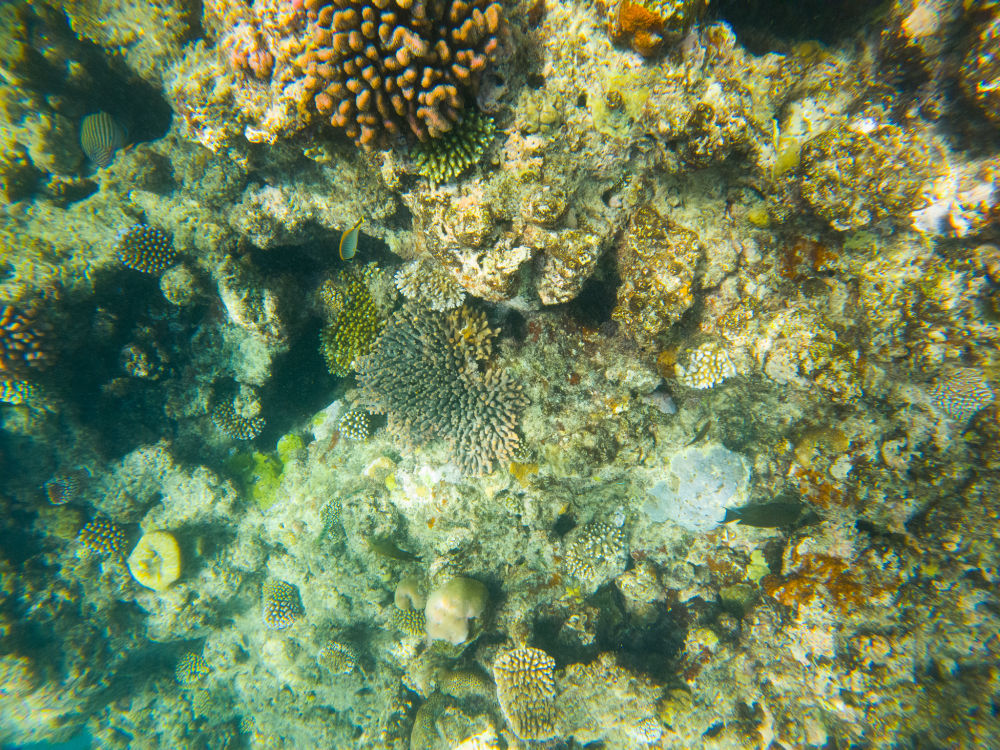
研究报告:全球温水珊瑚礁正越过生存临界点
Xin Hua She· 2025-10-14 06:01
Core Insights - The report led by the University of Exeter indicates that global warm-water coral reefs are crossing critical survival thresholds, with a significant risk of extinction if global warming trends are not reversed [1][2] - The study, titled "Global Critical Points Report," involved 160 researchers from 87 institutions across 23 countries, focusing on various cases of survival thresholds in the Earth's systems under current global warming trends [1] Group 1: Current Status of Coral Reefs - Warm-water coral reefs are experiencing an unprecedented survival crisis, with over 80% of corals showing signs of bleaching due to record-high ocean temperatures [2] - The global average surface temperature has increased by approximately 1.4 degrees Celsius compared to pre-industrial levels (1850-1900), pushing warm-water corals past their survival threshold [2] - Even if the temperature rise stabilizes at 1.5 degrees Celsius, most warm-water corals are "almost certain" to perish [2] Group 2: Future Predictions and Implications - If global warming continues, while some corals may evolve into more heat-resistant varieties, the majority will be replaced by simpler organisms like algae and sponges, leading to a less diverse ecosystem [2] - This ecological shift poses a disaster for millions of people who rely on coral reefs for their livelihoods and for approximately 1 million marine species [2] - The report's lead researcher warns that crossing the 1.5 degrees Celsius threshold will place the world in greater danger, potentially triggering more critical survival points and catastrophic chain reactions [2] Group 3: Positive Developments - The report also highlights some positive trends, such as the rapid adoption of solar energy and electric vehicles, which could lead to accelerated positive developments in combating climate change [3] - Coral bleaching, a phenomenon where corals lose their symbiotic algae due to environmental stress, can potentially be reversed if the stressors are reduced [3] - Various factors contribute to coral bleaching, with prolonged high sea temperatures being the primary cause [3]

二十年数据支撑,未来北方高温多雨常态化!
经济观察报· 2025-10-13 12:40
Group 1 - The climate in northern China is experiencing a significant trend towards "warming and humidification," with increasing temperatures and precipitation levels [4][19][21] - The number of high-temperature days in northern cities has increased dramatically, with some cities like Xinyang seeing a rise from 5 days in 2000 to 35 days in 2022 [11][12][13] - The average annual precipitation in China has been increasing, with an average increase of about 6 millimeters every 10 years from 1961 to 2024 [24][25] Group 2 - The agricultural sector is adapting to the challenges posed by frequent high temperatures and increased rainfall, requiring proactive measures for crop management [30][31] - The cultural heritage sector faces significant threats from climate change, particularly in the preservation of ancient buildings and artifacts, which are vulnerable to increased humidity and temperature fluctuations [32][33][34] - The changing climate is expected to impact various industries, necessitating adaptations to new weather patterns that resemble those of southern China [28][34]

【特稿】报告:全球温水珊瑚礁正越过生存临界点
Xin Hua She· 2025-10-13 09:38
Core Insights - The report led by the University of Exeter indicates that global warm-water coral reefs are crossing critical survival thresholds, with a significant risk of extinction if global warming trends are not reversed [1][2] - The study, titled "Global Critical Points Report," involved 160 researchers from 87 institutions across 23 countries, focusing on various cases of survival thresholds in the Earth's system under current global warming trends [1] Group 1: Current Status of Coral Reefs - Warm-water coral reefs are experiencing an unprecedented survival crisis, with over 80% of corals showing signs of bleaching due to record-high ocean temperatures [1][2] - The average global surface temperature has increased by approximately 1.4 degrees Celsius compared to pre-industrial levels (1850-1900), pushing warm-water corals beyond their survival limits [1] Group 2: Future Projections - If global warming continues, while some corals may evolve into more heat-resistant varieties, most will be replaced by simpler organisms like algae and sponges, leading to a less diverse ecosystem [2] - The report emphasizes that crossing the 1.5 degrees Celsius threshold will place the world in greater danger, potentially triggering more survival thresholds and catastrophic chain reactions [2] Group 3: Positive Developments - The report also highlights some positive trends, such as the rapid adoption of solar energy and electric vehicles, which could lead to accelerated positive developments in combating climate change [2]
35℃高烧不退!南方超长夏天背后,极端天气突发性或成新常态
Xin Jing Bao· 2025-10-12 03:49
Core Insights - The article highlights the significant climate anomaly in southern China this year, characterized by an extended summer with high temperatures persisting well into the autumn season [1][2][3] Climate Anomalies - Southern regions like Hangzhou and Chongqing have experienced temperatures exceeding 35°C, with Hangzhou recording nearly 70 days of high temperatures this year, surpassing last year's total of 61 days [1] - The subtropical high pressure has shifted unusually northward, disrupting the typical seasonal weather patterns, leading to prolonged high temperatures in the south and excessive rainfall in the north [2][3] Historical Records - The rainy season in North China began on July 5, 2023, which is 13 days earlier than the average, and lasted longer than usual, making it the longest rainy season since 1961 with a total precipitation of 356.6 mm, exceeding the average by 161.1% [3][4] Global Climate Trends - The article discusses the broader context of global warming, noting that the average global temperature has reached record highs from 2022 to 2024, with 2024 expected to surpass all previous records [4] - The increase in extreme weather events is attributed to rising greenhouse gas emissions, which continue to escalate without a clear downward trend [4] Agricultural Impact - The ongoing high temperatures and reduced rainfall in southern regions may lead to drought conditions, significantly affecting agriculture [6] - Recommendations include utilizing new technologies for resource mobilization and enhancing monitoring and forecasting to mitigate the impact on agricultural practices [6]
【环球财经】研究:南极地区海底甲烷渗出速度惊人
Xin Hua She· 2025-10-11 13:42
甲烷在全球海底已存在千百万年,数量巨大。这种无色无味的温室气体可经由海底裂缝逸出,经常以气泡流形式一路直上,抵达海面。论文第一作者、新西 兰地球科学组织海洋学家萨拉·西布鲁克说,全球范围内普遍存在海底甲烷渗出的情况,但此前在南极地区确认存在的活跃渗出点仅有一处。研究人员去年 开展这项研究时,起初想看那处渗出点是否仍在,没想到"发现新增了几十处"。 西布鲁克说,"以前被认为罕见的情况现在似乎变得普遍了"。每发现一处渗出,她和同事们都会兴奋,但这种兴奋"迅速被焦虑和担忧取代"。 研究人员指出,甲烷进入大气后在头20年吸收的热量是二氧化碳的80倍左右。从海底渗出的甲烷可能会迅速进入大气,从而加剧全球变暖趋势,而目前许多 预测气候变化趋势的研究还没有考虑到这一因素。 新华财经北京10月11日电英国学术期刊《自然-通讯》最新一期刊载的一项研究显示,南极地区海底蕴藏的甲烷正以"惊人速度"渗出。研究人员仅在南太平 洋南部深入南极洲的罗斯海浅水区域就发现40多个新的甲烷渗出点,担心当前流行的气候模型可能低估未来全球变暖程度。 x - 27 Box 4 22 1 5 while the may be 18 - 11/22 y ...
新研究称地球正在“变暗” 或加剧气候变化影响
Xin Hua She· 2025-10-11 10:17
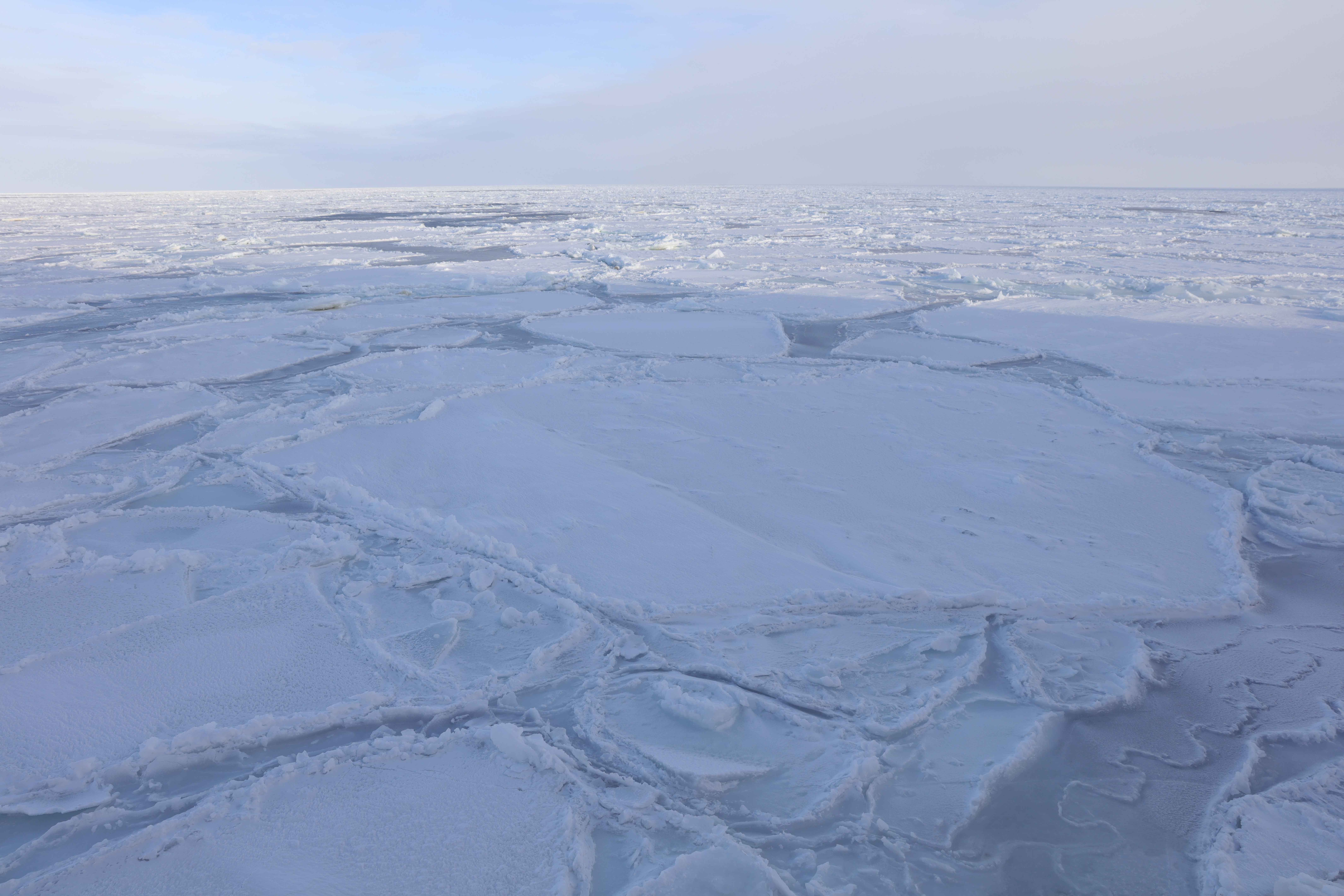
美国航天局兰利研究中心和挪威国际气候研究中心等机构的研究人员基于美航天局"云和地球辐射能系 统"2001年至2024年的卫星数据,发现与南半球相比,北半球吸收了更多的光但反射的光更少。这意味 着从太空中观察,北半球变得"更暗"。 新华社华盛顿10月10日电 刊发于新一期美国《国家科学院学报》的研究显示,地球正在"变暗",即地 球反射到太空的光线明显减少。其中,北半球"变暗"更为明显,这一变化正在加速全球变暖。 研究人员分析说,北半球"变暗"更明显与南北半球在"气溶胶-辐射"相互作用、地表反照率等方面的差 异有关。地表反照率是地面反射的太阳辐射与到达地面的太阳辐射之比。对太阳光的反射越多,地球表 面的温度就越低;吸收越多,温度越高。受气候变化和全球气温升高影响,北半球的北极海冰快速消 融,导致吸光能力更强的陆地和海水等地貌,正在迅速取代能够反射更多光线的冰雪地貌。 此外,大气层中的微小颗粒,即气溶胶,有助于形成反射阳光的云层。北半球多国的污染防控措施减少 了气溶胶,但导致反射阳光的云层也减少了。南半球受丛林大火和大规模火山喷发事件影响,导致大气 层中气溶胶增多,云层形成增加,进而反射了更多太阳光。 研究人员分析 ...
【特稿】研究:南极地区海底甲烷渗出速度惊人
Xin Hua She· 2025-10-11 08:40
Core Insights - A recent study published in the journal Nature Communications reveals that methane is leaking from the seabed in Antarctica at an alarming rate, with over 40 new methane seep points discovered in the Ross Sea region [1][2] - The research team, comprising members from various institutions, utilized acoustic sensors and remote vehicles to sample depths ranging from 5 to 240 meters, indicating a fundamental change in methane release mechanisms in the area [1] Group 1: Methane Emissions - Methane, a potent greenhouse gas, has been found to be released from the seabed, potentially exacerbating global warming trends, as it absorbs heat at approximately 80 times the rate of carbon dioxide in the first 20 years after entering the atmosphere [2] - The study highlights that the previously rare occurrence of methane seepage in Antarctica is now becoming more common, raising concerns about its implications for climate change models [2] Group 2: Research Implications - Researchers plan to return to Antarctica for further investigation to assess the relationship between the increased methane seepage and climate change, as well as its impact on marine life [2] - The study also notes a significant increase in atmospheric methane levels over the past decade, with a persistent gap between measured increases and known methane sources, indicating an unknown factor contributing to this rise [2]
【人民日报】科学家揭示北极海洋在5600万年前全球变暖中的作用
Ren Min Ri Bao· 2025-10-11 01:41
Core Insights - The research published in the journal "Nature - Earth Science" reveals that changes in ocean sulfate concentrations can alter methane consumption methods, shedding light on the carbon cycle mechanisms behind the extreme global warming and ocean acidification during the Paleocene-Eocene Thermal Maximum (PETM) 56 million years ago [1] Group 1: Research Findings - Approximately 90% of methane in modern oceans is utilized by microorganisms in sediments under anoxic conditions, producing alkaline substances that mitigate ocean acidification [1] - During the PETM, the sulfate concentration in Arctic seawater was less than one-third of modern levels, leading to a shift where oxygen-consuming bacteria began to "rapidly burn" methane, directly consuming oxygen and releasing carbon dioxide [1] - The reconstructed carbon dioxide levels in the Arctic Ocean during the PETM recovery period were 200-700 ppm higher than the global average, indicating a transition from a carbon sink to a carbon source [1] Group 2: Implications for Carbon Cycle - The reduction in sulfate and dilution of seawater forced methane to decompose through "rapid burning," resulting in significant carbon dioxide production [1] - This fundamentally altered the Arctic's role in the global carbon cycle, transforming it from a carbon sink to a greenhouse gas emission source [1]
科学家揭示北极海洋在5600万年前全球变暖中的作用
Ren Min Wang· 2025-10-10 22:11
Core Insights - The research published in the journal "Nature Geoscience" reveals that changes in ocean sulfate concentrations can alter methane consumption processes, shedding light on the carbon cycle mechanisms behind the extreme global warming and ocean acidification during the Paleocene-Eocene Thermal Maximum (PETM) 56 million years ago [1] Group 1: Methane Consumption and Carbon Cycle - Approximately 90% of methane in modern oceans is utilized by microorganisms in sediments under anoxic conditions, producing alkaline substances that mitigate ocean acidification [1] - During the PETM, the sulfate concentration in Arctic seawater was less than one-third of modern levels, leading to a shift where oxygen-consuming bacteria began to "rapidly burn" methane, directly consuming oxygen and releasing carbon dioxide [1] - The reconstruction of carbon dioxide concentrations based on marine phytoplankton molecular traces indicates that during the PETM recovery period, Arctic ocean CO2 levels were 200-700 ppm higher than the global average, indicating a transition from CO2 absorption to emission [1] Group 2: Role of the Arctic in Global Carbon Cycle - The reduction in seawater salinity and sulfate led to methane being decomposed primarily through "rapid burning," resulting in significant carbon dioxide production [1] - This fundamentally altered the Arctic's role in the global carbon cycle, transforming it from a carbon sink to a source of greenhouse gas emissions [1]
欧盟监测机构:全球经历有记录以来第三热九月
Zhong Guo Xin Wen Wang· 2025-10-09 07:01
欧盟监测机构:全球经历有记录以来第三热九月 中新网北京10月9日电 欧盟气候监测机构哥白尼气候变化服务局9日称,2025年9月全球气温为有记录以 来同月的第三高,仅比同月最高温低0.27摄氏度。 哥白尼气候变化服务局9日发布的报告显示,2025年9月全球平均地表气温为16.11摄氏度,比2023年和 2024年同月全球平均地表气温分别低0.27摄氏度和0.07摄氏度,但仍较工业化前(1850年至1900年)平均 水平高出1.47摄氏度。 本文为转载内容,授权事宜请联系原著作权人 中新经纬版权所有,未经书面授权,任何单位及个人不得转载、摘编或以其它方式使用。 关注中新经纬微信公众号(微信搜索"中新经纬"或"jwview"),看更多精彩财经资讯。 哥白尼气候变化服务局上个月发布的监测报告显示,2025年8月全球平均地表气温达16.6摄氏度,较工 业化前(1850年至1900年)平均水平高出1.29摄氏度,也达到有记录以来同月的第三高。(完) 来源:中国新闻网 编辑:徐世明 广告等商务合作,请点击这里 报告显示,2025年9月全球海洋表面平均温度为20.72摄氏度,北太平洋大部分海域的海表温度显著高于 同期平均水平 ...