增材制造

Search documents
“十五五”新材料产业发展规划
材料汇· 2025-08-22 15:00
Core Viewpoint - The new materials industry is crucial for supporting modern industrial systems and fostering new productive forces, with significant strategic importance for China's high-level technological self-reliance and manufacturing strength [2]. Group 1: Industry Background and Development Situation - During the 14th Five-Year Plan, China's new materials industry saw continuous growth, with total output value exceeding 8.2 trillion yuan and an average annual growth rate of over 12% [4]. - Achievements include breakthroughs in ultra-high-strength steel, high-performance carbon fiber, semiconductor silicon wafers, and key materials for lithium-ion batteries [4]. - Challenges remain in high-end materials and the need for improved self-sufficiency in core processes and equipment [4]. Group 2: Overall Requirements - The guiding ideology emphasizes innovation-driven development, demand-oriented approaches, and green low-carbon principles [7]. - Key principles include self-reliance through innovation, application-driven demand, and collaboration among enterprises [9]. Group 3: Development Goals (by 2030) - Strategic material security capabilities should exceed 80%, with a focus on achieving global leadership in frontier new materials [11]. - The goal is to cultivate internationally competitive new materials enterprises and establish over 20 distinctive industrial clusters [11]. Group 4: Key Development Directions - Advanced basic materials include ultra-high-strength automotive steel and high-performance aluminum alloys [13]. - Key strategic materials focus on high-temperature alloys and advanced semiconductor materials [14][15]. - Frontier new materials include low-dimensional and intelligent materials, quantum information materials, and bio-based sustainable materials [17][18]. Group 5: Key Tasks and Major Projects - Focus on urgent new materials needed in key application areas such as aerospace, new energy vehicles, and electronic information [21]. - Specific targets include developing high-performance carbon fiber composites and high-energy-density battery materials [22][26]. Group 6: Collaborative Innovation System - Establish a collaborative innovation system centered on enterprises, integrating industry, academia, and research [45]. - Encourage leading enterprises to form innovation alliances with universities and research institutions [46]. Group 7: Market Cultivation for Key New Materials - Implement insurance compensation mechanisms for the first application of key new materials to reduce user risks [50]. - Establish a project library for demonstration projects to showcase the advantages of new materials in practical applications [50]. Group 8: Breakthroughs in Key Processes and Equipment - Focus on overcoming bottlenecks in key processes and specialized equipment for new materials production [55]. - Develop advanced manufacturing technologies such as additive manufacturing and automated composite material forming processes [56]. Group 9: Standard System Improvement - Construct a comprehensive standard system covering the entire new materials industry chain to ensure quality and consistency [60]. - Develop over 500 key new materials standards, including international standard proposals [62]. Group 10: "Internet Plus" New Materials Action - Promote the integration of new information technologies with the new materials industry to enhance operational efficiency [64]. - Establish national-level industry internet platforms to facilitate real-time information sharing across the supply chain [66].


签约!天工股份与品德新材共启金属粉末材料新篇章
Zhi Tong Cai Jing· 2025-08-22 12:44
Core Viewpoint - Tian工 International's subsidiary, Jiangsu Tian工 Technology Co., Ltd., has officially entered into a comprehensive strategic cooperation with Jiangsu Pinde New Materials Co., Ltd. to enhance its capabilities in metal powder materials [1][2]. Group 1: Strategic Partnership - The partnership marks the establishment of Jiangsu Tian工 Titanium Crystal New Materials Co., Ltd. with a registered capital of 100 million yuan, focusing on the research, production, and sales of titanium alloy powder, copper alloy powder, and high-temperature alloy powder [1]. - Key figures from both companies attended the signing ceremony, indicating strong leadership commitment to this collaboration [1]. Group 2: Product Focus and Applications - Tian工 Titanium Crystal will concentrate on core metal powder materials, targeting diverse application scenarios [2]. - Titanium alloy powder is noted for its high specific strength, biocompatibility, and corrosion resistance, making it suitable for consumer electronics, medical devices, aerospace, and lightweight applications [2]. - High-temperature alloy powder is recognized as a core material for aerospace components due to its excellent high-temperature resistance [2]. - Copper alloy powder is valued for its high conductivity and thermal management properties, widely used in liquid cooling and other thermal management products [2]. Group 3: Industry Positioning and Future Potential - The strategic cooperation aims to integrate industry resources, leveraging Tian工's full industry chain advantages to ensure stable and reliable supply of titanium alloy powder [2]. - The collaboration will utilize Dr. Long Haiming's plasma atomization powder-making technology to enhance product performance and create a leading demonstration of integrated production lines for titanium alloy powder in China [2]. - This partnership expands Tian工 International's footprint in additive manufacturing and strengthens its position in the high-end materials sector, with a comprehensive product range that includes tool steel powder, titanium alloy powder, high-temperature alloy powder, and copper alloy powder [2]. - The company is poised to exhibit strong growth potential in the evolving fields of laser cladding, 3D printing, and injection molding related to metal powders [2].
签约!天工股份(920068.BJ)与品德新材共启金属粉末材料新篇章
智通财经网· 2025-08-22 12:40
Core Viewpoint - Tian工 International's subsidiary, Jiangsu Tian工 Technology Co., Ltd., has officially entered into a comprehensive strategic cooperation with Jiangsu Pinde New Materials Co., Ltd. to enhance its capabilities in metal powder materials [1] Group 1: Strategic Cooperation - The strategic partnership was marked by the establishment of Jiangsu Tian工 Titanium Crystal New Materials Co., Ltd., with a registered capital of 100 million yuan, focusing on the R&D, production, and sales of titanium alloy powder, copper alloy powder, and high-temperature alloy powder [1] - Key figures from both companies attended the signing ceremony, indicating strong leadership commitment to this collaboration [1] Group 2: Focus Areas and Applications - Tian工 Titanium Crystal will concentrate on core metal powder materials, targeting diverse application scenarios [2] - Titanium alloy powder is noted for its high specific strength, biocompatibility, and corrosion resistance, making it suitable for consumer electronics, medical devices, aerospace, and lightweight applications [2] - High-temperature alloy powder is recognized as a core material for aerospace components due to its excellent high-temperature resistance [2] - Copper alloy powder is valued for its high conductivity and thermal management properties, widely used in liquid cooling and other thermal management products [2] Group 3: Industry Positioning and Future Potential - The strategic cooperation aims to integrate industry advantages, leveraging Tian工's full industry chain to ensure stable and reliable supply of titanium alloy powder [2] - The collaboration will utilize Dr. Long Haiming's plasma atomization powdering technology to enhance product performance and create a leading demonstration of integrated titanium alloy powder production lines in China [2] - This partnership expands Tian工 International's footprint in additive manufacturing and strengthens its position in the high-end materials sector, with a comprehensive range of powder metallurgy products [2] - The company is poised to exhibit strong growth potential in the evolving fields of laser cladding, 3D printing, and injection molding for metal powders [2]
Amaero (3DA) Earnings Call Presentation
2025-08-20 22:00
AMAERO LTD (ASX: 3DA | OTC: AMROF) A leading U.S. domestic producer of high -value refractory and titanium alloy spherical powders & manufacturer of near-net - shape parts for mission -critical components across defense, space, aviation, medical and industrials Investor Presentation August 2025 For personal use only Important Notice and Disclaimer This investor presentation (Presentation) is dated 21 August 2025 and has been prepared by Amaero Ltd (ACN 633 541 634) (Amaero) in relation to a non-underwritten ...
易加增材赴科创板上市获受理 应收账款占营收比重近半
Zhong Guo Jing Ying Bao· 2025-08-20 13:15
Core Viewpoint - The company, Yijia Additive Manufacturing Technology Co., Ltd., has recently had its IPO application accepted on the Sci-Tech Innovation Board, aiming to raise approximately 12.05 billion yuan for four new projects with a total investment of about 13.38 billion yuan [1]. Financial Performance - The company has shown consistent growth in revenue, net profit, and assets from 2022 to 2024, with total revenues of 2.47 billion yuan, 4.09 billion yuan, and 4.71 billion yuan respectively, reflecting year-on-year growth rates of 65.42% and 15.22% for 2023 and 2024 [2]. - The net profit after deducting non-recurring items is projected to increase significantly, with figures of 0.25 billion yuan, 0.69 billion yuan, and 0.93 billion yuan for the same period, indicating growth rates of 179.26% and 34.74% for 2023 and 2024 [2]. - The company's total liabilities decreased from 5.16 billion yuan in 2022 to 2.61 billion yuan in 2024, resulting in a declining debt ratio from 82.63% to 16.69% [2]. Accounts Receivable - Accounts receivable have grown rapidly, with figures of 0.74 billion yuan, 1.38 billion yuan, and 1.95 billion yuan from 2022 to 2024, representing 33.30%, 37.68%, and 46.04% of total revenue respectively [3]. - By the end of 2024, accounts receivable over one year old amounted to 0.75 billion yuan, accounting for 34.59% of the total, indicating some long-term receivables have not been fully recovered [3]. Inventory Management - The company's inventory has also increased, with total inventory values of 2.68 billion yuan, 3.75 billion yuan, and 4.45 billion yuan from 2022 to 2024, with inventory levels in 2024 being comparable to annual revenue [3]. - The balance of finished goods inventory has risen significantly, with values of 0.37 billion yuan, 0.94 billion yuan, and 1.56 billion yuan, reflecting a growing proportion of 13.79%, 24.71%, and 34.53% respectively [4]. Cash Flow Analysis - The company has experienced negative net cash flow from operating activities over the three years, with figures of -1.06 billion yuan, 0.20 billion yuan, and -0.94 billion yuan [5]. - Cash inflows from sales have increased, but outflows have risen at a faster rate due to growing inventory and accounts receivable [6]. Research and Development - The company has been increasing its R&D expenditures, which were 0.21 billion yuan, 0.24 billion yuan, and 0.31 billion yuan over the three years, representing 8.57%, 5.82%, and 6.50% of total revenue [7][8]. - As of the end of 2024, the company had 123 domestic authorized patents, including 49 invention patents, indicating a strong focus on innovation [8]. Ownership Structure - The controlling shareholder, Yongsheng Holdings, holds a 30.64% stake in the company, with the actual controllers being Li Cheng and Li Jianhao, who collectively control 54.53% of the voting rights [9][10][11].
深圳,成为全球“消费级3D打印第一城”
21世纪经济报道· 2025-08-18 03:59
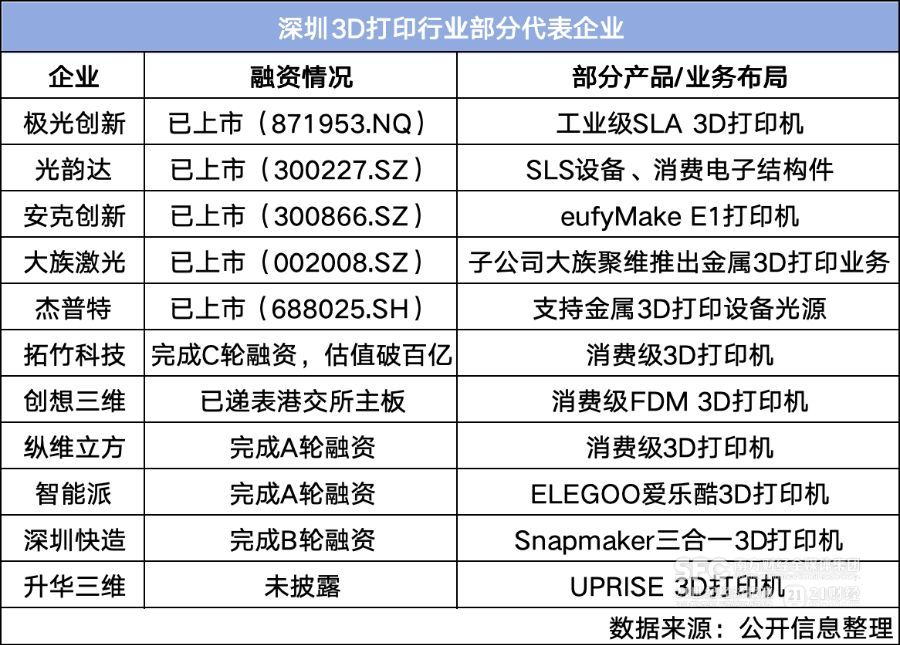
Core Viewpoint - Shenzhen has emerged as a leading hub for consumer-grade 3D printing, with over 80% of China's 3D printers exported from the Greater Bay Area, significantly driven by local companies like Creality, Bambu Lab, and Elegoo [2][5]. Group 1: Market Dynamics - In the first seven months of this year, Shenzhen accounted for over 90% of global shipments of entry-level 3D printers, with Creality holding a 39% market share [5][10]. - The global entry-level 3D printer market is projected to see a shipment of over 1 million units by Q1 2025, with a 15% year-on-year growth, and Chinese suppliers dominating this segment [2][10]. Group 2: Company Performance - Creality has achieved continuous revenue growth, surpassing 1 billion yuan for three consecutive years, with a projected revenue of 2.288 billion yuan in 2024 [7]. - Bambu Lab has become a unicorn with a valuation exceeding 10 billion yuan, driven by the success of its Bambu Lab X1 printer, which offers industrial-grade performance at consumer prices [9][10]. - Elegoo has reported sales exceeding 1.2 billion yuan in 2023, with its products sold in over 100 countries, capturing a significant share of the North American and European markets [8]. Group 3: Industry Structure - Shenzhen has developed a complete 3D printing industry chain, including modeling systems, materials, equipment, and application services, establishing itself as a global leader in consumer-grade 3D printing [3][12]. - The local industry is characterized by a collaborative ecosystem, with companies like Smart Technology and Anycubic contributing to rapid production capabilities, assembling a printer every two minutes [13][15]. Group 4: Future Outlook - The global 3D printing market is expected to grow at an annual rate of 20%, with projections indicating a market size exceeding $50 billion by 2028 [12][14]. - The increasing demand for personalized and customized products is driving the expansion of 3D printing from industrial applications to consumer markets [6][12].

全球“消费级3D打印第一城”,深圳何以炼成
2 1 Shi Ji Jing Ji Bao Dao· 2025-08-18 02:20
Core Viewpoint - Shenzhen has emerged as a leading hub for the 3D printing industry, dominating the global market with over 80% of China's 3D printer exports and a significant share of the entry-level 3D printer market [2][10]. Industry Overview - The Greater Bay Area's nine cities exported over 80% of China's 3D printers in the first seven months of the year, with Shenzhen playing a crucial role [2]. - The global shipment of entry-level 3D printers is expected to exceed 1 million units by Q1 2025, with a year-on-year growth of 15%, and Chinese suppliers accounting for 95% of this market [2]. - Shenzhen has developed a complete 3D printing industry chain, including modeling systems, materials, equipment, and application services, establishing itself as the "first city of consumer-grade 3D printing" [3][14]. Company Highlights - Major Shenzhen companies in the 3D printing sector include Creality, Bambu Lab, and Elegoo, which have achieved significant market shares and growth rates [2][3]. - Creality holds a 39% market share in entry-level 3D printers, while Bambu Lab's shipments grew by 64% year-on-year [2]. - Companies like Smart Tech and Anycubic have also seen substantial growth, with Smart Tech's sales surpassing 1.2 billion yuan in 2023 and Anycubic achieving over 1 billion yuan in revenue [7][8]. Market Dynamics - The consumer-grade 3D printer market was historically dominated by foreign brands, but Shenzhen companies have disrupted this with competitive pricing and innovative products [5][10]. - The global 3D printing market is expanding at an annual rate of 20%, with projections indicating a growth of over 220% by 2028, potentially exceeding $50 billion [13]. Innovation and Strategy - Shenzhen companies are employing various strategies for international expansion, including building independent platforms, community engagement, and localized marketing efforts [11]. - The region's robust supply chain and manufacturing capabilities enable rapid production, with some companies assembling a printer every two minutes [12][14].




铂力特取得粉床保护气流形成装置专利,可有效减少幅面的落渣量
Jin Rong Jie· 2025-08-16 06:35
Group 1 - The core point of the article is that Xi'an Boli Tech Additive Manufacturing Co., Ltd. has obtained a patent for a "powder bed protective airflow forming device," which is significant in the field of additive manufacturing [1] - The patent was granted with the announcement number CN223222471U, and the application date was June 2024 [1] - The device includes a blowing guide component, a first suction port, and a second suction port, designed to deliver protective airflow into the forming chamber [1] Group 2 - Xi'an Boli Tech Additive Manufacturing Co., Ltd. was established in 2011 and is located in Xi'an, primarily engaged in software and information technology services [1] - The company has a registered capital of 271.768196 million RMB [1] - According to data analysis, the company has invested in 8 enterprises, participated in 1,032 bidding projects, and holds 84 trademark records and 550 patent records [1]

有研粉材(688456.SH):3D打印粉末材料目前在商业卫星、运载火箭零部件中应用正在不断深入
Ge Long Hui· 2025-08-13 09:10
Group 1 - The core viewpoint is that the application of 3D printing powder materials in commercial satellites and rocket components is deepening, with the specific value depending on the demand for the components [1] - The rapid advancement of domestic commercial aviation is expected to further enhance the application of additive manufacturing, leading to an increase in value [1]

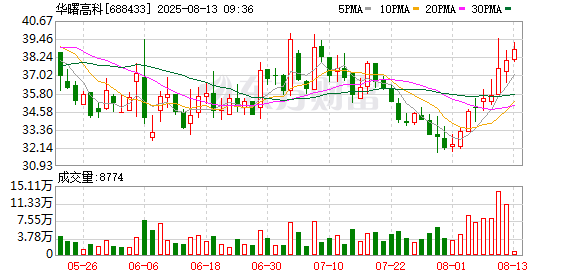
湘江新动能 | 以创新领跑全球智造——工业级3D打印企业华曙高科进阶之路
Shang Hai Zheng Quan Bao· 2025-08-13 01:35
Core Viewpoint - The article highlights the remarkable growth and technological advancements of Huashu High-Tech in the field of industrial 3D printing, showcasing its comprehensive innovation in equipment, software, materials, and applications over 16 years of development [2][6][9]. Company Development - Huashu High-Tech has evolved from a small facility in Hunan University to a manufacturing headquarters with over 140,000 square meters of space, focusing on additive manufacturing [2][9]. - The company was founded in 2009 by Dr. Xu Xiaoshu, who aimed to promote the development of China's 3D printing industry and achieve national manufacturing goals [6][8]. - The company launched its first polymer laser sintering equipment in 2012, becoming the third manufacturer globally of such equipment [6][8]. Technological Advancements - Huashu High-Tech has developed a complete industrial-grade additive manufacturing technology system, integrating equipment, software, materials, processes, and application technologies [2][8]. - The company has introduced over 40 types of 3D printing materials, including the first 3D printable material for the shoe mold industry, ST1, which is a low-carbon alloy steel [5][8]. - The industrial 3D printing technology allows for the creation of complex structures that traditional manufacturing methods cannot achieve, significantly reducing weight and enhancing efficiency [3][4]. Market Position and Future Outlook - As of early 2025, Huashu High-Tech has sold over 1,200 additive manufacturing devices globally, establishing a strong market presence [8][9]. - The global 3D printing market is projected to reach between $84 billion and $145 billion by 2030, indicating a significant growth opportunity for the industry [9]. - The company emphasizes that industrial 3D printing is a crucial pathway for upgrading high-end manufacturing, aligning with market trends and technological advancements [9].