开源生态

Search documents
Agent爆发、应用开花、算力赶集,这届WAIC见证“生态起来了”
Di Yi Cai Jing· 2025-07-30 10:32
人潮涌动的展馆、遍地开花的应用、马力全开的算力,大模型行业水温变了。 刚刚过去的WAIC(世界人工智能大会),是近些年里最热闹的一届。开幕前几日全场门票就已售罄,在二手市场,WAIC三日通票被炒至2000多元一张, 单日票被炒至600元以上,是原价的四倍。展会期间,各大AI群里不断有人在求票。 为期四天的展会,35万人次线下涌入,展览面积首次突破7万平米,扩增了40%,800余家企业带来3000余项展品,是往年的一倍。提及大会的热闹,一位参 展商对第一财经表示,去年都是大模型厂商为主,主要展出各种模型、比拼技术参数,离普通人太远,但今年都是各种应用了,很多家长还带着小孩来学 习。 蜜度首席技术官刘益东观察到,开源生态正在带动整个AI生态的繁荣。现场很多厂商都是做Agent(智能体)和应用的,而这些反过来又带动了基础设施和 算力,算力厂商的展位更大了。 九章云极DataCanvas公司AI首席科学家缪旭感慨," C端的人特别多,AI的渗透率越来越高,前几年很多人不懂,但现在每个人都能聊上几句。"去年他们担 心应用落地慢,现在反而担心算力供不应求。 应用向下"扎根" 有很多企业是第一次来WAIC参展,一个显著特征 ...


北京开源人才及活跃项目领跑全国
news flash· 2025-07-26 23:39
Core Insights - The 2025 Open Atom Open Source Ecology Conference recently opened in Beijing, highlighting the city's leadership in the open source ecosystem in China [1] - The Open Atom Open Source Foundation released the "China Open Source Development Deep Report (2024)", indicating a rapid release of domestic open source innovation potential [1] Open Source Ecosystem - Beijing has gathered over 3,400 open source contributors, leading the nation in both the number of active open source projects and the supply of open source talent [1] - Major cities such as Beijing and Shanghai have more than 500,000 active open source projects, while Shenzhen and Hangzhou each have over 200,000 [1] Project Sustainability - Notably, these core cities have maintained over 20% of their open source projects active for more than one year for three consecutive years, demonstrating project sustainability comparable to that of the United States and the European Union [1]
(经济观察)中国模型开源“接二连三” 开辟全球AI发展新路径
Zhong Guo Xin Wen Wang· 2025-07-26 12:41
Group 1 - Chinese technology companies are increasingly engaging in open-source AI model initiatives, with Alibaba launching multiple models in a short period, including Qwen3-235B-A22B-Instruct-2507, Qwen3-Coder, and Qianwen3 reasoning model [1] - The Kimi K2 model from Moonlight Dark Side, featuring a MoE architecture with 1 trillion total parameters and 32 billion active parameters, was also released [1] - The upcoming Step3 model from Jieyue Star will be the first full-size, native multimodal reasoning model, set to be open-sourced on July 31 [1] Group 2 - The open-source strategy of Chinese tech firms signifies a distinct path in AI development, promoting global AI technology accessibility and fostering an inclusive industrial ecosystem [2] - The Qwen3-Coder model has garnered attention from global investors and tech experts, being compared favorably to the Claude4 model [2] - The mixed model of "open-source ecology + closed-core" proposed by China emphasizes the balance between technology sharing and commercial value [2] Group 3 - The open-source wave in China is positively impacting the real economy, with major companies like FAW Group, China Petroleum, and Ping An Group integrating AI programming models [3] - The derivative models of Tongyi Qianwen have surpassed 140,000, making it the largest open-source model family globally, exceeding Meta's Llama series [3] - The "ecological empowerment" effect of open-source technology is evident across various sectors, creating a virtuous cycle of technology open-sourcing, scenario iteration, ecosystem cultivation, and market validation [3]

《人工智能开源创新北京宣言》发布 | 聚焦2025全球数字经济大会
Sou Hu Cai Jing· 2025-07-07 07:40
Core Viewpoint - The Global Open Source Innovation Forum was held during the 2025 Global Digital Economy Conference, focusing on the development of an open-source ecosystem for artificial intelligence (AI) and promoting international collaboration in this field [1][3]. Group 1: Forum Initiatives - The forum resulted in the launch of the "Beijing Declaration on Open Source Innovation of AI," which includes six initiatives aimed at fostering a fair and inclusive AI open-source ecosystem globally [3]. - The initiatives emphasize open-source without borders, technological openness, ecosystem co-construction, open-source security, ethical considerations in open-source AI, and risk governance [3]. Group 2: Project Evaluation and Development - A "Quantitative Assessment and Intelligent Prediction System for Open Source Projects" was introduced to guide the healthy development of open-source projects, focusing on growth potential analysis and evaluation metrics [3]. - This system aims to identify and promote excellent open-source projects, thereby enhancing the overall open-source ecosystem [3]. Group 3: Discussions and Future Directions - Key discussions during the forum included AI-driven open-source ecosystem construction, global community culture, and the challenges faced in AI open-source development [4]. - The forum's success is expected to enhance global collaboration in the open-source ecosystem and strengthen China's integration into the global open-source landscape [4].



一步到位!思翼生态亮相深圳无人机展,全核心零部件产品线覆盖。开源生态,无人机生态的另一选择
Zhong Guo Chan Ye Jing Ji Xin Xi Wang· 2025-07-02 11:53
Group 1 - The core viewpoint of the articles highlights the emergence of a mixed-source open ecosystem in the drone industry, showcased by Siwei Technology at the UASExpo, emphasizing the advantages of open-source compatibility and extensibility over closed ecosystems [1][2][3] - Siwei Technology presented a comprehensive product line covering five major categories: link systems, gimbals/cameras, flight control systems, power systems, and software products, all designed based on mainstream open-source protocols like Ardupilot and PX4 [1][2] - The company organized an event during the expo allowing participants to assemble an industry-grade drone in just five minutes using Siwei's products, demonstrating the practicality and user-friendliness of their offerings [1] Group 2 - Siwei Technology is one of the few manufacturers that possess core technology and covers the R&D and production of five major core components for civil drones, providing a complete range of parts for drone enthusiasts [2] - The company has strategically chosen to focus on core component development while avoiding the production of payloads like loudspeakers and searchlights, thereby enhancing compatibility and playability within the open-source ecosystem [3] - Siwei Technology was recognized as one of the "Top 10 Low-altitude Economy Enterprises" at the low-altitude economy gala, reflecting its strong technical capabilities and contributions to the development of intelligent robotics and various applications across multiple industries [3]
肖茜:AI开源重塑国际科技合作格局
Huan Qiu Wang Zi Xun· 2025-07-01 22:59
Core Insights - The announcement of Huawei and Baidu's open-source AI models has significantly impacted the global tech community, marking a shift in China's approach to AI development compared to the U.S. [1] - China's open-source strategy aims to promote inclusive global AI technology and reshape international tech cooperation [1][5] Group 1: Open-source AI Models - Huawei has open-sourced its Pangu model with 7 billion parameters and a mixture of experts model with 72 billion parameters, while Baidu has launched the Wenxin model 4.5 series [1] - Following the launch of DeepSeek-R1 by DeepSeek, other Chinese tech companies like Alibaba and Tencent have also embraced open-source models, contributing to a robust open-source ecosystem [1] Group 2: Technological Advancements - China's confidence in open-source initiatives stems from breakthroughs in AI model training, high-performance computing clusters, and domestic chip ecosystems [2] - The Chinese AI industry has over 4,500 companies, with a core industry scale nearing 600 billion RMB, covering critical areas such as chips, algorithms, data, platforms, and applications [2] Group 3: Economic Integration - Open-source initiatives by companies like Huawei and Baidu accelerate technology iteration and enhance the penetration of AI into the real economy [3] - The "open-source + commercial service" model lowers the barriers for developers and businesses, fostering innovation and ensuring profitability [3] Group 4: Global Collaboration - China's open-source models provide low-cost, easily deployable solutions for developing countries facing infrastructure and talent challenges [4] - Examples include Huawei Cloud's weather prediction model achieving 98% accuracy and MiniMax's Speech-02 model supporting 32 languages, promoting digital transformation in global southern countries [4] Group 5: Governance and Market Dynamics - China's open-source model is reshaping global AI governance, contrasting with the U.S. approach characterized by "technological hegemony" [5] - The mixed model of "open-source ecology + closed-core" emphasizes the balance between technology sharing and commercial value, providing new pathways for global southern countries to engage in the AI revolution [5]
AI Agent进化之路:从RPA执行到多智能体协同的数字化转型引擎
Sou Hu Cai Jing· 2025-06-30 23:42
Group 1 - The core viewpoint of the articles highlights the rapid development and practical application of AI Agents across various industries, driven by advancements in artificial intelligence technology [1][7] - AI Agents are evolving from "single tools" to "multi-Agent collaboration," indicating a shift towards integrated and cooperative functionalities rather than isolated capabilities [5] - The integration of AI Agents with RPA (Robotic Process Automation) is transforming traditional automation from "rule-driven" processes to "intelligent decision-making," enhancing operational efficiency [2][4] Group 2 - In vertical sectors such as finance and design, AI Agents demonstrate significant advantages, achieving 100% automation in critical processes like credit review and anti-money laundering, thereby eliminating human error [4] - The open-source ecosystem is crucial for the proliferation and rapid development of AI Agents, as seen with OpenManus and AutoGLM, which lower barriers to entry and accelerate ecosystem growth [4][5] - The collaboration between AI Agents and real-world applications is deepening, making them essential drivers of digital transformation and leading a new wave of intelligent change in enterprises [7]
百度文心大模型4.5系列模型开源,国内首发平台GitCode现已开放下载!
Cai Fu Zai Xian· 2025-06-30 07:40
Core Insights - Baidu's Wenxin 4.5 series models have been officially open-sourced on GitCode, providing accessible solutions for enterprises and developers [1][3] - The models include a total of 10 variants, featuring a mixed expert (MoE) architecture with parameter scales of 47B and 3B, and a dense parameter model of 0.3B, with the largest model totaling 424B parameters [3][4] - The MoE architecture allows for cross-modal knowledge integration while retaining dedicated parameter spaces for individual modalities, enhancing multi-modal understanding capabilities [3][4] Model Performance and Features - The Wenxin 4.5 models utilize the PaddlePaddle deep learning framework, achieving a model FLOPs utilization (MFU) of 47% during pre-training [4] - These models have reached state-of-the-art (SOTA) performance across various text and multi-modal benchmark tests, excelling in instruction adherence, world knowledge retention, visual understanding, and multi-modal reasoning tasks [4] - Model weights are open-sourced under the Apache 2.0 license, facilitating academic research and industrial applications [4] GitCode Platform Overview - GitCode, launched on September 22, 2023, has rapidly grown to over 6.2 million registered users and 1.2 million monthly active users, becoming a significant open-source community [5] - The platform integrates advanced code hosting services, supporting version control, branch management, and collaborative development, enhancing the developer experience [5] - The deep integration of Wenxin models with GitCode is expected to drive innovation and sustainable development in the AI industry and the broader open-source ecosystem in China [5] Community Engagement - Ongoing community activities, such as the GitCode × CSDN Wenxin model practical evaluation and discussion series, aim to facilitate developers' understanding and utilization of Wenxin models [6]

从 “工业重镇” 到 “数智引擎”:武汉软件产业增速领跑全国的密码
2 1 Shi Ji Jing Ji Bao Dao· 2025-06-20 09:42
Core Insights - Wuhan's software industry is rapidly evolving, with a projected software business revenue exceeding 350 billion yuan in 2024, marking a continuous growth rate leading the nation for three consecutive years [3][4][10] - The city aims to transform its economic structure by focusing on software innovation, moving away from heavy industry, and positioning itself as a leader in the central region of China [2][12] Industry Development - The software industry in Wuhan has seen a significant increase in new registrations, with over 43,000 new software companies established, reflecting a year-on-year growth of 56.8% [3][4] - Wuhan's software sector accounts for over 53% of the total software scale in the central six provinces, with an average annual growth rate of nearly 20% [3][4] Innovation and Talent - The city's strong educational foundation, with top universities like Huazhong University of Science and Technology and Wuhan University, plays a crucial role in nurturing high-quality talent and fostering innovation through industry-academia collaboration [3][4][10] - Companies like Dameng Database exemplify the successful integration of academic research and industry, having originated from university projects and now leading in the domestic database market [10][11] Open Source Ecosystem - Wuhan is establishing a robust open-source ecosystem, with initiatives like the establishment of the Hongmeng and RISC-V innovation centers, aiming to create a technology path independent of foreign closed-source systems [7][8] - The city has introduced a pioneering open-source development plan, offering financial incentives for companies to engage in open-source projects, thereby enhancing community engagement and innovation [8][9] Strategic Focus Areas - Wuhan is strategically targeting key software areas such as automotive software, network security, and geospatial information, aiming to build a competitive software industry cluster [13][15] - The automotive software sector is highlighted as a critical driver for the city's transition to smart technology, with companies like ECARX leading advancements in AI applications for vehicles [13][14] Future Goals - By 2030, Wuhan aims to achieve an overall software industry scale exceeding 800 billion yuan, positioning itself among the top cities in the nation in terms of software development [5][6] - The city plans to cultivate over 200 open-source innovation enterprises and establish more than 10 high-level open-source communities by 2027, fostering a vibrant developer ecosystem [9][10]
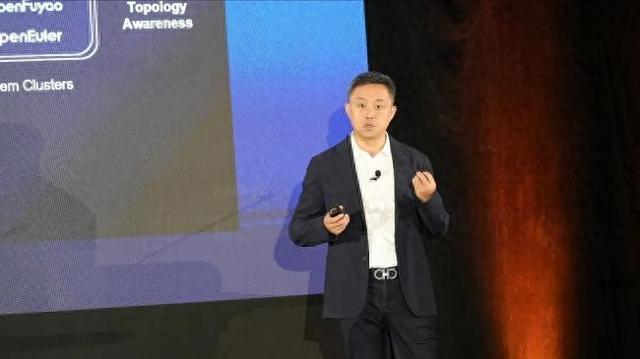
华为KubeCon China 2025:驱动云原生向AI原生技术融合跃迁
Huan Qiu Wang· 2025-06-19 06:59
Group 1 - The KubeCon+CloudNativeCon China 2025 conference was held in Hong Kong, focusing on the integration of cloud-native technologies and AI, featuring global open-source developers and industry leaders [1] - Huawei participated significantly in the conference, delivering three keynote speeches and over ten technical sessions, showcasing breakthroughs in the field of cloud-native and AI integration [1][3] - Open-source is recognized as a key driver for innovation, enabling faster development cycles and creating exponential value for the next technological revolution [1] Group 2 - Huawei's Chief Open Source Liaison Officer, Ren Xudong, discussed the evolution of computing clusters in the AI era, emphasizing the need for unified management of computing resources to support major AI frameworks [3] - Bilibili, with over 100 million monthly active users, has developed a cloud-native AI platform using Volcano and Karmada to optimize workload scheduling and enhance resource utilization [4][6] - iFlytek achieved significant improvements in AI model training efficiency by utilizing Volcano, increasing GPU utilization by over 40% and reducing fault recovery time by 70% [7][9] Group 3 - Karmada is highlighted as a multi-cloud management engine that addresses challenges in deploying AI tasks across multiple clusters, enhancing the reliability of large-scale data platforms [10][12] - KubeEdge, as a graduate project of CNCF, is recognized for its capabilities in edge computing, providing unified management and real-time advantages in various industry applications [14] - Kmesh, a cloud-native traffic management engine, utilizes eBPF technology to improve performance and reliability in handling large-scale traffic applications [16] Group 4 - openGemini, a high-performance time-series database, is designed for various industries, including IoT and aerospace, and aims to reduce business costs through efficient data storage and querying [18] - openFuyao focuses on building a diverse computing ecosystem to address the complexities of AI workloads, promoting effective resource management and scheduling [20] - Huawei continues to collaborate with global enterprises and developers to drive innovation in AI and cloud-native technologies, contributing to the intelligent transformation of various industries [20]