
财务造假

Search documents
ST葫芦娃中报净利润大降94% 董事长刘景萍因财报重大差错被通报批评
Jing Ji Guan Cha Wang· 2025-08-31 01:33
Core Viewpoint - ST HuLuWa's financial performance in the first half of 2025 showed a significant decline, with a 42.89% decrease in revenue and a 94.14% drop in net profit, indicating serious operational challenges and potential accounting issues [1][2]. Financial Performance - The company reported a revenue of 508 million yuan in the first half of 2025, down from the previous year [1]. - Net profit attributable to shareholders was 2.41 million yuan, a decrease of 94.14% year-on-year [1]. - The company experienced a non-recurring net profit loss of 18.78 million yuan, indicating a shift from profit to loss [1]. Product Portfolio - ST HuLuWa has 111 products in production and sales, with 54 specifically designed for children aged 0-14, covering various common pediatric diseases [1]. - Key products include Xiaoer Feire Keshuan Granules and Changain Ning Granules [1]. Reasons for Performance Decline - The decline in revenue was attributed to fluctuations in market demand and intensified industry competition, particularly in respiratory medication sales [1]. - Management and financial expenses increased by 15.96% and 77.74% respectively, contributing to the net profit loss [1]. Accounting Issues - The company discovered that some sales were recognized prematurely, leading to inaccuracies in financial reporting for 2023 and 2024, with net profit adjustments of approximately 95.64 million yuan and 37.66 million yuan respectively [2]. - Nearly 90% of the 2023 net profit and about 50% of the 2024 mid-year net profit were derived from premature revenue recognition and abnormal pricing [2]. Audit Concerns - The auditing firm, Lixin, issued a qualified opinion on the 2024 annual report and a negative opinion on internal control, citing insufficient evidence regarding customer payments and related party transactions [3]. - There were concerns about the company's related party transactions, particularly with Hainan Zhongwang Medical Technology Development Co., which raised questions about the commercial substance of these transactions [3].

一审判决出炉,判赔超2.74亿元
Jin Rong Shi Bao· 2025-08-29 13:35
Core Viewpoint - Longli Biological, which engaged in financial fraud and was delisted after nine years, has recently faced a first-instance judgment in a securities false statement liability dispute, with the court ordering compensation for 1,618 investors [1][9]. Group 1: Legal Proceedings - The first-instance judgment revealed that 1,618 plaintiffs collectively hold investment loss claims amounting to 274 million yuan and legal fees of 809,000 yuan against Longli Biological [6]. - The defendant Cheng Shaobo is jointly liable for the debts owed by Longli Biological, while other defendants share joint liability within a certain percentage range, with Guolian Minsheng Securities bearing 5% of the joint liability [6][4]. Group 2: Company Background and Fraud Details - Longli Biological, established in June 2001, produces functional sugars and starches from corn and has been involved in biomass comprehensive utilization [7]. - The company was listed on the Shenzhen Stock Exchange in 2011, with Huaying Securities as its sponsor [7]. - Longli Biological faced delisting due to negative net assets for two consecutive years (2017 and 2018) and received audit reports that could not express an opinion, leading to its stock suspension in May 2019 and formal delisting in July 2020 [7][8]. Group 3: Regulatory Actions - In January 2018, the China Securities Regulatory Commission (CSRC) initiated an investigation into Longli Biological for suspected information disclosure violations [8]. - The CSRC identified Longli Biological as a typical case of financial fraud, revealing that from 2015 to mid-2017, the company inflated assets by nearly 500 million yuan, reduced liabilities by over 1.7 billion yuan, and inflated profits by approximately 140 million yuan [8]. - In January 2021, the CSRC issued administrative penalties against Longli Biological, including a fine of 600,000 yuan and a 1.5 million yuan fine against its actual controller Cheng Shaobo [8].

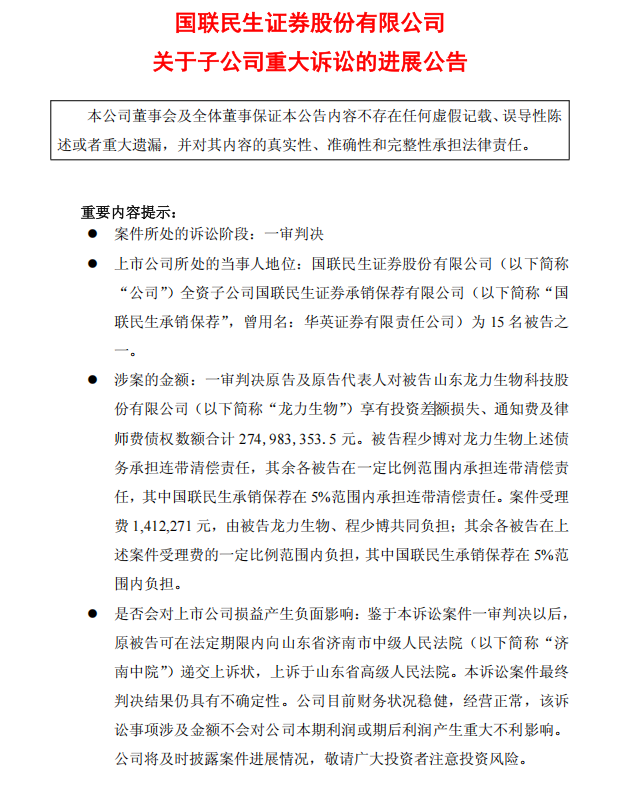
1618位股民把上市公司告了,获赔超2.75亿元
Yang Zi Wan Bao Wang· 2025-08-28 11:06
Core Viewpoint - The court ruling on the securities fraud case involving Longli Bio has significant implications for investor rights and the responsibilities of intermediary institutions in China’s capital market [1][4]. Group 1: Case Background - Longli Bio, once a prominent biomass energy company, was listed on the Shenzhen Stock Exchange in 2011 and engaged in systematic financial fraud from 2015 to mid-2017, inflating profits to hide operational losses [2]. - The company faced severe financial issues leading to a risk warning in January 2018, and it was officially delisted in July 2020, transitioning to the New Third Board for trading [2]. - The China Securities Regulatory Commission (CSRC) found that Longli Bio's fraudulent activities spanned several years, resulting in a maximum fine of 600,000 yuan for the company and additional penalties for its controlling shareholder and other responsible personnel [2]. Group 2: Legal Proceedings and Compensation - Following the delisting, 1,618 investors initiated a collective lawsuit against Longli Bio for losses incurred due to false statements, with the total claim exceeding 900 million yuan [4]. - The Jinan Intermediate People's Court ruled that Longli Bio must compensate investors for a total of 274 million yuan in investment losses, along with additional legal fees and notification costs [4]. - The controlling shareholder, Cheng Shaobo, is held jointly liable for all debts, while the underwriting institution Guolian Minsheng and the accounting firm Lixin are responsible for 5% and 30% of the compensation, respectively [4]. Group 3: Implications for Investors and Intermediaries - The case highlights the critical role of intermediary institutions in preventing financial fraud, as they are often the first line of defense against such misconduct [5]. - Legal experts suggest that increasing the liability of intermediaries and implementing mandatory insurance for company executives could enhance investor protection [5].

龙力生物证券虚假陈述责任纠纷案一审判决结果出炉 1618名投资者合计获赔超2.75亿元
Shang Hai Zheng Quan Bao· 2025-08-27 18:45
Core Viewpoint - The court ruling on the securities fraud case involving Longli Bio and its underwriter Guolian Minsheng Securities has resulted in significant compensation for investors, highlighting the accountability of both the company and its intermediaries in financial misconduct [1][2][3] Group 1: Court Ruling and Compensation - The Jinan Intermediate People's Court ruled that 1,618 investors are entitled to over 275 million yuan in compensation due to Longli Bio's fraudulent financial practices [1] - Longli Bio's actual controller, Cheng Shaobo, is held jointly liable for the compensation, while Guolian Minsheng Securities and Lixin Accounting Firm are responsible for 5% and 30% of the compensation, respectively [1][2] - The total compensation includes 274 million yuan in investment loss, 809,000 yuan in legal fees, and 80,700 yuan in notification fees [2] Group 2: Background of Longli Bio - Longli Bio was a prominent biomass energy company listed on the Shenzhen Stock Exchange, but it faced severe financial issues leading to its delisting in 2020 [1] - The company engaged in systematic profit inflation from 2015 to mid-2017, which concealed operational losses [1] - The China Securities Regulatory Commission (CSRC) found that Longli Bio's financial fraud lasted for several years and involved substantial amounts, resulting in fines for both the company and its key personnel [1] Group 3: Legal and Regulatory Implications - The ruling emphasizes the strict regulatory environment targeting financial fraud, particularly actions led by actual controllers like Cheng Shaobo [3] - The differentiation in liability between the underwriting and auditing firms reflects the judicial system's expectations of intermediaries' roles in the capital market [3] - As the comprehensive registration system reform progresses, the responsibilities of intermediary institutions are expected to increase [3]
透视半年报|ST华闻持续亏损三年半,资产负债率达82%
Bei Ke Cai Jing· 2025-08-26 07:30
Core Viewpoint - ST Huawen is facing severe liquidity issues, with significant declines in revenue and net profit, alongside increasing debt levels and asset restrictions [1][2][3] Financial Performance - In the first half of 2025, ST Huawen reported revenue of approximately 135 million, a year-on-year decrease of 22.5% [1][2] - The net profit attributable to shareholders was approximately -76.41 million, reflecting a decline of 26.09% compared to the previous year [1][2] - The net cash flow from operating activities was approximately -63.68 million, a drastic decline of 418.79% year-on-year [1][2] Debt and Asset Restrictions - As of June 30, 2025, ST Huawen had overdue medium-term notes totaling approximately 569 million and overdue bank loans of about 129 million [2] - The total amount of restricted assets exceeded 1.8 billion, with significant portions of equity, real estate, and land being pledged or frozen [2][8] Business Challenges - The company cited ongoing industry adjustments and liquidity constraints as key factors affecting business performance, alongside the need to cover interest and penalties on existing debts [3][12] - ST Huawen has been in a continuous loss state since 2022, attributing losses to industry adjustments, goodwill impairment, and fund losses [10] Legal and Regulatory Issues - The company has faced penalties for inflating revenue figures, with fines totaling 2.5 million due to violations related to revenue recognition practices [14][16] - ST Huawen is currently undergoing a pre-restructuring process initiated by the Haikou Intermediate People's Court, although formal acceptance of restructuring remains uncertain [10][11]

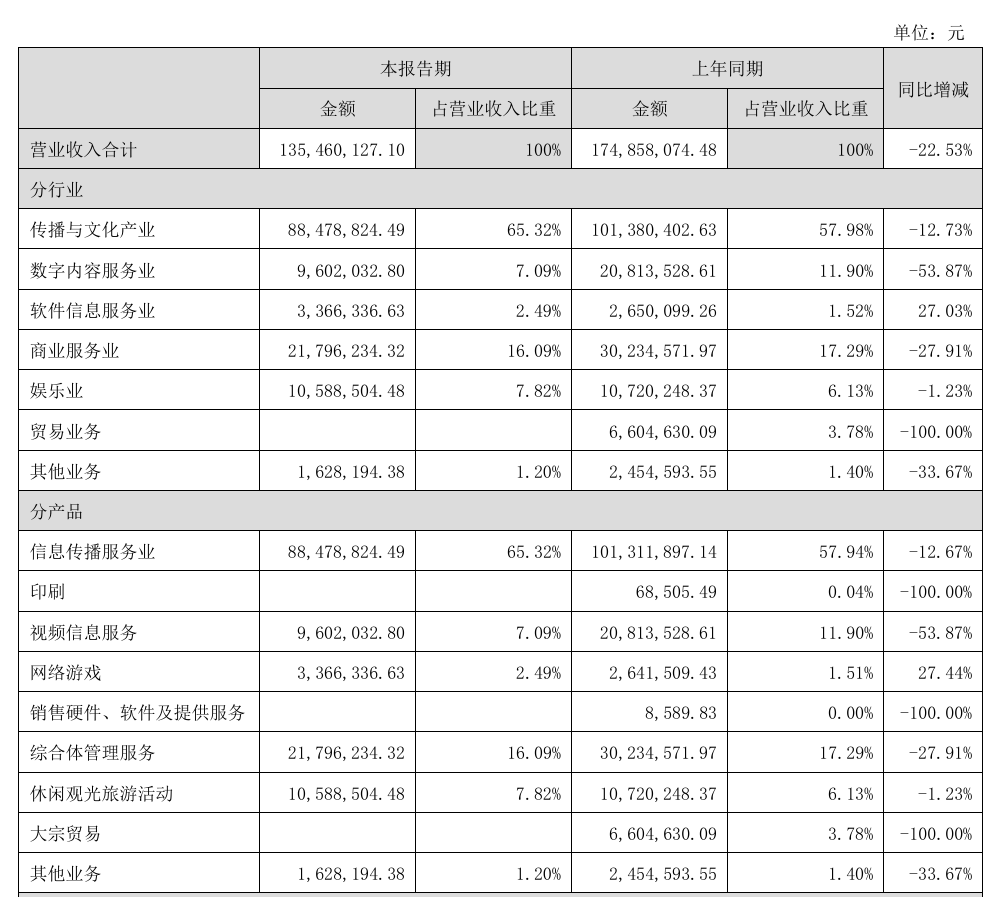
ST高鸿8月25日大宗交易成交294.67万元 成交价持平收盘价 累计跌幅偏离值超70%引关注
Sou Hu Cai Jing· 2025-08-25 12:23
Core Viewpoint - ST Gaohong is experiencing significant stock price decline and volatility due to serious financial fraud allegations, leading to a risk of forced delisting [1][2] Group 1: Stock Performance - On August 25, 2025, ST Gaohong's stock closed at 1.26 CNY per share, down 5.26% from the previous trading day, with a trading volume of 2.75 million CNY [1] - The stock has seen a cumulative decline of 56.70% from July 18 to August 25, with a cumulative deviation value of -70.23%, categorizing it as a severely abnormal fluctuation security [1] - From August 22 to 25, the stock price dropped by 10.00%, with a cumulative deviation value of -13.32% [1] Group 2: Financial Fraud and Impact - The abnormal stock price fluctuation is closely linked to a major financial fraud incident, where ST Gaohong inflated its operating income by 19.876 billion CNY and profit by 76.2259 million CNY from 2015 to 2023 [2] - The company faces a significant risk of forced delisting due to these fraudulent activities, including a fraudulent issuance of shares amounting to 1.25 billion CNY [2] - In Q1 2025, the company reported a loss of 42.69 million CNY, with projected losses for the first half of the year between 130 million to 180 million CNY [2] Group 3: Market Position and Risks - ST Gaohong currently has a total market capitalization of 1.459 billion CNY, with a price-to-book ratio of 2.46 and a negative price-to-earnings ratio [2] - Despite being in popular sectors like telecommunications and IoT, the stock has consistently ranked among the largest decliners in the market due to the impact of financial fraud and delisting risks [2] - The company’s main bank accounts are frozen, and it is facing ongoing debt defaults and litigation, which are continuously impacting its business operations [2]

楼起楼落,港交所已无03333
Mei Ri Jing Ji Xin Wen· 2025-08-25 11:16
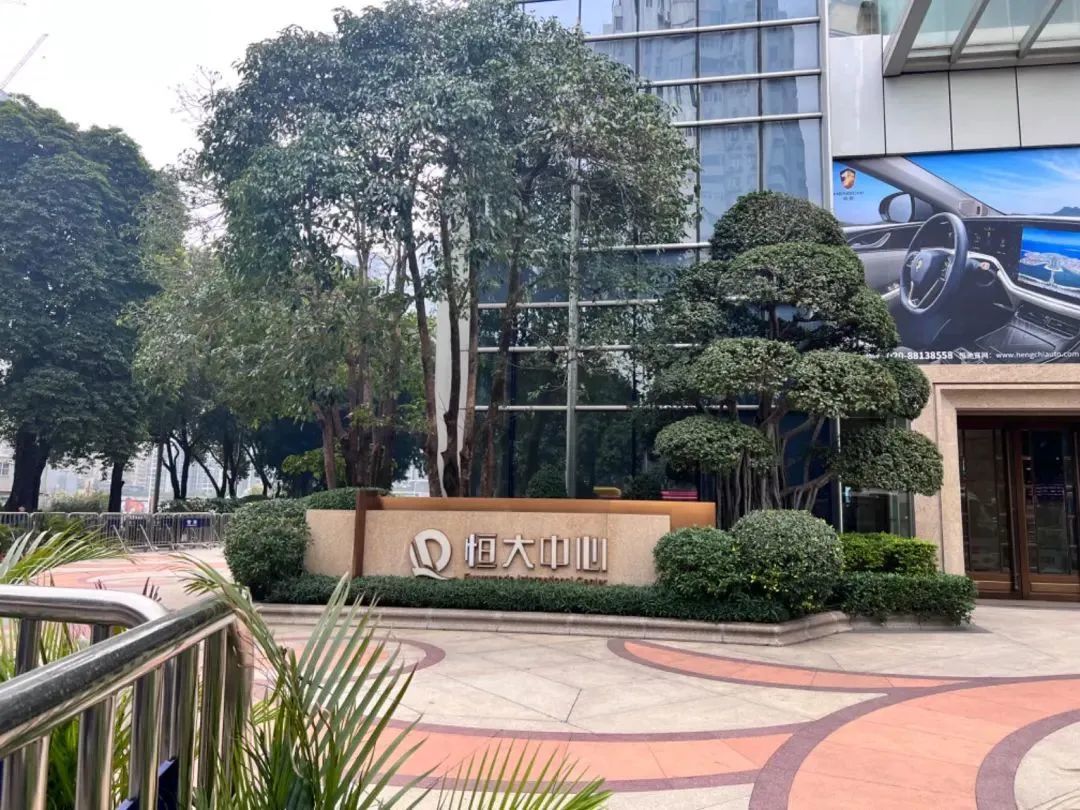
Core Viewpoint - China Evergrande's listing status on the Hong Kong Stock Exchange will be canceled effective August 25, 2025, due to prolonged suspension and financial insolvency [1][3]. Group 1: Financial Status and Legal Proceedings - China Evergrande has been suspended from trading since January 29, 2024, and has faced a court-ordered liquidation due to severe insolvency and inability to repay debts [2][6]. - The company has been found to have inflated revenues by over 560 billion yuan and profits by over 90 billion yuan through fraudulent accounting practices between 2019 and 2020 [7]. - As of the latest report, the total debt claimed against China Evergrande amounts to approximately 350 billion HKD (about 45 billion USD), while its last reported liabilities were around 275 billion USD [13][14]. Group 2: Asset Management and Recovery Efforts - The liquidators have identified total assets under their control valued at approximately 27 billion HKD, with liquid cash around 2 billion HKD [12]. - Legal actions are ongoing against former executives for their roles in the financial mismanagement, with claims for approximately 6 billion USD in dividends and compensation [11]. - The liquidation process aims to protect creditor interests and may allow for more flexible asset management post-delisting, although it may reduce transparency and bargaining power for creditors [16].
每经热评︱紫天科技财务造假近25亿元被严惩 企业治理不能用“家族信任”代替“制度约束”
Mei Ri Jing Ji Xin Wen· 2025-08-25 02:37
Core Viewpoint - The case of *ST Zitian highlights the severe consequences of financial fraud, leading to significant penalties and the loss of market credibility [1][2][3] Group 1: Financial Fraud and Consequences - *ST Zitian was fined a total of 38.4 million yuan by the Fujian Securities Regulatory Bureau for systemic financial fraud involving nearly 2.5 billion yuan in revenue [1] - The company's market value has plummeted to just over 400 million yuan, representing a loss of over 90% from its peak [2] Group 2: Governance Issues - The family-based governance structure of *ST Zitian led to a lack of accountability, with executives deflecting blame onto each other during the crisis [2] - This situation underscores the importance of establishing a modern governance framework that includes independent directors and professional oversight, rather than relying solely on familial trust [2] Group 3: Regulatory Compliance - The company's refusal to cooperate with regulatory investigations, including ignoring communications from regulators, exemplifies a blatant disregard for market rules [3] - The regulatory response indicates a zero-tolerance policy towards financial fraud and non-compliance, emphasizing that companies cannot evade consequences through concealment or delay [3]

紫天科技财务造假近25亿元被严惩 企业治理不能用“家族信任”代替“制度约束”
Mei Ri Jing Ji Xin Wen· 2025-08-24 13:18
Core Viewpoint - The case of *ST Zitian (300280) highlights the severe consequences of financial fraud, leading to significant penalties and the potential delisting of the company from the stock market [1][2][3] Group 1: Financial Fraud and Consequences - *ST Zitian has been fined a total of 38.4 million yuan by the Fujian Securities Regulatory Bureau for systemic financial fraud involving nearly 2.5 billion yuan in revenue [1] - The company's market value has plummeted to just over 400 million yuan, representing a loss of over 90% from its peak [2] Group 2: Governance Issues - The family ties among the company's executives led to a lack of accountability, as they engaged in mutual blame rather than cooperating with investigations [1][2] - The case serves as a warning that family-based governance cannot replace institutional constraints, emphasizing the need for independent directors and professional oversight [2] Group 3: Regulatory Compliance - The company's refusal to cooperate with regulatory investigations, including ignoring calls and messages from regulators, demonstrates a blatant challenge to regulatory authority [3] - The regulatory response indicates a zero-tolerance policy towards financial fraud and non-compliance, reinforcing the importance of adhering to market rules [3]
每经热评|紫天科技财务造假近25亿元被严惩 企业治理不能用“家族信任”代替“制度约束”
Mei Ri Jing Ji Xin Wen· 2025-08-24 12:22
Core Viewpoint - The case of *ST Zitian (SZ300280) serves as a cautionary tale for the capital market, highlighting the severe consequences of financial fraud and the importance of corporate governance and regulatory compliance [1][2][3] Group 1: Financial Fraud and Consequences - *ST Zitian has been penalized with a total fine of 38.4 million yuan by the Fujian Securities Regulatory Bureau for systemic financial fraud involving nearly 2.5 billion yuan in revenue [1] - The company's market value has plummeted to just over 400 million yuan, representing a loss of over 90% from its peak [2] Group 2: Corporate Governance Issues - The family ties among the company's executives led to a chaotic blame game during the crisis, demonstrating that familial relationships cannot replace institutional constraints in corporate governance [2] - The case emphasizes the necessity for independent directors and professional oversight to prevent governance failures [2] Group 3: Regulatory Compliance and Market Sentiment - The company's blatant defiance of regulatory investigations, including ignoring communications from regulators, signifies a challenge to regulatory authority and market rules [3] - The regulatory response indicates a zero-tolerance policy towards financial fraud and non-compliance, reinforcing the need for companies to adhere to market regulations [3]