Machine Learning

Search documents
X @Avi Chawla
Avi Chawla· 2025-09-06 06:33
General Overview - The document is a wrap-up message encouraging readers to reshare the content if they found it insightful [1] - It promotes tutorials and insights on Data Science (DS), Machine Learning (ML), Large Language Models (LLMs), and Retrieval-Augmented Generation (RAGs) [1] Author Information - Avi Chawla (@_avichawla) shares daily tutorials and insights [1] Project Focus - The content focuses on generating a Large Language Model (LLM) fine-tuning dataset locally [1]
AI & The Future: Shaping Tomorrow Innovation | Gamma Kosala | TEDxTelkom University
TEDx Talks· 2025-09-05 16:47
Problem Statement & Industry Concerns - Street crime accounts for 35% of conventional crime, highlighting the urgency of addressing street crime and motorcycle gangs in Indonesia [7] - The speaker's personal experience of being attacked by a motorcycle gang ("kelitih") in Yogyakarta illustrates the issue of street crime [2][3][4] AI Solution & Technological Application - The speaker and team are developing AI to enhance city safety and comfort [9] - AI, leveraging machine learning, can learn from data to solve problems [14] - London Underground uses AI to detect potentially harmful actions, resulting in 44,000% alerts from October 2022 to September 2023, with 19,000% of alerts sent to nearby stations for immediate action [15] - The team is creating an algorithm to detect motorcycle gangs by training AI with thousands of CCTV videos from major cities, achieving over 90% accuracy in classification [17][18] - AI-integrated CCTV can transition from passive monitoring to proactive prediction of street crimes like motorcycle gangs, snatching, and theft [20][21][22] Collaboration & Community Involvement - AI cannot independently secure a city, necessitating community collaboration [23] - The team is developing a monitoring application that allows citizens to report incidents in areas without CCTV coverage, which will be verified by AI and authorities [24][25] - The application aims to foster collaboration between the community and AI to enhance city safety [26]


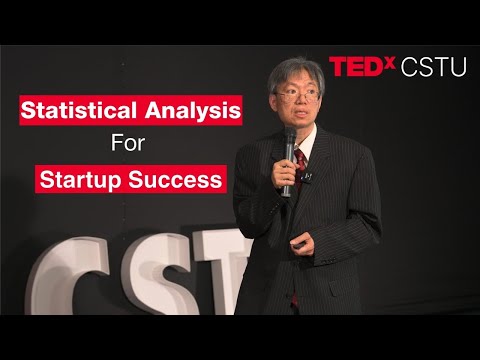
Statistical Analysis For Startup Success | Ricky Chan | TEDxCSTU
TEDx Talks· 2025-09-05 15:33
Ricky Chan, a distinguished professor and entrepreneur, will present an innovative TEDx CSTU talk in 2025 that redefines startup success. His presentation reveals a transformative approach to entrepreneurship by fusing statistical analysis with cutting-edge AI technologies. Challenging the traditional reliance on guesswork, Chan's vision is to empower investors and founders with confident, informed decisions that dramatically increase success rates. With the sobering statistic that 99 out of 100 startups fa ...
Sera Prognostics (SERA) FY Conference Transcript
2025-09-05 12:00
Summary of Sera Prognostics Conference Call Company Overview - **Company**: Sera Prognostics - **Industry**: Healthcare, specifically focused on pregnancy and preterm birth risk assessment - **Product**: PreTRM Test, a clinically validated test for screening risks of spontaneous premature birth [2][3][4] Key Points and Arguments Challenges in Preterm Birth - **Prevalence**: 1 in 10 babies are born prematurely, defined as birth before 37 weeks of gestation [2][3] - **Trends**: Preterm birth rates in the U.S. have increased from 9.4% in 2013 to 10.4% in 2023, indicating a double-digit compound growth rate [5] - **Healthcare Costs**: Prematurity costs the U.S. healthcare system approximately $25 billion annually [4] - **NICU Costs**: Average NICU stay costs around $4,500 per day, with extremely premature babies costing up to $20,000 per day [6] PreTRM Test Overview - **Unique Selling Proposition**: The PreTRM Test is the only clinically validated test for early prediction of premature birth, utilizing proteomics to measure biomarkers [10][15] - **Biomarkers**: The test measures the ratio of IGFBP4 and SHBG proteins to assess risk for spontaneous preterm birth [10][11] - **Timing**: The test is conducted during weeks 18 to 20 of pregnancy, integrating into standard care [11] Clinical Validation and Efficacy - **Clinical Studies**: The PreTRM Test has been validated through studies like AVERT and PRIME, showing significant reductions in NICU admissions and improved neonatal health outcomes [16][19] - **Efficiency**: The number needed to screen to avoid one NICU admission is 40, compared to 150 for traditional methods [17] - **Cost Savings**: Only four women need to be screened to avoid one NICU day stay [20] Commercialization Strategy - **Funding**: Sera Prognostics is well-funded with approximately $110 million in cash and a $30 million annual operating budget [4] - **Targeted States**: The company is focusing on six key states for commercialization, with a sales force and access team to ensure reimbursement and awareness [21][22] - **Partnerships**: Collaborations with payers and digital education channels to increase awareness among clinicians and expectant mothers [23][25] Future Outlook - **Guideline Inclusion**: Aiming for inclusion in clinical guidelines and payer coverage based on clinical evidence [21] - **Health Economic Model**: The breakeven for deploying the test could be achieved within a year, presenting data at the ISPOR Europe Conference [24] - **Community Impact**: The goal is to empower mothers and educate providers to improve health outcomes for babies [25] Additional Important Information - **Healthcare System Impact**: The implications of preterm birth extend beyond immediate healthcare costs, affecting long-term health and economic outcomes for families [6][7] - **Awareness Gap**: Only 20% of expectant mothers are informed about the risks of preterm birth during their first appointment [9] - **Technological Investment**: Sera Prognostics is investing in AI and machine learning to enhance predictive algorithms for the PreTRM Test [13][14] This summary encapsulates the critical insights from the conference call, highlighting the challenges, solutions, and strategic direction of Sera Prognostics in addressing preterm birth risks.

QuantGate Systems Inc. Expands and Strengthens Its Advisory Board with Strategic Appointments
Newsfile· 2025-09-04 17:38
Core Insights - QuantGate Systems Inc. has expanded its Advisory Board by appointing two experienced professionals, Jaspreet Randhawa and Scott MacAndrew, to enhance its strategic capabilities in global investments and fintech innovation [1][2][3]. Group 1: Advisory Board Appointments - Jaspreet Randhawa is a derivatives strategist with expertise in trading infrastructure and institutional capital markets, holding degrees from Durham University and Harvard Business School [2]. - Scott MacAndrew brings over 25 years of experience in global finance as a portfolio manager and market-maker, and is involved in expanding digital banking access through Cypher by Holt [3]. Group 2: Company Commitment - The new appointments reflect QuantGate's commitment to leveraging industry leaders' strategic counsel to advance business development, technology commercialization, and global growth [4]. Group 3: Company Overview - QuantGate Systems Inc. is a fintech innovator that provides real-time market sentiment analysis and AI-powered trading intelligence, aiming to empower traders and investors with superior insights [5].

Lila Biologics Announces Collaboration with Lilly For Radioligand Therapy Discovery and Development
GlobeNewswire News Room· 2025-09-04 13:00
Core Insights - Lila Biologics has entered a global licensing and multi-target research collaboration with Eli Lilly to develop novel radioligand therapies for solid tumors [1] - The company has launched two AI/ML-driven protein therapeutic platforms aimed at treating cancer and non-oncology diseases [1][5] - Lila's proprietary technology focuses on optimizing drug-like properties of proteins to create transformative therapeutics [2][4] Company Overview - Lila Biologics was founded in late 2023, emerging from the lab of Nobel Laureate David Baker at the University of Washington [6] - The company is headquartered in Seattle, WA, and aims to revolutionize patient care through advanced protein design technologies [5][6] Technology and Platforms - Lila's Targeted Radiotherapy (TRT) platform is designed for solid tumor indications, while the Long-Acting Injectables (LAI) platform targets non-oncology diseases [5] - The LILADD™ framework allows rapid discovery and optimization of protein-based biologics with first- or best-in-class potential [2] Collaboration with Eli Lilly - The collaboration will focus on generating novel tumor-targeting radiopharmaceuticals, with Lila designing precision-targeted proteins and Lilly handling clinical development and commercialization [3] - Lila retains full asset rights to its proprietary RLT and LAI pipelines, separate from the collaborative efforts with Lilly [3]


Global-e Announces Board Authorization of $200 Million Share Repurchase Program
Globenewswire· 2025-09-04 12:55
Core Viewpoint - Global-e Online Ltd. has announced its first-ever stock repurchase program, authorizing up to $200 million for the buyback of its ordinary shares, reflecting confidence in cash flow generation and commitment to shareholder value [1][2]. Group 1: Stock Repurchase Program - The board of directors has authorized a stock repurchase program amounting to $200 million [1]. - The program aims to enhance shareholder value and demonstrates the company's strong cash flow generation capabilities [2]. - Repurchases may occur through various methods, including open market purchases and privately negotiated transactions, in compliance with U.S. securities laws [2]. Group 2: Financial Health and Strategy - The company has a healthy balance sheet that allows for continued investment in strategic initiatives while returning capital to shareholders [2]. - Repurchases will be funded through cash on hand and future cash generated from operations [2]. - The timing, number, and value of repurchased securities will depend on market conditions, financial results, and liquidity [2]. Group 3: Company Overview - Global-e is a leading platform for global direct-to-consumer e-commerce, partnering with over 1,400 brands and retailers across North America, EMEA, and APAC [5]. - The company facilitates international sales by providing a localized shopping experience for online shoppers in over 200 destinations [5]. - Global-e's solutions combine localization capabilities, business intelligence models, and international logistics expertise [5].


Azitra, Inc. to Present at the H.C. Wainwright 27th Annual Global Investment Conference
Prnewswire· 2025-09-04 12:10
Core Insights - Azitra, Inc. is a clinical stage biopharmaceutical company focused on innovative therapies for precision dermatology [4] - The company will present at the H.C. Wainwright 27th Annual Global Investment Conference from September 8-10, 2025 [3] - Recent updates include promising safety results from the Phase 1b clinical trial of the ATR-12 program for Netherton syndrome and the initiation of the Phase 1/2 trial for the ATR-04 program targeting EGFR inhibitor-associated dermal toxicity [2][4] Company Overview - Azitra's lead program, ATR-12, targets Netherton syndrome, a rare skin disease with no approved treatments, and is currently in a Phase 1b clinical trial [4] - The ATR-04 program addresses EGFR inhibitor-associated rash, which affects approximately 150,000 people in the U.S., and has received Fast Track designation from the FDA [4] - The company utilizes a proprietary platform of engineered proteins and a microbial library of around 1,500 bacterial strains, enhanced by AI and machine learning for drug discovery [4] Presentation Details - The virtual presentation by Travis Whitfill, Cofounder and COO, is scheduled for 7:00 AM ET on September 8, 2025 [3] - During the conference, one-on-one meetings will be held with registered investors and potential partners to discuss the company's business and clinical development strategy [3]

X @Polyhedra
Polyhedra· 2025-09-04 12:00
2/ Unified Interface for Different Workloads:Consolidated the prover’s interface to support both straightforward circuits (such as hashing) and more sophisticated computation graphs (such as machine learning models). This flexibility ensures the system can scale from simple cryptographic tasks to complex computational workloads. ...
AI's role in revolutionizing drug discovery | Kaja Milanowska-Zabel | TEDxIILOPoznań
TEDx Talks· 2025-09-03 16:39
Drug Discovery Process - Traditional drug discovery is lengthy and costly, taking 10-15 years and billions of dollars to bring a single drug to market [4][5] - AI can accelerate drug discovery and reduce costs by using machine learning and deep learning algorithms [6] - AI-driven virtual screening can identify potential drug candidates from vast chemical spaces, reducing the number of candidates for lab validation from millions to 50-100 [8][9][10] AI Applications in Drug Development - AI can assist in target identification by analyzing data to determine connections with specific indications [19] - AI can predict toxicology, efficacy, stability, and pharmacokinetics of drug candidates [20] - AI can aid in patient stratification during clinical studies by analyzing patient data (genetic information, images, physical information) to group patients who may or may not benefit from the drug [13][14] Clinical Trials and Regulatory Approval - Only 10% of drugs entering clinical studies are successful, highlighting the need for optimized clinical trial design [15] - AI can be used for risk management in clinical trials, predicting risk factors and adapting protocols based on results [17] - AI can assist in preparing FDA submissions and communicating drug information to patients using large language models [17][18]