三化融合

Search documents
宋丁:万亿南山,敢与全球顶尖科技城区 “掰手腕” —— 专访国家高端智库 CDI 资深研究员,拆解科技城区的全球竞逐密码
Sou Hu Cai Jing· 2026-01-29 03:42
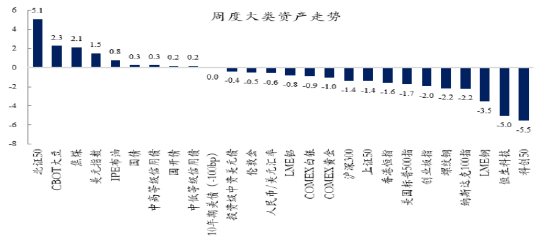
Core Insights - Shenzhen's Nanshan District is projected to surpass a GDP of 1 trillion yuan by 2025, becoming the first district in China to achieve this milestone, positioning itself on the global stage for technology and economic competition [1] Group 1: Economic Drivers - The core driver behind Nanshan's trillion-yuan achievement is the combination of technology and finance, which acts as a catalyst for economic growth [3] - Nanshan is home to major tech companies like Huawei, Tencent, and ZTE, establishing a strong foundation for technology and research [3] - The financial sector in Shenzhen plays a crucial role in facilitating the rapid monetization of technological achievements, creating an efficient innovation loop [3] Group 2: Innovation Ecosystem - Nanshan's innovation model is characterized by a business-led research and development ecosystem, with over 90% of R&D funding coming from enterprises [4] - This contrasts with other cities that rely heavily on academic institutions, allowing Nanshan to maintain a leading position in R&D investment and capabilities [4] - The close integration of R&D and manufacturing in Nanshan ensures that innovation is driven by market demand, preventing disconnection between research and industry [4] Group 3: Market Characteristics - The success of Nanshan's economy is attributed to the integration of market-oriented innovation, openness, and property rights protection [5] - Nanshan's high technology conversion rate is driven by demand-oriented innovation logic, supported by its geographical proximity to Hong Kong [5] - The combination of these factors creates a robust foundation for the district's economic growth [5] Group 4: Challenges and Future Directions - Despite its achievements, Nanshan faces challenges in original innovation, relying heavily on technology transfer rather than foundational research [6] - There is a need to enhance core technology capabilities, particularly in AI, to compete with global leaders [6] - Moving forward, Nanshan must focus on resource integration, AI penetration, and high-level innovation to create a mutually beneficial development ecosystem [6][7] Group 5: Global Positioning - Nanshan is positioned to compete on an international level, with its technology conversion capabilities already leading globally [8] - Compared to Silicon Valley, Nanshan benefits from a combination of dense R&D resources and high-end manufacturing, which is a unique advantage [8] - While there are gaps in R&D investment compared to international giants, Nanshan demonstrates superior efficiency in converting R&D into tangible outputs [8]



广州工控大湾区高端装备产业园开园 产业园总投资达47亿元
Guang Zhou Ri Bao· 2026-01-04 08:29
Core Viewpoint - The Guangzhou Intelligent Manufacturing High-end Equipment Industrial Park officially opened, marking a new journey for "Guangzhou Intelligent Manufacturing" towards global applications [1] Group 1: Industrial Park Overview - The industrial park is located in the Nansha Suikang Intelligent Manufacturing Base, covering an area of over 640 acres with a total investment of 4.7 billion yuan [1] - The park focuses on the integration of industrialization, digital intelligence, and green development, establishing a "1+3" industrial system centered on "port heavy equipment" [1] Group 2: Product Focus and Innovation - Key products include marine engineering equipment, rail transit equipment, clean and efficient power generation equipment, modular buildings, and high-tech ships and power equipment [1] - The park will also collaborate to build several intelligent manufacturing innovation platforms to accelerate technological integration and industrial collaboration in the Guangdong-Hong Kong-Macao region [1] Group 3: Infrastructure and Logistics - The park features the only heavy equipment embedded port pool terminal in the Nansha core area, with a berthing capacity of 1,500 tons, facilitating efficient export of large equipment [1] Group 4: Partnerships and Collaborations - A series of cooperation signing ceremonies took place, with major companies like China Construction Technology, China Railway Equipment Tianjin Company, Guangzhou Heavy Industry Group, and Guangchai Co., Ltd. signing agreements to settle in the industrial park [1] - This marks a significant step in resource integration, technology sharing, and market collaboration among central enterprises and local state-owned enterprises [1]
国防军工行业 2026 年度投资策略:转型,增长的信心
Changjiang Securities· 2025-12-16 11:13
Core Insights - The report identifies the main investment themes for the defense and aerospace industry in 2025 as internal equipment, military trade, and military-civilian integration, with a focus on the second growth curve as a key selection criterion for stocks [2][5][36] - For 2026, military-civilian integration and military trade are expected to remain the primary investment lines, supported by stable growth in defense spending and policy guidance [2][5] Industry Overview - The report outlines a deep review of the defense industry, highlighting that the internal equipment market, military trade, and military-civilian integration emerged as the three main investment directions in 2025 [5][21] - The investment framework has evolved from focusing solely on internal equipment to incorporating military trade and military-civilian integration, reflecting a more comprehensive understanding of the market dynamics [5][21] Policy Analysis and Internal Equipment Outlook - The report emphasizes that the integration of mechanization, information technology, and intelligence will drive future growth in internal equipment, with specific focus areas including information support forces, cyber warfare units, military aerospace, and rocket forces [6][41][46] - Recent U.S. defense policy changes, which reduced the number of key technology areas from 14 to 6, align closely with China's focus on new quality and new domain developments [6][41] Investment Strategy for 2026 - The report recommends a bottom-up approach to stock selection, emphasizing the importance of identifying stocks that excel in the second growth curve, particularly in military trade and military-civilian integration [7][36] - Specific companies are highlighted as key investment targets, including 中航沈飞 (AVIC), 广东宏大 (Guangdong Hongda), and 西部超导 (West Superconductor), which are positioned to benefit from trends in military trade and civilian applications [22][33][36] Key Investment Areas - The report identifies several promising sectors within the defense industry, including special chips, quartz electronic fabrics, aerospace electronics, high-performance power supplies, and military aviation engines, each with unique growth drivers [22][33][36] - The military trade sector is expected to see a shift towards high-end equipment exports, with 中航沈飞 (AVIC) and 广东宏大 (Guangdong Hongda) as core players [22][36] Conclusion - The report concludes that the second growth curve represents a critical opportunity for investors, with military trade and military-civilian integration likely to be the main growth drivers in the coming years [36][41]



创金合信基金魏凤春:传统产业投资与格瓦拉困境
Xin Lang Ji Jin· 2025-11-07 01:57
Core Viewpoint - The article emphasizes the importance of traditional industries in China's economic landscape, particularly in the context of the 14th Five-Year Plan, highlighting their role in stabilizing growth, employment, and income [5][10]. Market Review - The recent market performance indicates a shift from growth stocks to value stocks, with traditional sectors like electric equipment, steel, and coal showing significant gains, while tech sectors faced declines [2][4]. - The "old-style" stocks, characterized by stable earnings and generous dividends, are regaining attention as market dynamics shift [2][4]. Industry Rebalancing - Traditional industries are crucial for short-term demand expansion and are categorized under the 14th Five-Year Plan as essential for economic stability [4][5]. - The plan aims to optimize traditional industries while fostering new and future industries, with traditional sectors accounting for approximately 80% of manufacturing value [5]. Traditional Industries' Role - Traditional industries are seen as the backbone of the economy, essential for maintaining growth, employment, and income levels, especially during economic downturns [5]. - The service sector also plays a vital role in employment, necessitating a shift towards high-quality development [5]. Market Analysis of Traditional Industries - The analysis of operational and financial leverage across traditional industries reveals varying levels of risk and opportunity, with some sectors showing signs of stress due to high leverage [6]. - The first quadrant indicates high non-current asset ratios and debt levels, posing risks in a slowing economy, while the third quadrant shows low leverage, suggesting potential for growth in an upward economic trend [6]. Short-term Trends in Traditional Industries - The Producer Price Index (PPI) data indicates a recent uptick in prices for certain traditional sectors, supporting the profitability of traditional industry stocks [9]. - Specific sectors like coal mining and black metal mining have shown PPI increases, which may enhance their profitability [9]. Investment Strategy for Traditional Industries - The article warns against a rigid investment approach, termed the "Guevara dilemma," advocating for a flexible strategy that adapts to changing market conditions [10]. - Traditional industries must integrate with new technologies and models to achieve high-quality development, emphasizing the need for innovation and transformation [10].