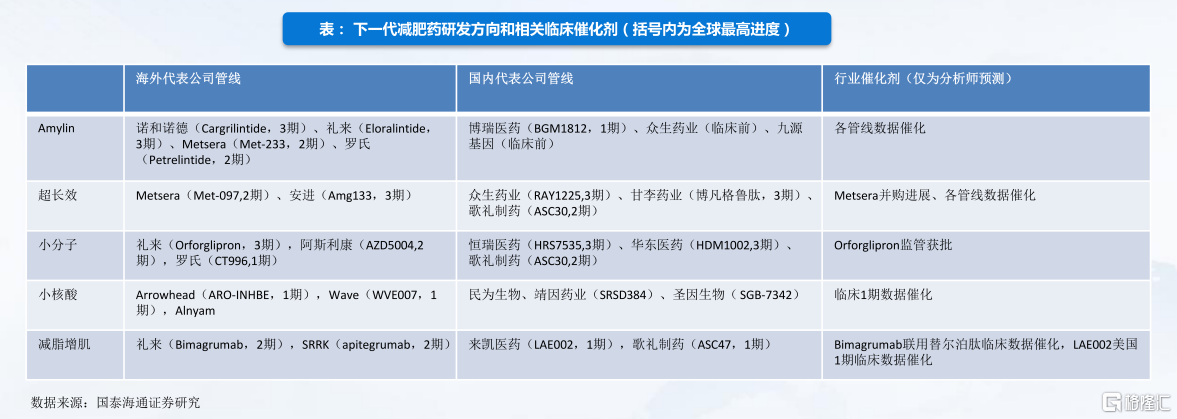
下一代减肥药

Search documents
减肥药进入“长期维持+低频注射”时代 安进(AMGN.US)“月服”优势引领千亿美元市场
Zhi Tong Cai Jing· 2026-01-14 07:16
Core Viewpoint - Amgen's experimental weight loss drug MariTide shows promising results in clinical trials, allowing obese patients to maintain weight loss with monthly injections, contrasting with the weekly injections of current popular weight loss medications [1][2][4] Group 1: Drug Mechanism and Administration - MariTide is a GLP-1 related drug that activates GLP-1 receptors while blocking GIP receptors, offering a dual mechanism that differs from traditional GLP-1 agonists [2][3] - The drug is currently in Phase 3 clinical trials and has not yet received FDA approval for clinical sales [2] - The convenience of administration is highlighted, with potential for monthly or even quarterly injections, which could improve patient adherence compared to weekly injections required by existing treatments [1][4] Group 2: Clinical Efficacy - In the Phase 2 trial, participants experienced an average weight loss of approximately 20% over 52 weeks, with no plateau in weight loss observed, indicating sustained effectiveness [4] - The dual mechanism of action is expected to provide a more durable intervention compared to existing weight loss drugs [3][4] Group 3: Market Potential - Goldman Sachs projects the global anti-obesity drug market could reach $90 billion to $100 billion by 2030, significantly higher than the current market size [5][6] - The market is viewed as having substantial growth potential, with Amgen's MariTide expected to play a key role in this expansion, potentially leading to a revaluation of the company's stock [6] - The increasing global obesity rates and the demand for effective weight loss treatments are driving the market growth, with predictions of a large patient population beginning treatment in the coming years [6][7] Group 4: Competitive Landscape - Goldman Sachs expresses a more favorable outlook on MariTide compared to existing drugs like Novo Nordisk's Wegovy and Eli Lilly's Zepbound, suggesting greater upside potential for Amgen's stock [6] - The market is entering a new phase characterized by "price for volume" strategies, driven by policy changes and the introduction of oral weight loss medications, which are expected to lower barriers for patient access [7]

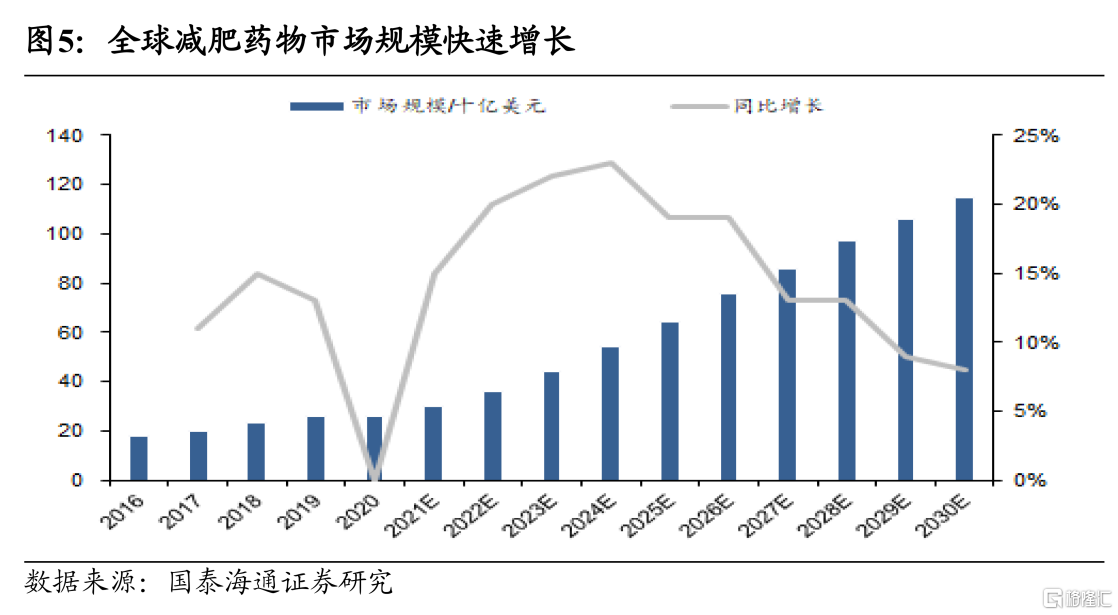
两家公司同一天股价翻倍,资本市场在押注什么样的减肥药?
新财富· 2025-12-25 08:52
Core Viewpoint - The capital market is shifting its focus from merely achieving higher weight loss percentages to exploring alternative methods for addressing obesity, particularly through new drug mechanisms and oral formulations [3][6]. Group 1: Market Trends and Innovations - The weight loss drug industry is reaching a consensus that a 25% weight loss may be the upper limit achievable through drug interventions, with increasing difficulty in achieving stable and tolerable breakthroughs [3][6]. - On December 8, 2023, several biotech companies focused on next-generation weight loss drugs saw significant stock price increases, driven by early clinical data on oral small molecules and new mechanisms outside of GLP-1 [3]. - Eli Lilly's Retatrutide reported a 28.7% weight loss in its Phase III TRIUMPH-4 study, surpassing the previously accepted 25% ceiling, but this came with higher discontinuation rates and new adverse reaction signals [5][13]. Group 2: Clinical Data and Implications - The TRIUMPH-4 study included 445 participants with obesity or overweight and knee osteoarthritis, indicating a larger weight loss potential due to the higher baseline BMI of participants [15]. - Retatrutide demonstrated significant improvements in pain scores related to osteoarthritis, suggesting its clinical value extends beyond weight loss alone [20]. - The study revealed that 47.7% and 58.6% of participants in the 9 mg and 12 mg groups, respectively, achieved at least 25% weight loss, while only 1.3% in the placebo group did [22]. Group 3: Future Directions in Weight Loss Drug Development - The next generation of weight loss drugs is expected to focus on improving tolerability and adherence rather than solely maximizing weight loss percentages, with oral formulations and receptor signaling pathways becoming key areas of exploration [29][30]. - Companies like Structure Therapeutics and Wave Life Sciences are developing oral small molecules and RNA therapies that aim to enhance patient compliance and address body composition rather than just weight [30][36]. - The competition in the weight loss drug market is evolving towards a more nuanced understanding of patient needs, emphasizing long-term management and the optimization of body composition [44][46].

20.85亿美元!复星医药国际合作再添里程碑
Ge Long Hui· 2025-12-13 04:35
Core Viewpoint - Pfizer's aggressive strategy in the weight loss drug market is underscored by its recent licensing agreement with Fosun Pharma, granting Pfizer exclusive global rights to develop and commercialize the oral GLP-1R agonist YP05002, with a total transaction value of up to $2.085 billion [1][3][4]. Group 1: Pfizer's Strategic Moves - Pfizer's recent acquisition of Metsera for over $10 billion and the licensing deal for YP05002 reflect its commitment to expanding its weight loss drug portfolio amid impending patent expirations for several key products [3][4]. - The company plans to invest $10-15 billion in mergers and acquisitions by 2025, indicating a proactive approach to filling revenue gaps caused by patent cliffs [3][4]. - Pfizer's recent transactions highlight its determination to capture a significant share of the weight loss market, which is projected to be worth hundreds of billions [3][4]. Group 2: Fosun Pharma's International Strategy - The collaboration with Pfizer is a significant milestone for Fosun Pharma, enhancing its internationalization strategy and accelerating the global development of YP05002 [2][10]. - Fosun Pharma has completed six external business development deals in 2025, totaling approximately $4 billion, which includes various innovative drug pipelines [10][11]. - The partnership with Pfizer not only boosts Fosun's revenue potential but also strengthens its core technology platforms in antibody, ADC, cell therapy, and small molecule innovation [10][11]. Group 3: Market Dynamics and Competitors - The weight loss drug market is experiencing a surge, with multiple companies reporting positive clinical data for their GLP-1 drugs, leading to significant stock price increases [5][6]. - Notable competitors include ShouTi Bio and EQRx, which have reported promising results for their respective GLP-1 drugs, indicating a competitive landscape [5][6]. - The emergence of next-generation weight loss drugs, including small molecules and siRNA therapies, suggests a dynamic and evolving market with various players vying for market share [8][9][14].

辉瑞胜出!100亿美元收购Metsera,打败诺和诺德
Hua Er Jie Jian Wen· 2025-11-08 06:21
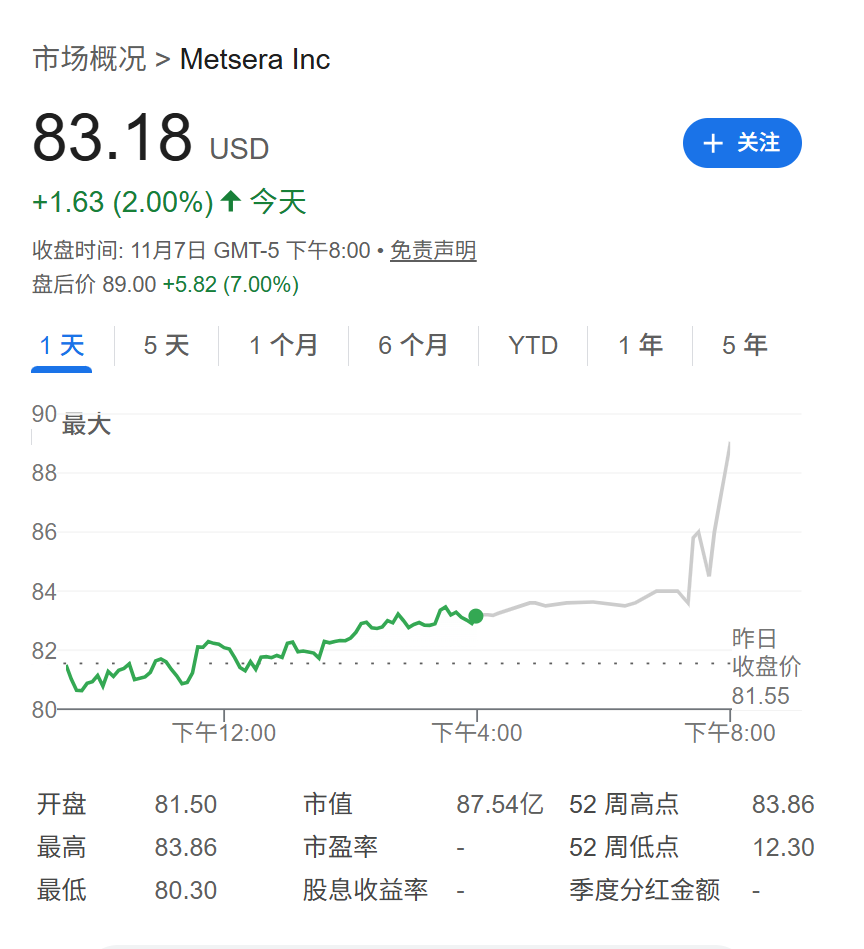
Core Insights - Pfizer successfully acquired Metsera Inc. for $10 billion after a competitive bidding war with Novo Nordisk, with a final offer of up to $86.25 per share, representing a 159% premium over Metsera's closing price before the initial offer [1][2][6] Group 1: Acquisition Details - The acquisition includes an initial cash payment of $65.60 per share and potential milestone payments of up to $20.65 per share [1] - Pfizer's acquisition proposal has received approval from the FTC, providing certainty for the transaction, while Novo Nordisk's proposal faced regulatory scrutiny [1][6] - Metsera's stock price surged approximately 150% since Pfizer's initial announcement, reflecting investor confidence in the acquisition [2][5] Group 2: Strategic Implications - The acquisition is crucial for Pfizer, which is facing declining revenues from its COVID-19 business and has struggled with the development of its own weight loss drugs [5] - Novo Nordisk aimed to enhance its competitive position in the weight loss market through the acquisition of Metsera but faced challenges from Pfizer's aggressive bidding [5][6] - The global weight loss drug market is projected to reach $100 billion by 2030, making the acquisition strategically significant for both companies [7] Group 3: Metsera's Position - Metsera, founded in 2022, focuses on developing next-generation weight loss drugs, with three candidates in early to mid-stage development [7] - The drugs in Metsera's pipeline are expected to offer longer efficacy or fewer side effects compared to existing treatments like Novo Nordisk's Wegovy [7]

辉瑞,不想认输
Ge Long Hui· 2025-10-11 16:02
Core Viewpoint - Pfizer's recent acquisition of Metsera for over $7.2 billion marks its strong re-entry into the weight loss market, despite previous setbacks in its GLP-1 pipeline. The company aims to capture a share of the lucrative obesity and cardiometabolic disease treatment market, which is projected to grow significantly in the coming years [1][4]. Group 1: Market Potential and Competition - The global GLP-1 market is expected to reach approximately $52.83 billion in 2024, with a year-on-year growth of 46%. The sales of semaglutide products are projected to be around $29.3 billion, holding a 55.5% market share, while tirzepatide products are expected to generate nearly $16.5 billion, accounting for 32.23% [1]. - In 2024, sales of the weight loss version of semaglutide (Wegovy) are anticipated to grow by 86% to about $8.448 billion, while tirzepatide (Zepbound) is expected to see a staggering 2702% increase to $4.926 billion [2]. - The global anti-obesity drug market is forecasted to exceed $150 billion by 2030, indicating a robust growth trajectory for the sector [2]. Group 2: Pfizer's Strategy and Pipeline - Pfizer had previously halted its GLP-1 pipeline development, which included three small molecule agonists, leaving only one GIPR antagonist in Phase II clinical trials. However, the company has now pivoted back into the obesity market by acquiring Metsera, which has several promising obesity drug candidates [4][6]. - Pfizer plans to invest $10-15 billion in mergers and acquisitions by 2025 to counteract the impending patent cliff, with eight major products set to lose patent protection in the next three years, contributing to 40% of the company's total revenue in 2024 [5]. Group 3: Metsera's Drug Pipeline - Metsera's pipeline includes MET-097i, a novel long-acting GLP-1 receptor agonist with a half-life of 380 hours, allowing for monthly dosing. It also features MET-233i, a long-acting amylin analog currently in Phase I trials, which aims to reduce weight while preserving muscle mass [9][10]. - Recent Phase IIb studies for MET-097i showed promising results, with participants losing an average of 14.1% of their body weight over 28 weeks, and some individuals achieving weight loss of up to 26.5% [9][10]. Group 4: Competitive Landscape - The weight loss drug market is becoming increasingly competitive, with major players like Eli Lilly and Novo Nordisk leading the charge. Pfizer's challenge will be to differentiate its offerings in a market where many companies are pursuing similar therapeutic targets [17][21]. - Recent developments include Eli Lilly's successful Phase III trials for its oral GLP-1RA, which demonstrated an average weight loss of 7.3 kg, and Novo Nordisk's advancements in multi-target therapies [18][21]. Group 5: Future Outlook - Pfizer's acquisition of Metsera is not just a pipeline enhancement but a strategic move to secure a foothold in the evolving landscape of next-generation weight loss therapies. The market is shifting from a "duopoly" to a "multitude of competitors," indicating a new phase of competition in the obesity treatment sector [24].