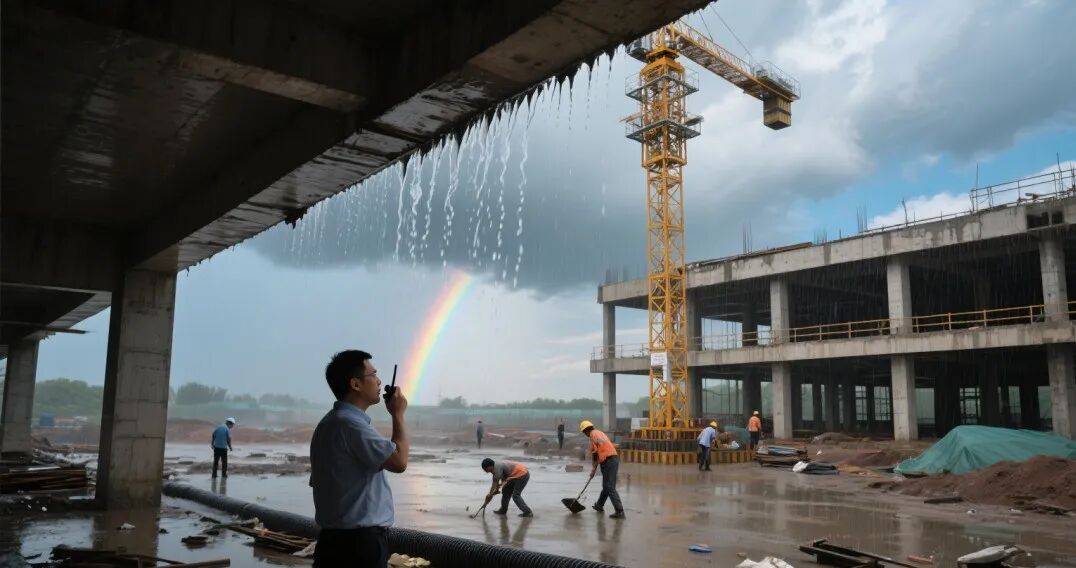
不良资产盘活

Search documents
停摆已超七年 远洋建管接手代建云南石林商业项目
3 6 Ke· 2026-02-13 02:46
Core Viewpoint - The company, Yuanyang Construction Management, has signed a contract for the Shilin Dashangjia project in Kunming, marking its second distressed asset revitalization project following the Jincheng project in Xishan District [1][10]. Group 1: Project Overview - The Shilin Dashangjia project is located in the core area of Shilin County, covering a total construction area of approximately 170,000 square meters, and is positioned as a pure commercial community with various business formats including apartments and commercial streets [2]. - The project has been stalled for over seven years due to the developer's financial difficulties and disputes over property purchase contracts and construction payments, leading to a complete halt in construction since around 2018 [3]. Group 2: Revitalization Efforts - Prior to signing the contract, Yuanyang Construction Management conducted a comprehensive assessment of the project's asset status, debt structure, construction quality, safety hazards, and remaining development potential [5]. - The company has developed a comprehensive plan that includes a resumption path, construction rhythm, sales milestones, and cash flow arrangements, and has communicated with local governments and creditors to facilitate the project's revival [5]. Group 3: Government Support and Initiatives - The provincial government's initiative to address unfinished buildings has provided a new opportunity for the revitalization of the project, with the Yunnan Provincial Department of Housing and Urban-Rural Development issuing a notice to clear and rectify unfinished projects [4]. - The Shilin County government has included the Shilin Dashangjia project in its key rectification project list, further supporting the revitalization efforts [4]. Group 4: Previous Projects and Future Plans - The Jincheng project, also managed by Yuanyang Construction Management, is located in the Xishan District and has been recognized as a typical unfinished project, with plans for its revitalization involving restructuring and investment from external parties [9][10]. - In addition to the Shilin Dashangjia project, Yuanyang Construction Management has secured two other comprehensive construction management projects in January, indicating a strategic expansion in the area of full-process construction management [11].
深耕不良资产赛道,远洋建管签约昆明石林大商家复工代建项目
Xin Lang Cai Jing· 2026-02-12 11:16
Core Insights - Ocean Group's subsidiary, Yuan Yang Construction Management, has successfully signed the Kunming Shilin Dashangjia reconstruction project, marking its second case of revitalizing distressed assets in Kunming after the Xishan District Jingsheng project [1][5] Group 1 - The Shilin Dashangjia project is located in the core area of Shilin County, with a total construction area of approximately 170,000 square meters, designed as a pure commercial community that includes apartments and commercial streets [3][8] - Yuan Yang Construction Management adopts the role of "project doctor," quickly assembling an expert team for comprehensive diagnostics of the project, which had been stagnant for years due to funding and planning issues [3][4][8] - The company will provide a "full-process, integrated" construction and sales service, leveraging its mature full industry chain system and extensive experience in construction management to optimize product design and attract suitable businesses [3][4][8] Group 2 - In the context of the real estate market entering the "stock era," revitalizing distressed assets has become a test of the professional capabilities of construction management companies [4][8] - Yuan Yang Construction Management is actively participating in the practice of activating stock assets, contributing to the improvement of living environments and urban aesthetics [4][8]

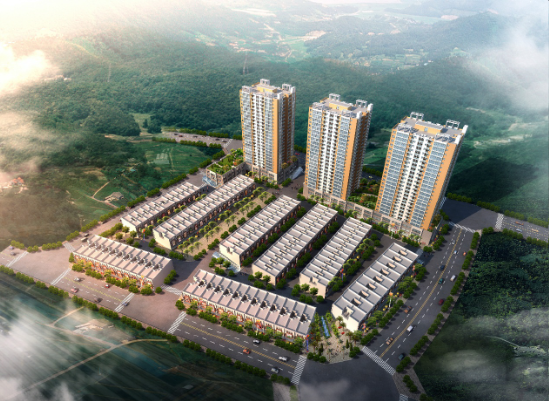
深耕不良资产赛道 远洋建管签约昆明石林大商家复工代建项目
Zheng Quan Ri Bao Wang· 2026-02-12 08:17
Group 1 - The core achievement of the company is the successful signing of the Kunming Shilin Dashangjia reconstruction project, marking the second case of revitalizing distressed assets in Kunming after the Xishan Jingsheng project [1] - The Shilin Dashangjia project covers a total construction area of approximately 170,000 square meters and is positioned as a pure commercial community, including apartments and commercial streets, with strong asset activation value and potential due to its central location and mature transportation [1] - The company adopts the role of a "project doctor," forming an expert team to conduct a comprehensive diagnosis of the project, identifying issues related to funding and planning that led to its stagnation, and developing tailored revitalization plans to address historical problems [1] Group 2 - In the context of the real estate market entering the "stock era," the ability to rejuvenate distressed assets has become a test of the professional capabilities of construction companies [2] - The company actively participates in the activation of stock assets through its professional construction capabilities, contributing to the improvement of living environments and urban aesthetics [2]
远洋集团与华西集团达成战略合作 发力城市更新与不良资产盘活
Xin Lang Cai Jing· 2026-01-28 05:36
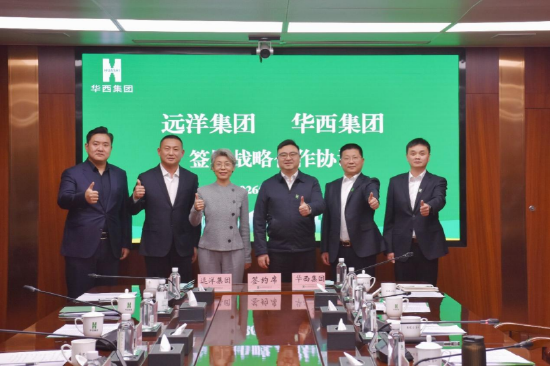
Core Viewpoint - Recently, Ocean Group signed a strategic cooperation agreement with Sichuan Province's large state-owned construction investment company and industry leader, Huaxi Group, focusing on urban renewal and the revitalization of non-performing assets, aiming for deep collaboration across the entire investment, financing, construction, management, and operation chain to explore markets and achieve mutual benefits [1][10]. Strategic Collaboration - The signing ceremony highlighted the warm welcome from Huaxi Group's Deputy General Manager, Gu Jinge, who praised Ocean Group's professional operational management capabilities and full industry chain service level [3][12]. - Huaxi Group has established the Sichuan Urban Renewal Group, taking on the role of the "main force" for urban renewal in the province, leveraging its strong engineering construction capabilities to collaborate with Ocean Group in core areas [3][12]. Cooperation Deepening - This cooperation marks a substantial phase of business synergy between the two companies, focusing on integrating the entire process of investment, financing, construction, management, and operation [8][16]. - Ocean Group will leverage its mature experience in asset operation management and revitalization, while Huaxi Group will contribute its significant advantages in engineering construction and project investment, aiming to explore paths for the value re-creation and enhancement of existing assets [8][17]. Additional Agreements - In addition to the strategic cooperation agreement between Ocean Group and Huaxi Group, Huaxi's 12th Company, Wuhu Shenghong Industrial Investment Co., Ltd., and Zhejiang Jin Special Investment (Suzhou) Enterprise Management Co., Ltd. also signed a strategic cooperation framework agreement, focusing on special investment business and the revitalization of existing assets [10][19].
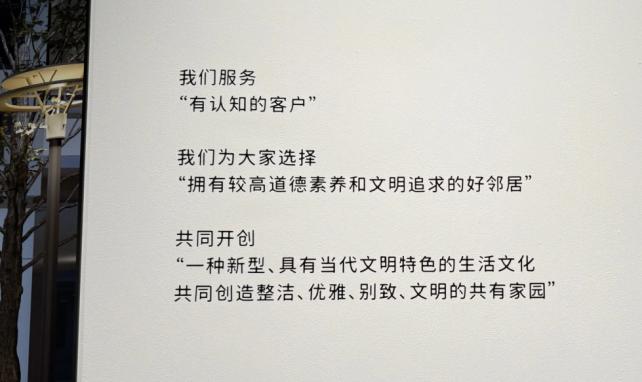
东北汉子,捅破杭州房价天花板
3 6 Ke· 2026-01-23 02:13
Core Viewpoint - The recent record-breaking price of new high-rise apartments in Hangzhou, specifically the "Yinglan Xiucheng" project, has raised eyebrows in the real estate market, indicating a shift in pricing strategies and market dynamics in the region [1][2][29] Group 1: Market Dynamics - The average price of the new high-rise apartments in the "Yinglan Xiucheng" project is approximately 120,000 yuan per square meter, surpassing the previous record of 90,000 yuan per square meter [1][2] - Out of 188 units, 132 are priced above 100,000 yuan per square meter, with the most expensive units exceeding 22.46 million yuan per square meter [2] - The project has not registered any sales yet, indicating a potential strategy of selective marketing rather than broad sales [2] Group 2: Company Background - Yinglan Real Estate, the developer, has a mysterious background with limited public information available, tracing its origins back to the 1990s during China's state-owned enterprise reform [4][5] - The founder, Yu Zhiqiang, has a diverse background in finance and arts, which influences the company's branding and project development [5][6] - The company has primarily focused on financial center developments in major cities like Beijing, Hangzhou, and Xiamen, often through partnerships and acquisitions rather than traditional land purchases [20][28] Group 3: Historical Context - Yinglan's rise is linked to the historical context of the Chinese financial sector, particularly the collapse of major financial institutions like Zhongnongxin, which has shaped the current landscape [17][18] - The company has a history of acquiring distressed assets and transforming them into profitable developments, exemplified by the Beijing Financial Street project [15][19] - The founder's connections and experiences during the 1990s have contributed to a robust network that supports Yinglan's operations and strategic decisions [24][28] Group 4: Future Outlook - Yinglan's approach to real estate development focuses on scarcity and exclusivity rather than scale, suggesting a unique market positioning strategy [29] - The company's ability to navigate changing market conditions and leverage historical connections will be crucial for its future success [28][30]
“滨州101”焕新记
Jin Rong Shi Bao· 2026-01-06 01:44
Core Viewpoint - The "Binzhou 101" project, once a symbol of urban decay, has been revitalized into a high-end business complex through collaborative efforts between local government, real estate developers, and financial institutions, marking a significant turnaround for the area [1][5]. Group 1: Project Background - "Binzhou 101" covers an area of 19,600 square meters and was initially planned as the first five-star hotel in the region, but faced multiple construction halts since its inception in 2004 due to financial issues and market fluctuations [4]. - The project was stalled for over a decade, with the original developer facing a broken capital chain, leading to repeated debt restructuring attempts that failed to revive the project [4][5]. Group 2: Revitalization Efforts - Local government established specialized working groups to facilitate the project's forced liquidation and restart construction, addressing complex economic disputes and project construction procedures [4][5]. - The project was transformed from two buildings into four, now serving as a central business complex featuring brand restaurants, corporate headquarters, and a star-rated hotel [5]. Group 3: Financial Support and Management - Shandong Financial Asset Management Co., Ltd. played a crucial role by injecting 80 million yuan and leveraging 600 million yuan in social funds to support the project's revival [7]. - The project adopted a targeted approach, including thorough financial and engineering due diligence, establishing sufficient collateral guarantees, and ensuring contract security through notarization [8]. Group 4: Broader Implications - The revitalization of "Binzhou 101" reflects the growing role of local asset management companies in mitigating regional financial risks and revitalizing stalled real estate projects, contributing to urban renewal and development [8].
化解危局盘活资产
Jin Rong Shi Bao· 2025-10-16 03:04
Core Insights - China Orient Asset Management Co., Ltd. successfully exited the bankruptcy restructuring project of Shandong Fangyuan Nonferrous Metals, revitalizing over 6 billion yuan in existing assets and resolving more than 37 billion yuan in bad debts [1][2] - The restructuring involved 475 creditors receiving legal compensation and over 1,600 employees achieving stable employment, while also addressing social security arrears [1][2] Group 1: Project Background - Shandong Fangyuan Nonferrous Metals and 20 other companies are key players in the regional copper smelting industry, having faced severe debt crises since 2019 due to market fluctuations and management issues [2] - In June 2022, a regional court ruled for the substantial merger and restructuring of these companies, with China Orient leveraging its expertise in bad assets to inject new vitality into the project [2] Group 2: Strategic Approach - China Orient collaborated with restructuring investor Zhongjin Lingnan to implement a dual-driven strategy of "capital increase + debt acquisition," creating a synergistic system of "industrial operation + financial empowerment" [3] - The partnership allowed for a division of roles, with Zhongjin Lingnan leading industry development and China Orient providing financial resources and bad asset investment experience [3] Group 3: Achievements - Since 2023, the restructured Shandong Zhongjin Lingnan Copper Co., Ltd. has significantly increased cathode copper production while reducing processing costs and energy consumption, successfully turning losses into profits [4] - The project exemplifies how China Orient activated market elements and nourished the real economy through financial means, aligning with national policies for the copper industry's high-end development [4] - China Orient aims to continue supporting the green transformation of the economy and explore new models for green finance development [4]

又一家“千亿民营集团”暴雷
Sou Hu Cai Jing· 2025-09-11 18:28
Core Viewpoint - The article discusses the rise and fall of Duofe Group, highlighting its rapid expansion through leveraging and acquisition of distressed assets, which ultimately led to significant financial difficulties and legal issues for the company [1][6][10]. Company Background - Duofe Group, founded by Hu Xingrong, initially gained prominence by capitalizing on opportunities presented by the 2008 global financial crisis, particularly in acquiring and revitalizing unfinished real estate projects [2][4]. - By 2015, Duofe Group had expanded significantly, operating in over 20 cities and generating annual revenues exceeding 10 billion yuan [4]. Financial Performance - In 2024, Duofe Group reported revenues of 218.9 billion yuan and total assets of 143.3 billion yuan, placing it among the top 50 private enterprises in China [5]. - The trading segment of Duofe Group saw revenues surge from 25.8 billion yuan in 2019 to 206.8 billion yuan in 2022, although this growth raised concerns about the sustainability and profitability of its business model [8]. Challenges and Issues - Since 2022, Duofe Group has faced numerous legal challenges, including 18 judicial cases in Wenzhou with total amounts executed reaching 28.5 million yuan, and issues related to unpaid debts leading to its subsidiaries being labeled as "dishonest debtors" [6]. - The company's aggressive expansion strategy has resulted in a deteriorating financial situation, with significant debt issues emerging in 2023, including nearly 1 billion yuan in frozen equity and tax arrears [8][9]. Industry Insights - The situation of Duofe Group reflects a broader trend in the industry where companies that rely heavily on aggressive expansion and capital operations without solid operational foundations often encounter severe financial distress [10]. - Other companies, such as Xuesong Group and Zhengwei Group, have experienced similar downfalls due to over-leveraging and financial mismanagement, underscoring the importance of building core competencies rather than solely depending on capital market maneuvers [10].