
世界文化遗产保护

Search documents
苏州古典园林艺术展泉州开展
Su Zhou Ri Bao· 2026-01-28 00:35
Core Viewpoint - The exhibition "A World Within Reach: Suzhou Classical Garden Art Exhibition" opened in Quanzhou, showcasing the beauty of Suzhou gardens across seasons and promoting cultural exchange between Suzhou and Quanzhou [1][2] Group 1: Exhibition Details - The exhibition features various forms such as promotional videos, aesthetic sharing, and photography displays to illustrate the seasonal beauty of Suzhou gardens [1] - The event highlights the philosophy of garden design in Suzhou, known for its intricate spatial layout and rich cultural connotations, which are significant to traditional Chinese culture [1] - The exhibition is located in Quanzhou, symbolizing the cultural dialogue and mutual prosperity between the two cities, both of which are recognized as World Heritage Cities [2] Group 2: Cultural Exchange and Activities - The opening ceremony included a performance of Suzhou Pingtan, enhancing the cultural experience for attendees [1] - A promotional video titled "Entering the Garden" was shown, connecting nine World Heritage gardens and explaining garden design techniques such as "changing scenery with movement" and "borrowing scenery" [1] - The exhibition aims to establish a platform for mutual appreciation of garden art and to promote deep cooperation between Suzhou and Quanzhou in cultural heritage protection and tourism integration [1]
第三届“长城之约”活动在河北涞源举行
Zhong Guo Jing Ji Wang· 2025-11-17 12:22
Group 1 - The third "Great Wall Appointment" global promotion event and World Heritage Dialogue commenced on November 15 in Laishui County, Baoding City, Hebei Province [1][3] - The event is organized by the Hebei Provincial Department of Culture and Tourism, Baoding Municipal Government, and the Great Wall Tourism Market Promotion Alliance, among others [3] - The "Great Wall Appointment" series has evolved from initial conceptual exploration to a well-established brand, achieving significant results in promoting international dialogue and cultural exchange [3] Group 2 - The Great Wall, as one of China's first World Heritage sites, symbolizes the resilient spirit and patriotism of the Chinese nation, serving as a crucial emblem of Chinese civilization and a witness to cultural exchanges [5] - Hebei Province is a major region for Great Wall resources, preserving sections from various historical periods, making it one of the most representative and well-preserved areas of the Great Wall [5] - Laishui County is noted for its rich Ming Dynasty Great Wall remains, being one of the longest counties in terms of Great Wall preservation in China [5] Group 3 - The event featured a thematic promotion segment where actor Zhang Xiaolong, portraying "Xu Xiake," interacted with Great Wall protectors to narrate stories of Great Wall conservation and promote Hebei's cultural tourism resources [7] - Experts and scholars discussed topics such as the construction of the Great Wall National Cultural Park, heritage protection, cultural transmission, and international communication during the event [7] - A roundtable dialogue was held to explore innovative narratives of the Great Wall and strategies for attracting global tourists, particularly the "Z Generation" [7] Group 4 - The event included the "Great Wall Appointment" 2025 World Heritage International Photography Exhibition, showcasing approximately 2,200 submissions and 3,500 images to reflect the Great Wall's historical features and conservation achievements [8] - A thematic sharing session was conducted, focusing on the Great Wall as a historical bond and spiritual home for the Chinese nation [8] - The "Great Wall Appointment" journey for international photographers was launched, involving renowned photographers from various countries to capture the natural and cultural landscapes along the Great Wall [8]


西藏布达拉宫迎年度“美颜”
Zhong Guo Xin Wen Wang· 2025-10-22 09:07
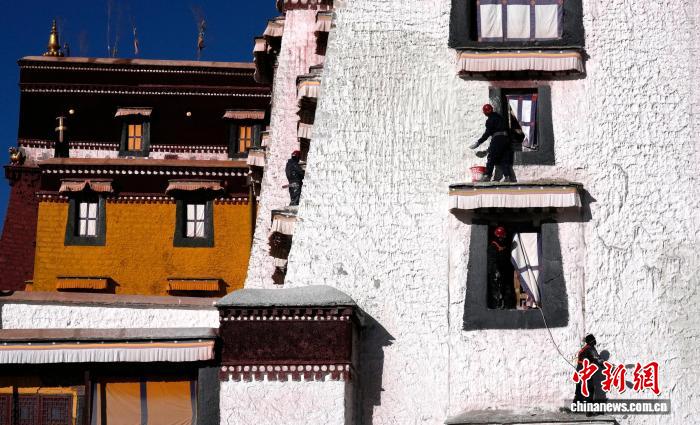
Core Points - The Potala Palace in Tibet undergoes its annual painting event, which is a community-driven initiative where locals and tourists participate in the restoration process [1][2] - The painting is traditionally completed before the Tibetan calendar's ninth month, specifically before the "降神节" (降神节) [1] - Participants mix natural ingredients like milk, honey, and sugar with lime to create a special paint for the palace [1][2] Community Involvement - Many visitors, including first-time participants, express pride in contributing to the preservation of this UNESCO World Heritage site [2] - Local residents also actively participate, viewing the event as a prayer for a better life and a hope for world peace [2] - The management of the Potala Palace provides food and tea for the volunteers during the painting process, ensuring that the palace remains open for visitors and pilgrims [2]
全球连线丨外籍嘉宾在莫高窟感受世界文化遗产的生态保护之变
Xin Hua She· 2025-10-15 01:12
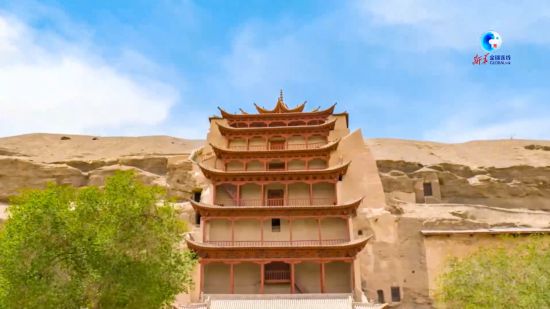
Group 1 - The core issue of protecting and inheriting the cultural heritage of the Mogao Caves, a world cultural heritage site, is a common challenge for humanity [1] - Since the 1940s, the Dunhuang Research Institute has developed a comprehensive scientific protection system, transitioning from passive rescue protection to proactive preventive protection [1] - The ongoing efforts include wind and sand control and analysis of disease causes affecting the caves [1] Group 2 - The "World Mayors Dialogue · Dunhuang" event was held in Dunhuang, attended by mayors and representatives from 10 countries, along with diplomats and young sinologists [3] - During the visit, guests specifically learned about the comprehensive environmental management project at the top of the Mogao Caves, gaining insights into the experience of cultural heritage protection [3] - Foreign guests experienced the ecological protection changes in the Gobi Desert region, highlighting the significance of the Mogao Caves [3]
“世界遗产在北京”国际交流对话活动在京开幕 海内外专家学者探讨遗产保护理念与实践
Zhong Guo Jing Ji Wang· 2025-09-28 06:42
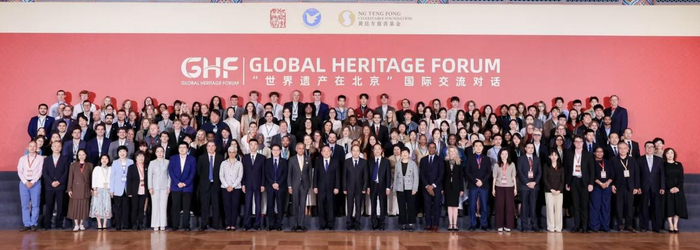
Core Insights - The event "World Heritage in Beijing" aims to enhance the international influence of Beijing's cultural heritage and promote cultural exchange between China and other countries [1][3] - The dialogue marks the one-year anniversary of Beijing's central axis being listed as a UNESCO World Heritage site and the 40th anniversary of China's accession to the World Heritage Convention [3][4] Group 1: Event Overview - The event was organized by the Beijing International Exchange Promotion Association, the Beijing Cultural Relics Bureau, and the Huang Tingfang Charity Foundation, gathering experts and scholars from various countries [1][3] - Key figures, including the Vice Chairman of the Beijing Political Consultative Conference and the UN Resident Coordinator in China, delivered speeches emphasizing the significance of cultural heritage protection [3][4] Group 2: Cultural Heritage Significance - The dialogue serves as a platform to showcase Beijing's achievements in cultural heritage protection and to share China's experiences in heritage conservation with the world [3][6] - The event also aims to foster international cooperation and promote the sustainable development of cultural heritage, particularly involving youth participation [4][6] Group 3: Expert Contributions - Experts from various institutions, including Tsinghua University and the World Monuments Fund, discussed the importance of cultural exchange and the role of Beijing as a historical crossroads of different cultures [6][7] - The event featured discussions on themes such as "International Communication of World Cultural Heritage" and "Educating Talents to Inherit Culture," facilitating in-depth exchanges of ideas [7]
如何保护好世界遗产地景迈山千年古茶林?
Zhong Guo Huan Jing Bao· 2025-09-16 02:16
Core Viewpoint - The ancient tea forest cultural landscape in Jingmai Mountain, Pu'er City, Yunnan Province, has become the world's first tea-themed World Cultural Heritage site, highlighting the importance of protecting this unique resource while facing various challenges [1]. Challenges in Protecting Ancient Tea Forests - Limited capacity to prevent extreme natural disasters, such as droughts and hail, has been observed, with past artificial rainfall measures proving ineffective due to poor coverage [2]. - Over-harvesting of tea leaves persists, driven by high prices and insufficient regulatory oversight, leading to damage to the ancient tea trees [2]. - The influx of tourists and external cultural influences has weakened the internal motivation for protecting the ancient tea forests, with some visitors damaging the ecosystem by picking tea leaves and littering [2]. Recommendations for Resource Protection - Increased investment in disaster prevention infrastructure is necessary, including improved early warning systems and advanced irrigation techniques to mitigate drought impacts on ancient tea trees [3]. - Establishing a comprehensive monitoring system to assess the health of ancient tea trees and employing biodiversity to control pests without chemical pesticides is recommended [3]. - Implementing a unified tagging system for ancient tea trees to facilitate protection and educate visitors about their cultural significance is suggested [4]. - Clear harvesting standards should be established to regulate the behavior of companies and individuals, with penalties for over-harvesting [4]. - Educational initiatives for tourists should be developed to promote responsible behavior and environmental protection [4]. - Strengthening local cultural heritage through events and activities that promote tea culture can enhance community engagement and respect for the ancient tea forests [5].
杭州西湖博物馆20周年 打造世界文化遗产保护样本
Zhong Guo Xin Wen Wang· 2025-09-12 00:56
Core Insights - The Hangzhou West Lake Museum celebrated its 20th anniversary, focusing on the protection and transmission of cultural heritage [1][2] - The museum has evolved from having zero artifacts to housing 17,763 items and serving 23 million visitors, becoming a key platform for cultural heritage protection [2] Group 1: Museum Development - The museum was established as China's first lake-themed museum, integrating its design with the natural landscape [1] - It has hosted 254 exhibitions and over 5,000 cultural activities, becoming a central landmark for international cultural exchanges during significant events like the G20 Summit and the 2023 Hangzhou Asian Games [2] Group 2: Cultural Heritage Significance - The West Lake itself is viewed as a "museum" of natural and cultural landscapes, with the museum serving as a window to showcase this integration [1] - Public participation has become a crucial force in the protection of world cultural heritage, with volunteers acting as cultural heritage "ambassadors" [2]
国家文物局:“三星堆—金沙遗址”等申遗工作正稳步推进
Xin Jing Bao· 2025-09-10 08:21
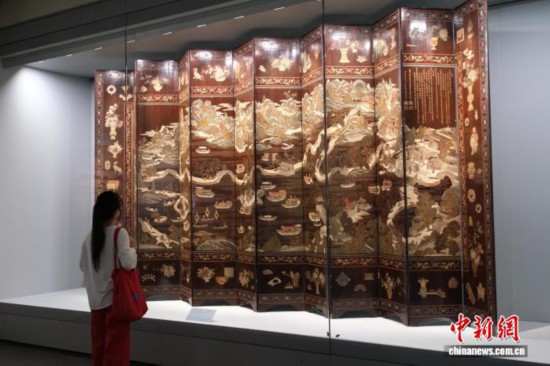
Core Points - The National Cultural Heritage Administration of China announced plans to promote several cultural heritage sites for World Heritage status during the "14th Five-Year Plan" period, including "Jingdezhen Handcrafted Porcelain Industry" and "Sanxingdui - Jinsha Site" [1] - China currently has 60 World Heritage sites, including 41 cultural heritage sites and 4 sites that are both cultural and natural [1] - The application process for several heritage sites is progressing steadily, with a focus on optimizing the "Chinese World Cultural Heritage Tentative List" [1] Group 1 - The successful inclusion of four cultural heritage sites in the World Heritage List, such as "Quanzhou: China's World Maritime Trade Center in the Song and Yuan Dynasties" and "Beijing Central Axis" [1] - The management system for several heritage sites, including Leshan Giant Buddha and Mount Wudang, has been streamlined to enhance protection and management capabilities [1] - A series of protection and display projects have been implemented for sites like the Forbidden City and the Great Wall, improving their protection status and interpretative display levels [2] Group 2 - The establishment of the "Asian Cultural Heritage Protection Alliance," initiated by China, has expanded to include 20 member, partner, and observer countries [2] - The alliance aims to contribute to the international governance system for cultural heritage protection by establishing a technical committee for standardization [2] - China has submitted 10 protection status reports to UNESCO, all of which have been successfully approved by the World Heritage Committee [2]
共护人类瑰宝 延续文明脉络
Ren Min Ri Bao· 2025-08-21 06:12
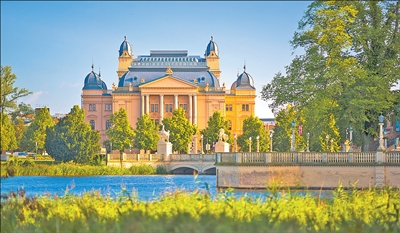
Core Points - The 47th World Heritage Conference concluded in Paris, adding 26 cultural and natural heritage sites to the World Heritage List, emphasizing the responsibility of preservation and promotion of these treasures [1] - The article explores innovative cultural heritage protection efforts in three sites: the Schwerin Castle Complex in Germany, the Umm Qais archaeological site in Jordan, and the Gedi Ruins in Kenya [1] Schwerin Castle Complex - The Schwerin Castle Complex consists of 38 buildings, showcasing a blend of architectural styles including Classicism, Baroque, and Neo-Renaissance, reflecting the historical significance and daily life of the local community [2] - The local government and community actively participate in heritage protection, with funding from municipal and state governments, as well as social donations [4] - Initiatives to engage local residents include workshops in schools and storytelling competitions, fostering a sense of pride and responsibility towards the heritage [4] Umm Qais Archaeological Site - The Umm Qais site features remnants of ancient agricultural society, including water management systems that highlight the historical significance of the area [5] - The site has been influenced by various civilizations, including Roman, Nabataean, Byzantine, and Ottoman, making it a rich cultural heritage location [5] - Community involvement in preservation efforts includes training and job creation, enhancing local residents' connection to their heritage [6] Gedi Ruins - The Gedi Ruins, located between the Indian Ocean and a forest, served as a key trading hub in East Africa, showcasing unique coral stone architecture and water management systems [7][8] - The site has historical artifacts indicating its role in the Indian Ocean trade network, with connections to East Asia, South Asia, and the Arabian Peninsula [8] - Collaborative efforts among local communities, museums, and government agencies focus on balancing heritage protection with sustainable tourism development [8]
共护人类瑰宝 延续文明脉络(第一现场)
Ren Min Ri Bao· 2025-08-20 22:52
Core Viewpoint - The recent UNESCO World Heritage Committee meeting in Paris resulted in the addition of 26 cultural and natural heritage sites to the World Heritage List, emphasizing the responsibility of preservation and promotion of these treasures [1] Group 1: Germany's Schwerin Castle Complex - The Schwerin Castle, known as the last bloom of European Romanticism, is surrounded by gardens and lakes, featuring 38 buildings that showcase various architectural styles [2] - The local community actively engages in the preservation of the castle, with initiatives such as workshops in schools and community involvement in discussions about renovations [4] - The "Schwerin World Heritage Promotion Association" encourages local youth to participate in storytelling competitions, fostering a sense of pride and connection to the heritage [4] Group 2: Jordan's Umm Qais Archaeological Site - The Umm Qais site, located in northern Jordan, features remnants of ancient agricultural societies, including water management systems that supported local communities [5] - The site reflects a blend of various civilizations, with over 150 houses showcasing unique architectural styles, particularly the use of basalt for construction [5] - Local residents are involved in the preservation efforts, participating in restoration projects and traditional craft demonstrations, which also enhance their income [6] Group 3: Kenya's Gedi Ruins - The Gedi ruins, an important hub for trade along the East African coast, feature well-preserved coral stone buildings and a sophisticated water management system [7][8] - The site has been recognized for its unique architectural techniques and its role in the Indian Ocean trade network, evidenced by artifacts from various cultures [8] - Collaborative efforts between the Kenyan National Museum, local communities, and government agencies focus on risk management and community training to enhance preservation [8]