
两山理论转化

Search documents
生态治理螃蟹致富,南京浦口区探索“两山”转化新路径
Zhong Guo Huan Jing Bao· 2025-12-25 09:12
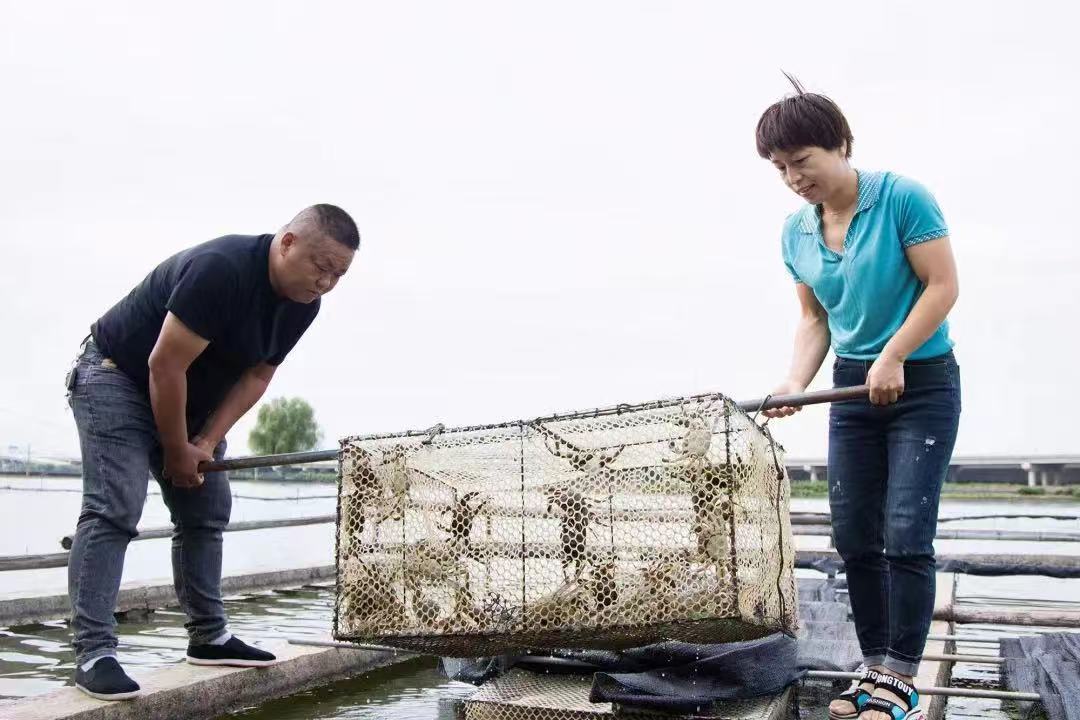
Core Insights - The article highlights the successful transformation of Houwei Village in Nanjing's Pukou District through crab farming, leading to a significant increase in collective income to 6 million yuan this year from previously less than 2,000 yuan per capita annual income [1] Group 1: Economic Development - Houwei Village has leveraged the ecological advantages of the Chu River to develop a crab farming industry, contributing to local economic revitalization [1][5] - The annual revenue of the Qingqingyuan Family Farm, run by siblings Chen Yugen and Chen Yuxiang, has reached 5 million yuan with a farming area of 300 acres [6] - The average income per mu for farmers in the village is projected to be around 8,000 yuan by 2025, with a total aquaculture area of 9,470 acres [11] Group 2: Ecological Governance - The Chu River, spanning 36.7 kilometers, serves as a natural link for surrounding towns and is subject to a collaborative governance model involving multiple provinces to address ecological challenges [3] - A dual ecological compensation mechanism has been established, ensuring that areas exceeding water quality standards compensate those that meet them, resulting in a 100% compliance rate for cross-border water quality [3] Group 3: Technological Innovation - The introduction of smart farming techniques, including real-time water quality monitoring through IoT and drone technology, has significantly improved the efficiency and sustainability of crab farming [4][6] - The implementation of an ecological transformation system for aquaculture ponds has facilitated the purification and recycling of wastewater, enhancing environmental sustainability [7] Group 4: Brand Development and Market Strategy - The village has developed the "Shangong Crab" brand, which has gained market recognition, and established research bases in collaboration with local agricultural universities to enhance crab quality [8][10] - The integration of agritourism, including crab tasting and fishing experiences, has diversified income sources and attracted visitors, contributing to the overall economic growth of the region [10]

江山如画|绿水青山的答案,在这座县城写进生活
Zhong Guo Xin Wen Wang· 2025-12-01 05:47
Core Viewpoint - The article highlights the achievements of Jingde County in Xuancheng City, Anhui Province, which has received multiple accolades for its ecological initiatives and has successfully transformed its ecological advantages into economic benefits through innovative practices [1] Group 1: Ecological Achievements - Jingde County has been recognized as the first batch of "Green Mountains and Clear Waters are as Good as Mountains of Gold and Silver" practice innovation bases, "National Ecological Civilization Demonstration Zones," and "National Key Ecological Function Areas" [1] - The county has established a "carbon sink + prosecution" ecological prosecution mechanism, which aims to convert ecological resources into economic opportunities [1] Group 2: Economic Transformation - The county's efforts have led to a transformation where ecological beauty is turned into economic value, illustrating a high-quality path for green development [1]
太实用了!稻田退水“零直排”的嘉兴经验学起来!
Zhong Guo Huan Jing Bao· 2025-11-17 00:29
Core Viewpoint - The case study from Pinghu City, Jiaxing, Zhejiang Province, demonstrates the implementation of a "zero discharge" water recycling model in rice paddies, contributing to both agricultural productivity and environmental protection, aligning with the principle that "green mountains and clear waters are invaluable assets" [1] Group 1: Main Practices - Construction of high-standard farmland provides the hardware foundation for irrigation and drainage separation, enhancing water utilization efficiency by 10% [2] - Upgrading ecological drainage channels to intercept and purify water quality, achieving a total nitrogen concentration reduction of 18%-32% and total phosphorus reduction of 15%-29% [3] - Promotion of resource recycling through digital irrigation technologies, resulting in an annual water savings of 549 million cubic meters and a 40% reduction in drainage volume [4] Group 2: Achievements - The implementation of the "zero discharge" model has transformed agricultural landscapes, increasing grain production from 188,000 tons in 2020 to 192,000 tons in 2024, with innovative planting models enhancing per-acre income [6] - The ecological advantages have led to increased rural income, with per capita disposable income reaching 52,997 yuan in 2024, significantly above national and provincial averages [7] - The dual enhancement of ecological and economic value has attracted quality agricultural projects, contributing to a total output value exceeding 10 billion yuan [8]
城湿相融 金玉共生
Zhong Guo Zi Ran Zi Yuan Bao· 2025-11-14 06:23
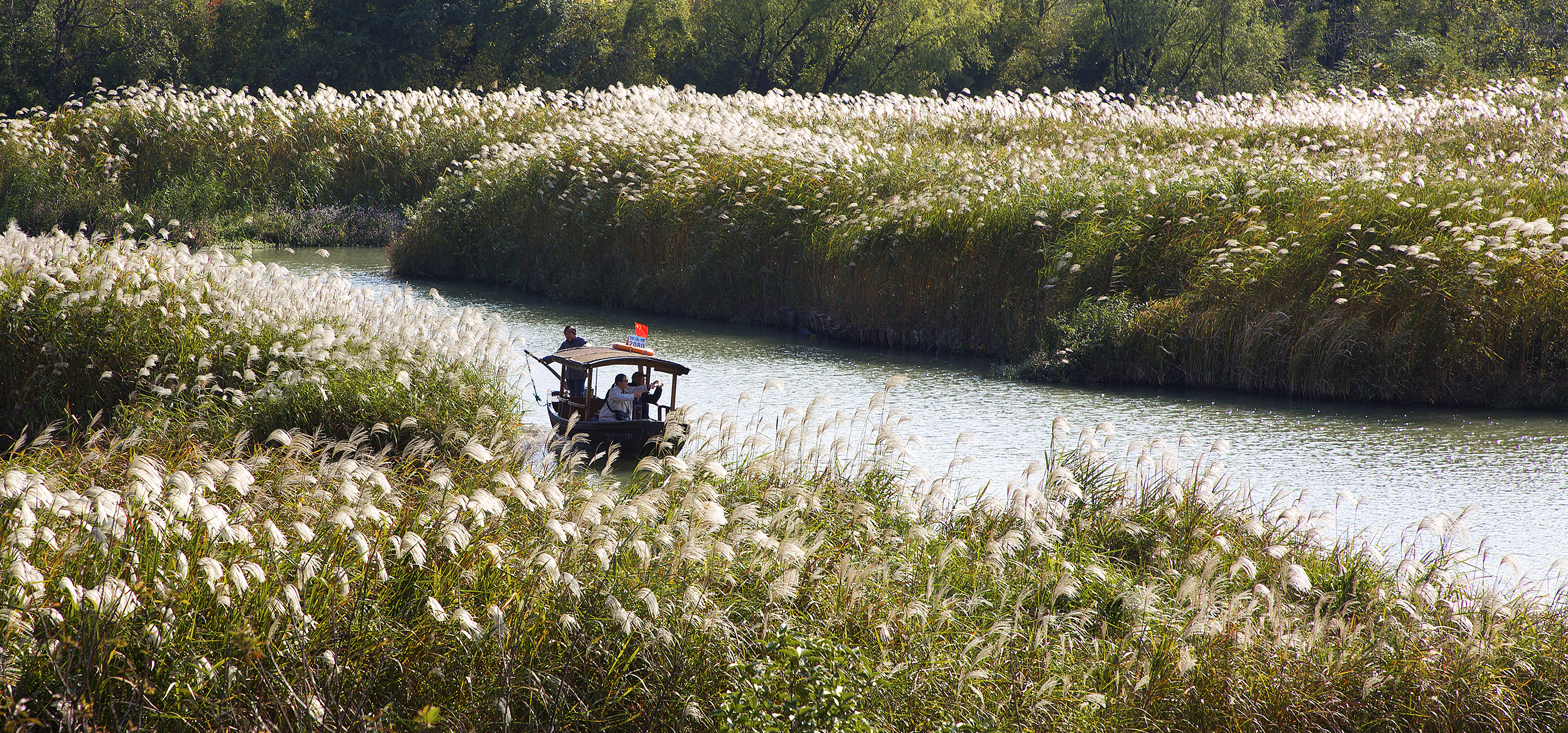
Core Viewpoint - The article highlights the ecological transformation and biodiversity improvement of Xixi Wetland in Hangzhou, marking its 20th anniversary as China's first national wetland park, showcasing successful environmental restoration efforts and the integration of ecological protection with urban development [4][11]. Group 1: Ecological Restoration - Xixi Wetland has undergone significant ecological changes from pollution and degradation to a thriving ecosystem, with the introduction of various protective measures since 2003 [7][9]. - The wetland now hosts 971 species of vascular plants, an increase of 750 species since 2005, and 224 bird species, including three national first-class protected animals [13]. - Water quality has improved significantly, achieving surface water Class III standards, with some areas reaching Class II [13]. Group 2: Biodiversity and Wildlife - The recent sighting of the black-faced spoonbill marks the first record of this national first-class protected bird species in the wetland, indicating the area's rich biodiversity [3][13]. - The wetland's ecological functions have been restored, contributing to the mitigation of the "greenhouse effect" and "urban heat island effect," with air quality indicators ranking first in Hangzhou [13]. Group 3: Community and Economic Impact - The wetland's transformation has positively impacted local residents, with over 500 million annual visitors to the 5.79 square kilometer free-access area and nearly 700 employees in wetland management [13][14]. - The integration of wetland conservation with urban development has led to a stable increase in visitor numbers and revenue, with over 26 billion yuan generated since its opening [14]. Group 4: Innovative Management Approaches - Hangzhou has implemented a "Park-Oriented Development" (POD) model, promoting a spatial structure that combines wetland protection with urban park development [9][14]. - The establishment of the Xixi Wetland Smart Governance Center, utilizing advanced technologies for real-time monitoring and management, supports ongoing ecological protection efforts [10].
山坳间的“生态答卷”:变废为电照亮千家万户
Guang Xi Ri Bao· 2025-11-13 07:07
Core Viewpoint - The article highlights the significant improvement in the sanitation conditions of Ling County, which has transitioned from a "garbage siege" to effective waste management through the establishment of a waste incineration power plant and a dedicated fly ash landfill site [2][3][5]. Group 1: Waste Management Improvements - Ling County has successfully addressed the "garbage siege" issue, with the waste incineration power plant converting waste into electricity, thus enhancing local sanitation [2][6]. - The county's waste incineration plant processes an average of 1,200 tons of garbage daily, generating 500,000 kilowatt-hours of electricity, sufficient to meet the daily needs of 50,000 households [7]. Group 2: Environmental and Health Concerns - Prior to improvements, Ling County faced severe environmental issues, including open burning of waste and low waste collection rates, leading to significant pollution risks [3][4]. - The fly ash produced from the incineration process posed potential environmental hazards if not properly managed, necessitating the construction of a dedicated fly ash landfill [4][5]. Group 3: Infrastructure Development - A new fly ash landfill site with a capacity of 175,000 cubic meters has been established, funded by an investment of 24.8571 million yuan, which can accommodate the fly ash for approximately 16 years [5]. - The landfill incorporates advanced technologies to prevent leachate generation, significantly reducing the risk of groundwater contamination and enhancing environmental safety [5][6].
